Translation into English by Sri M.K. Sudarshan
published in S R I N R I S I M H A P R I YA – NOVEMBER 2021


(Continued from Part 1 of 2 published in Nrisimha Priya October 2021
1.“jaina”: There lived one by the name of Jeener (i.e. Mahaaveer) who, like the Buddha, was greatly revered by his followers as being wise and omniscient. He propagated a system of belief whose important tenets can be summarized in the following way:
Jeevaatma, individual souls, are all real. In accordance with their respective past deeds of virtue and sin (i.e. punnya, paapa), they take innumerable bodily forms in this world and therewith live or exist by alternately growing and dissolving in an endless cycle of birth and rebirth.
The adherents of this philosophy abjure all forms of rituals and “yaagaas” since they believe it only involves needless violence (himsa) to many creatures and animals.
This school is atheistic.
It considers “moksha” to be a state of bodiless-ness, i.e. the state when the Body is completely rid of all its condition of “punnya–paapa”, that state is held to be salvation. To be able to rid the Body of its condition of “punnya” and “paapa”, this school of philosophy prescribed for its followers a method of penance or “tapas” that involved going into deep seclusion and beginning to meditate upon oneself by incessant chanting of the mantra, “parama sukham, parama sukham” (“Supreme Bliss! Supreme Bliss!”). While endlessly chanting that way, the meditator proceeds to deliberately pluck, one by one, every strand of hair upon his scalp by its root*! And thus, by the time that the last strand of hair standing upon his head has been uprooted, all of the ‘punnya’ and ‘paapa’ of the meditator, along with the Body too, all get completely extinguished through the penance. Once thus extinguished, the Body does not ever return to the world to retake any other bodily form, and such a state of ultimate bodiless-ness is what constitutes “moksha”. Thus, say his followers, has their preceptor, the Jeener spoken about “moksha” which is a state that is utterly bliss-less. (*Translator’s note: here the “hair plucking” is not to be taken too literally; it is only a form of analogy meant to convey the idea that the path to salvation in Jainism is an extremely long, hard and arduous one).
2. “bhaaskara”: There is only one Reality and that is Brahman alone. It is omnipotent. It is self-illumined. It is “sath” or the Truth lying latent in the Word itself (i.e. the Logos). This Brahman is the substrate or source for all sentient and insentient beings. As gold in ore form transforms into other forms such as a golden ring etc. so does this Brahman manifest itself in sentient forms such as ‘jeevaatma’. Just as plain, misshapen clay transforms into the form of clay pot, so too does this Brahman transform into inert, insentient Matter (prakkruti) and which, in turn, then transforms into a variety of bodily forms, each as suited and appropriate to the purpose of each sentient-being.
The adherents of this philosophy hold that even sensory faculties such as Speech (vaak) and physical faculties, such as limbs, are thus creations of Brahman and are dissolved by it too.
It can, however, never be known when such creation and dissolution of sentient beings (jeeva) and insentient matter (prakkruti) originated since jeevaas have no beginning (anaadi). In course of time however, when jeevaatma-s come to realize that “I am of the nature of Brahman but have been transfigured into a ‘jeeva’ and now having undergone all manner of grief and infirmities without cease, I continue to undergo repeatedly the same condition furthermore”.
After countless rebirths then, however, comes a time, when the Jeeva, at last, attains the realization of the truth “That Brahman, I am that myself!” (“Brahma-bhaavam”). And having attained such realization of Brahma-bhaavam, there is never any return to the state of mere “jeevaatma” again anymore. And that, according to the followers of this school of thought, is what constitutes “moksham”.
3.“vyaakarana”: The followers of this school posit the existence of “sabda brahmam”… i.e. a Primordial Sound from which all that exists in the universe emanated. They call this primordial sound as “sphotam”.
They put forward the proposition that just as sound emanates when the two palms of the hand are clapped, so does the movements of the entire universe produce sounds which all emanate from the one primordial sound called “sphotam”.
All of the heavens and earth, in their view, are enveloped by “sabda”, the humming of the universe, as it were, and all such sounds are but echoes of the one Primordial Sound, the “sphota”, which verily is the Brahman that can be realized. This philosophy belongs to the school called “maayaavaada”.
4.“vaiseshika”: In this school of philosophy, it is accepted that Isvara (or Brahman) exists; He is omniscient, and it is He who has created the entire and vast universe. The reality of that Brahman need not necessarily be known only with the aid of the Vedas. Even by proper inference (anumaanam), the followers of Vaiseshika aver, it can be realized that since none amongst jeevaatma-s is able to effect such universal creation, there must necessarily therefore exist one Being who is much superior to every other being.
It is accepted by these followers, that the Vedas spring from Isvara alone and therefore it is infallible. Thus, they (proceed to take the words and meaning of the Vedas itself to) claim the context for the truth they espouse as follows:
Jeevaas, monadic souls, exist in countless in numbers in the universe; each of them possesses the potential to assume huge bodily forms (vibhu) but by themselves they possess no intelligence (arivu); but when they take birth, together with the body, they come to possess intelligence too. Then, in time, the body perishes and along with it, intelligence too. What remains in the end is mere, inert matter… nothing more to it… and there is neither any joy nor sorrow to be had here. Such is the belief system of Vaiseshika.
5.“naiyyaayika”: While Sage Vyaasa expounded the principles of Vedanta philosophy in his great work (the Brahma Sutra) of aphorisms, beginning with “athaatho brahma jignyaasa:” and concluding with “anaavrutthi: sabthaat”, likewise, Sage Gautama too expounded the dialectics of Vedanta through his work of aphorisms which is the basis of this school of thought.
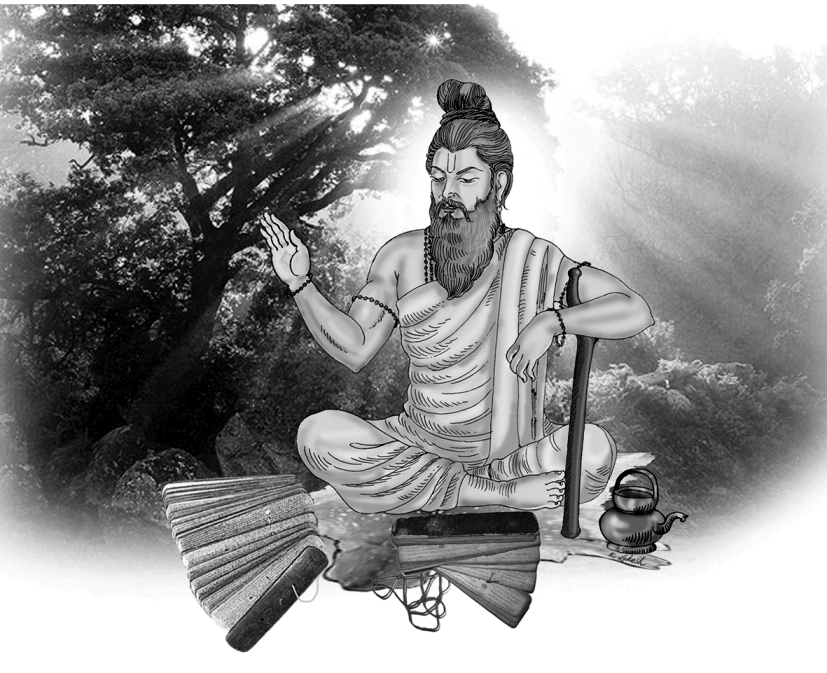
According to this school, Isvara is Reality, and He is the efficient Cause (nimittakaaranam) of the entire universe of existence as well as the giver of the Vedas.
Jeevaatma-s, atomic souls are infinite in number but possess no intelligence (arivu) or self-awareness. They pervade all of space just as ether (aakaasa) does. They are eternally existent. Due to their respective deeds of “karma”, they come to incarnate various bodily forms in the world, including the human form; and when that happens, the souls beget intelligence and they become self-aware too. The experience of both joy and sorrow (sukha-dukha) of existence then ensues.
These embodied souls obtain their form by the mere combinations and permutations of various pre-existent natural elements and forces such as ether (aakaasa), earth (pruthvi), water (jalam), energy (tejas), wind (vaayu) etc. An entity or separate principle known as Matter (prakkruthi) does not exist. When, finally, a soul attains the state of “moksham” (salvation), the knowledge (gnyaana) it obtained previously is lost forever in cosmic dissolution. What remains of the soul then is plain, inert, rock-like (paashaanam) barren-ness, devoid of all qualities such as joy, sorrow and the like.
Nyaaya philosophy, despite being a branch of Vedanta, nevertheless contains many tenets that patently contradict the Vedas and that is why Sage Vyaasa himself characterized it as being “tarkka–prathistaanaadapi:
He rejected it as a school of thought based on dialectical sophistry.
6.“neereeswara-meemaamsaka”: This philosophy can be summed up as follows:
God does not exist, nor do any demigods and even if they did, they possess no personification. Thus, they are incapable of granting any kind of blessings or benefits to anybody.
However, this school believes that the various sacrifices, rituals and sacraments prescribed in the Vedas ought to be scrupulously performed without fail so as to remove all taint of human sin, and by which jeevaatma-s become wholly deserving of, and are able to reap, the rewards of heavenly bliss and enjoyment (svargaanubhavam). The heavenly realm (svargam) is here conceived as a lush, verdant, sylvan and beautiful idyllic place (like the Nilagiri valleys on earth!). Such is the philosophical outlook of these “meemaamsaka-s”.
7.“neereswara-saankhya”: The main tenets of this school of philosophy are these:
The Vedas are eternally self-existent. On the question whether there exists an Almighty God (kadavuL), Saankhya is silent.
Jeevaatma-s (monadic souls) exist in infinite numbers.
There does exist an ontological principle known as Matter (prakkruthi) and it is the cause for jeevaatma-s taking bodily and manifest forms. In that sense, it is insentient Matter (prakkruthi) that is efficient and immanent cause for all existent entities.
Matter when associated with jeevaatma gains by itself intelligence and self-awareness (arivu) too and thereby experiences everything through agency.
All ‘jeevaatma-s” are of “vibhu” form (i.e. all-pervasive in size) but they possess no intrinsic attributes of any kind. If a jeevaatma contemplates constantly upon these truths about the immanence of Matter (prakkruti), it can rid itself of its bodily form and manifestation and, thereby, attain the experience of “moksha”. There is really nothing else to experience.
8.“yoga-siddhaanta”: Here is a gist of this school of philosophy: This “siddhaantham” was first propounded and propagated by the four-faced son of Almighty Srimann Naaraayana, Brahmaa.
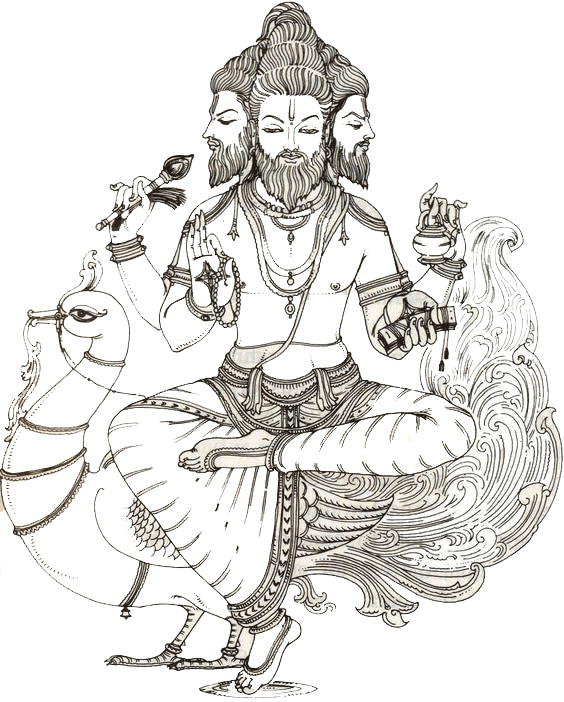
Naaraayana, the Omnipotent One, exists as supreme reality. He is to be known as the Efficient Cause (nimitta kaarana) of all Creation but he is not its Material Cause (upaadaana kaarana).
The way to attain Srimann Naaraayana through the path of Bhakthi (i.e. bhakthi-yoga) is ineffective. There is another way to attain “moksha” which is our way and in it, salvation is gained when jeevaatma consummates the contemplation upon its very own true self and nature. There is really no such similar experience to be gained through contemplation of Godhead. The four-faced Brahmaa, who it was that first propounded Saankhya, has spoken thus.
9. “paasupatha”: This philosophy is said to have been propounded by Lord Pasupathi, a personification of god “paramasivan”. This “paramasivan” is a deity that is superior to even Srimann Naaraayana and is the true Efficient Cause of all Creation.
Souls (jeevaatma-s) are monadic entities that exist in countless numbers. They are all able to attain “moksha” through constant contemplative worship of Shiva (shivopaasana) and having reached his abode, they too assume his own likeness in all respects, including that of being able to experience and enjoy the bliss that he enjoys himself (sivabhogham). It is Shiva alone, known as “sadaashivan”, from whom emanated all other gods such as Vishnu, Brahmaa, Indra and others.
Within this school of Paasupatham, there are four other sub-branches each with their own distinctive philosophical shades of thought. One of them upholds a certain discipline called “sivadeekshai”. Those who embrace and practice this discipline constitute a distinctively egalitarian community with no differences amongst themselves based on either caste, rank or birth status etc. According to this discipline, a jeevaatma, that is of atomic or monadic nature, upon attaining “moksha”, assumes a size and form that is of ethereal dimensions i.e. it attains cosmic immanence and pervasion much like the great formless one, Shiva himself, who, besides being all-pervasive and immanent, has really no personality other than that of being Pure Consciousness (gnyaana-mayam).
*******************
After dissecting threadbare all the above schools of philosophy in his formidable treatise, our Sri Nigamaantha Desikan set out his conclusions in the form of a comparative summation containing the quintessence of Visisshtaadvaita Vedanta.
Some of the philosophies adumbrated above clearly are opposed to the Vedas.
While putting forth theories and speculations, that are both whimsical and fanciful in nature and construction, they have only tried to establish heresy as though it were authentic system of thought. A few others amongst them, while accepting the authority of Vedic scriptural revelation, have postulated wholly erroneous interpretations of the same, only to suit their own theories and views. There are also a few amongst the above systems of philosophy that, even while following the orthodox schools – which posit Srimann Naaraayana as supreme deity to which all others are subordinate –nonetheless, at the same time, they also sanctify and glorify lesser god or demigods. They do so on grounds that by propitiating them, through means prescribed in the Vedas as rituals and sacrifices (karma), those lesser gods confer great many earthly gains, material and even spiritual benefits upon souls — quickly and very easily too.
It is for all the above reasons that it is possible, that with the passage of time, in this age and era of Kali Yuga, we will witness the mushrooming of many more philosophies, cults and false gods that would either befuddle and misguide or enthrall and captivate the minds of ordinary people (saadhus), but which, in fact, are only even more toxic and flawed in nature.
It in this context that we must view the treatise of Sri Nigamaantha Mahadesikan, who after deep study and inquiry into the merits and demerits, into the inconsistencies and self-contradictions of each and every one of the philosophies or belief-systems he enumerated, was able to unravel, resolve and reconcile all the various disparate and dissonant viewpoints, fallacies and paradoxes that were inherent in them. This he accomplished based on the strength of sound and proven authoritative works, such as Sri Bhaashyam, which, propounded earlier by a long lineage of orthodox Achaaryas, sought to establish Veda and Vedanta on a firm and unassailable footing, now known to be Visisshtaadvaita.
In the illuminative treatise of his titled “PARAMATHA BHANGAM”, Sri Nigamaantha Mahadesikan has clearly, succinctly and comprehensively expatiated upon the profound verities of Visishtaadvaita axioms, principles, concepts and reasoning for our own edification. They include: the nature of paramaatma, the nature of jeevaatma, the nature of Matter, its cause and ontological adjuncts, the nature of Time and its adjuncts, the nature of divine and pure essence (suddha-sattvam) and how it defines and characterizes the plane of highest blissful existence known as Sri Vaikuntam, the relationship between paramaatma and jeevaatma, between body and soul, between sentient, insentient and Isvara principles, the doctrines of bhakthi-yoga and prapatthi as means of aspiring for and attaining “mukthi” or temporal liberation, the kinship between God and Devotee (bhagavath-bhaagavatha sambandham) through Bhakthi… etc.
All the above “lakshanam-s” — fundamental tenets — of Visisishtaadvaita have been lucidly set out in the great treatise of our Achaarya Sri Nigamaantha Mahadesikan which he has passed on to us as his compassionate legacy for posterity.
I have penned this essay of mine (arul mozhi) in response to many of you known to me in the ordinary, day-to-day secular world (loukeekam), who had, for quite some time, been expressing a yearning for a concise and easily comprehensible digest of this great work of our Achaarya. In writing the “PARAMATHA BHANGAM”, our Achaarya had complete faith that it was firmly based on the verities established by his predecessor lineage of great preceptors and gurus who had delved deep and surely into the depths of the Vedas and Vedanta. And he was sure too that his treatise would therefore serve us all as invaluable aid and guide that will help us journey forth, without facing any great obstacles on the way, to that great realm called Sri Vaikuntam.
“Shubamasthu”