A friend of mine forwarded me the article/blog that you can scroll down and read. It’s sage advice indeed on investing for ordinary investors like you and me. It’s worth reading and thinking about.
Being a corporate animal and careerist all my life, I’ve been an investor too myself for well over 30 years now. And I’ve learnt a lot of lessons from other wise men like this guy, R Gopalakrishnan . But then I say this too, with all “rational humility” and due modesty , the best lessons are those that I have myself over the years slowly and patiently come to teach myself ! Here are 5 of my own nuggets of distilled investing wisdom:
- Trust your own instincts . Don’t follow the herd or glib-tongued stock-market analysts.
- Don’t invest out of greed. Investing is not and never will be as important as your normal hardworking day job.
- Never venerate investing activity as though it were a creed. The popular hype is that “Equity is a cult”. Well… it is a cult indeed …. But beware that it’s led by innumerably more false and fake prophets than the true.
- I’ve always looked upon every investment of mine as an affair that will expire with the “7year itch” . Affairs shouldn’t last for more than 7 years … usually they turn either stale or sour … They must be exited thereafter … no matter how good or how bad they had been while they lasted. Do not ever remain in a “good affair” thinking it will go from “good to great”…. That’s exactly what the great Alan Greenspan (who was himself a curious mixture of exuberant economist and irrational central-banker) called “irrational exuberance”.
- Don’t go around in public or social parties gloating about your investing genius. It’s very uncouth and irritating behaviour. You knew really “fu*#{ ALL” about the stock market when you invested … you just got lucky … that’s all! Don’t flatter yourself beyond that … ever .

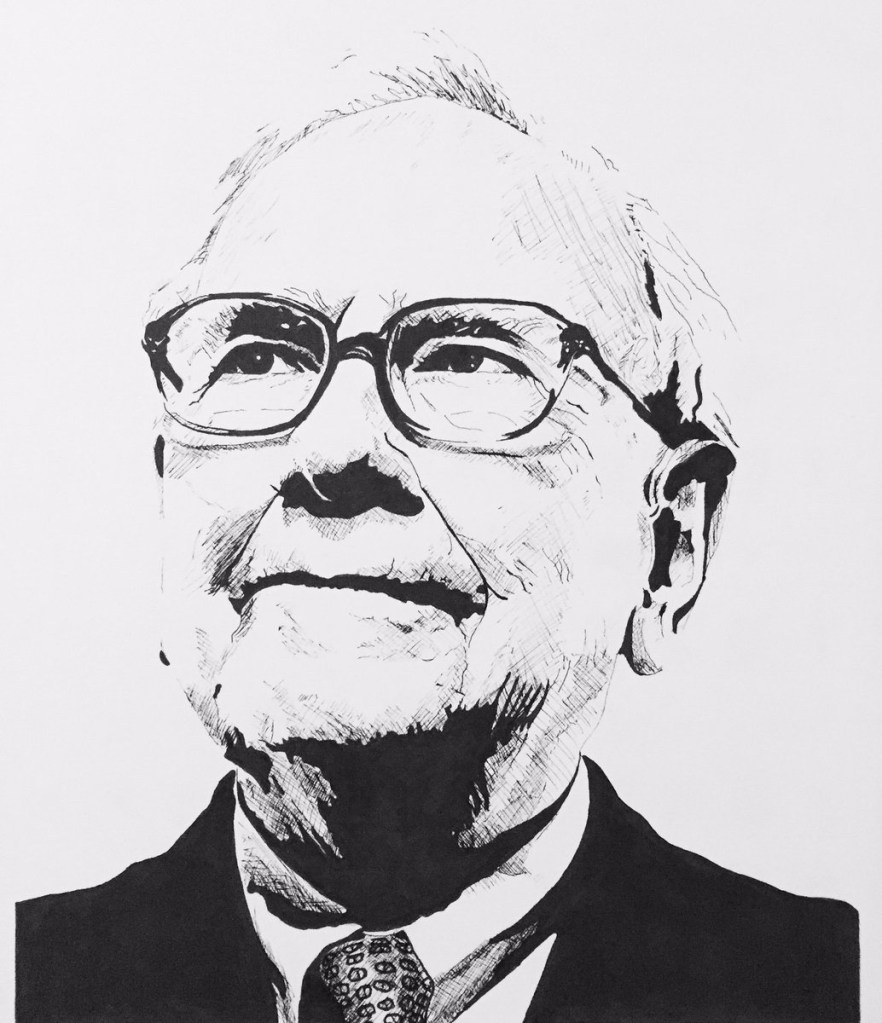
After 30 years of investing , I’ve followed the above 5 mantras of my own … and I can say I’m no “Sage of Omaha” but neither have I ever been a victim of Bernie Madoff or a Rajarathinam.
And I shall say Cheers to that !
And oh! BTW, the very last piece of investment wisdom I’ve given to myself is this one as a tailpiece:
6. Know when to gracefully retire from Investing just as you know when you should be retiring from a job, a career or a company. Invest to live, don’t live to invest.
Yours rationally and humbly ,
Sudarshan Madabushi

Irrational exuberance and rational humility
By R Gopalakrishnan (Ex-director, Tata Sons and vice chairman, Hindustan Unilever.
The disconnect between the fundamentals of several companies and their market valuations has widened over the last year. While this exuberance may well prove to be justified for a few companies, for most, it will be judged to have been thoroughly misplaced.
Disruption is to be welcomed, it is a fantastic event. As history shows, the line between disruption and mania is thin—remember Tulipomania (1636), the Mississippi Scheme (1719), and the South Sea bubble (1720). Nick Leeson’s last few trades brought the mighty Barings Bank down. Gordon Gekko could not imagine his protégé, Bud Fox, double-crossing him. Harshad Mehta betted one trade too far before he got caught out. For my former colleague, the late Dilip Pendse, the world collapsed while trying to cover some trading steps gone wrong.
I worry that the hard-earned savings of middle-class investors could be at risk. The odds are decidedly stacked against such investors if the quality of companies getting listed —and the grey market premiums getting accorded to them —are anything to go by.
I have learnt useful things through my conversations with capital markets cognoscenti. Capital market activities impact Indian citizens, much like cricket does: It irrationally depresses or excites people. Unlike in the case of cricket, however, capital markets can be cruel and punishing if investors don’t check their instincts. Fortunately, there are three simple rules worth following to avoid financial heartburn.
1. Know what you own. These words are so simple, but such is the power of greed, that it can often overcome one’s long-term resolve to follow this rule.
2. Know how much to own. A basic rule of thumb when investing in early-stage initial public offering (IPO) companies is to invest an amount wherein if you lose everything, it will not negatively impact your lifestyle. Unfortunately, most investors at the height of the mania do just the opposite: They invest as large a proportion of their net worth as they can, hoping to maximise their wealth in the shortest period. The reality is that for successful investing, you must be alive, and for that you must first survive.
3. Own your decisions. At the end of IPO manias, postmortems are always done on what the listing company, the investment bankers, the regulator, or even the government could have done to protect small shareholders. The conclusion is always the same: The buck —a euphemism for losses —always stops with the investor, however large or small.
What makes the upcoming IPOs unusual is that many of them defy conventional valuation methodologies. Companies have always been valued on cash generation, successful financial history, and distinctive pricing power. These help earnings growth to be reasonably projected. Several loss-making companies valued at billions of dollars today, however, do not generate any cash flow, don’t have any history of earnings, lack any modicum of pricing power. Yet, miraculously and magically, they are expected to grow revenues exponentially with a hazy route to cash generation. They are also expected to generate a profit at some point in five years and a positive cash flow in 10 years!
The reality is that while a lot has changed over the years, basic valuation techniques have not. As one successful entrepreneur, Alan Mitz, is reported to have said, “Turnover is vanity, profits is sanity, but cash is reality”. This adage must reflect in valuations at some time, and very few companies will live up to expectations.
To appreciate why, count how many companies worth more than a billion dollars have been established over the last 15 years that are profit-making? Contrast this to the number of unicorns out there and ask yourself: Have business fundamentals changed overnight?
What makes investing appear so simple to those outside the profession is the perception that there is a 50 per cent chance of either success or failure on every investment. You wouldn’t say the same thing about other professions such as pilots, surgeons, dentists, engineers, and so on! Although investing appears simple, it is not.
India is a tough place to earn profits. In India@75, there are about 250 listed companies with a market capitalisation of $1 billion or more. Several became profitable only after enduring tribulations and heartbreaks. However, loss-making start-ups are nowadays valued at over $1 billion, initially through private transactions, but lately through public markets. In 2021, India celebrated and welcomed a new unicorn, a $1-billion company, every 10 days! Sheer ecstasy for a few, but will it be delayed pain for many?
This is best reflected in research published by Professor Hendrik Bessembinder of Arizona State University that shows that from 1926 to 2016, over half of all the net wealth created in the US stock market was created by only 90 companies, just 0.3 per cent of all companies. Small investors need to understand the asymmetrical outcomes and the probabilities involved in such payoffs.
The only antidote to irrational exuberance is rational humility combined with a deep sense of self awareness. In times like today, it will help protect one’s wealth, health, and happiness.