A brief recapitulation of everything written so far would be in order before continuing on to recount the history of the decline and fall of the “ubaya-vedaantins” after India gained independence finally from both Mughal and British Rule in 1947.
Earlier in Part-9, it was explained how the commonalities between Tenkalai and Vadakalai historical narratives divided them. And in Part-10 and Part-11 through Part-23, it was explained how the dissonances in the manner how they constructed their narratives also bitterly divided them as a community; and how they each used the very same narratives to create out of thin air, as it were, and by their own rather perverse ingenuity, a big rift — a rift of “sampradaayam” in temple traditions and theological positions — between Sri Rangam and Kanchipuram. It may be remembered the dissonances were classified into three kinds:
A. Timeline
B. Power and Legitimacy
C. Language as a cultural badge …. or baggage.
A. and B. above were dealt with in Part-10 through Part-11 to Part-23.
The dissonance under C. above viz. Language as a cultural barrier the “ubaya-vedaantins” erected between themselves — again with their own hands and inside their own little sectarian universe of thought and attitudes — needs to be examined at some length just to understand the deep politico-cultural impact it has had on the sectarian schism that developed later.
“Dissonance“, as already observed, means “a harsh, discordant combination of sounds or conflicting notes that are not overtones of the major musical note or chord”. In a non-musical context, the word means “a state of disagreement or conflict… a misalignment”. It has been seen through Part-10 through Part-23 that, generally speaking, to a non-partisan and disinterested reader who is only “outside looking in“ into the history of Sri Vaishnavism, and who is trying to understand the genesis of its 500-year-old sectarian conflict, the Tenkalai narrative does come across, more often than not, as being more out of tune and more dissonant than the Vadakalai narrative. The problematic nature of the Tenkalai narrative is that it disturbs the predominant harmonic theme of all “ubaya vedaanta” tradition whose very soul lies in the absolute equivalence of the Dravida Veda to the ageless Veda, the Tamizh language to Sanskrit and the Azhwaars to the even more ancient Rishis.
*************************************
Throughout its imperialistic rule over India of 250+ years, the British Crown systematically encouraged and implemented its fundamental policy of “Divide and Rule” to subjugate its peoples.
The policy was the cornerstone of all British governance and administration. It served them admirably as the most expedient and effective means of keeping India’s vast and diverse societies from uniting into a common rebellious front and helped constantly exploit every little chink or sign of difference found amongst them based upon either caste and creed or ethnicity and language.
The community of “ubaya-vedaantin-s” with its deep spiritual influence over significantly vast numbers of populations in the Tamil country fell victim too to the British mischief of “divide and rule” in the 19th century CE leading up to Indian Independence.
No objective historian to this date has been able to discover the real truth behind the deep mystery of historicity as to when, how and why exactly the Sri Vaishnavas of Tamil country began to cultivate the Tenkalai-Tamizh Vs Vadakalai-Sanskritic sub-cultural binary amongst themselves and also came to distinctly identify themselves with it. In both their narratives, no dates or time-frames are given as to what combination of circumstances and factors led to the Tamizh versus Sanksrit binary that to this day remains as a vague, uneasy but undeniable source of undertowed tension between the southern “tennaachaarya sampradayam” and the northern “vadakalai” “Desika sampradaayam”.
If you asked a staunch Tenkalai about it, he or she might refer to some anecdotal (not very authoritative) sources in the hagiographical accounts of how Sri Srisailesa, the guru of Sri Manavaala Maamuni, enjoined the latter to concentrate on propagating the Sri Vaishnava “rahasya grantha” (esoteric) literature of the Southern lineage of Achaaryas who followed Sri Ramanuja — viz. Paraashara Bhatta, Pillai Lokaacharya, Nanjeeyar, Periavaachaan Pillai, Sri Sailesa and others. Such literature was predominantly exegetical in nature and focused solely on the devotional Bhakthi works of the Azhwaars modelled upon the seminal commentary called “Bhagavath-Vishayam” (or “aaraayira padi“) on Sri Nammaazhwar’s “tiruvoimozhi” (circa. 7th-8th century CE). Such literature is a huge collection of Tamizh and/or Manipravaalam “vyaakhyaanam” popularly known as “eedu“. The unstated implication of the Tenkalai’s position is that this literature in Tamizh and Manipravaalam vernacular is more contemporaneous, more easily accessible and comprehensible to the common populace than the age-old Sanskrit Vedic, Agamic and Smriti-based literature. Therefore, it is such literature which ought to occupy central and front space in the scriptural and liturgical ecosystem of Sri Vaishnavite tradition.
If you were to ask a staunch Vadakalai about it, he or she would most likely reply that he finds no reason for such a binary or exclusionary approach to Sri Vaishnava scripture and liturgy. The votary of “Desika sampradaayam” would say that Sri Vaishnavite literature is “ubaya-vedaantham” which sees both the Azhwar’s Dravida Veda or the “divya prabhadhams” and the Sanskritic Veda (i.e. the whole body of Vedic sruti, smriti and Vedaanta) as holistic scripture rather than as disparate linguistic expression.
In private conversation, the Tenkalai too will most often assume indeed the “politically correct” posture of the Vadakalai “ubaya-vedaantin” but then in actual liturgical practice and traditions inside temples, it is the Tenkalai bias however that will override and overrule the spirit of true “ubaya-vedaantam“. For e.g. in most Tenkalai temples — Sri Rangam, Tirumala, Melkote, Sri Villiputtur, Tiruvellikeni etc. –the chant of Vedas will be relegated to a secondary or inferior status with pride of place accorded only to the chant of the Tamizh Prabhandhams. In the Kanchipuram Sri Varadaraja Perumal Swami temple, the chief cause of all the sectarian conflicts that even today arises between the Tenkalai and Vadakalai sects (please refer to Part-1 and Part-2) can be attributed solely to this liturgical binary choice between the Tamizh Dravida Veda and the Sanskrit “vadamozhi” Veda with each side fighting tooth and nail, in fact, to enforce its own preference in the conduct of all temple rites and rituals…. and willing to go to even the Courts of the land to have its own way enforced.
***********************************
From where did the “ubaya-vedaantins” first come to learn about the Tamizh versus Sanskrit linguistic divide?
How did such a divide come to influence their theological thinking?
How did such a toxic idea infiltrate into the temple-traditions and practices of the Sri Vaishavas?
Who amongst the “ubaya-vedaantins” — which Achaarya, yati or “sri kaaryam” — was responsible for introducing such insidious notions of narrow identity into the collective consciousness of the community?
There are simply no answers to be found for such questions in Sri Vaishnava narratives or accounts of their community history.
Neither the Tenkalai or Vadakalai of today can substantiate with historical fact or truth as to when the antipathy between Tamizh and Sanskrit language arose inside the Sri Vaishnava temples. At best, there is only hearsay, apocrypha or pure hagiographical speculation that can be cited to support the theory that the linguistic conflict between the “tennaachaaryas” and “desika sampradaayin-s” arose as early as around the 15th century CE in the time of Sri Sailesa or Sri Manavaalamuni.
It is beyond doubt that under the Vijayanagar Kings there was no recognition given at all to the Tamil Vs Sanskrit construct. The Vijayanagar Kings were devoted to both Sanskrit and vernacular languages such as Tamizh and Telugu. The book Amukta Malyada, composed in Telugu by Krishna Devaraya was inspired by the Tamizh hymn of Andaal, the poetess of Sri Villiputtur, who sang the Tamizh Tiruppaavai. Sukanya Badri, a historian writes: “While unravelling the legend of Andal, the king in his work also talks about the principles of an ideal political administration. The king expresses his ideas and observations through the descriptions of cities, towns, villages, people, dress, dishes, and elegant life. One can imagine vividly the richness of life in those days, even if the king had exercised his poetic license while writing! The masterpiece on the life of a Tamil Vaishnavite saint is even more commendable since Krishnadeva Raya was neither closely associated with any Tamil poet nor a known writer in Telugu language. That Amukta Malyada crossed all boundaries and even centuries later occupies the exalted position of an acclaimed epic only highlights the capabilities of the spiritual and learned king who wrote it!”
There is also either only complete absence of evidence or no more than scanty historical evidence to show that it was during Muslim Rule in India — say between the 16th and 18th century CE — that the Tamizh versus Sanskrit tussle began amongst the “ubaya-vedaantins”. The Muslim rulers did not really interfere too much in the Hindu religious institutions, establishment or religious customs. They maintained arms length distance and were simply content to loot and plunder temple wealth.
No serious scholar of history within the Sri Vaishnava community has ever researched deeply into the true historicity of this strange linguistic bias that grew steadily throughout the 19th and 20th centuries CE — post-Muslim Rule — and has become today an inexplicable bane of the two sects ever since India gained political independence.
On my own part, however, I offer an unverified theory of history to claim that the binary of Tamizh versus Sanskrit amongst the “ubaya-vedaantins” was nothing but an adventitious offshoot of the Christian missionary and evangelical movement in British India which was actively aided and abetted by the Western academia devoted to study of orientalist and Indology during the late 18th century CE and all of the 19th century CE.
It is not my intention here to offer any original research findings of mine in support of my theory…. That would be over-ambitious of me. It is, of course, my fervent wish that some young historian in future might take up the task and be able to provide very badly needed enlightenment upon the subject. My objective here is merely to try and connect a few dots in 18th and 19th century history of India when under British Rule in the erstwhile Madras Governorate, Christian missionary activity — aided by the then academic discipline called Indology or Indian Orientalist study — deliberately sought to sow the seeds of the nefarious Tamizh versus Sanskrit divide right across Tamil society with a view to subjugate, fragment it and rule over it. One might wish to reject my thesis as unsubstantiated but nonethless I hold it to be not altogether far-fetched or untenable when I venture to say that it was during this period of the British in fact that the Sri Vaishnavas too might have got infected by the toxicity of the Christian evangelistic and academic idea that Tamizh and Sanskrit represented two separate ethnological and cultural civilizations in the Tamil country.
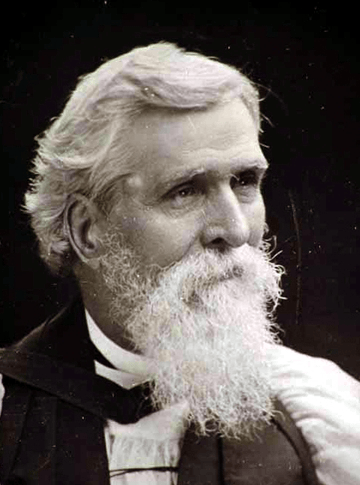
My theory is based on some general readings of mine of the works of Bishop Robert Caldlwell whose very brief biography is given below just to provide broad perspective for my thesis:
QUOTE:
“Bishop Robert Caldwell (1814 -1891) was an orientalist who pioneered the study of the Dravidian languages with his influential work “Comparative Grammar of Dravidian Languages” (1856) . Robert Caldwell was born on May 7, 1814 to Scottish parents. Initially self-taught and deeply religious, young Caldwell graduated from the university of Glasgow and was fascinated by the comparative study of languages. At 24, Caldwell arrived in Madras on January 8, 1838 as a missionary of the London Missionary Society and later joined the Society for the Propagation of the Gospel Mission (SPG). Caldwell realized that he had to be proficient in Tamil to preach to the masses and he began a systematic study of the language.
“He proposed that the South Indian languages of Telugu, Tamil, Malayalam, and Kannada formed a separate language family, which he named the Dravidian languages, affirming their antiquity and literary history, and their independence from Sanskrit and the Indo-Aryan languages. He speculated that speakers of the proto-Dravidian language entered India from the northwest. Thomas Trautmann writes of this book: “Caldwell showed the full extent of the Dravidian family, and demonstrated the relations among the languages in a richness of detail that has made it a classic work, still in print. The real significance of what Caldwell accomplished was not the first conception of the Dravidian family, but the consolidation of the proof.”
(to be continued)
Sudarshan Madabushi