I am not an economist although as a Chartered Accountant I believe I do have have good understanding and firm professional grip on many of the concepts and theories of that pseudo-science . In my humble opinion, therefore, I say that all this hyped-up debate we see in the media about the philosophical distinction between Freebies and Welfare — which SC , lawyers , ex-IAS bureaucrats, journalists and motley intellectuals seem so agitated about today — is really a non-issue from a common-sensical standpoint. It is truly much ado about nothing.
Anyone with a decent, working knowledge of economic theory will tell you that the difference between Welfare and Freebie can be foundin “mens-rea” …. i.e. the real intention with which a politician or a political party holds out a promise of some material and wholly gratuitous benefit — or actually doles it out — to the public from out of the State exchequer.
If the intention of a political party is genuinely to provide succour to or otherwise ameliorate public grievance, then it is indeed Welfare.
If the intention, on the other hand, is really to influence public behaviour so as to gain votes in an election , then it is freebie.
Who is to determine mens-rea ?
I would say it ought to be The Election Commission of India. Because it is the ECI that in my opinion is the best judge in the whole country that can so well and easily distinguish the true nature of the beasts in the electoral jungle called Politicians and Political Parties from those who are genuinely motivated by Welfarism.
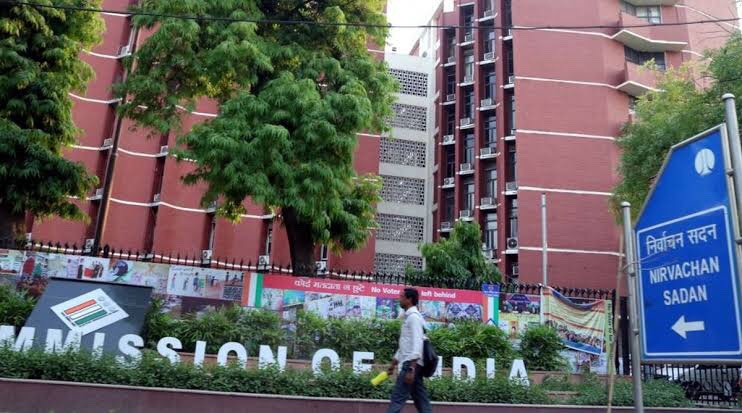
The promise to provide a genuine benefit or service to the public, if it were to be motivated or driven by anything other than the pure intention of welfare, then it must fall squarely within the definition of a freebie…. and would hence qualify to be called unlawful gratification, and which in fact, is tantamount to cynically exploiting the moral ambivalence or naïveté of the public at large.
How can the ECI tell the difference?
From a basic knowledge of Economic theory of human behaviour, of course. It’s not really any great rocket science.
My own knowledge of basic Economics tells me the following:
One of the characteristics of human wants is that certain wants are more intense whereas other wants are less intense.
1. Necessaries or Necessities :
Those wants which are most essential for the survival of human beings are called necessaries. The existence of human life becomes difficult without their satisfaction. They are further classified into:
(i) Necessaries of Life:
Necessaries of life or necessaries of existence are those goods of consumption without which a man cannot live or exist. Simple food, clothing and shelter are considered as the necessaries of life.
(ii) Necessaries of Efficiency:
Those goods which are essential to maintain or increase our efficiency or energy and ability to work are called the necessaries of efficiency. No doubt, we can live without them but their long absence may decrease our efficiency. Rich diet like milk, fruit, vegetable, eggs, etc. are included in the necessaries of efficiency. Table and chair are necessaries of efficiency for a student or for a person doing desk job.
(iii) Conventional Necessaries:
Conventional necessaries are those necessaries which we are forced to use either because of social customs or our society expects us to do so. For example, dowry and entertaining relatives at marriages, etc. are conventional necessaries.
2. Comforts:
In comforts are included those goods which make our lives comfortable or easy or their use provides facilities in life. After satisfying our wants for necessaries of life, whatever money remains with us, is spent on comforts”. People use things of comfort to maintain or increase efficiency. Use of a fan in summer and a room heater in winter make life comfortable.
WE MUST MAKE THE DIFFERENCE BETWEEN A ‘COMFORT’ AND A ‘NECESSARY OF EFFICIENCY’ CLEAR. THE BENEFIT DERIVED FROM A COMFORT IS LESS THAN THE MONEY SPENT ON IT, WHILE THE BENEFIT FROM A NECESSARY OF EFFICIENCY “IS MUCH MORE AS COMPARED TO THE MONEY SPENT ON IT”. FOR EXAMPLE, AN ELECTRIC FAN FOR A COLLEGE STUDENT IS A NECESSARY OF EFFICIENCY, WHEREAS FOR A PERSON SLEEPING IN SUMMER, IT IS A COMFORT.
3. Luxuries:
Luxuries are those things the satisfaction of which do not increase our efficiency, but simply gives us pleasure. According to Chapman, “Luxuries are things which when consumed do not appreciably add to “and may even detract a person’s efficiency.” To Ely, “Luxuries in its ordinary sense means anything that satisfies a superfluous want.” Drinking, costly furniture, use of prestige goods at home, luxurious car, electric cookers, automatic washing machines are a few examples of luxuries.
Luxuries do not increase our efficiency to work but sometimes they use may decrease efficiency, e.g., no work can be done efficiently and accurately after drinking. Luxuries can be further subdivided into:
(i) Harmful Luxuries:
HARMFUL LUXURIES ARE THOSE GOODS THE USE OF WHICH IS HARMFUL FOR MAN. THEIR USE DECREASES EFFICIENCY OR DESTROYS HEALTH. FOR EXAMPLE, DRINKING AND SMOKING ETC. ARE HARMFUL LUXURIES.
(ii) Harmless Luxuries:
Harmless luxuries are those goods the use of which neither decreases efficiency nor destroy the health “of their consumers. Jewellery, air-conditioners, etc. are harmless luxuries.
***********
Now, given the clear-cut categorisation above of peoples needs, I wish the Election Commission makes a clear recommendation to both the Govt. and the Supreme Court as follows:
Anything that political parties promise to provide , or actually do provide, before an election takes place, and which does not fall under the category of “Necessities of life” and “Necessities of efficiency” must be regarded not as Welfare but as a Freebie and hence held unlawful.
A law thus must be enacted and enforced to ban all Freebie distribution, or even a promise to distribute it, by any political party — not only before elections but at all times.
Good Economics is almost always also Good Politics. Good politics is quite often bad Economics.
*******
Now, some people may not be dismissive of my idea but can be very sceptical about it. That’s because they may feel that if the ECI was going to be made (under a special enactment of law) the arbiter of what is Welfare and what is freebie , then that might open the floodgates of litigation by the entire political class. And that the ECI’s impartiality or integrity will be frequently slurred upon in the courts.
Such concerns are not unfounded , I do grant that. But then I think mistrust of the ECI’s independence has always been a given in the Indian political landscape. We all witnessed it in the case of EVMs not so long ago. But the ECI as a robust institution can very well hold its own, I think, in the face of such periodic, scurrilous onslaughts by the political classes .
More importantly, what should not be missed is my point that is implied in my suggestion of granting a very specific role for the ECI as arbiter deciding all cases of Freebies Vs Welfarism. It is that the envisaged role is predicated upon making the ECI’s decisions non-justifiable under a special provision which, conceivably, could be introduced in Article 324 of the Constitution, as well as in the relevant and applicable sections of the Representation of Peoples Act, and in the Electoral Code of Conduct.
Under such provision of non-justifiability regarding this matter, the ECI’s constitutional bite can hopefully be given some teeth . Politicians and political parties will be deterred from playing games with the electorate with blandishments of freebies disguised as welfare measures.
Whether the political classes (or the rambunctious cattle) in Parliament would ever move to enact such a radical provision of non-justifiability under the law is a different matter altogether. If they do , then fine … our Parliamentarians would deserve credit for being statesmen. If they don’t, then that would only expose the hypocrisy and humbug of the entire political classes, and those in the judiciary too, who go around giving pious sermons on “empowering and strengthening constitutional institutions” in India.
Sudarshan Madabushi