“AYODHYA” — The city of Faith and Discord
4 AM on the morning of 18th Novermber 2023, we set by car on the road from Varanasi to the city of Ayodhya, 220 Kms away… a nearly 5 hours drive by car.
The pre-dawn light was wintry, dark and very cold. On the way, the roads rights upto Jaunpur were often enveloped in thick, billowing fog, making visibility for driving through seem a little treacherous….
I sat in the front seat with the 4 other members of my family all at the back, still groggy with morning stupor and in varying states of drowsiness, nodding off and on to sleep every now and then. As the car sped through the dense white fog, I who was wide awake, just couldn’t help a slight feeling of nerves. To keep my mind steady and calm, I pulled out my prayer-book, turned to the “stotra” I usually turn to in such situations and began reciting the “Raghuveera Gadyam” (Swami Vedanta Desika’s Sanskrit “Sri Mahaaveera Vaibhavam“, a quasi-poetic, quasi-prosaic re-telling of the heroic exploits of Sri Rama in Valmiki Ramayana).
By the time, the car reached Sultanpur on the way, the morning sun began to shine bright in a blue, cloudless sky above us, the fog dissipated away and a clear day welcomed us as we finally entered the outskirts of Ayodhya!
***************
For me and for wife, this was our very firt visit to the holy city of Ayodhya. It had been a long unfulfilled wish of mine for over 50+ years in my life to make a pilgrimage to the birthplace of Sri Rama, the hero of the story of Ramayana — the very first itihaasa story I had ever heard in life and which througout my life thereafter, through the years as a schoolboy, a young man and then in my middle-age, had always held a special, unfading fascination for me. As we drove into the outer roads of Ayodhya towards the River Sarayu Ghats, I felt extremely excited — almost like a schoolboy on a merry excursion to explore a new city in a new country. The city of Ayodhya was one of the oldest in the world… It was also the greatest and grandest of its times and a magnficent metropolis even by modern standards, in fact!

******************
As the car wound its way slowly into the city of Ayodhya, there were a police-checkposts all along the way. We were told that with the upcoming January 22nd 2024 “mahapratishta“, the grand inauguration scheduled for the new temple on Ram Janma Bhoomi, the birthplace of Sri Rama, police and paramilitary security had been tightened everywhere to regulate, monitor and surveille crowd ingress and egress into and out of the city. It took more than half hour to wend and weave our way to the banks of the River Sarayu.
My excitement over my very first ever visit to Ayodhya was aroused in my mind by the many fleeting and flashing impressions about its ancient and troubled history I had gathered over a lifetime of reading and re-reading the Ramayana, transcribing the original Valmiki Ramayana, enjoying the English translations of Rajaji, Rt. Hon’ble Srinivasa Sastry and N.Raghunathan. I had also back in the 1990s, like millions of people all over India, avidly followed the TV series on Ramayana produced by Ramanand Sagar. I had also studied parts of Kamban’s magnificent Tamil version. I had read too the alternative (even controversial) Ramayana re-tellings of many other modern authors — Aubrey Menen, A.K.Ramanujam, Ami Ganatra and others.
Scenes also flooded my mind as they came in from my past recollections as a young man when I had watched the Bharatha Natyam dance-drama renderings of the Ramayana from Rukmini Devi’s Kalakshetra stage productions. My mind also recalled memorable bits and pieces from the brilliant orations on the Ramayana that I had witnessed over the years at Tamizh Patti manram delivered by stalwart scholars as the (late) Justice Ismail, Keeran and others …. as well as the eloquent and edifying Tamizh “upannyaasams” and “kaalapshepams” on Ramayana I had once long ago heard delivered by great religious scholars and Acharyas such as Srimadh Sri Tirukudanthai Andavan (Sri Kannan Swami), Sri Sengalipuram Anantharama Deekshitar, Sri Kripananda Variyar, Sri Mukkur Lakshminarasimha Chariar, Sri Krishna Premi, Sri B. Sundara Kumar and others…
The account in the Ramayana which had always seized my imagination and filled it with fascination for the times in the past which went much longer before than that of even Sri Rama was the list of his ancestors in the long Ikshvaaku family lineage (vamshaavali). It was with a furtive and rather childishly petty sense of pride that I also noted that the ancestor who preceded Sri Rama eleven generations ahead of him was one named “Sudarshan“!
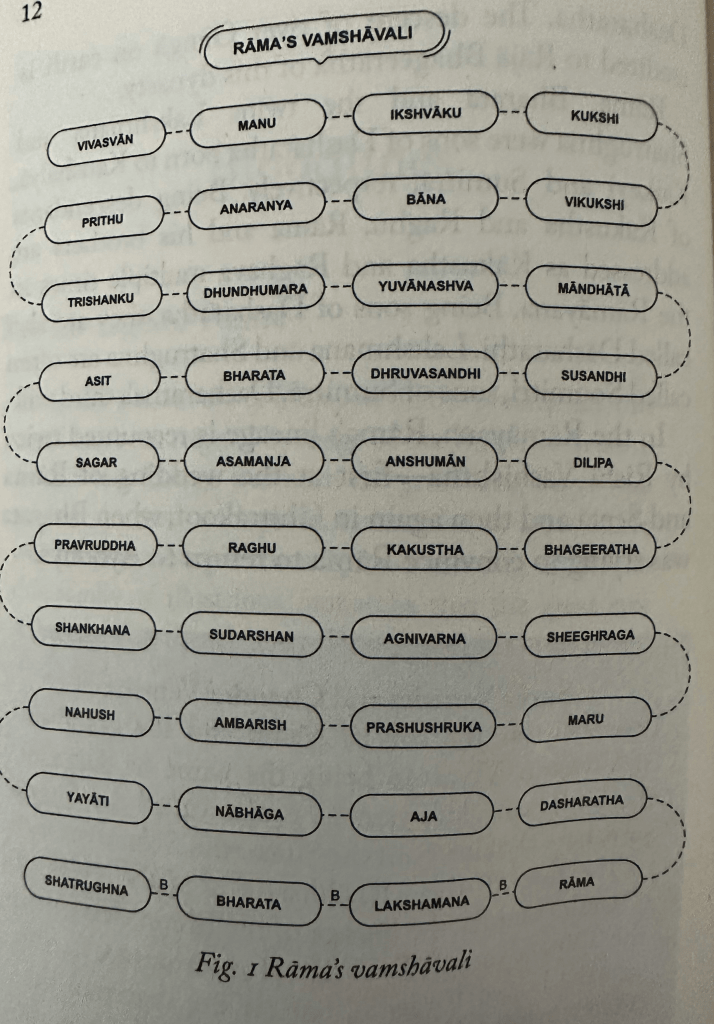
Snippets from all such above impressions about the Ramayana and Ayodhya were buzzing around in a whirligig inside my excited mind as our car honked and lurched its way through the detours and bypass roads meandering away into the heart of Ayodhya city.
**************
That winter morning as we drove into the city, it was not only the past history of Ayodhya— ‘itihaasic‘, literary and legendary — that was flitting in and out of mind in so many blurred images as in a movie montage. There were snatches of a few vivid visions from the modern 500-year old contemporary political history of Ayodhya too which trickled in and out of my mind…
In 2018, my son gifted me a book on my birthday. It boasted about being the “first, comprehensive biography” of Ayodhya.
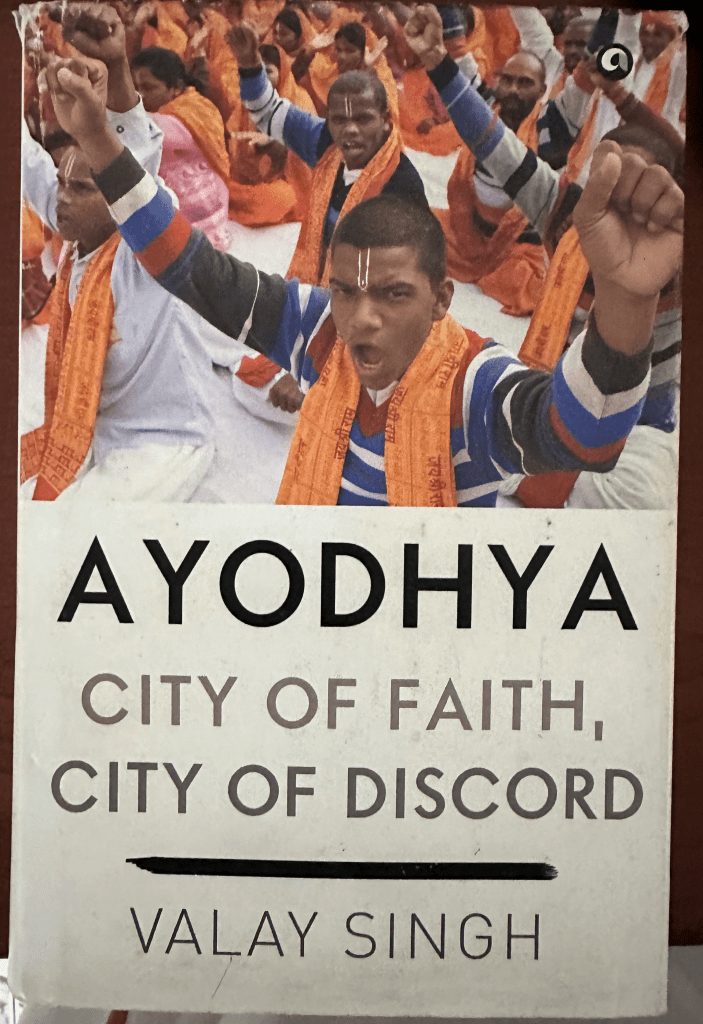
The book was deeply researched albeit not without the inevitable traces of historian bias creeping in here and there. I read the entire book and was fascinated to learn about the extremely chequered life-history of the city of Ayodhya — the one it had endured through 5 centuries of the last millennium, all through the Islamic, British Colonial and Post-Independence eras of Indian History. As the author of the book wrote:
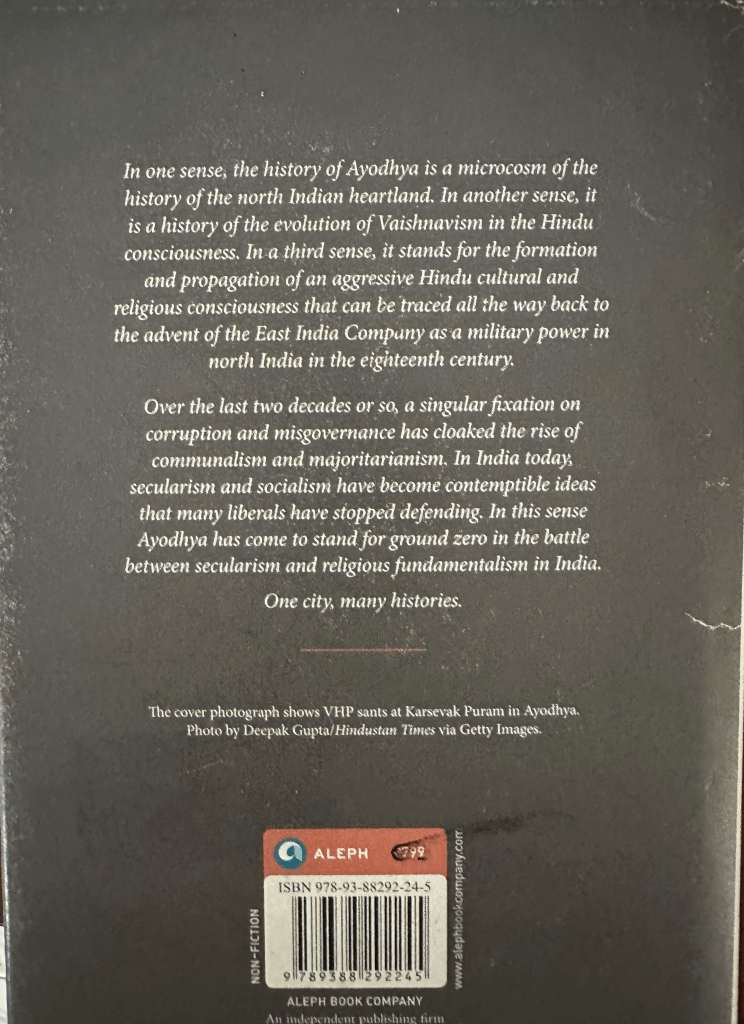
Many chapters indeed are there in the historical accounts of Ayodhya that record many sad, unhappy, violent, regrettable and disputatious events and incidents. They all tell a tale of political intrigue and machinations, war and strife…. It all began with Queen Kaikeyi in the palace of the Ikshavakus. Then came the era when Saket and the Buddha eclipsed the city of Ayodhya. The Gupta Empire came then and revived Ayodhya. Then came the Hunas and King Harsha of Kannauj… Then arrived the dynasties of the Gurjara-Pratiharas followed by the Gahadvalas….
Right from the times of Queen Kaikeyi in the ‘treta-yuga‘ until the year 2020 CE in the Age of Kali, there have always been nefarious plots and conspiracies afoot and attmpted coup d’etats of all sorts to unseat or dethrone Sri Rama from his capital city of Ayodhya…
The Gahadavala dynasty (Gāhaḍavālas) also Gahadavalas of Kannauj was a Rajput dynasty that ruled parts of the present-day Indian states of Uttar Pradesh and Bihar, during 11th and 12th centuries. Their capital was located at Banaras (now Varanasi) and for a brief period, they also controlled Kannauj. Chandradeva, the first monarch of the dynasty, established a sovereign kingdom sometime before 1090 CE.
In 1992, after the Babri Masjid at Ayodhya was partly destroyed in a riot, the agitating kar sevaks found a stone inscription buried beneath the earth. “According that inscription, comprising twenty lines, the Gahadvala king Govinda Chandra repelled western (Graeco-Sassanian-Turkic Islamic) intruders and built a magnificent temple dedicated to Vishnu-Hari at the same spot in Ayodhya where later the Babri Masjid was built”.
The post-Babri Masjid history of Ayodhya is too well known and still remains fresh in the contemporary memory of all India. Inside my mind that morning as our car neared the River Sarayu, my own old recollections of 1992 — and all the political events thereafter — came flooding back in a flurry of so many blurred images and bioscopic visual-bytes. I remembered the climax of it all when the final judgement in the Ayodhya dispute was declared by the Supreme Court of India on 9 November 2019.The Supreme Court ordered the disputed land (2.77 acres) to be handed over to a trust (to be created by the Government of India) to build the Ram Janmabhoomi temple!
And there I was at last… after so many years of wating… at the exact spot in Ayodhya where Sri Rama was born! I was now an eye-witness — one among a billion and more Ram-bhakths of the world — who was finally seeing his wish fulfilled: to stand on the sacred soil of Ayodhya, the Rama Janma Sthaan, and cry aloud “Jai Shri Raam”!
********************
It was so appropriate that our very first call in the city of Ayodhya was the ghat on the River Sarayu!
Where we landed was .. who knows? … the same spot perhaps on which Rama as a lad played and frolicked with his other princelings and siblings… It was there that they went perhaps swimming, fishing… river-rafting too? It was there that Rama’s father, King Dasaratha, perhaps performed great many Vedic sacrifices, including the Ashwamedha Yagnya? It was on the same banks of the River Sarayu where perhaps Bharatha had sat, wept and grieved over his separation from Rama, languishing in exile for 14 long years…?
One fact that was very certain though was this: At the end of his avatar on earth, it was from the banks of the River Sarayu that Sri Rama ascended into his abode of Vaikuntam in the heavens, taking along with him every denizen of Ayodhya, human, animal and plant….
That morning in Ayodhya when my family and I first set foot upon the sandy banks of the Sarayu, momentarily, my mind went back to the scene described in the last “sarga” in the “uttara Khandam” of Valmiki Ramayana wherein the poet describes with truly awesome, surreal vividness, the memorable scene of the ascent of all Ayodhyians with Sri Rama to Sri Vaikuntam. That scene from the Uttara Khandam (English translation from N.Raghunathan’s work) is worth reproducing here below :
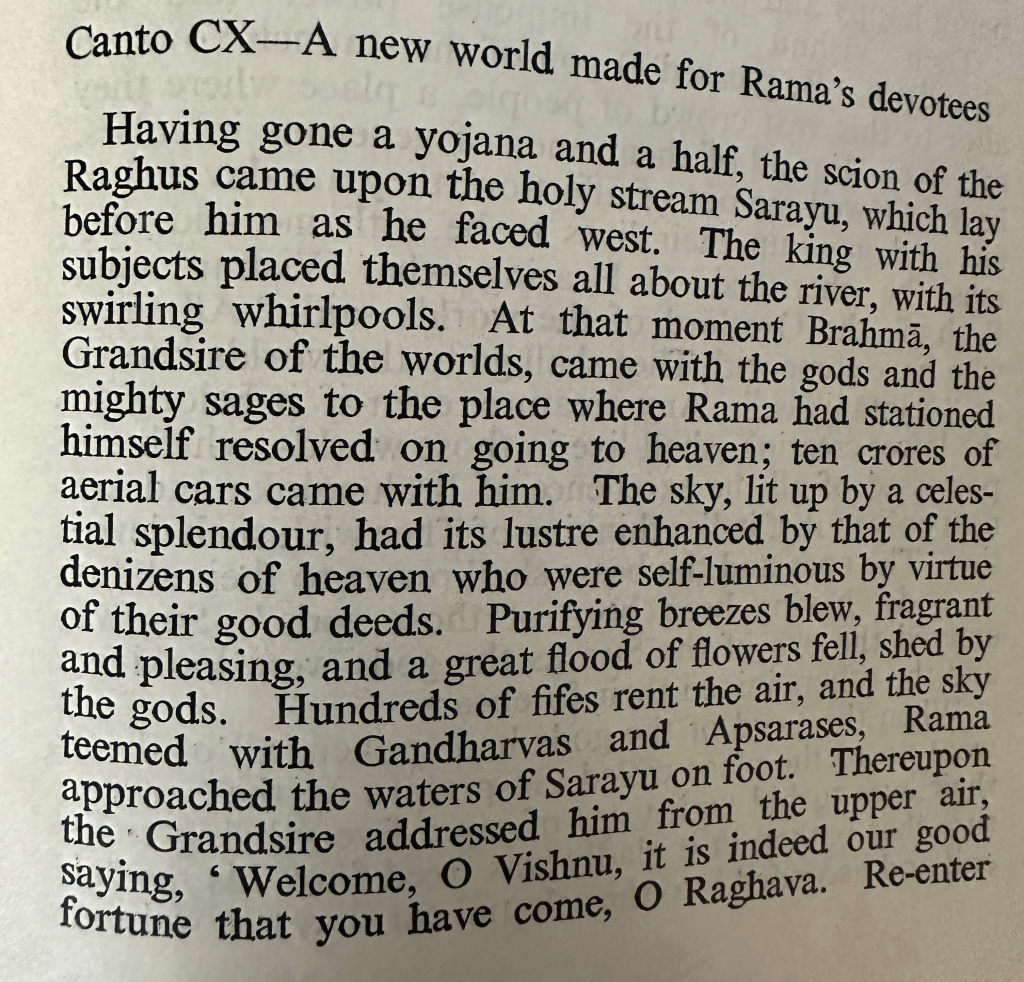
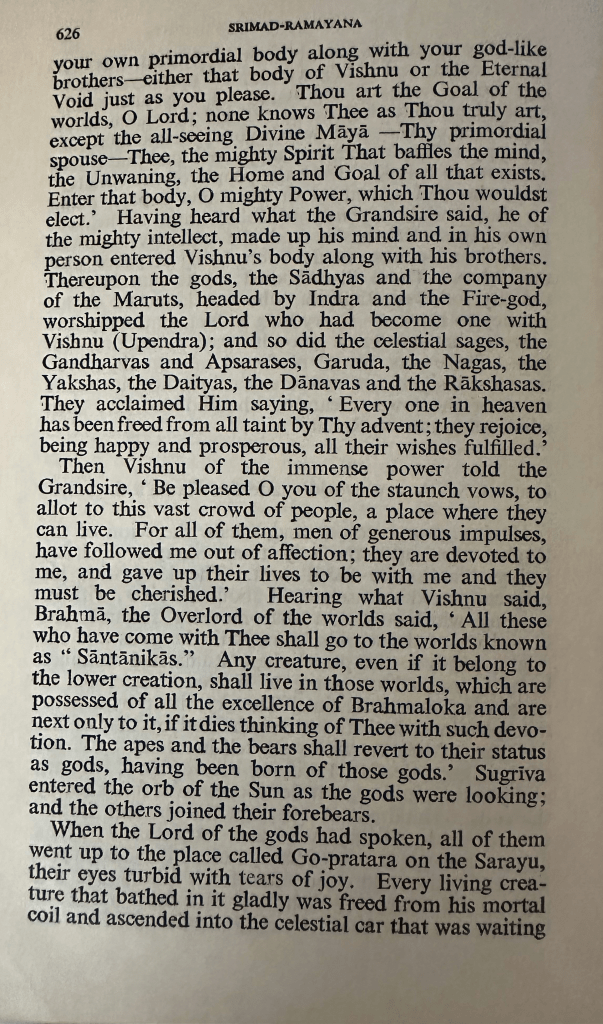
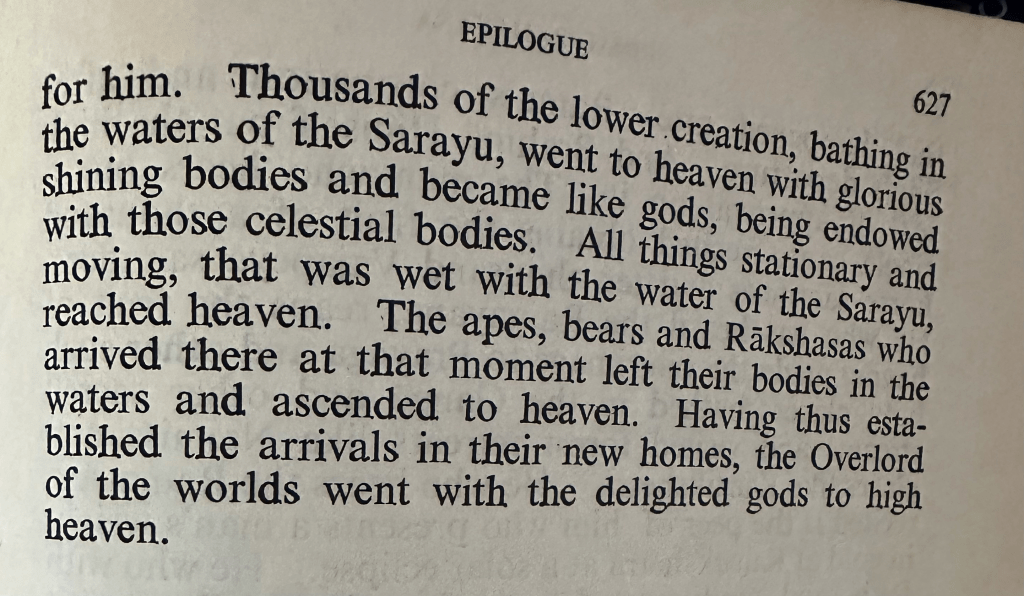
The mystical scene described above was captured photographically in just one memorable line at the very end of Swami Vedanta Desikan’s Raghuveera Gadyam :
“sākēta janapada jani dhanika jaṅgama taditara jantu jāta divya gati dāna darśita nitya nissīma vaibhava,
bhava tapana tāpita bhaktajana bhadrārāma,
śrī rāmabhadra, namastē punastē namaḥ ॥”
O Rama! You who earned eternal famed for giving salvation to all people of Ayodhya, animals and every living being there!
****************
Before setting out on our pilgrimage of Kashi, Prayag, Gaya, I had shared with my family members a video-clip of a short description given by the popular Sri Vaishnavite “upannyaaskar“, Sri Velukkudi Krishnan about some of the most important places that one must visit in Ayodhya. We decided then that given we had no more than a day at our disposal to complete our tour of Ayodhya, we would take a cue from Sri Velukkudi and try and cover most of the spots he had recommended. Our local guide in Ayodhya helped us most efficiently to succeed:
But first I had to complete my “snaanam” in the sacred River Sarayu — the “moksha nadi” and perform the “praatah sandhyaavandanam” rite.
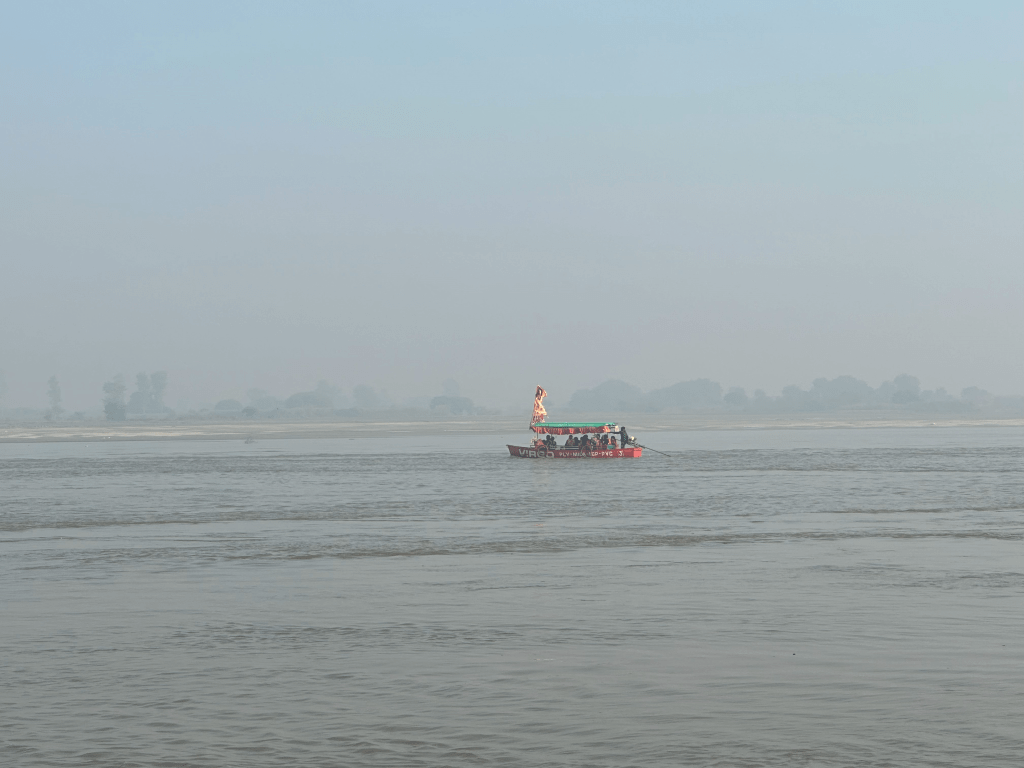
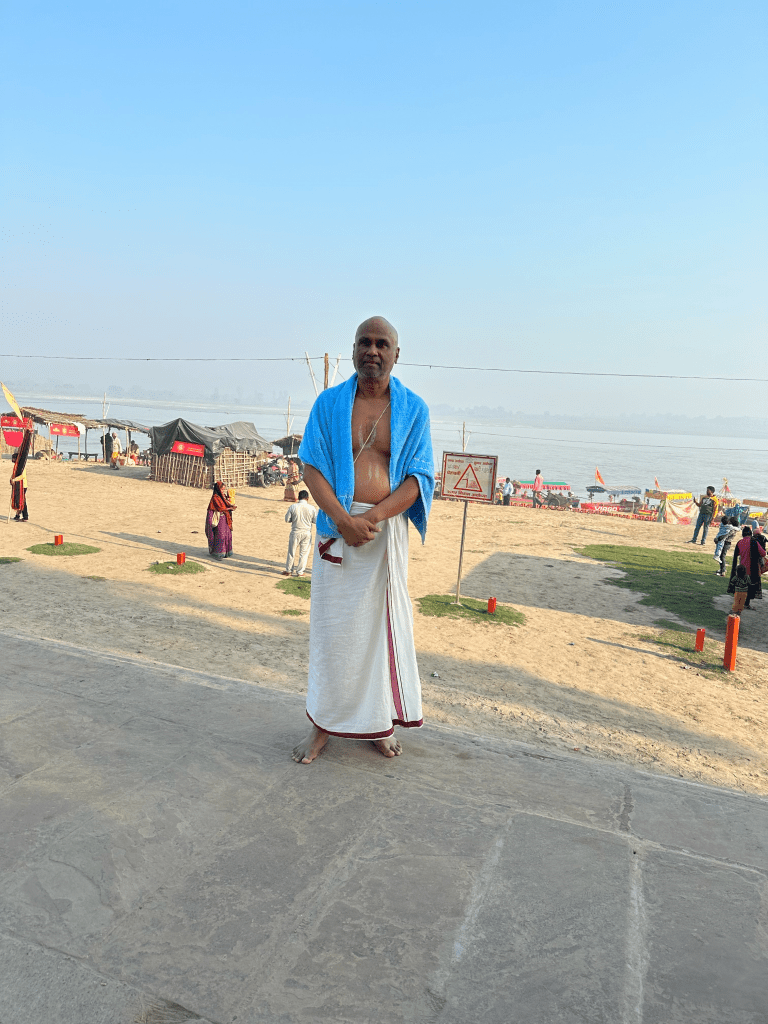
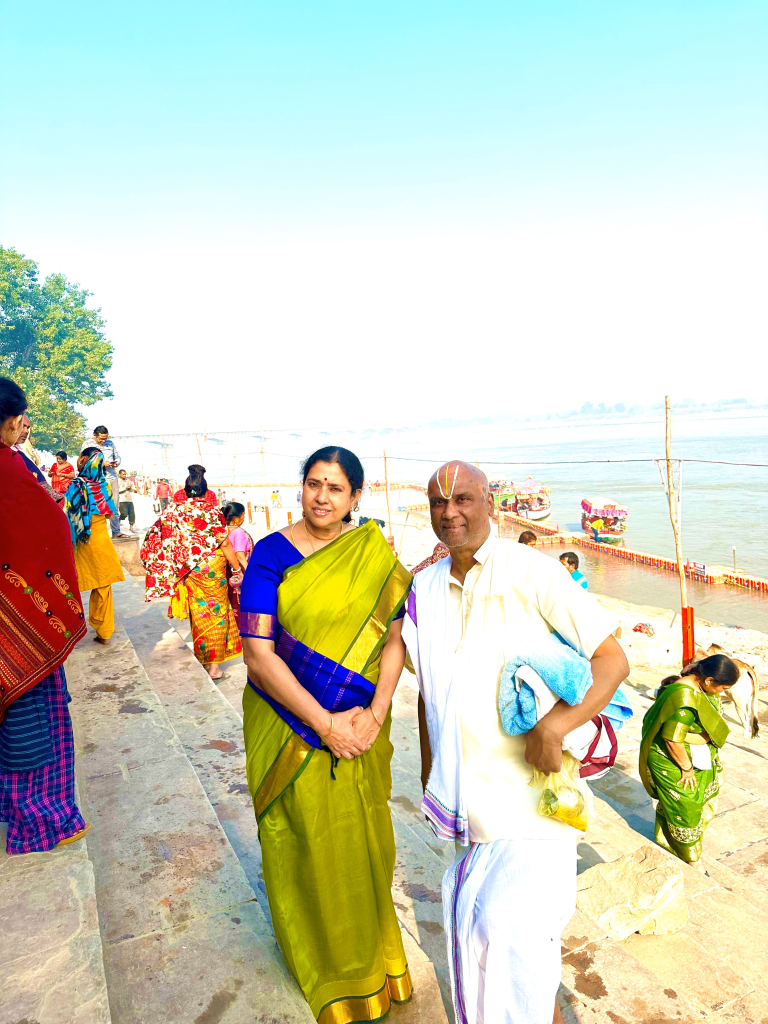
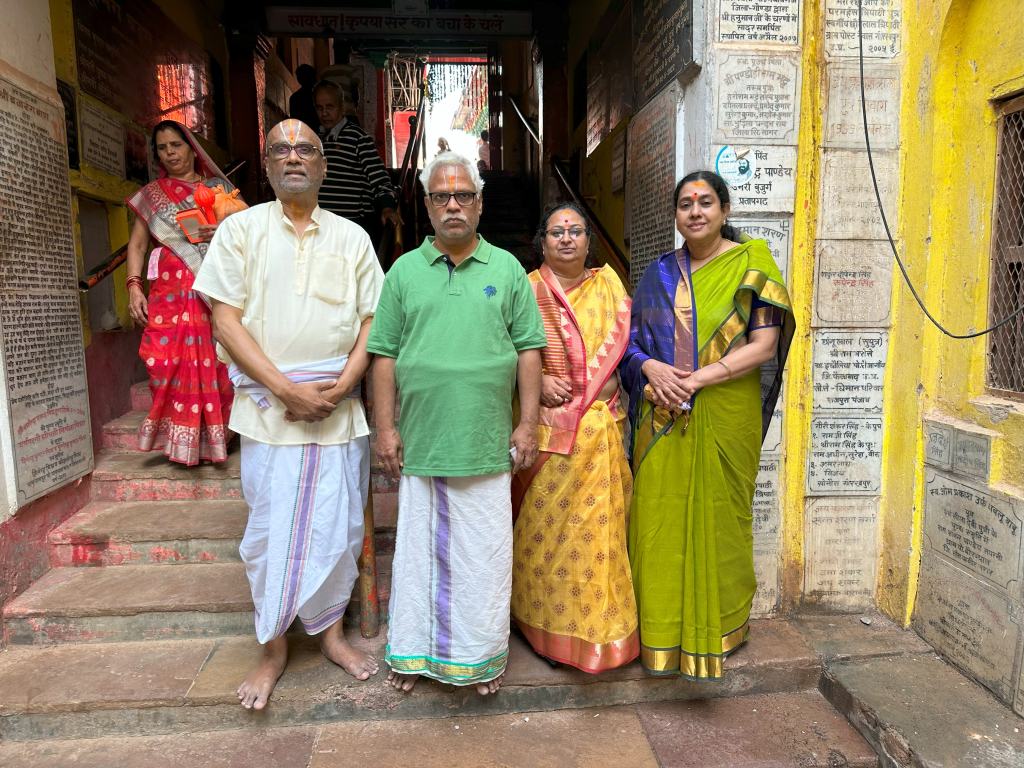
From the banks of the Sarayu, after my “snaanam”, my family and I went into the city of Ayodhya and followed the Velukkudi Krishnan trail to visit the following most important shrines:
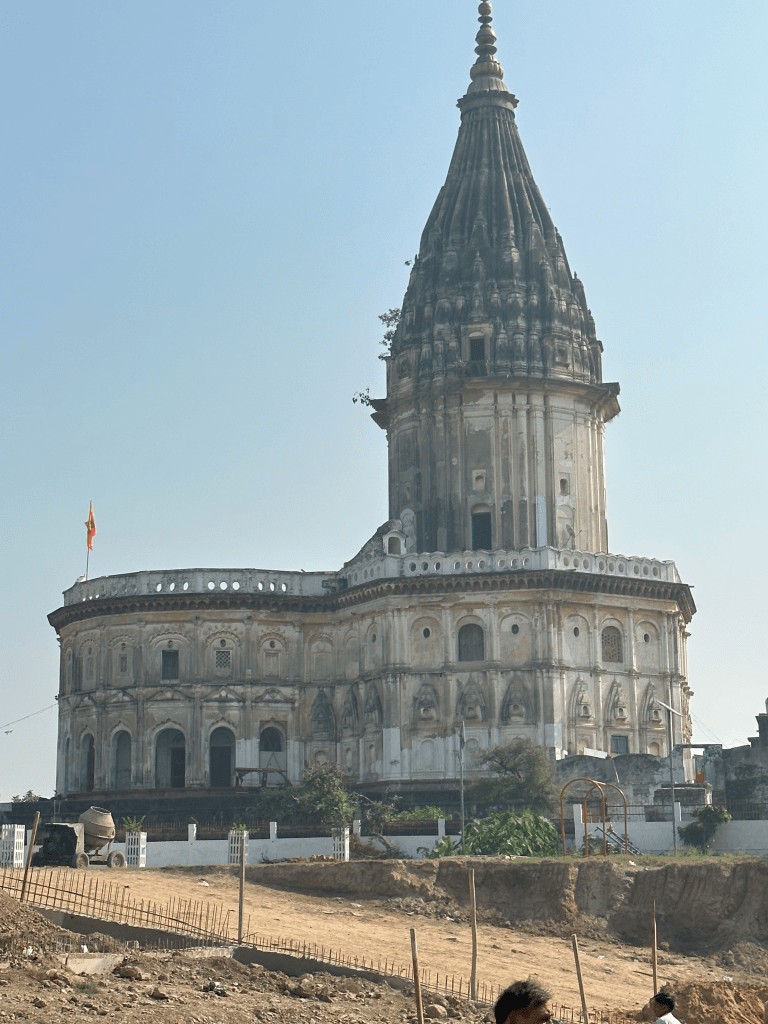
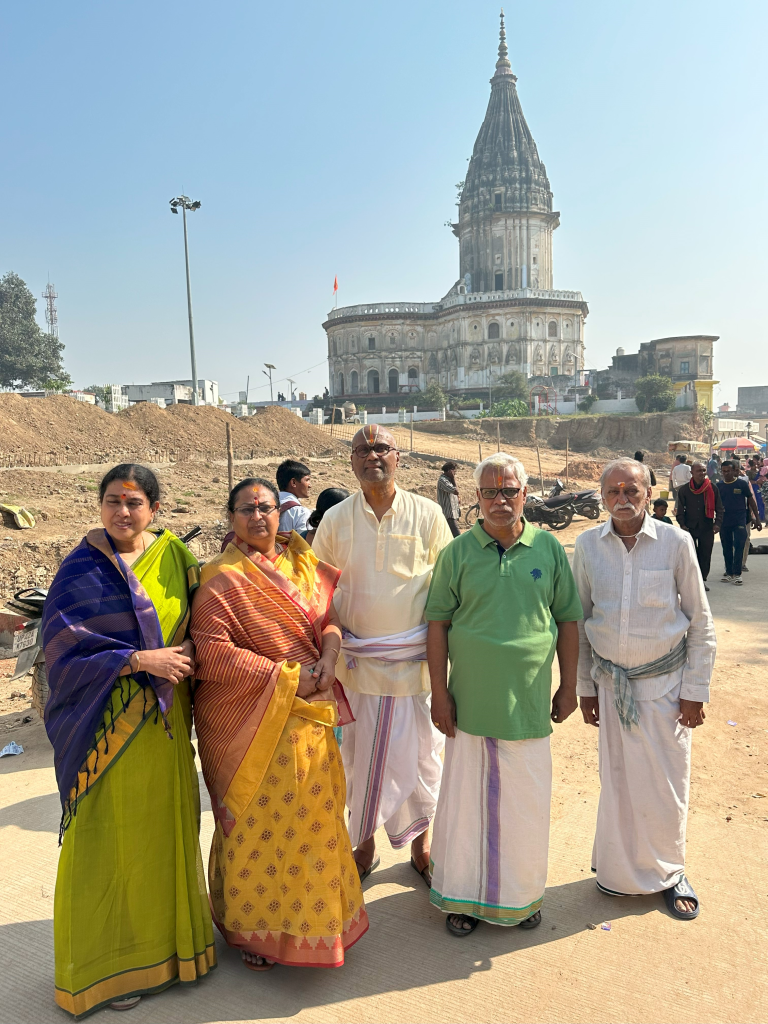
Hanuman Garhi; Ayodhya Dwaara; Kanak Mahal; Dasarath Mahal; Rama Janma Bhoomi; Sita ka Rasoi; and Valmiki Bhavan … in that order and as they appear in the videos and photos below:




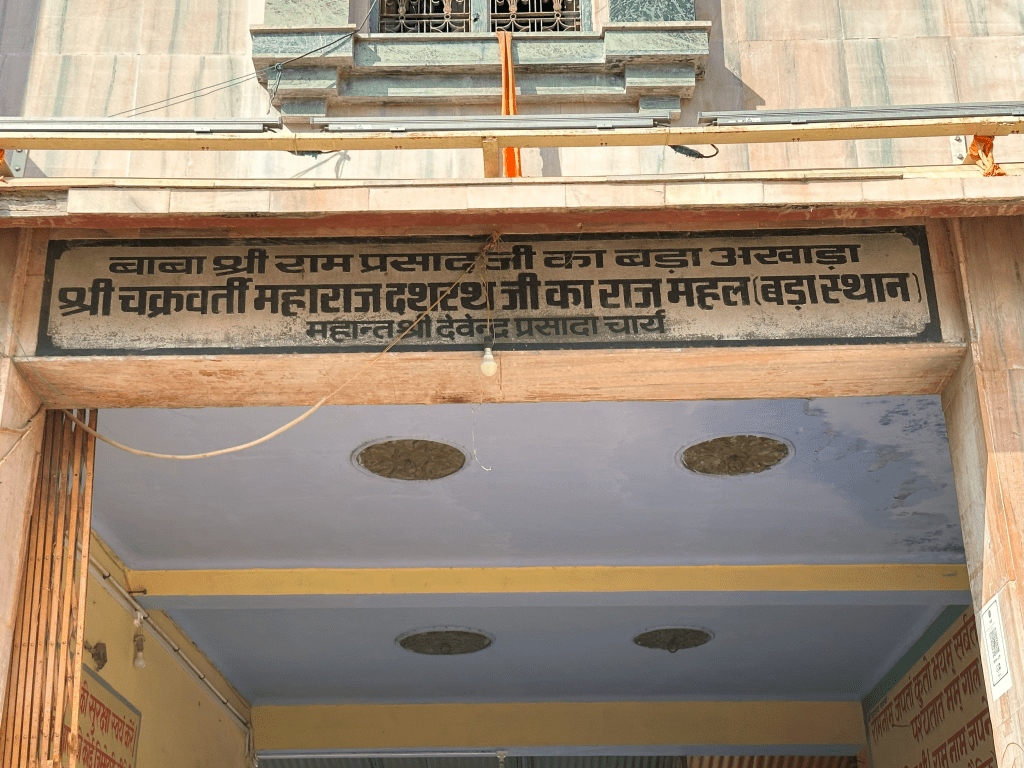
*****************
When we walked for about half a kilometre towards the Ram Janma Sthaan, we were told that the area had been cordoned off by the police since the grand new Ram Janma Bhoomi Mandir was under construction and work was being carried out in full swing 24/7 to meet the auspicious deadline of 22 January 2024 when the nation would witness the temple “maha samprokshanam” by the Prime Minister of India, Sri Narendra Modi. We were not allowed to carry mobiles or camers beyond the permitted point. We witnessed giant cranes and poclains being put to work; there were massive granite and marble stones being worked upon by dozens of “sthapathis” and “shilpa achaaris” who we were told were busy sculpting the new “archa murthys” of Ram Lalla. Meanwhile, adjoining the new temple periphery, inside a temporary makeshift structure, we were allowed to go inside and have darshan of the old “Ram Lalla” and “Maa Seetha” and Lakhman — the “murthys” that had for so many years been “imprisoned under lock and key” while the dispute over the Babri Masjid mosque had raged on both within and outside the Courts.
We had wonderful darshan of Ram Lalla ! It was for me and my wife a dream come true! We were so grateful for the privilege of witnessing in person the hallowed grounds of Ram Janma sthaan!
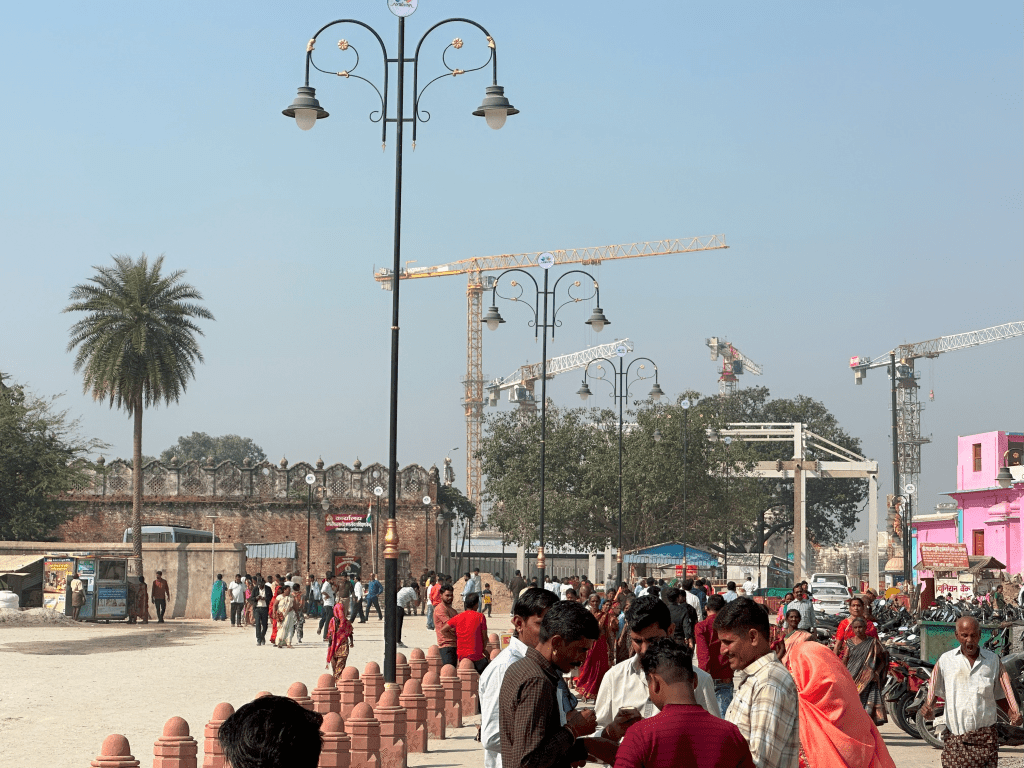

From the site of the new Ram Janma Bhoomi we trooped across a short distance to Sita Rasoi — the “royal kitchen of Maa Sita”, another ancient site, so greatly revered by the Ramanandi sect Vaishnavas of Ayodhya. It is believed that it is at this great big mansion where was hosted the “sammandhi virundhu” for Sita when she first came to Ayodhya as Rama’s bride and when preparations for the grand the royal family banquet were made here in this “rasoi“. Again, it was from here that preparations for the grand feast that was hosted in Ayodhya for hundreds of thousands of guests who came to attend the Pattabhishekam of Coronation of Sri Rama on his triumphant return from Lanka.
This “sita ka rasoi” is still very much functional today in Ayodhya. At least 1000 Ramanandi Vaishnavs, pandits, purohits, kar sevaks and other “yaathris” are given “bhojan” here under the auspices of the charitable organization led by Sant Ramananda-ji … a nonagenerian Ramanandi saadhu who since 1990 has undertaken the “kainkaryam”, the service of providing “anna daanam” to Ayodhya vaasis and yaathris every day without fail , all at his own expense. He raises funds through public charity and donations from private individuals and families from all over India.
This aged and saintly Sant gave up eating meals since the last 25 years. He lives on a frugal diet of fruits and milk. In the “rasoi” we visited situated at the back of the “sita ka rasoi”, we saw a vast kitchen space where the day’s “anna daana” food was being prepared.
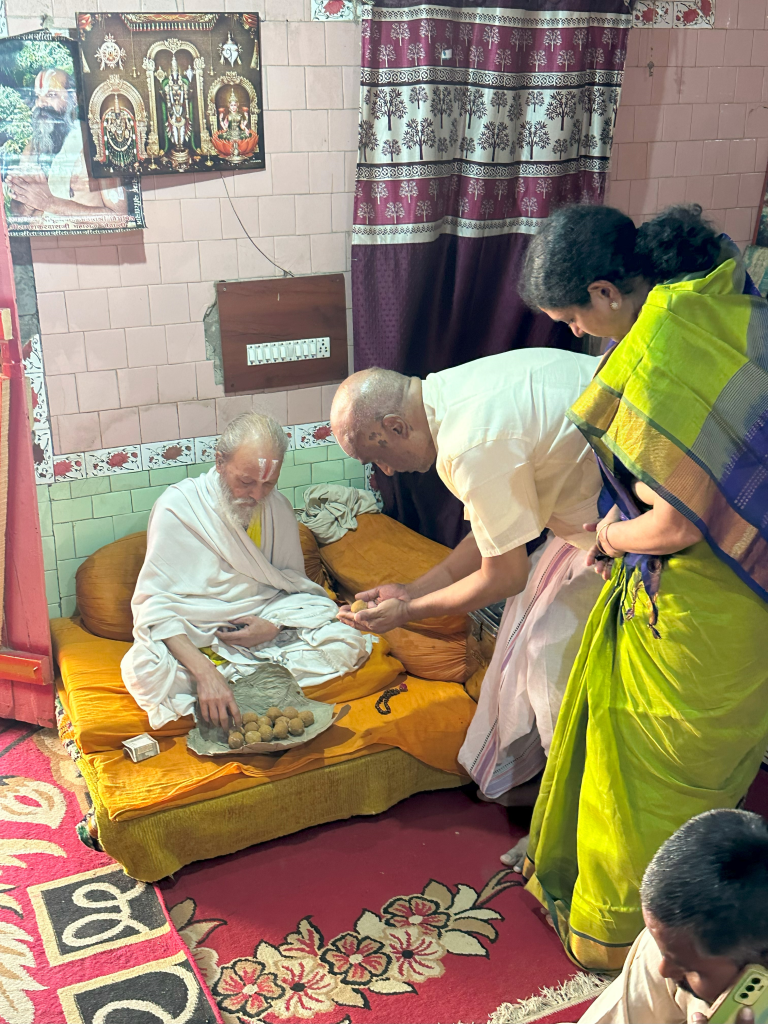
We then had a private audience with Sant Ramananda-ji who welcomed us without a word spoken. But with a gentle smile he asked where we came from and what brought us to Ayodhya. We explained to him we were from the South of India and it had been our dream to visit Ram Janma sthaan. He graciously accepted our donation for the “nithya anna daana” charity he was conducting. He blessed us all and with great affection gave us “prasad” made straight from the ovens of “sita ka rasoi”.
*******************
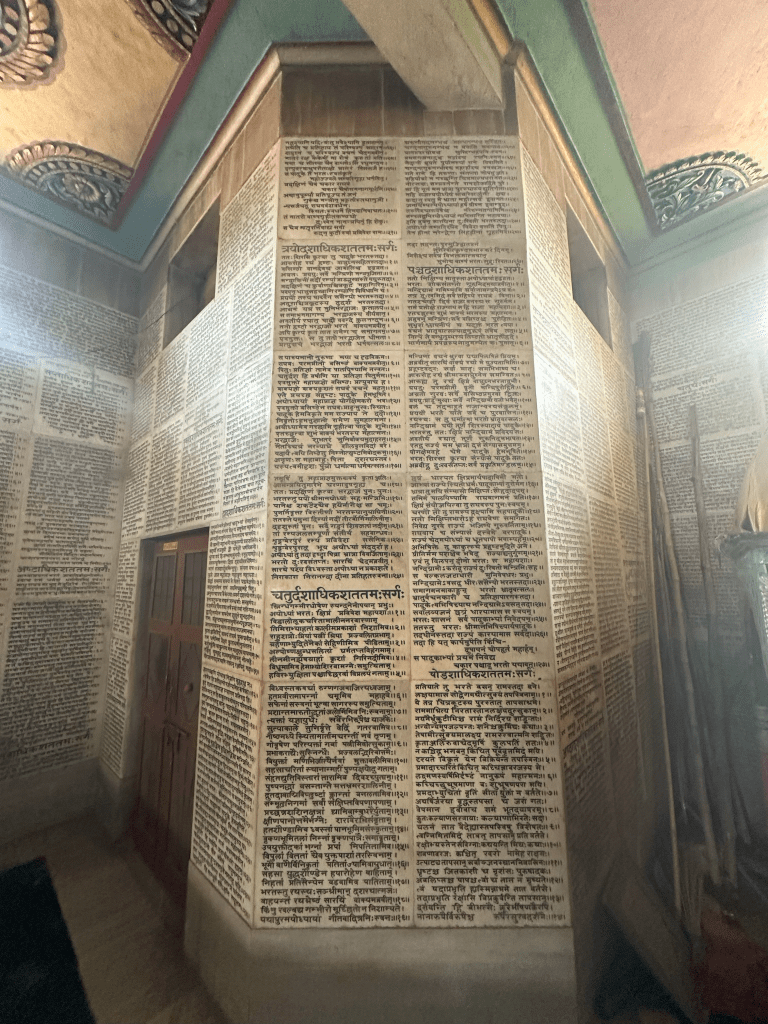
Our next and last stop in Ayodhya was Sri Valmiki Ramayana Bhavan where it is believed the Rishi wrote his magum opus the Srimad Valmiki Ramayana. Inside there is a shrine in his honour with the idols of the rishi and Lava and Kusha seated beside him. An elderly Ramanandi Vaishnava priest officiates at the sanctum. And all across the walls of the Mahal are erected stone inscriptions of the entire 24,000 shlokas of Ramayana.


We wound up our soul-fulfilling yaathra of Ayodhya an hour after noon that day. The city of Rama and Sita has an indescribable ambience of sanctity about it — what we know to be “bhagavath saanidhyam“. I felt especially blessed that at least once in my lifetime, I had had the opportunity to walk on and worship the same ground on which the avatar of “maryaada purushottama” Sri Ramachandra had trodden at Ayodhya.
********************
I must now conclude this series of blogposts with the last of the 3 specific expressions I have used in the title to describe the journey of my pilgrimage….
I have explained what “snaanam” was in the course of my travels; then I also explained at great length what was “shraadham“; then about “darsanam” too. All that now remains is for me to conclude with what “alinganam” is and what it came to mean during the pilgrimage.
That final piece on “alinganam” will be essayed in the Epilogue to follow.
Sudarshan Madabushi
Outstanding .God Bless
Thank you Sir 🙏