The Mahasamprokshanam ritual (also known as Kumbhabhishekam or Samprokshanam), holds significant historical importance in Hindu temple tradition. Its primary purpose is to “homogenize, synergize and unite the mystic powers of the deity” — essentially, it is a reconsecration ceremony that recharges and revitalizes the spiritual energy of the temple and its deities.
Historically, this ritual has been performed at regular intervals (often every 12 years) or after major renovations, repairs, or the installation of new idols. It serves to reaffirm the sanctity of the temple, ensuring that the divine presence and energy remains potent and accessible to devotees. The ritual is deeply rooted in Agama traditions and has been observed for centuries, as seen in ancient temples where Mahasamprokshanam marks key milestones in their history and continuity of worship.
The ceremony also fosters community participation, bringing together devotees, priests, and local residents in a collective act of devotion and celebration, thereby reinforcing the temple’s role as a center of cultural and spiritual life.
************
The Mahasamprokshanam (Kumbhabhishekam) in Vilanagar Sri Varadaraja Perumal Kovil, began as prescribed by Agama, involving a multi-stage ritual to rejuvenate the divine energy of the deities in the temple.
The following is an overview of the key procedures:
1. Preparatory Rituals
- Invocation of Deities: The process begins in the yagashala (sacrificial hall) with the invocation of Sri Paravasudeva in holy water and Sri Mahalakshmi in a sanctified kalasam (pot). Agni (fire god) is invoked in the homam (fire altar), and divine energy is infused into sacred rice (akshata) and the Yaga Bera (ritual idol).
- Purification: The temple site is cleansed with cow dung, and protective mantras are recited to ward off negative influences. Dhvāra pālakas (gatekeeper deities) like Chandan and Prachandan are installed at the temple entrance.
2. Energy Transfer to Kalashas
- Ashta Bandhana Removal: The moola vigraha (main deity) is detached from its pedestal by dissolving the Ashta Bandhana paste (a blend of eight herbs and resins). This adhesive is ritually replaced every 12 years.
- Mantra Jalam: The deity’s spiritual essence (sannidhyam) is transferred into kalashas filled with sanctified water through Vedic chants. These pots serve as temporary abodes for the divine energy during temple renovations.
3. Temple Renovation & Renewal


- Structural Repairs: Renovations to vimanas (tower structures), gopurams (gateways), and dwaja sthambams (flagpoles) are completed. Damaged idols are repaired or replaced in accordance with Agamic specifications.
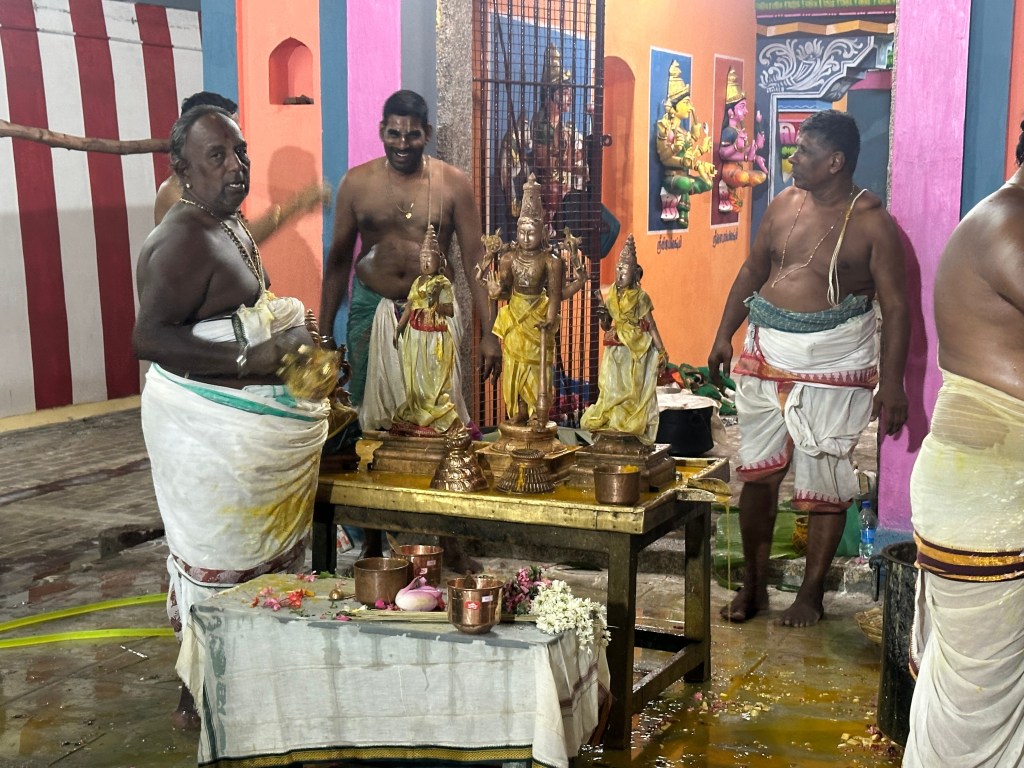
- Snapana (Sacred Bath): The deity undergoes abhisekam (ritual bath) with varying numbers of kalasams (1, 5, 9, 12, etc.), depending on the occasion. This is accompanied by recitations of Stotras and dhyana (meditation) on the Lord’s form.

4. Reconsecration Rituals
- Kalasha Abhishekam: The sanctified water from the kalashas is poured over the vimana and gopuram while chanting the Sri Mantram and Virya Mantram. This transfers the deity’s energy back into the moola vigraha.
- Mudra and Offerings: Priests perform shadanga nyasam (ritual gestures) and present upacharas (offerings) like arghya (water), pushpa (flowers), and dhupa (incense). Specific mudras like Aavahana (invocation) and Sannidhi (proximity) are shown to re-establish the deity’s presence.
5. Final Rites & Blessings
- Bali and Tarpanam: Offerings (bali) are made to ancillary deities and ancestors. The Acharya performs Purnahuti (final oblation) in the fire altar, seeking forgiveness for any ritual errors.
- Pradakshina: Devotees circumambulate the temple three times, reciting hymns to secure liberation from the cycle of rebirth.
Key Considerations
- Timing: Rituals are conducted at auspicious intervals (e.g., every 12 years) and during specific daytime windows (e.g., 5–6 AM or 4:30–5:30 PM).
- Materials: Sacred items like darbha grass, akshata, and ashta bandhana paste are essential for maintaining ritual purity.
This structured renewal ensures the temple remains a potent center of divine energy, aligning with the Agama.
***************
ASHTA BANDHANA RE-APPLICATION RITUAL
As described above, the removal and re-application of the Ashtabandhana paste on the main idol (moola archamurthy) is one of the most important procedures in the ritual of “samprokshanam”. It has not only tremendout religious significance but actually also serves as a very powerful means of social and community bonding.
The Ashtabandhana paste is a traditional adhesive used to affix the main idol (moola vigraha) to its pedestal (peetham) in Hindu temples. This paste is actually prepared by priests in a ceremonial manner using pestle and mortar to grind a thick paste. After the paste has been formulated, using the pestle and mortar ritual it has to be ground into a highly adhesive admixture — a kind of cementing medium . The grinding is done my pounding the adhesive repeatedly. The whole village community in Vilanagar was invited to participate in the ritual grinding of the Ashtabandhana paste, each devotee taking turns to repeatedly pound it with pestle and mortar.


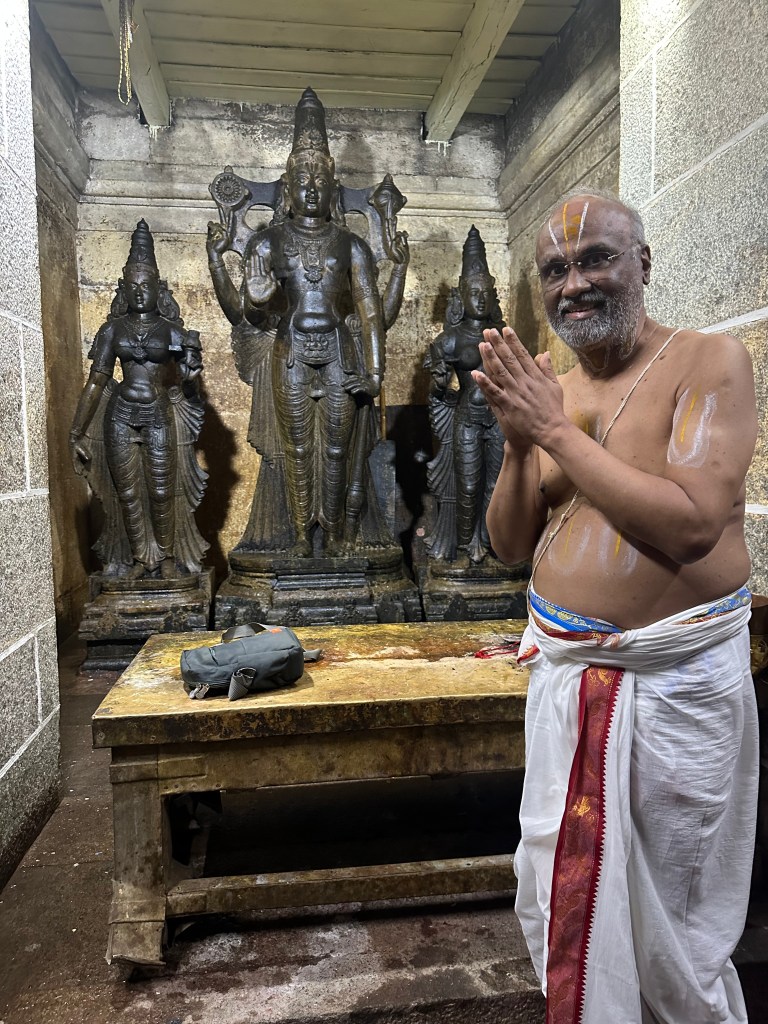
The opportunity for me to join the village community in the ritual was really a God-sent one for me as it was the first time ever in my life that I had the experience.
**************
There are specific rituals performed during the re-application of the Ashtabandhana paste:
- Collection and Sanctification of Ingredients: Eight traditional ingredients (“ashta“) are collected and assembled in the yagasala (ritual hall) with religious rituals. Priests chant verses that eulogize the deities associated with each ingredient, seeking their blessings for the successful preparation and application of the paste.
- Puja and Mantra Chanting: Vedic pundits perform special pujas and chant mantras as the paste is prepared and before it is applied to the idol and pedestal. This sanctifies both the materials and the process, reinforcing the spiritual connection.
- Application Ceremony: The actual affixing of the idol to its pedestal with the Ashtabandhana paste is performed with great reverence, as part of the larger Maha Samprokshanam ritual. The process is overseen by priests, ensuring all ritualistic requirements are fulfilled.
These rituals highlight both the sacredness of the materials and the importance of the act, symbolizing the spiritual and physical bonding of the deity to the temple sanctum.
Specific mantras and prayers are recited then during the re-application of the Ashtabandhana paste, as this act is considered highly sacred and central to the consecration process.
I had the wonderful divinely ordained experience of personally applying the “ashtabandhana paste” to the base of the magnificent 12-foot main moolavar idol of Sri Varadaraja Perumal in the “garba-griha”. It was a truly horripilating experience for me as I began applying the paste below the sacred feet of the Almighty! Involuntarily, I began to recite the Sanskrit verses from Swami Vedanta Desikan’s “Nyaasa Dasakam” which express “prappati” or absolute surrender to Lord Varadaraja!
**************
While the exact mantras can vary based on tradition and Agama followed, the general practice includes:
- Invocation of Vishvaksena: Before starting, priests chant mantras in praise of Vishvaksena to remove obstacles, such as:
These mantras invoke auspiciousness and smooth conduct of the ritual. - Sankalpa (Statement of Intent): The priest formally declares the purpose of the ritual, asking for blessings and success in affixing the idol.
- Purification and Kalasha Mantras: Mantras invoking sacred rivers and purifying the ingredients are recited, such as:gange cha yamune chaiva godāvari sarasvati… These invite the presence of holy waters into the ritual.
- Application Mantras: As the paste is applied, priests chant Vedic and Agamic mantras specific to the deity being installed, seeking the deity’s presence and requesting that the idol be firmly established. These may include:
- Ashtakshara Mantra (for Vishnu): Om Namo Narayanaya
- Gayatri Mantra or other core Vedic hymns.
- Prayers for Sanctification: Additional prayers are offered to sanctify the act and ensure the idol’s spiritual energy is preserved and enhanced.
These mantras and prayers, recited with devotion and precision, ensure the physical act of applying the paste is also a profound spiritual event, establishing the idol as a true seat of divine presence.
The classic formulation for the Ashtabandhana paste includes eight key ingredients, though exact recipes may vary slightly by region or tradition. Commonly cited ingredients are:
- Wood lac (shellac)
- Resin (such as Shorea robusta or sarja resin)
- Red ochre (hematite)
- Beeswax
- Buffalo butter (clarified butter)
- Conch shell powder
- Gall nut (kaduka/Terminalia chebula)
- Cotton
Other variations may include:
- Limestone powder
- Fine sand or special clay
- Kolarakku (lac resin)
- Amla (dried gooseberry).
Purpose of Applying Ashtabandhana
- Adhesive Function: Ashtabandhana acts as a strong, watertight adhesive, binding the idol securely to the pedestal so that ritual liquids (like water, milk, ghee) poured during abhishekam do not seep underneath and dislodge the idol.
- Ritual Sanctity: It preserves the sanctity and spiritual potency of the idol by sealing the base, protecting any sacred yantras or mantras placed beneath.
- Longevity: The paste is believed to keep the idol rejuvenated and spiritually potent for up to 12 years, after which it is traditionally renewed during Mahasamprokshanam/Kumbhabhishekam.
The historical significance of using the specific ingredients in the Ashtabandhana paste lies in their functional, ritual, and symbolic roles within temple tradition:
- Functional Durability: The eight ingredients-such as wood lac, limestone powder, resin, red ochre, aloe vera, papaya leaf, bitter gourd leaf, and beeswax-were selected for their adhesive, waterproofing, and flexible properties. This ensured the idol remained firmly fixed to the pedestal despite constant exposure to ritual bathing substances (abhisheka dravyams) like water, milk, and oils. The paste’s flexibility, akin to rubber, allowed it to absorb minor movements and prevent cracks, which could otherwise allow liquids to seep in and damage sacred yantras or mantras beneath the idol1.
- Ritual Protection and Sanctity: The ingredients also serve a sacred function, forming a watertight seal that protects the yantra (mystical diagram) and bijakshara mantras (sacred syllables) placed under the idol. This preservation is crucial for maintaining the pranic (spiritual) power of the deity, as any breach could diminish the idol’s spiritual potency over time.
- Symbolic and Traditional Value: The use of eight (ashta) ingredients is itself symbolic, representing auspiciousness and completeness in Hindu ritual practice. The tradition of using these natural substances dates back centuries, reflecting an ancient understanding of both material science and spiritual symbolism in temple construction and maintenance.
- Cyclical Renewal: The gradual hardening and cracking of the paste over years necessitated its periodic renewal (typically every 12 years), reinforcing the cyclical nature of temple sanctification and the ongoing rejuvenation of divine energy.
The Ashtabandhana paste maintains the idol’s spiritual energy by creating a watertight and airtight seal between the idol and its pedestal, which is crucial for several reasons:
- Prevents Ritual Liquid Seepage: During daily and special rituals, liquids like water, milk, and ghee are poured over the idol. Ashtabandhana ensures these do not seep beneath the idol, which could otherwise disturb or dislodge sacred items (such as yantras or mantras) placed under the idol that are essential for maintaining the deity’s spiritual presence.
- Secures the Idol’s Position: Temple scriptures emphasize that once an idol is installed, it should not be moved, as its location is determined by precise spiritual calculations. The strong adhesive property of Ashtabandhana keeps the idol immovable, preserving the sanctity of the consecrated spot and the uninterrupted flow of spiritual energy.
- Preserves Spiritual Power: By sealing the idol and protecting the sacred contents beneath, Ashtabandhana helps maintain and enhance the spiritual energy (prana or shakti) of the deity, which is further supported by constant worship and ritual practices.
- Ensures Longevity of Sanctity: The paste’s effectiveness typically lasts about 12 years, after which it is renewed to ensure the continued potency of the idol’s spiritual energy and the temple’s sanctity.
In summary, Ashtabandhana is both a physical and spiritual safeguard, ensuring the idol remains a powerful and unbroken conduit for divine energy within the temple. Ashtabandhana is both a practical and sacred compound, essential for the stability and sanctity of temple idols throughout the many centuriesthat they have been worshipped in our country.
Personally, I felt that my participation in the Ashtabandhana ritual, had resulted in a strange soulful “bonding” with the presiding deity of Vilanagar! It reminded me of the same sentiment of “bonding” that Sri Andal in her Tiruppaavai had alluded to in a simple but profound Tamil phrase:
குறைவொன்றும் இல்லாத கோவிந்தா! உன்தன்னோடு
உறவேல் நமக்கிங்கு ஒழிக்க ஒழியாது
“There is only one thing we know for certain. By having you as our Lord, we have gained Vaikuntha (the ultimate spiritual abode) as the fruit of our birth. That is all we know. No one can ever break the bond we have with you.”
(to be continued)
Sudarshan Madabushi