In June 2023 — around the time that the terrifying storm of havoc caused by the Corona Virus abated, Peter Turchin, an American social-scientist published a book with a title as terrifying as the great Pandemic itself. The book “End Times: Elites, Counter-Elites, and the Path of Political Disintegration” https://a.co/d/6tKhBYZ very soon attracted the attention of mainstream academia not only in America but worldwide — economists, sociologists and political scientists began analysing and debating on it. “Peter Turchin brings science to history. Some like it and some prefer their history plain. But everyone needs to pay attention to the well-informed, convincing and terrifying analysis in this book” wrote Angus Deaton, winner of the 2015 Nobel Prize in Economics.
The main reason why Turchin’s book became a terrific hit in the academic world was because the principal theory it contained had a very intriguing name. It came to be famously known as “Elite Overproduction“.
*********
What is “Elite Overproduction” theory?
In very brief terms, Turchin’s theory caught the attention and imagination of the academic world only because it was the very first of what qualifies to be called as a quantitative or statistical approach to studying a socio-economic problem that hitherto academia had gone about explaining only through dense, non-empirical, historicist and overly discursive treatises. Earlier, sociologists and historians—such as C. Wright Mills and Arnold J. Toynbee— had in their own works discussed this deep-seated social problem only in very broad terms of historical meta-events and dynamics. Turchin, in a refreshing change of approach, examined the same social phenomena as they giving it a new name: “elite overproduction”! The phrase was was coined to give the problem a specific name and a clear analytical framework in Turchin’s work to shed new light, as it were, on an old problem. “Elite overproduction” came to be projected by Turchin as some overwhelming, baleful and impersonal force that inevitably caused social instability in historical cycles. This was new perspective on a very old social phemomenon.
Some of the key quantitative (or statistical) measures Turchin used to substantiate his theory of “elite overproduction” included the following:
(a) Indicators of unrest, such as growth in protest movements and self-funded political campaigns among elites.
(b) Real wages and median income (relative to GDP and to elite incomes).
(c) Trends in educational attainment versus elite job growth.
(d) Rates of elite mobilization (function of elite numbers and declining incomes).
(e) Political Stress Indicator (an aggregate combining elite numbers, elite incomes, and intra-elite competition).
*********
According to Turchin, periods of political instability have throughout human history been due to the purely self-interested behavior of the elite.
— When the economy faced an expansion in the workforce, exerting a downward pressure on wages, the elite generally kept much of the wealth generated to themselves, resisting taxation and income redistribution.
— In the face of intensifying competition, they also sought to restrict upward mobility to preserve their power and status for their descendants.
— The above actions exacerbated inequality, which inevitably then becomes a key driver of sociopolitical turbulence due to the proneness of the relatively well-off and well-educated to turn to radicalism. In the modern Western world, the popularity of progressive political beliefs among university graduates, for instance, may be due to widespread underemployment rather than from exposure to progressive ideas or experiences during their studies.
Turchin has said that it is elite overproduction that can explain many of the social disturbances and upheavals during later years of various Chinese dynasties, the late Roman empire, the French Wars of Religion, and France before the Revolution. Turchin correctly predicted in 2010 that this situation would cause great social unrest in the United States during the 2020s. In 2025 too, today, we see much of the same deep social unrest unfolding not only in America but in France, Germany, the UK and other parts of Europe too.
Turchin came up with this theory by comparing the number of elite aspirants (e.g., college graduates, law degrees, PhDs) with the number of available elite positions over time in societies like the United States. He showed that, for example, in 1950s America, fewer than 15% of people had bachelor’s degrees, meaning competition for elite jobs was relatively limited; by the 1990s, the number of graduates far outstripped elite job openings, intensifying competition—a measurable trend in educational attainment versus elite job growth.
Turchin also tracked the growing number of self-funded political candidates, using it as an indicator of swelling elite aspirant ranks vying for a fixed number of power positions (e.g., Congress seats), and highlighted the increase in intra-elite competition.
Thus, “elite overproduction”, Turchin explains, happens during periods when elite numbers and appetites exceeded society’s ability to absorb them. He used the analogy of “musical chairs” to visualise how “elite overproduction” leads to “too many educated people chasing too few elite positions and elite status in society.
The resulting “elite inflation” thus ends up, his theory concluded, in declining elite incomes and escalating intra-elite conflict—a pattern visible in proxy measures like falling median wages, rising credential requirements, frequency of elite aspirant protests, and increased “counter-elite” activity. What made Turchin’s approach notable was its attempt to find “objective, statistically grounded” correlations between elite overproduction and political instability, using both historical and contemporary data on elite aspirants, credentials, and economic trends.
********
Peter Turchin’s theory seems not at all far-fetched when one looks around India.
India too currently faces a severe problem of elite overproduction—defined as a surplus of highly educated, ambitious individuals competing for a relatively small number of elite, high-status jobs. This phenomenon manifests in several distinct ways, with recent data and reporting showing its significant and growing impact.
Youth Unemployment Crisis: India’s educated youth represent the majority of the country’s unemployed—about two-thirds of unemployed Indian youth have a college degree or higher, a fraction that has doubled since 2000. The unemployment rate among recent graduates is over 29%, and among college grads under 25, more than 40% are unemployed.
Job Market “Musical Chairs”: Even graduates of India’s elite colleges (IITs, NITs, IIMs) now face falling placement rates, stagnating salaries, and declining job opportunities relative to the number of highly qualified applicants. Competition for top jobs is intense, resembling the “elite overproduction” pattern seen globally, and is worsening with each passing year.
Underemployment and Skills Gap: Many young graduates find themselves overqualified for low-paying or unrelated jobs.
Societal and Political Implications: Frustration among educated, underemployed youth drives protests, political engagement, and can contribute to social instability—a classic sign of elite overproduction as theorized by Peter Turchin. (Dalit community in the State of Tamil Nadu and Women are clamouring today for Hindu Temple high-priest jobs!) India’s ultra-competitive civil services exams (success rate often below 1%) and centralized power structures further reinforce fierce rivalries for elite status.
Women Most Affected: Educated young women in India experience especially high unemployment and underemployment, accounting for 95% of youths not in employment, education, or training. Elected Governments have a hard time meeting pre-election promises to set up Self-Help and Women Empowerment Programs for women from the underprivileged sections of society.
India’s challenge with elite overproduction, thus, is indeed very acute and worsening, with an educational system producing millions of aspirants for relatively fixed or slowly expanding number of elite jobs. This mismatch has already led to high unemployment, underemployment, and social tensions—making India one of the world’s egregious examples of the elite overproduction phenomenon.
**********
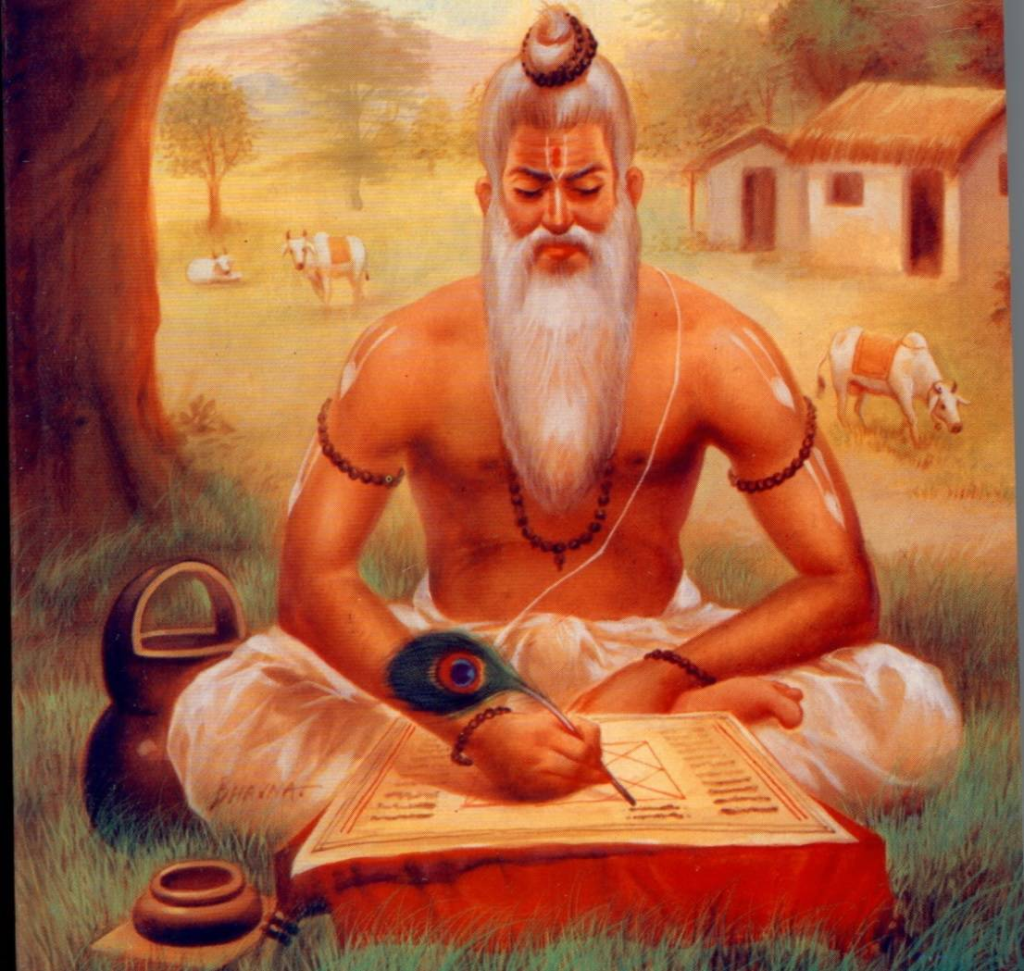
Long before the likes of academicians and intellectuals like Peter Turchin … and even centuries before great historians like Arnold Toynbee, Max Weber or C.Wright Mills … studied the social phenomenon of Elite Overproduction, in ancient India it was already anticipated, explored fully and understood deeply by a Vedic seer who is known today as Maharishi Manu. In the Hindu cosmology and religion, Manu holds a significant place as the first man, the progenitor of humanity, and a central figure in various Creation narratives in Purana and Itihasa literature.
The Manusmriti, also known to the West as the “Laws of Manu”, is a foundational text in Hindu jurisprudence and ethics. Attributed to Rishi Manu, it outlines the principles of dharma (moral law), social order, and the responsibilities of individuals within society. The Key teachings from the Manusmriti include: Guidelines for social conduct and the duties of different Varnas (social classes); Rules for family life, including marriage, inheritance, and education; Principles of justice and governance, emphasizing the importance of righteous leadership. These teachings remain influential in contemporary discussions about ethics and social justice within Hindu communities.
The Manu Smriti did not coin any equivalent fancy phrase for “elite overproduction”. However, it did speak very elaborately and accurately about the very same conditions of social unrest, instability, upheaval and intra-elitist competition that Peter Turchin, Arnold Toynbee or any other modern sociologist have described in the modern times.
Manu called the social phenomenon of “elite overproduction” not specifically but generally by referring to it with the Sanskrit term, āpada (आपद्), which literally means “distress” “calamity,” “misfortune,” “danger,” “hardship,” or “crisis.”
In the context of his Dharmaśāstra or Smriti context, āpada specifically referred to periods of extreme difficulty or crisis that suspend or modify the usual codes of conduct amongst social classes due to real and present threats to survival or well-being. The literal sense of āpada is “a fall into trouble“—with “āpatti” as a related noun form—referring to being overtaken by unavoidable adversities or emergencies requiring exceptional measures.
Manu’s term “distress” refers thus primarily to severe circumstances of material or existential hardship, especially those that threaten a person’s ability to subsist or maintain the minimum standards of ritual purity and lawful livelihood prescribed by their social order (varna). Manu’s usage of the term “distress” includes situations such as: Extreme want of livelihood (i.e. declining wage levels, inequality of wealth etc); Failure of issue (childlessness) (i.e. grave demographic decline); Threat to survival or well-being (i.e. widespread unemployment, lack of upward social mobility etc.); Disruption of routine, law, and ritual (i.e. sociopolitical turbulence, radicalism etc.)
Distress or āpada (आपद्) in Manu’s times, in his famous Smriti treatise, he characterized it as “want of livelihood” and “falling in ruin,” causing a suspension or disruption of regular dharmic restrictions in the social-order to preserve life and future ritual (i.e. communal) continuity.
********
It seems to me that the ancient seers in India — like Maharishi Manu — clearly presaged even millennia ago what great harm elite overproduction could potentially bring upon any society. Which is why, very wisely, Manu structured the concept of Varnashrama upon which the whole of the Vedic Social Contract was drawn up.
Manu’s social contract envisaged a societal structure founded upon a system of vocational aptitudes of citizens and upon prescribed duties and rights for specific castes or classes of people. The Varnashrama system was designed thus very wisely to avoid precisely what Peter Turchin today calls the “musical chair” and “elite overproduction” crisis into which modern democratic societies — with their unbridled fetish for notions of absolute, utopian egalitarianism — find themselves plunging headlong into.
Peter Turchin, being an American intellectual, maybe also suffers from the same failing of most Western academicians and social scientists. They focus overly on the realities of only American History which is hardly 250 years old while forgetting that ancient civilisations like India (more than 5000 years old) had indeed already thought about, analysed and even successfully dealt with social phenomena such as “elite overproduction“.
One reason why Peter Turchin may have wanted in the writing of his famous book to altogether ignore studying the Vedic Varnashrama system of social-order could be that in the last 100 years in our country it has been denounced, demonised and cast aside into the dustbin of history … by India’s very own best academicians and socio-political commentators today.
(to be continued)
Sudarshan Madabushi