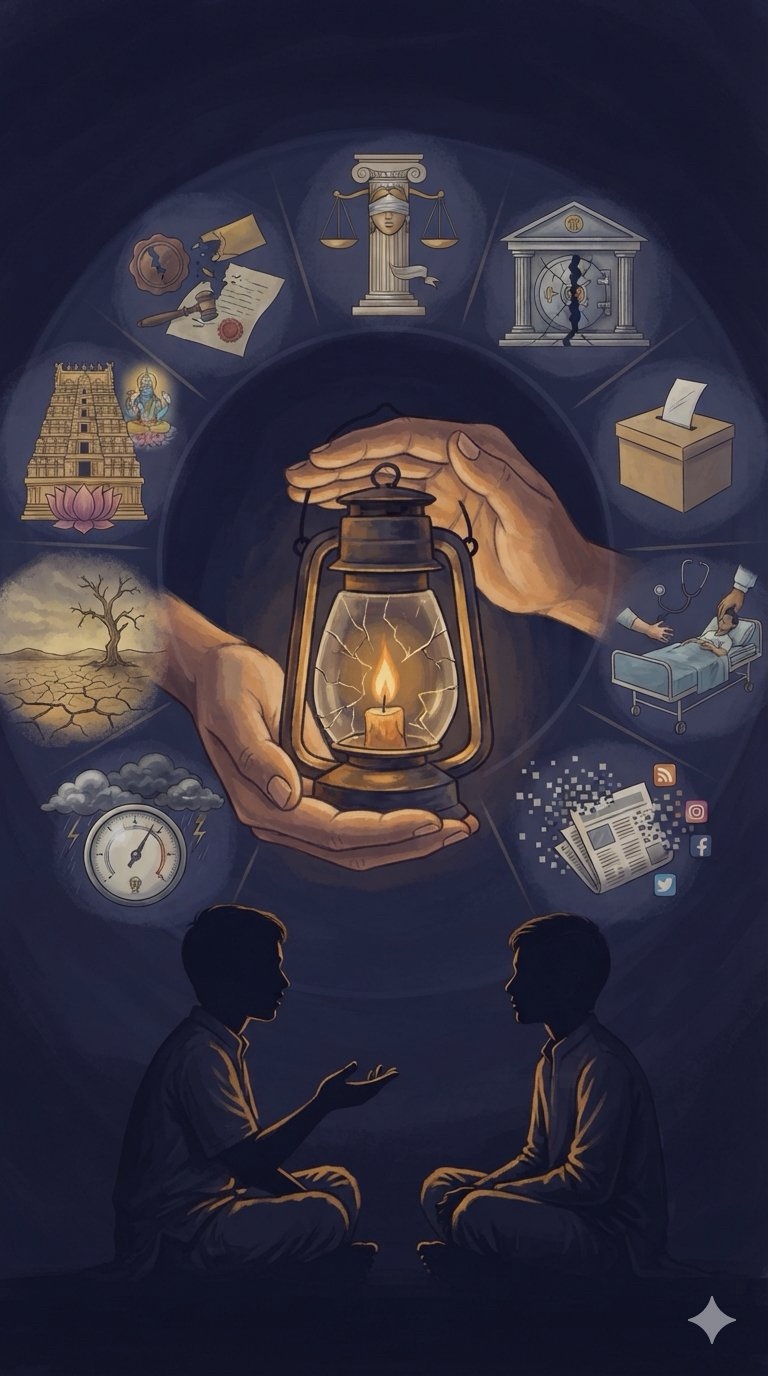
Trust is the first thing we surrender—and the last thing we learn to rebuild.
From Eden’s broken trust to today’s trust deficit in governments, banks, media, and technology: nine dialogues on betrayal, entropy, and the possibility of resurrection through mahāviśvāsam.
Category Archives: History
“YAJÑEŚA: The Life and Times of Mukkur Sri Lakshminarasimhachariar” by M. K. Sudarshan is now available globally !

https://www.facebook.com/share/1CBWA9zqnA/?mibextid=wwXIfr “YAJÑEŚA: The Life and Times of Mukkur Sri Lakshminarasimhachariar” by M. K. Sudarshan. [Blue Rose Publishers, India/ UK] This book is now available globally ! Subject: Global DistributionHello Author, Hope you are doing great!Congratulations! Your book is now available globally. Spread the word today amongst your friends and family! Amazon.com https://www.amazon.com/Yajñeśa-यज्ञेश-Lakshmi-Narasimha-Chariar/dp/9378259014/ref=sr_1_1?crid=1ZD9P7E46PGAX&dib=eyJ2IjoiMSJ9.jgxI6mctIhS5c6P1V-nnkA.vod42emrykhHFrIInsU55bZXC6Vq9fZMvDsg5ovpyGU&dib_tag=se&keywords=9789378259012&qid=1792388270&s=books&sprefix=9788167446909%2Cstripbooks-intl-ship%2C333&sr=1-1 Amazon.co.uk https://www.amazon.co.uk/dp/9378259014/ref=sr_1_1?crid=3UNA2XTJ043EX&dib=eyJ2IjoiMSJ9.jgxI6mctIhS5c6P1V-nnkA.Xtut97T83379RdlTywHu9KiZDf0jLzxMnBQS0EInn1U&dib_tag=se&keywords=9789378259012&qid=1792388275&s=books&sprefix=9789378259012%2Cstripbooks%2C238&sr=1-1 Amazon.itContinue reading ““YAJÑEŚA: The Life and Times of Mukkur Sri Lakshminarasimhachariar” by M. K. Sudarshan is now available globally !”
The Refineries That Saved India’s Pumps
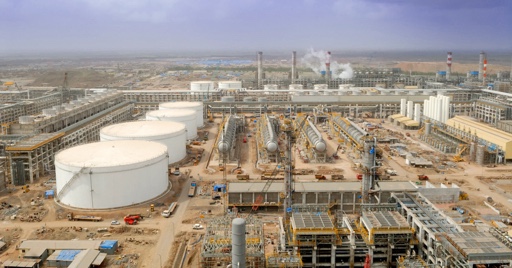
Title: The Refineries That Saved India’s Pumps
Subtitle: While America and Europe face a looming refining-capacity crisis, self-sufficient India should thank its public sector—and Ambani
The article argues that India’s relative freedom from the diesel shortages now troubling the United States and Europe is not luck, but the result of a seven-decade effort to build domestic refining capacity. While Western economies face pump-level supply stress, India remains broadly self-sufficient in petrol and diesel, even though it imports most of its crude oil.
It traces India’s refining history from the first post-Independence refinery in 1954, through IndianOil’s creation in 1959 and the nationalisation of the oil industry in 1976, to the public-sector refinery network that still forms the backbone of national fuel supply.
The piece credits successive governments—especially those of Nehru, Indira Gandhi, P. V. Narasimha Rao, Vajpayee and Manmohan Singh—for building and expanding this capacity across very different political eras.
Reliance’s Jamnagar complex receives substantial but qualified praise. Commissioned in 1999 and expanded in 2008, it became the world’s largest single-site refinery, with about 1.4 million barrels per day of capacity, giving India export strength and flexibility during the current global diesel squeeze.
The article’s central argument is balanced: India should credit both the public sector, which built the foundation, and Reliance, which added world-scale private capacity. But it also cautions that Jamnagar’s success does not settle concerns about crony capitalism, market concentration or unequal access to state policy.
India’s energy security, it concludes, was built by long-term public and private investment—and must not be taken for granted in future crises.
The Illusion of Failure: Why the Wars in Iran and Ukraine Are Going Exactly as per Plan, and Why Huntington is Not Dead
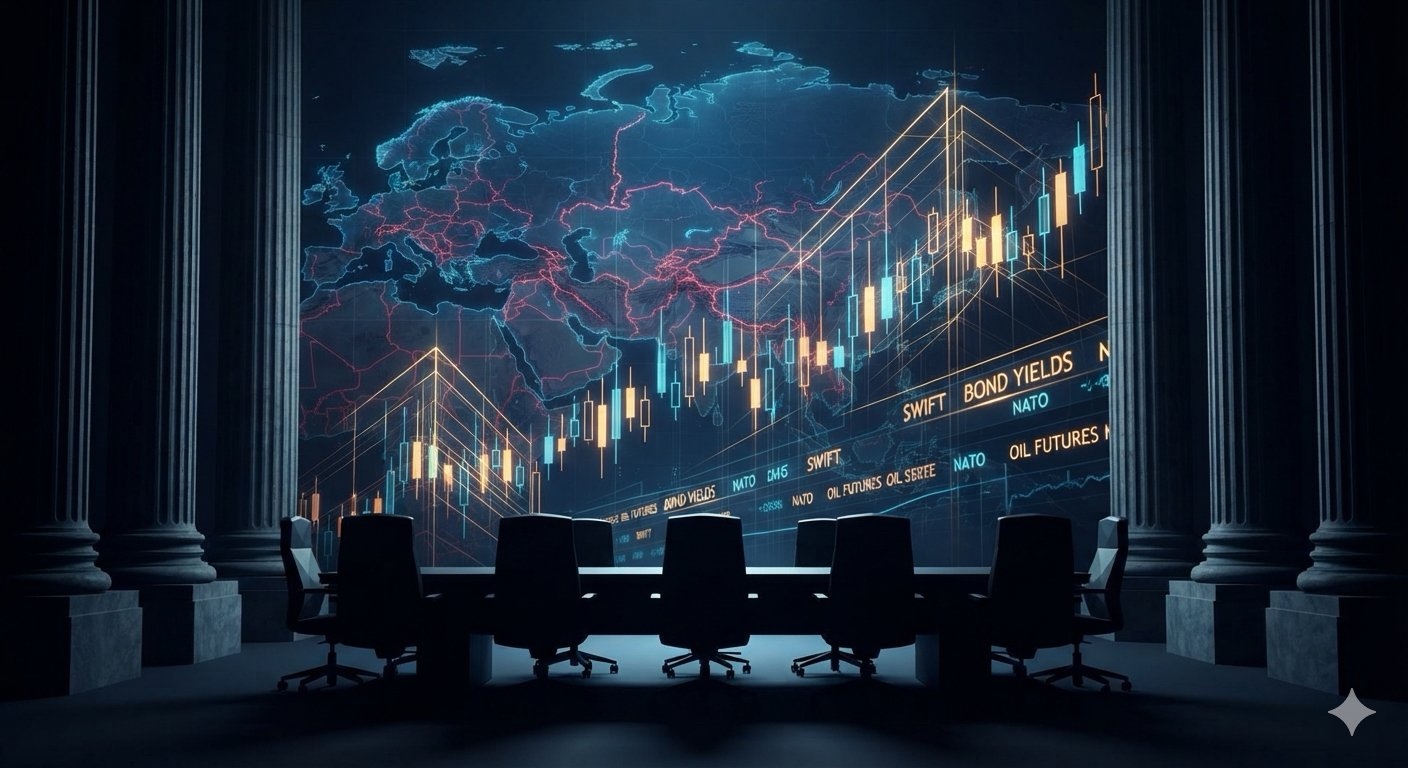
Discover why media narratives of Western failure in Ukraine and Iran are an illusion.
This Op-Ed exposes the financial oligarchy and civilisational architecture driving the 21st-century global order.
What happens in a world where red lines drawn by Goliath are no longer respected by Davids?
As Washington’s deterrence fades, regional powers are rewriting the rules of global diplomacy. Discover how a fractured giant and asymmetric defiance are ushering in a volatile new era of messy multipolarity.
The Nobel Awards Committee: institutional instrument of Euro-Atlanticist “soft power” and cultural hegemony

Summary:
The Nobel Prize is fundamentally a geopolitical instrument of Western hegemony rather than a neutral, international arbiter of human excellence.
By analyzing structural exclusions—such as the rejection of traditional medical systems like Ayurveda, the omission of non-Western economic models, and a distinct geopolitical bias in Literature and Peace—the Nobel Foundation consistently rewards individuals who conform to a secular, liberal, and Eurocentric worldview.
The historical denial of a posthumous award to Mahatma Gandhi, contrasted with exceptions made for European candidates, exemplifies this institutional double standard.
Ultimately, for non-Western nations to seek validation from Stockholm is an act of ideological capitulation to Western cultural imperialism.
A Gandhi Jayanthi Roundtable
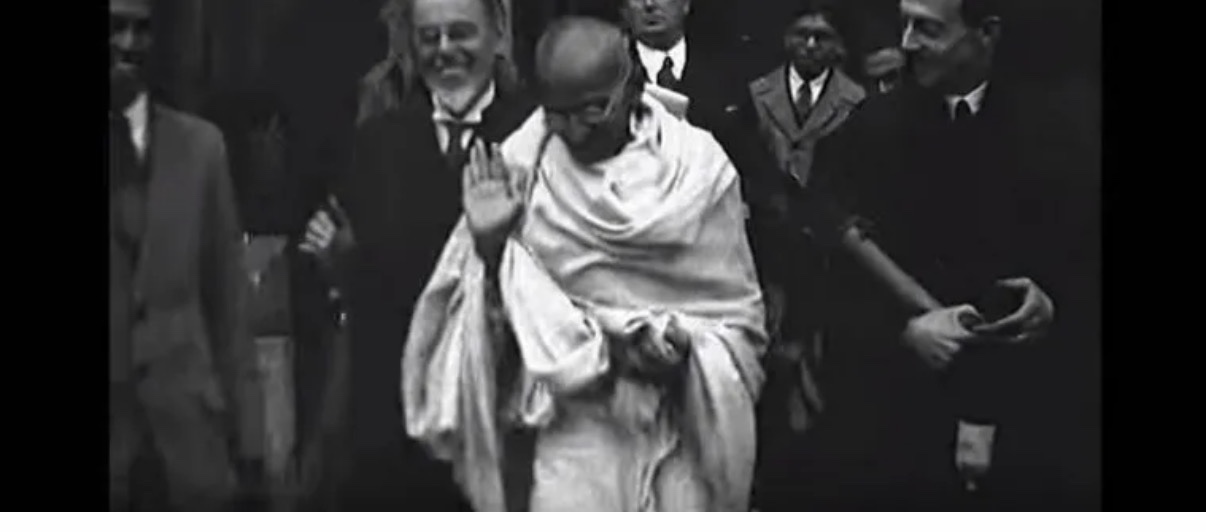
The Bhakta, the Dveṣī, and the Historian: Three Voices on the Mahatma by M.K.Sudarshan October 2, 2026: Chennai, India A fictional roundtable conversation on Gandhi’s achievements, failures, moral authority, and contested legacy It is Gandhi Jayanthi. A coffee shop in India is crowded with customers, newspaper columns, old arguments, and new certainties. Above the counterContinue reading “A Gandhi Jayanthi Roundtable”
Canonisation of the Divya Prabandhams through Maṇipravāḷam: A Double-Edged Sword?

The canonisation of the Āḻvār hymns as the Nālāyira Divya Prabandham preserved an extraordinary body of Tamil devotional poetry, sustained its temple life, and generated the sophisticated bilingual tradition of Maṇipravāḷam.
Yet the same process also placed the hymns within a specialised theological interpretive grammar, limiting their wider circulation as literature.
This essay examines that double-edged legacy and asks how the Divya Prabandham might be restored to the broader Tamil literary imagination without diminishing its Śrīvaiṣṇava identity.
“Mr. Gandhi, what do you think of Western Civilisation?” — Part II of 2
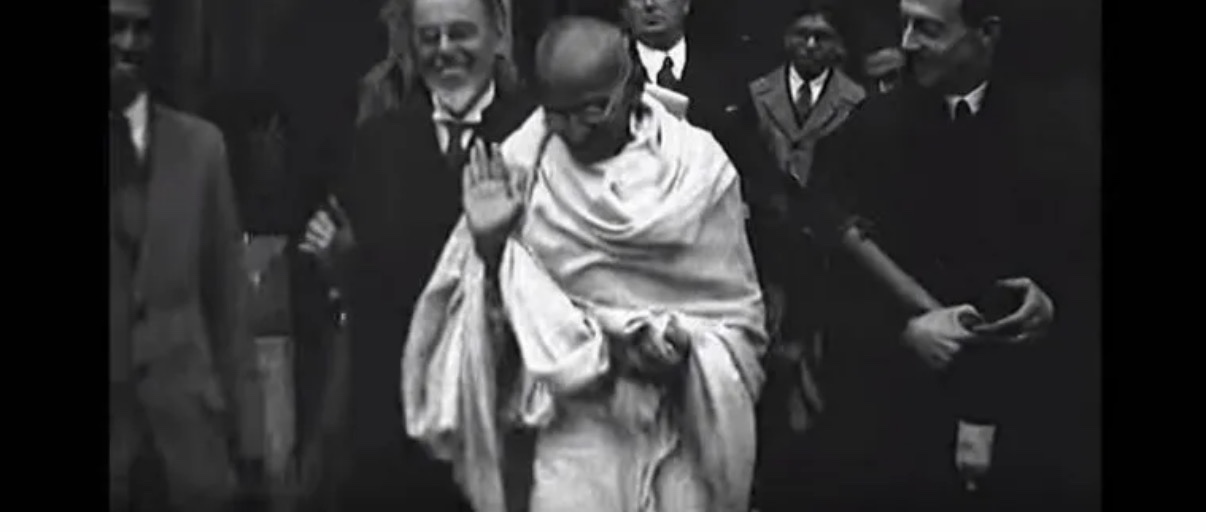
“Mr. Gandhi, what do you think of Western Civilisation?”“I think it’s a good idea.”
A century after Mahatma Gandhi delivered his famously sharp retort to a condescending British press, the global architecture he challenged faces an unprecedented twilight.In this new two-part long-form essay, I take a bird’s-eye view of the last 500 years of global history.
From the violent internal fractures of pre-industrial Europe to the cold, zero-sum geopolitical chessboards of Sir Halford Mackinder, the essay explores how Western Civilisation successfully turned its localized concepts into a global monoculture—often by ruthlessly marginalizing alternative frameworks.
Today, as the ten great ideological pillars of this half-millennium framework face systematic collapse, the world is stepping into a profound ideological void.📖 Read the full deep dive here:
Brahmotsavam at Tirumala commenced on September 15, 2026 with the hereditary Thozhappachari priests’ traditional “kainkaryam” on the grand occasion for the Deity, The Lord of Tiruvenkatam

The Salakatla Brahmotsavam began on 15 September 2026, following the Ankurarpanam on 14 September.
The opening day included the formal Dhwajarohanam, performed according to Vaikhanasa Agama prescriptions.
The water-bearing procession seen around the commencement of the festival is part of the Brahmotsavam’s preparatory and inaugural ritual cycle. In other words, the date of the water procession is linked to the opening of Brahmotsavam.