M.K.Sudarshan
November 24, 2026: Chennai, India
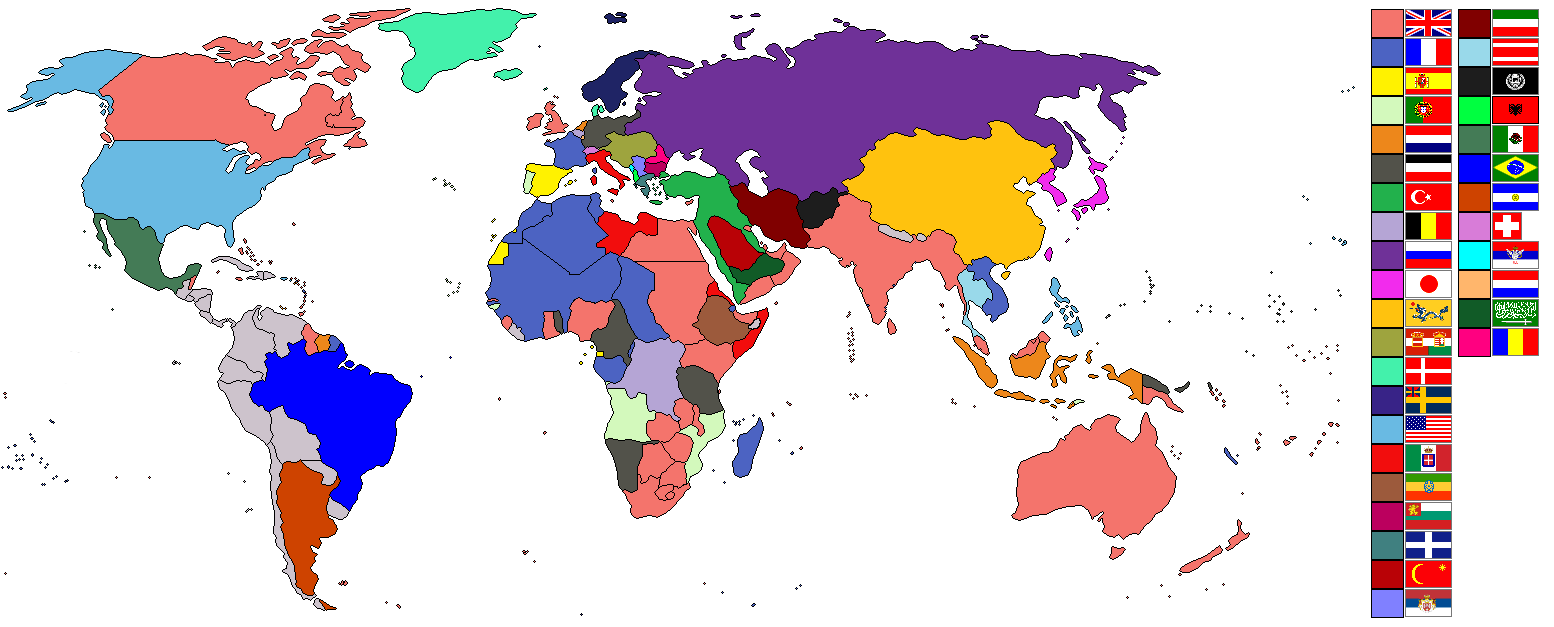
A world without boundaries was promised as a humanist ideal; it was delivered as an imperial playground.
The world has always been more connected than the popular story of isolated civilisations suggests. Long before steamships, railways, telegraphs, container ships, and the internet, merchants, pilgrims, soldiers, monks, sailors, and rulers moved goods, faiths, technologies, diseases, and ideas across continents. The Silk Roads linked East Asia to Central Asia, the Middle East, the Mediterranean, and the Indian subcontinent, carrying silk, spices, ceramics, precious metals—and Buddhism, Islam, Christianity, and other traditions.[1]
But interconnection has never been innocent. It has always been shaped by power: by who could travel, who could trade, who could borrow, who could build, who could fight, and who could write the rules. The “global village” was not born as a democratic commons. It became, in its modern form, a contested hegemonic playground—designed largely by Western powers, but increasingly challenged by the rest of the world.
The older world was connected
It is tempting to believe that globalisation began only in the last four or five decades. In one narrow sense, that is true: the density, speed, and organisational depth of today’s interdependence are historically unprecedented. But in a broader sense, interconnection is ancient.
The Indian Ocean linked East Africa, Arabia, Persia, India, Southeast Asia, and China long before European colonialism. The Silk Roads carried not only commodities but also knowledge, art, religion, and political ideas across Eurasia. These were not global villages in the modern sense; communication was slow, uneven, and limited. Yet they prove that the human world was never a collection of sealed boxes.
The difference is that earlier connections were fragile and selective. A disruption in one region might take months or years to affect another. Today, a war, a shipping blockage, a financial panic, a semiconductor shortage, a pandemic, or a climate shock can send tremors across the planet within days.
Empire made the world smaller
The great accelerations in interconnection often came through conquest. Empires built roads, ports, armies, currencies, legal systems, and administrative networks that made long-distance movement possible. Rome connected the Mediterranean; the Mongols linked much of Eurasia; the Ottomans controlled vital routes between Europe, Asia, and Africa; and European empires eventually stitched together the Americas, Africa, Asia, and Europe through naval power and colonial rule.
The age of European overseas expansion made this connection brutally global. Colonialism was not merely the movement of goods and ideas. It was the forced integration of continents into systems of extraction, plantation labour, racial hierarchy, and metropolitan profit. The railway, the telegraph, the steamship, and the printing press did not simply “bring the world together.” They also gave imperial states unprecedented capacity to govern distant territories, move troops, extract resources, and spread their cultural authority.
This is why the claim that interconnection emerged primarily from conquest contains a deep historical truth. Trade, culture, religion, and technology were not irrelevant; they were often the lifeblood of empire. But empire supplied the coercive political framework within which much of that exchange could flourish.
The West wrote the rules
By the nineteenth century, Western powers had acquired a decisive advantage in industry, shipping, finance, military technology, and administrative capacity. They did not merely participate in global exchange; they increasingly set its terms.
The language was universal: civilisation, progress, free trade, development, modernity, and eventually human rights. But the practice was often hierarchical. “Openness” frequently meant the right of European capital, missionaries, merchants, and settlers to enter other societies. It did not always mean the equal right of colonised peoples to govern themselves, protect their industries, control their resources, or resist cultural domination.
This is the central contradiction of Western universalism. It spoke of humanity, but often treated non-European peoples as objects of improvement rather than as equal authors of history. It preached a world without barriers, but built barriers of race, empire, debt, and dependency.
America inherited the imperial mantle
After 1945, formal colonial empires began to collapse, but imperial power did not disappear. It changed form. The United States became the organising centre of a new Western-led order: the dollar system, the IMF, the World Bank, NATO, the General Agreement on Tariffs and Trade, and later the World Trade Organization.
The official language was liberal and universal. Free trade, open markets, democracy, human rights, and international law were presented as principles beneficial to all. And they were not empty words: trade, technology, education, migration, and global institutions did create real opportunities for many societies.
But the order was also hierarchical. The United States could project military power across oceans. The dollar gave Washington extraordinary financial leverage. Western corporations dominated key markets, technologies, and intellectual-property regimes. International institutions often reflected the interests of their strongest founders more faithfully than those of the weaker states they claimed to represent.
Globalisation, in this form, was not simply a neutral process of connection. It was a political architecture.
The global village arrives
From the 1980s to 2008, this architecture expanded dramatically. Container shipping lowered transport costs. Computers and telecommunications made coordination across borders possible. Financial deregulation allowed capital to move rapidly across currencies and markets. Trade liberalisation, the rise of global value chains, and China’s entry into the WTO in 2001 produced an unprecedented integration of production.
A smartphone could be designed in California, use components from East Asia, be assembled in China, financed through global capital markets, and sold everywhere. A financial crisis in one country could become a global recession. A disruption in energy, food, shipping, or critical minerals could affect prices and politics thousands of miles away.
This was the high point of the global-village ideal. The world would become one market, one information space, one supply chain, and perhaps one moral community. Interconnection was presented as a force that would naturally make societies freer, richer, more peaceful, and more alike.
The assumption that failed
The deepest Western assumption was that China’s integration into Western-led markets would gradually make it more liberal, more dependent on Western institutions, and less likely to challenge the existing order.
That assumption failed—or at least became far less certain.
China used globalisation strategically. It welcomed trade, investment, technology, and export markets, but retained state control over finance, strategic industries, land, data, and the security apparatus. It used foreign capital and technology to build domestic capacity. It moved from low-cost manufacturing toward higher-value production, industrial policy, and technological ambition.
China joined the WTO in 2001 after fifteen years of negotiations, and the resulting reforms helped propel its growth in the early 2000s. But integration did not produce the political transformation many Western policymakers expected. Instead, China demonstrated that a state could participate deeply in global capitalism while strengthening, rather than weakening, authoritarian rule.
The West had assumed that markets would remake China. China showed that a powerful state could use markets to remake its own position in the world.
The reversal begins
After the global financial crisis of 2008, the momentum of globalisation slowed. The IMF notes that global trade openness plateaued after 2008, an era often described as “slowbalisation.” But the more dramatic reversal came with renewed great-power rivalry, especially after Russia’s invasion of Ukraine.
The new language is no longer simply “free trade.” It is “resilience,” “de-risking,” “friend-shoring,” “economic security,” “strategic autonomy,” and “small yard, high fence.” Governments now treat semiconductors, batteries, rare earths, pharmaceuticals, energy, shipping lanes, and data infrastructure as matters of national security.
The European Union insists that it seeks to “de-risk,” not fully decouple, from China. But de-risking means reducing dependence in strategic sectors while preserving commercial ties where they remain useful. The United States has imposed export controls on advanced computing chips and semiconductor-manufacturing equipment to restrict China’s ability to obtain or produce technologies with military applications.
This is not the end of interconnection. It is the weaponisation of interconnection.
The gospel becomes blasphemy
For three decades, Western imperialism preached interconnection as a gospel. Open your markets. Liberalise your capital accounts. Protect intellectual property. Accept global supply chains. Trust international institutions. Integrate, and you will prosper.
Now, when China has become a technological and geopolitical competitor, parts of the West declare that unrestricted interconnection is dangerous. Tariffs, sanctions, export controls, investment screening, industrial subsidies, and financial restrictions are presented as necessary safeguards.
The contradiction is stark. The same system that once urged the world to open is now being selectively closed by those who once benefited most from opening it. The message has changed: interconnection is good when it extends Western influence; it is dangerous when it strengthens a rival.
This is why the reversal is not merely economic policy. It is a struggle over who may write the rules of the global game.
Containment by another name
Western governments rarely use the word “containment.” They prefer “competition,” “de-risking,” or “protecting the rules-based order.” But the strategic effect is clear.
The U.S. National Security Strategy identifies China as the only competitor with both the intent and the growing capability to reshape the international order. In that framework, China’s access to advanced technology is not treated simply as a commercial matter. It is treated as a threat to Western military and geopolitical primacy.
Containment today does not necessarily mean sealing China behind a wall. It means controlling the gates: restricting advanced chips, limiting sensitive technology transfers, building allied supply chains, pressuring financial systems, and preserving military alliances around China’s periphery.
It is imperial logic in a new form. The aim is not necessarily to conquer territory. It is to preserve a hierarchy of power.
The world versus the West
The phrase “the world versus the West” can sound too simple. The world is not a single bloc, and the West is not a single mind. India, Brazil, Indonesia, the Gulf states, African nations, and many others pursue their own interests and refuse to be mere instruments of either Washington or Beijing.
But the phrase captures something real. For centuries, Western powers claimed the right to define modernity, development, security, trade, human rights, and international order. Today, much of the world is no longer willing to accept that claim without question.
The contest is not simply between democracy and authoritarianism, capitalism and socialism, or freedom and tyranny. It is also a contest over who gets to decide the rules of interconnection.
Who controls the dollar system? Who controls advanced technology? Who controls the seas, ports, and chokepoints? Who controls climate finance? Who controls intellectual property? Who decides when sanctions are legitimate? Who decides which wars are defensive and which are aggression? Who decides whether sovereignty is sacred—or expendable?
These are not technical questions. They are questions of power.
Interconnection cuts both ways
Interconnectedness is neither a blessing nor a curse in itself. It is a field of power.
It can spread knowledge, medicine, food security, capital, culture, and solidarity. It can also spread financial crises, pandemics, weapons, propaganda, climate damage, and coercive dependency. A disruption in one part of the world can send shock waves through another. An election, coup, war, sanctions regime, or energy crisis in one hemisphere can alter the fate of states in another.
This is why the hope that less interconnection will automatically produce peace is misplaced. Disconnection may reduce some vulnerabilities, but it can also produce scarcity, mistrust, bloc rivalry, and a weaker capacity to confront shared dangers. The world cannot solve climate change, pandemics, nuclear risk, or financial instability by retreating into national backyards.
The real choice is not between connection and disconnection. It is between hierarchical interconnection and reciprocal interconnection.
The unfinished struggle
The global village was never simply a humanist dream. Nor was it merely an imperial scheme. It was both: a real expansion of human contact and a contested arena of power.
Western imperialism helped build the modern interconnected world, but it did so through conquest, extraction, racial hierarchy, financial power, and unequal rules. The West then presented that order as universal progress. When the order began to empower rivals, it began to revise the rules in the name of security.
Yet the world is not returning to isolation. It is entering a more dangerous phase: interconnection without shared trust; dependence without shared governance; integration without equality; and fragmentation without genuine independence.
The struggle ahead is therefore not between a connected world and a disconnected one. It is between a world in which hegemony writes the rules for everyone, and a world in which the rules are written through genuine equality, consent, and mutual restraint.
The choice before the world
The twenty-first century will not be decided by whether the world becomes more connected or less connected. It will be decided by the terms on which connection survives.
If the West seeks merely to preserve its privileges by denying others the means to rise, it will deepen resentment, accelerate fragmentation, and make conflict more likely. If China seeks merely to replace one hierarchy with another, it will reproduce the same imperial logic under a different flag. If every state retreats into economic nationalism, the weakest will suffer first and the planet will remain exposed to dangers no nation can solve alone.
A just world order would not require the abolition of national sovereignty, cultural difference, or strategic self-defence. It would require that no state, bloc, corporation, or currency system possess the unchecked power to turn another society’s dependence into submission.
It would require a world in which trade does not become blackmail; finance does not become a weapon of starvation; technology does not become a permanent monopoly; climate responsibility does not become a burden imposed on the poor; and international law does not become a language spoken only by the powerful.
The global village will remain a contested hegemonic playground so long as some powers believe that connection is a privilege they may grant, withdraw, or weaponise at will. The alternative is not a world without boundaries. It is a world in which boundaries protect the weak as well as the strong; in which interdependence is not a trap; and in which the rules of the game are written not by the West alone, nor by any new hegemon, but by the world.
Sources:
[1] Heritage on the move – UNESCO Digital Library https://unesdoc.unesco.org/ark:/48223/pf0000384999_eng
[2] The Silk Roads – UNESCO World Heritage Centre – Document https://whc.unesco.org/en/documents/179475
[3] Tales of silken times https://www.unesco.org/ar/node/82955
[4] China in the WTO: Past, Present and Future https://www.wto.org/english/thewto_e/acc_e/s7lu_e.pdf
[5] Chapter 1: China’s Economic Transformation: Exceptional … https://www.elibrary.imf.org/display/book/9798229037143/CH001.xml
[6] Charting Globalization’s Turn to Slowbalization After Global … https://www.imf.org/en/blogs/articles/2023/02/08/charting-globalizations-turn-to-slowbalization-after-global-financial-crisis
[7] Picture This: Globalization’s Peak https://www.imf.org/en/publications/fandd/issues/2023/06/pt-globalization-peak-stanley
[8] European Commission – Statement – Die Europäische Kommission https://ec.europa.eu/commission/presscorner/api/files/document/print/en/statement_23_6409/STATEMENT_23_6409_EN.pdf
[9] G7 Session III https://ec.europa.eu/commission/presscorner/detail/en/STATEMENT_23_2824
[10] Implementation of Additional Export Controls: Certain Advanced Computing … https://www.regulations.gov/document/BIS-2022-0025-0052
[11] Commerce Implements New Export Controls on Advanced … https://www.bis.gov/press-release/commerce-implements-new-export-controls-advanced-computing-semiconductor-manufacturing-items-peoples
[12] Commerce Strengthens Restrictions on Advanced https://www.bis.gov/press-release/commerce-strengthens-restrictions-advanced-computing-semiconductors-semiconductor-manufacturing-equipment
[13] The Biden-Harris Administration’s National Security Strategy https://china.usembassy-china.org.cn/fact-sheet-the-biden-harris-administrations-national-security-strategy/