The scientist has conducted now experiments on rats in a laboratory to conclusively show that “intermittent fasting” does wonders for the human food digestive system, for lowering hypertension and for promoting general mental well being !
Oh boy ! Thank the 21st century medical scientist and researcher today for at last confirming only what my forebears and ancestors in India had known already for thousands of years and had in fact handed the knowledge down to posterity not through “experimental findings” but through simple Puranic tales and legends intended to make the commonest and even the least literate of people adopt the healthy habit of “intermittent fasting” in their life .
But then Purana fables and mythical lengths were laughed at by even many Indian families here in this country . Western education and lifestyles that we Indians embraced as a result of our colonial hangovers from the past made us all discuss Purana as just a lot of fanciful hogwash.
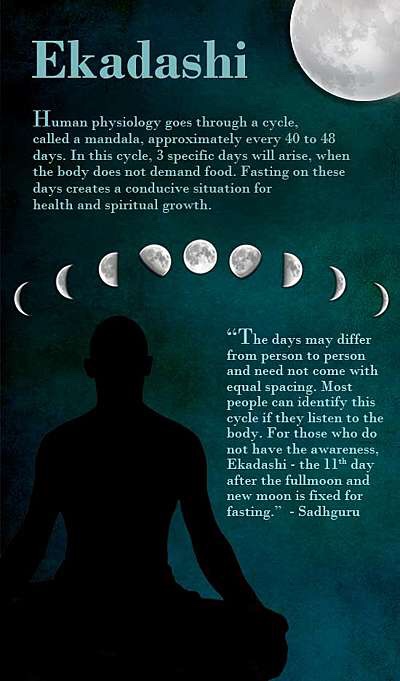
What is the Puranic legend that encouraged our ancestors to adopt intermittent fasting? It is the legend of the ritual fasting called “ekaadashi vratam” which some Hindu families … and I know for certain that some Sri Vaishnava ones too … even today observe regularly every fortnight on the 11th day of the waxing and waning monthly cycles of the lunar calendar .
The Vaishnava (Worshipers/Followers of Vishnu) sect believes that ‘Vaikunta Dwaram’ or ‘the gate to the Lord’s Inner Sanctum’ is opened on this day. The Margashirsha Shukla Paksha (waxing fortnight Dec-Jan) Ekadashi in the Lunar calendar is known as a ‘Mokshada Ekadashi.’ Special prayers, yagnas, discourses and speeches are arranged at Vishnu temples across the world on this auspicious day. The Shaiva sect observes the day as Trikoti Ekadashi, a religious observance where all the deities in the Hindu pantheon pay obeisance to Lord Sri Shiva at once. (Wikipaedia)
According to the Vishnu Purana, fasting on Vaikuntha Ekadashi is equivalent to fasting on the remaining 23 Ekadashis of the (Hindu) year.[4] However, according to Vaishnava tradition fasting is mandatory on all Ekadashis of both Shukla paksha and Krishna paksha. Fasting on Ekadashi is considered holier than any other religious observation. Complete Fasting has to be observed on Ekadashi, the 11th day of the Paksha. [1 Paksha = 15 days, One month (maasa) has 2 pakshas in Hindu Lunar Calendar.) (ibid)
The significance of Vaikuntha Ekadashi is mentioned in the Padma Purana. The legend says that the Devas, unable to bear the tyranny of ‘Muran’ – a demon, approached Shiva, who directed them to Vishnu. A battle ensued between Vishnu and the demon and Vishnu realized that a new weapon was needed to slay Muran. In order to take rest awhile so he could create a new weapon, Vishnu retired to a cave named after the goddess Haimavati in Badarikashrama. When Muran tried to slay Vishnu, who was sleeping, the female power that emerged from Vishnu burned Muran to ashes with her glance. Vishnu, who was pleased, named the goddess Ekadasi‘ and asked her to claim a boon. Ekadashi, instead, beseeched Vishnu that people who observed a fast on that day should be redeemed of their sins. Vishnu thus declared that people who observed a fast on that day and worshipped Ekadashi, would attain Vaikuntha (eternal salvation)
The demon Muran (according to the Purana lore) personifies what is called “Rajasic” and “Tamasic” qualities in people, attributed to lust, passion, rage, frustration inertia, arrogance, sloth, greed etc. When one conquers these tendencies, one attains the purity of mind, “Satva”, indispensable for attaining of moksha, the liberation or realization of the self. For realizing the self as pure awareness, purity of mind is required. Fasting helps to keep at bay tendencies which could be triggered by intake of certain foods that pollute such purity.
And that’s precisely where and why Ritual “intermittent fasting” helps.
Now, I find to my wonder, that the modern medical clinical- researcher … if you read the attached article you will know it too… calls the Puranic demon Muran by another high-sounding scientific name …. ! He calls it “gut dysbiotic microbiota”! And as I read more about this “dysbiotic” demon, and about how the doctors explain it behaves inside the human gut, the more I’m reminded of the very same physiological perils resident in me that are more generally termed as “Rajas and Tamas” by the Purana, and which indeed are sought to be removed by observing “EKAADASHI vratam” … a ritual which today goes by the fashionable name of “intermittent fasting”.
As for me … a practising Sri Vaishnava albeit nowhere anywhere near a perfected one … I can say that over the last few years I did begin observing regularly and ritually the Ekadashi Vratam which the Puranic Saastras (scriptures) have prescribed for me. And I might say confidently that so far … touch wood and I am a senior citizen … I do not suffer from any major complaints of any significant health disorder … at least certainly no wayward blood pressure , no hypertension or any bad blood-chemistry !
Today, let me also say this : I do daily offer thanks unto my deity, Bhagavan Sri Vishnu, for whose pleasure alone I dedicate indeed all my fasting on Ekadashi Days! It is He who I know keeps me protected from the demons lurking inside my body … the same demons the ancient Purana named as Demon Muran … and whose avatars in fact are those that, as today’s medical doctors say, appear inside the recesses of my gut and lay siege to it as “gut dysbiotic microbiota” !
Perhaps I should offer a small prayer of thanks also to those little laboratory Rats who have been so instrumental in confirming that Scientific discovery and Puranic myth are …after all … not enemies of each other.
So, ladies and gentlemen, in conclusion let me say this, even if you do not want to believe the myth or legend of Purana , you will have to now nonetheless believe in rodents , don’t you ?
Sudarshan Madabushi