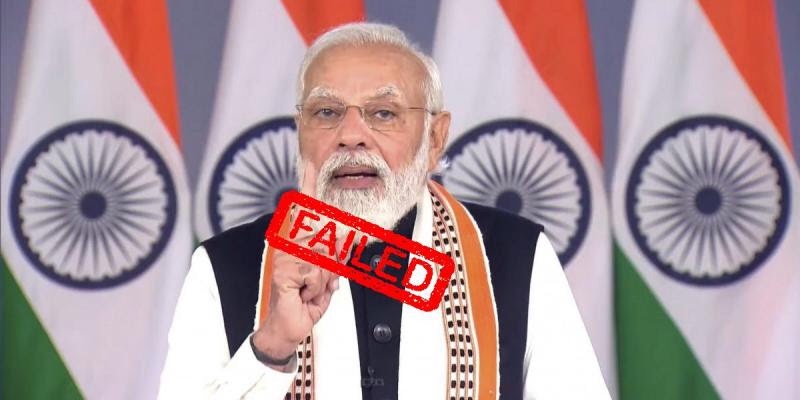
PM Modi a few days ago gave an admirable and thoughtful speech about citizens’ Duties that ought to be placed above Citizens’ Rights.
The tone and content of Mod’s speech was redolent of what John F Kennedy once famously exhorted citizens of America :
“Ask not what the country can do for you ; ask what you can do for the country”.
Modi as the Prime Minister of a nation of 1.5 billion proud people was only expatiating upon a lofty theme that is centred around a deeply-rooted ideal of Indian political philosophy found in our ancient scripture the Bhagavath Gita which, in fact, clearly defines in but a single simple but powerful Sanskrit couplet the whole of our civilisational attitude to human rights and human duties — do your duty as Karma first, for that is indeed highest reward in itself, being the most virtuous Dharma.
कर्मण्येवाधिकारस्ते मा फलेषु कदाचन।
मा कर्मफलहेतुर्भूर्मा ते सङ्गोऽस्त्वकर्मणि॥ २-४७
Karmanye vadhikaraste Ma Phaleshu Kadachana ।
Ma Karmaphalaheturbhurma Te Sangostvakarmani ।।
Meaning– Your right is to perform your work, but never to claim rights to the results. Never be motivated by the results of your actions, nor should you be attached to not performing your prescribed duties.
This OpEd piece in The WIRE today below however reduces the discourse on a subject-matter of lofty political philosophy to the lowest and cheapest street-level quality of pretentious “philosophical politics”. It needlessly personalises the issue by turning it into a polemical diatribe against the Prime Minister. It reduces philosophy to pettiness, mocks at idealistic expression with crass pettifogging, and employs specious legalese to solemnise vacuous argument.
The Wire 22 Jan 2022
So long as journalists in this country like these two authors of the above article are generously given prime column-space and prominence, and allowed as well to go on expressing and broadcasting their venomous spleen and viewpoints, the quality of public discourse in India will only continue to be what we see it to be in our daily life: miasmic in substance and grotesque of form.
Sudarshan Madabushi