A few interesting views on translation as a literary effort of the noted professional Marathi translator, Shanta Gokhale is the 2021 winner of the Sahitya Akademi award for English translation for Laxmibai Tilak’s ‘Smritichitre’.
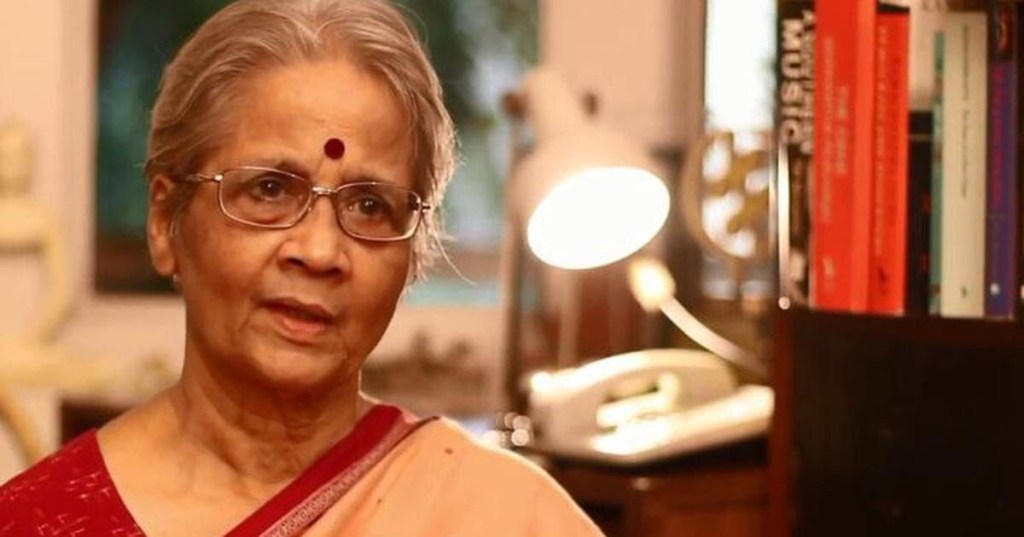
Quote
“I would be very upset if I were told that an author I had translated sounded like me. The aims and ideals of translation have travelled with time. Today we strive to keep as many of the textural, syntactical and rhythmic qualities of the original text intact in our translations as we possibly can.
Therefore, writerly pride in pocket, the translator submits to the original author’s voice. She doesn’t take over the original. She allows herself to be taken over by it.
“If the author of the original text writes a rough-edged prose that deliberately disregards some conventional rules of grammar and syntax, to smoothen out the rough edges would mean drowning out the author’s authentic voice. The translator must instead, stretch the possibilities of her language to accommodate that voice. In the process, she might even enrich her language.
“Walter Benjamin says, “The opportunity offered by translation is not a defensive one: to preserve, to embalm, the current state of the translator’s own language. Rather, it is an opportunity to allow a foreign tongue to influence and modify the language into which a work is being translated.”
Translators are often asked the question. “Does your choice of language depend on the readership for which you translate?”
“What the questioner has in mind is whether we orient our translation towards the American or the British reader. Some translators might. I don’t. I do not translate for a particular group of readers, wherever they live. I do not “planish and pat a masterpiece into a vilely beautiful shape” as Nabokov puts it in his essay on the art of translation, “to conform to the notions and prejudices of a given public.” For Vladimir Nabokov, such an act constitutes a crime that belongs to the third degree of a translator’s turpitude, “to be punished by the stocks as plagiarists were in the shoebuckle days.”
“A crime that Brodsky points to is dropping words and phrases that you don’t know the meaning of; and not giving yourself enough time to hunt for the meaning. Translation needs as much time as original writing. I find it very difficult to translate with a deadline hovering over my head. How do you know what traps lie in wait for you in the original text?
“I have spent days trying to find the meaning of a dialect word or phrase and more days digging for its nearest equivalent in English.
“Susan Sontag says in her St Jerome Lecture on Literary Translation, “By literary translation we mean, we could mean, the translation of the small percentage of published books actually worth reading: that is to say, worth rereading. I shall argue that a proper consideration of the art of literary translation is essentially a claim for the value of literature itself.” The purpose of translation, “the evangelical incentive” as she puts it, “is to enlarge the readership of a book deemed to be important.”
Unquote
Regards,
Sudarshan Madabushi
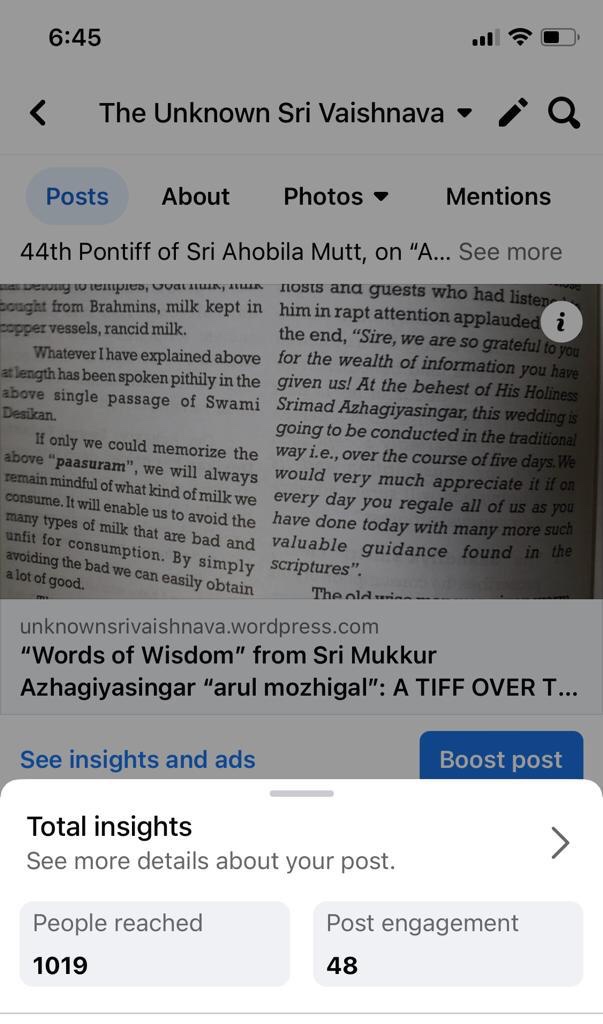
PS : my own several English translations of Srimad Azhagiyasingar’s Tamizh Arul Mozhi which I have over the past months been regularly uploading on to my web page on Facebook and WordPress is receiving overwhelming interest from world wide readers. It is very gratifying indeed for me personally.
Sudarshan.
On my FB page alone: 1019 views in 5 days
Another 125 views on my WordPress web page. Total 1164 readers

Sudarshan Madabushi