Between 1993 and 2020, as an expatriate corporate manager I lived and worked in … and travelled through …. several Arabic-Islamic countries in the GCC ( Arabian Gulf Council countries) and MENA (Middle East and North Africa countries). From my various resident-bases in Bahrain, Kuwait City, Cairo and then Riyadh, my work took me on very extensive travels through Egypt, Sudan, Turkey, Morocco and Qatar.
In my corporate career spanning 25+ years in that part of the world, I was privileged to forge and cherish many personal relationships — with colleagues and friends belonging to several countries in West Asia: Arabs, Egyptians, Sudanese, Palestinians, even a few Turks and Moroccans…
So, yes, I can and will, with all modesty, venture to say that because of my travels there, I am well acquainted with the Arab-Islamic geography, history and culture despite not being fluent in the language spoken by peoples of the Middle East and North Africa. It is on the strength of my 25+ years’ long acquaintance with the Arab world and its fascinating history and old culture that I say this today : In the consecration of the Ayodhya Ram Mandir in 2023, I see remarkable parallels and contra-parallels in the ancient but utterly ravaged history of Pharaonic Egypt and Vedic India. It’s a historical parallel that Dr. David Frawley‘s (aka Vamadeva Shastri) phrase, “civilisational awakening”, used by him in a recent TV interview with an Indian news channel (watch above), evokes in my mind.
The Parallel:
The ancient culture of Egypt was Pharonic. The ancient culture of Bharathavarsha was Vedic. What exactly is the parallel between the history of Egypt and that of India which is discernible in the context of the Ram Mandir, Ayodhya?
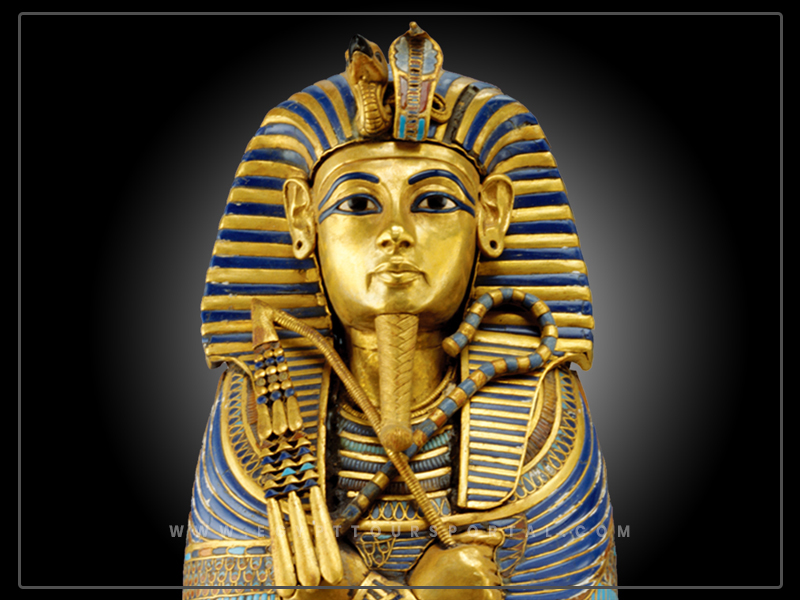
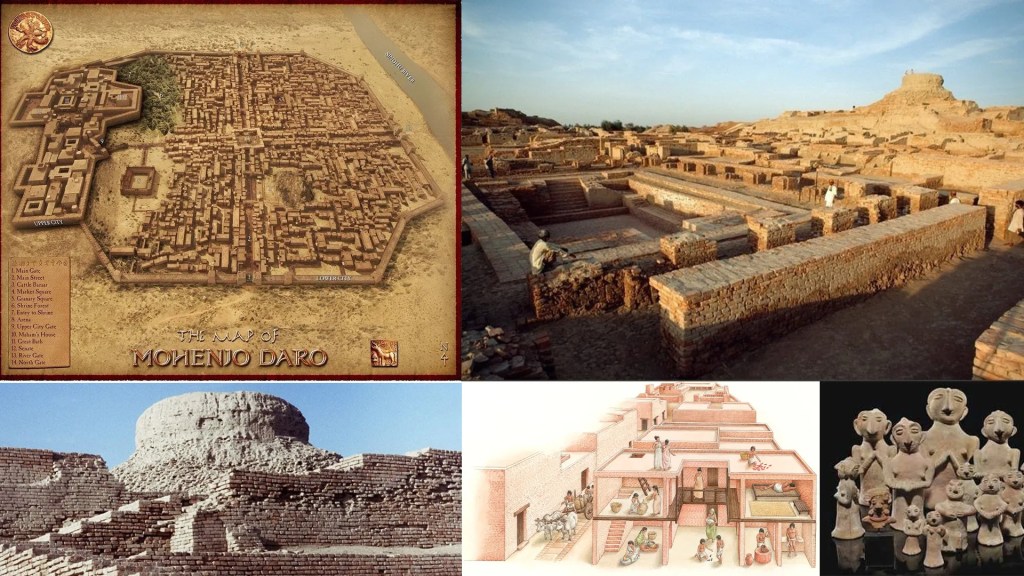
A few quick and brief snippets of ancient history of the two civilisations helps to reveal the near sameness of the two cultures: (https://www.worldhistory.org/india/; (https://en.m.wikipedia.org/wiki/Pharaonism )
- Ancient Egypt was a civilization of ancient Northeast Africa, concentrated along the lower reaches of the Nile River, situated in the place that is now the country Egypt. Ancient Egyptian civilization followed prehistoric Egypt and coalesced around 3100 BC (according to conventional Egyptian chronology) with the political unification of Upper and Lower Egypt. The history of ancient Egypt occurred as a series of stable kingdoms, separated by periods of relative instability known as Intermediate Periods: the Old Kingdom of the Early Bronze Age, the Middle Kingdom of the Middle Bronze Age and the New Kingdom of the Late Bronze Age.
- Ancient India was a country in South Asia whose name was ‘Bharata‘, whose story is told, in part, in the Indian epic Mahabharata. According to our Puranas (religious/historical texts written down in the 5th century CE), the land was, therefore, known as Bharatavarsha (`the subcontinent of Bharata’). Hominid activity in the Indian subcontinent stretches back over 250,000 years, and it is, therefore, one of the oldest inhabited regions on the planet. The Indus Valley Civilization (c. 7000-c.600 BCE) was among the greatest of the ancient world, covering more territory than either Egypt or Mesopotamia and producing an equally if not more vibrant and progressive culture. The most famous sites of this period are the great cities of Mohenjo-Daro and Harappa both located in present-day Pakistan. Harappa has given its name to the Harappan Civilization (another name for the Indus Valley Civilization) which is divided into Early, Middle, and Mature periods corresponding roughly to 5000-4000 BCE (Early), 4000-2900 BCE (Middle), and 2900-1900 BCE (Mature). Harappa dates from the Middle period (c. 3000 BCE) while Mohenjo-Daro was built in the Mature period (c. 2600 BCE).
- The success of ancient Egyptian civilization came partly from its ability to adapt to the conditions of the Nile River valley for agriculture. The success of the Vedic civilization can be attributed again to agriculture that was carried out extensively across the length and breadth of the land, all along vast riverine, alluvial plains and deltaic regions of a host of great rivers such as the Ganga, Yamuna, Narmada, Godavari, Kaveri and Tamrabarani….
- In ancient India, the religious beliefs which characterized the Vedic Period are considered much older than any other world civilisation’s. It was during this time that they became systematized as the religion of Sanatana Dharma (‘Eternal Order’) known today as Hinduism . The underlying tenet of Sanatana Dharma is that there is an order and a purpose to the universe and human life and, by accepting this order and living in accordance with it, one will experience life as it is meant to be properly lived. While Sanatana Dharma is considered by many a polytheistic religion consisting of many gods, it is actually monotheistic in that it holds there is one god, Brahman (the Self but also the Universe and creator of the observable universe), who, because of his greatness, cannot be fully apprehended save through the many aspects which are revealed as the different gods of the Hindu pantheon. It is Brahman who decrees the eternal order — Dharma — and maintains the universe through it. This belief in an order to the universe reflects the stability of the society in which it grew and flourished as, during the Vedic Period, governments became centralized and social customs integrated fully into daily life across the region. Besides The Vedas, the great religious and literary works of the Puranas, the Mahabharata, Bhagavad-Gita, and the Ramayana all come from this period.
- Similar to the concept and belief of Dharma in the Vedic civilisation, the Egyptians too had a conception of an ordered cosmos that the Pharoanic priests believed was surrounded by and shot through with disorder, which had to be kept at bay. Disorder menaced most strongly at many times of transition during the passage of History leading from one era to the next. The concept of maat (“order”) was fundamental in Egyptian thought. The king’s role was to set maat in place of isfet (“disorder”). Maat was crucial in human life and embraced notions of reciprocity, justice, truth, and moderation.
- Maat was perhaps a distant Pharaonic echo of Vedic Dharma. The Pharoah or king’s offering of maat to a deity encapsulated the relationship between humanity, the king, and the gods; as the representative of humanity, he returned to the gods the order that came from them and of which they were themselves part. In the Vedic times in India, the role of the King — the “chakravartin” — in upholding, enforcing and affirming Dharma was conceived too as the same. It was divinely ordained by royal duty as laid down in the Dharma-Sastras under whose jurisdiction came all of society — the individual, family, the corporations, and the King or Raja as well. “The welfare of the King was held to be rooted in the welfare of the people. Political union was sanctified by religious sanction. The King and Dandam, the spirit of punishment or justice (power of sanction), were both of divine creation. … A reciprocal influence, generated by Dharma, was believed to connect right or wrong living with cosmic influences of a supernatural character”. (“Rajadharma”: K.V.Rangaswami Aiyangar (Adyar Library 1941).
- A FEW MORE PARALLELS
- Egyptian identity since the Iron Age Egyptian Empire evolved for the longest period under the influence of native Egyptian culture, religion and identity . The Egyptians came subsequently under the influence of a succession of several foreign rulers, including Persians, Greco-Macedonians, Romans and Arab Caliphates. Under these foreign rulers, the Egyptians accommodated three new religions, Christianity, Judaism, and Islam, and produced a new language, Egyptian Arabic. By the 4th century, the majority of the Egyptians had converted to Christianity and in 535 the Roman Emperor Justinian ordered the Temple of Isis at Philae closed, which marked the formal end of the ancient religion of Egypt.
- During the Middle Ages, the monuments of the ancient Egyptian civilization were sometimes destroyed as remnants of a time of jahiliyyah (“barbarous ignorance”). The majority of the destruction of the ruins occurred in the 13th and 14th centuries CE, a time of floods, famines and plagues in Egypt, leading some people to believe that Allah was punishing the Egyptians for the continued existence of these relics of a time of jahiliyyah. The most notable acts of destruction in the Middle Ages were the tearing down of a statue of the goddess Isis in 1311 in Fustat and the destruction of a temple in Memphis in 1350. Historians point out that the Koran singled out the Pharaoh whose story is related in the Book of Exodus as an especially vicious tyrant opposed to Allah, and in general the Pharaohs are portrayed in Islamic tradition as depraved despots reveling in jahiliyyah. Several Muslim leaders such as the Caliph Yazid III ordered the destruction of all the pharaonic monuments.
- Now, let’s turn to India.
- Cyrus II (the Great, r. c. 550-530 BCE) of the Persian Achaemenid Empire (c. 550-330 BCE) who invaded India in 530 BCE, initiated a campaign of conquest in the region. Ten years later, under the reign of his son, Darius I (the Great, r. 522-486 BCE), northern India was firmly under Persian control (the regions corresponding to Afghanistan and Pakistan today) and the inhabitants of that area subject to Persian laws and customs. Persia held dominance in northern India until the conquest of Alexander the Great in 330 BCE who marched on India after Persia had fallen. Again, foreign influences were brought to bear on the region giving rise to the Greco-Buddhist culture which impacted all areas of culture in northern India from art to religion to dress.
- Following Alexander’s departure from India, the Mauryan Empire (322-185 BCE) rose under the reign of Chandragupta Maurya (r. c. 321-297 BCE) until, by the end of the third century BCE, it ruled over almost all of northern India, after defeating the Nanda Kingdom. Chandragupta’s son, Bindusara (r. 298-272 BCE) extended the empire throughout almost the whole of India. His son was Ashoka the Great (r. 268-232 BCE) under whose rule the empire flourished at its height.
- The Mauryan Empire declined and fell after Ashoka’s death and the country splintered into many small kingdoms and empires (such as the Kushan Empire) in what has come to be called the Middle Period. This was a time of individual and cultural development in the various kingdoms which finally flourished in what is considered the Golden Age of India under the reign of the Gupta Empire (320-550 CE). Virtually every aspect of culture reached its height under the reign of the Guptas. Philosophy, literature, science, mathematics, architecture, astronomy, technology, art, engineering, religion, and astronomy, among other fields, all flourished during this period, resulting in some of the greatest of human achievements.
- The Gupta empire declined slowly under a succession of weak rulers until it collapsed around 550 CE. Thereafter, in 712 CE the Muslim general Muhammed bin Quasim conquered northern India, establishing himself in the region of modern-day Pakistan. The Muslim invasion saw an end to the indigenous empires of India and, from then on, independent city-states or communities under the control of a city would be the standard model of government by kings, princes and feudal warlords.
- The Islamic Sultanates rose and was established in India. The disparate world views of the religions — Hinduism, Islam, Sikhism, Buddhism, Jainism — which now contested each other for acceptance in the region and the diversity of languages spoken, made the unity and cultural advances, such as were seen in the time of the Guptas, difficult to reproduce ever again in Bharathavarsha. Consequently, the whole of the continent was easily conquered by the Islamic Mughal Empire. India would then remain for over 1000 years subject to various foreign influences and powers – among them the Portuguese, the French, and the British.
- Under the foreign rule of the Islamic Sultanate, the Mughal Dynasty and British imperialist-colonialist rule, all of India continually suffered civilizational destruction just as the ancient Egyptian civilization too had undergone throughout its own history. Hindu temples were destroyed, Sanksrit language was replaced by Persian and later by English; Hindu Vedic education was banished to be replaced by Macaulayian models of modern education; Hindu history was re-written wholesale by European Orientalists and Indologists; age-old Hindu societal models based on varnashrama systems were vilified and outlawed; village economies, peasantry and tradecrafts were taxed to extinction; and plundering and looting of the country’s natural and cultural wealth was carried out for hundreds of years with total impunity.
- Both ancient Egyptian and India civilizations over a period of at least 5000 years in history were subjected thus to the most viciously systematic and complete form of cultural genocide carried out by generations that were the most hegemonistic and blood-thirsty of imperial forces in the world.
Where the Parallel ends
The parallel between Pharaonic and Vedic civilisational historical growth and evolution ends in the modern era in a very strikingly contrasting manner.
The Pharonic identity of Egypt was utterly erased from the face of the peoples of the Nile. The Vedic identity of the peoples of the great alluvial plains of India, however, although ravaged and nearly destroyed by the modern forces of secularism and industrialism, managed to somehow survive.
How did it all happen?
MODERN EGYPT
Egypt’s most notable writer of the 20th century, Taha Hussein was an outspoken champion of old Egypt’s civilizational identity. He expressed his disagreement with Arab unity and his beliefs in Egyptian nationalism on multiple occasions. In one of his most well known articles, written in 1933 in the magazine Kawkab el Sharq, he wrote saying:
Pharaonism is deeply rooted in the spirits of the Egyptians. It will remain so, and it must continue and become stronger. The Egyptian is Pharaonic before being Arab. Egypt must not be asked to deny its Pharaonism because that would mean: Egypt, destroy your Sphinx and your pyramids, forget who you are and follow us! Do not ask of Egypt more than it can offer. Egypt will never become part of some Arab unity, whether the capital [of this unity] were to be Cairo, Damascus, or Baghdad
https://en.m.wikipedia.org/wiki/Pharaonism
Until the 1940s, Egypt was more in favour of territorial, Egyptian nationalism and distant from the pan-Arab ideology. Egyptians generally did not identify themselves as Arabs. Many young Egyptians in the modern era believed that their civilization was was not that of just another Muslim and/or Arab nation, but rather as having a very distinctive identity owing to the heritage of ancient Egypt. However, the modern nation of Egypt was torn apart by conflicting claims to its true heritage. Islam and Arabia claimed Egyptian civilization as its own!
“Pharaonism” was condemned by Hassan al-Banna, the founder and Supreme Guide of the fundamentalist Muslim Brotherhood, as glorifying a period of jahiliyyah (“barbarous ignorance”), which is the Islamic term for the pre-Islamic past. In a 1937 article, Banna attacked Pharaonism for glorifying the “pagan reactionary Pharaohs” like Akhenaten, Ramesses the Great and Tutankhamun instead of Prophet Muhammad and his companions and for seeking to “annihilate” Egypt’s Muslim identity. Banna insisted that Egypt could only be part of the wider Islamic ummah (“community”) and that any effort to mark Egyptian distinctiveness from the rest of Islamic world was going against the will of Allah.
Egypt under King Farouk was a founding member of the Arab League in 1945, and the first Arab state to declare war in support of the Palestinians in the Palestine War of 1948. This Arab nationalist sentiment increased exponentially after the Egyptian Revolution of 1952. The primary leaders of the Revolution, Muhammad Naguib, and Gamal Abdel Nasser, were staunch Arab nationalists who stressed that pride in Egypt’s individual indigenous identity was entirely consistent with pride in an overarching Arab cultural identity. It was during Naguib’s tenure as leader that Egypt adopted the Arab Liberation Flag to symbolize the country’s links to the rest of the Arab Muslim World.
MODERN INDIA
In the modern era, pre-Independence and post-Independence India too has witnessed the onset of a severe and deeply debilitating civilisational identity crisis not unlike that of the Egyptian Pharaonic one.
The Nehruvian view of India’s civilisation was openly secularistic and fundamentally opposed to the very idea that India’s civilisation always was and is rooted in Vedic or Hindu roots. That idea was dismissed as being “obscurantist and reactionary” and out of touch with the modern world of science, industry and technology. It was a very Nehruvian way of saying that the Vedic civilisation represented fundamentally Islamic “jahiliyya“.
Many post-Independence historians, intellectuals, legal luminaries and political ideologues and commentators in India were greatly influenced by the Nehruvian worldview which held that the ancient Vedic religious ethos must be rejected and instead be replaced by modern, European Enlightenment ethos and new-age value-systems based on Reason or “scientific temper“, on principles of Equality, Secularism, Liberalism and Individualism. The Nehruvian clearly did not appreciate the cardinal fact of History which Samuel Huntington in his famous book “THE CLASH OF CIVILIZATIONS” (1996) had described in these words: “Religion is a central defining characteristic of civilizations, and, as Christopher Dawson said, “the great relgions are the foundations on which the great civilizations rest””
Underlying also the Nehruvian worldview was the conviction that ancient India was neither a nation state nor a civilisational state. Vedic civilisation was nothing but a Brahminical concoction of sorts. Many modern historians and even mythology-experts like Devadutt Pattanaik, assert even today that, “India is a passive entity without any agency, which from time to time underwent significant historical change under the influence of invasions and immigrations. Thus the Aryans (from Central Asia) brought to India Sanskrit language and its associate culture; the ancient Greeks brought philosophy, mathematics and astronomy; the Mughals gave India art, architecture and composite culture; while the British gave India modernity, science, technology and railways…. Every significant positive change or major shift in Indian society post-Aryans has been on account of external impetus or invasions, while all social evils in India are attributable to the inherently discriminatory and rigid practices of Brahminical Hinduism”.
In other words, according to a whole generation of historians in post-Independence India, there “might not even be such a historical entity as India or (Vedic) Hinduism.. for its civilisation was entirely brought by foreigners into India”.
Ramachandra Guha, eminent historian of India today, furthermore went on to assert that “the British, despite their vilest motives in conquering India, were an unconscious tool of history, compelling the best and the bravest Indians to correct what was flawed in their society and politics“.
CULTURE WAR
Now, the Indian counterpart of King Farouk and Jamal Abdul Nasser in modern Egypt was of course India’s first Prime Minister, Jawaharlal Nehru, who came to be acknowledged, arguably today, as the architect of modern, democratic, socialistic and secularistic India. Historians and academicians extolled him for steering India out of its ancient (Vedic) civilisational delusions of grandeur and into modern enlightenment. Nehru was hailed for upholding the “secular and pluralistic values of India and for constantly reinforcing those values through his efficient administration, thereby preventing communal conflicts and holding the society in harmony… He helped fight religious chauvinists… and harmonized the masses with the classes…. Ramachandra Guha wrote that it was thanks largely to the Nehruvian imprint on India that ensured her “perfect bond with the world” and which also served as “India’s representative to the great Western democracies and also as their representative to India“.
Throughout the seven long decades of the post-Independence era in India, there has been a perennial, uncompromising and increasingly rancorous “culture war” between the forces of Nehruvian Secularism and Vedic Civilisational champions (who today are being called pejorative names such as “Hindutva fanatics“, “Sanghi bigots” or “Hindu Fundamentalists“).
In Egypt too (which became a Republic only in 1952), there was similar but not as strongly or bitterly long-drawn “culture war” fought.
“Egypt has been both a leader of pan-Arabism and a site of intense resentment towards that ideology. Egyptians had to be made, often forcefully, into “Arabs” [during the Nasser era] because they did not historically identify themselves as such. Egypt was self-consciously a nation not only before pan-Arabism but also before becoming a colony of the British Empire. Its territorial continuity since ancient times, its unique history as exemplified in its pharaonic past and later on its Coptic language and culture, had already made Egypt into a nation for centuries. Egyptians saw themselves, their history, culture and language as specifically Egyptian and not “Arab.” (https://en.m.wikipedia.org/wiki/Pharaonism)
Whereas in Egypt, the Pharaonists clearly lost the “culture war”, in India however, the Vedic civilisationalists were only subdued but never defeated.
Pharonic culture was totally extinguished and forever banished from Egyptian society where Islam and pan-Arab Nationalism emerged as all powerful, all-pervading people’s self-identity. In India, however, the common people to whom ancient Vedic tenets of faith was embedded in their very DNA, the ancient civilisation of the Hindus stubbornly refused to die. There were of course many points in time in history when it was close to being totally submerged by the rising tide of Western political and social ideologies such as Marxism, Liberal Socialism and Secularism as well as by global Christian Evangelism and Islamic expansionism which were handmaidens to the ideological political imperialism. But then the ingrained resilience of Sanatana Dharma helped to keep the body, mind and soul of Indian civilisation alive despite odds iand challenges it had to face in modern India. What made the Vedic civilisation so resilient?
The answer clearly is: Because it was founded on Religion. In a very insighful, almost prophetic passage in his book, The Clash of Civilizations, Samuel Huntington wrote this in 1996:
“The great political ideologies of the 20th century include liberalism, socialism, anarchism, corporatism, Marxism, communism, social democracy, conservatism, nationalism, fascism and Christian democracy. They all share one thing in common: they are products of Western civilisation. No other civilisation in the world has generated a significant political ideology. The West however has never generated a major religion. The great religions of the world are all products of non-Western civilisations and, in most cases, antedate Western civilisation. As the world moves out of its Western phase, the ideologies which typified late Western civilisation decline, and their place is taken by religions and other culturally based forms of identity and commitment. The Westphalian separation of religion and international politics, an idiosyncratic product of Western civilisation, is coming to an end, and religion, as Edward Mortimer suggests, is “increasingly likely to intrude into international affairs.” The intracivilisational clash of political ideas spawned by the West is being supplanted by an intercivilisational clash of culture and religion.”
Subhodeep Mukhopadyay is a researcher in Civilisational Studies whose published works in academia today in India are well respected. He writes about the resilience of Vedic civilisation as the bedrock of India as a nation-state:
“While it is true that India as a nation state may not have existed (in ancient times) until recently, that does not mean that India as a civilisational state, subsuming clans, tribes and kingdoms, never existed. When Darius I, in 515 BCE referred to India as the land of the Hind he, as well as the Indians whom he referred to, had a very good idea of whom Darius was talking about.
“When Megasthenes (350 BCE) talked about “Indica”, and came to India, it was not some imaginary, amorphous South Asia that he visited, but a real land with well-defined borders, cultures and practices. Indians had their own traditional categories of rajya, raashtra and desha to denote various levels of citizenship, and well known terms of self-identity like Bharathavarsha and Aryavarta.
“Apart from this, Indians had their own models of civilisational unity, such as sacred geography as encapsulated in the pan-India tirtha-sthala (pilgrimage sites) of Kumbha-mela Shakthi-pithas and Jyotilingas and those mentioned in the Ramayana and Mahabharatha. (Mention must be made here too of the several scores of ancient Vedic temples in South India that are monumentalized today as “paadal-petra-sthalams” and “divya desams” — where the bhakthi poets, Nayanmars and Azhwars, sang their immortal hymns in Tamizh).
“Even today across India, when Hindus perform the jala shuddhi or water sanctification ritual, they invoke the seven pan-Indian rivers Ganga, Yamuna, Narmada, Godavari, Sindhu, Saraswati abd Kaveri. In other words, from ancient times, Indians had a reasonably clear idea of India’s civilisational spread and understood Dharma as the unifying principle which bound diverse people, languages, societies and cultures together. Diversity and multiplicity in India is civilisationally bound by the Hindu (Vedic) thread — it is neither chaotic nor a synthetically unified diversity….”
******************
The Pharaonic Civilization had only one great river, the Nile, upon which its ancient culture was rooted and flourished. But when a foreign civilisation, the Islamic juggernaut, overran, overtook and overcame it, it crumpled and faded away.
A resurgence of Pharaonism, dubbed “Neo-Pharaonism”, has been noted in today’s Egypt, coming from both the state and the people.
The Egyptian government under president Abdel Fattah el-Sisi has openly embraced the ancient Egyptian aesthetic. In 2020, a 90-ton obelisk depicting the pharaoh Ramses II was erected in Tahrir Square. Throughout 2021, various extravagant parades were organized around the transportation of mummies and other artifacts to the Grand Egyptian Museum. Similar spectacles, including musical performances in the ancient Egyptian language, followed the opening of the Avenue of Sphinxes later that year. The First Lady Entissar Amer declared that she felt proud of “belonging to an ancient civilization“.
The Neo-Pharaonic trend has been analyzed as a rather unique movement for Egypt, given that it is a state-sponsored “populist discourse of identity politics” which moves away from Islamism and pan-Arabism towards the promotion of a special Egyptian identity. Curiously, no widespread Islamist backlash towards Neo-Pharaonism has been observed yet.
It is too late in the day however for neo-Pharaonism to revive and reinvigorate again Egypt. History has passed it by…. irrevocably.
***************
The Vedic civilisation of India however has fared much better because its Religion has proved to be indomitable and resistant to the onslaught that Western civilisations — first Islam, then Christian, first Marxism and then Secularism — had mounted upon it over the last 1000 years.
In 2023, the building of the Ram Mandir at Ayodhya is a celebration of the “awakening of the Vedic Civilisation” (to borrow Prof. David Frawley’s phrase) which until had been eclipsed by invading religions and irreligious ideologies. The Ram Mandir resurrection is indeed Vedic Civilisation’s way of telling the world:
“I’m not going down the way that Pharoanic Egypt was forced to go — into cold catacombs and dead pyramids where only madding crowds of worldwide tourists would gather to gawk emptily at them or take selfies with”.
Sudarshan Madabushi