The year 2024 could well be a watershed moment for modern India.
There is amongst many sections of our people today an exciting Vision of India as “Vikshith Bharath 2047” i.e. a country in the comity of nations of the world recognized at last as fully developed in the centenary year of our Independence. The vision seems to have fired up the imagination of many of the educated youth in India. As a senior citizen who will not live to 2047, I do hope my children and grandchildren will however proudly live in such a country.
After witnessing all through last week the public brouhaha over l’affaire T M Krishna Sangitha Kalanidhi’2024, I couldn’t help wondering and asking myself a laterally framed question: Will the Madras Music Academy too like India become “vikshith” in the year 2047?
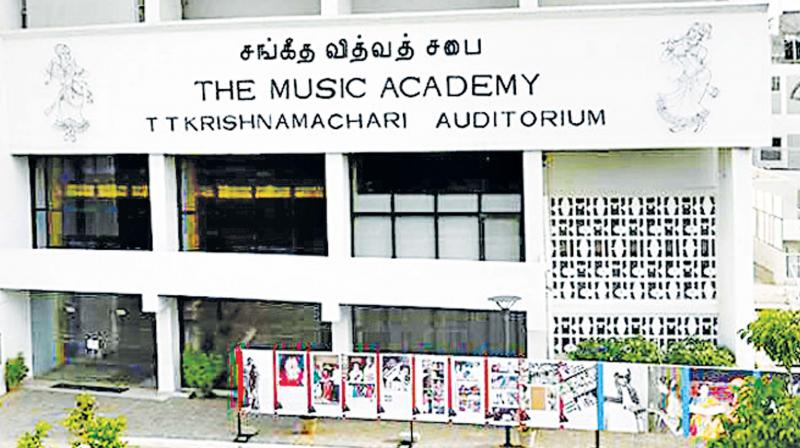
To elicit other people’s views first before I formed mine own, I put the same question to quite a few of my close rasika-friends. Most of them only shrugged it off with nonchalant comments I paraphrase below :
“Look, don’t you go losing sleep over the question. The TMK affair is really nothing more than a storm in a tea-cup. It will be regarded in the future as a sensational development in the history of the Madras Music Academy, no doubt, but nothing really epochal.
“TMK being knighted “Sangitha Kalanidhi” might change him a bit both as musician and person; he might get assimilated by and into the traditional ecosystem so that he no longer stands out as a sore-thumb, eyesore or “bad boy” of the Carnatic music world but will simply appear instead as its one-time festering wound that ultimately healed into a scar … a blemish but not a blight on the institution. But nothing else major however will have changed Carnatic music even in 2047.… plus ça change, plus c’est la même chose, as the French say.
“This musical ecosystem is a unique cultural continuum. It will continue to be a classical performing-art that remains as difficult and arduous to master as ever, and as fiercely competitive a profession to survive within easily. Therefore it will only continue to be as culturally elitist as it always has been. Those few who can make the cut in the field will always succeed in being able to make it to the top-league and bask there in the spotlight. Other lesser mortals or less lucky artistes will continue to plod on in the field nonetheless, sincerely pursuing the art purely as passion in life.
“It doesn’t matter what caste or social class they might belong to … But then genetic predisposition will still always play a great role in deciding who takes up the art to make a mark in it and who will blame their lack of success on other factors many of which TM Krishna himself all these years has himself been ranting about as a maverick — viz . elitism, brahminism, exclusivism and specious so-called “cultural hegemony”.
Nobody, not even T M Krishna, can de-brahminize Carnatic music because the music’s own power to brahminize anyone who takes to it is far greater.
Antiquarian veneration of everything Carnatic Music stands for — i.e. bhakthi, sastra, ‘paataantharam“, dharmic traditions etc. — can never be wiped out from the hearts of any Vidwan, teacher, disciple or rasika who comes forward to drink deep from the springs of religio-aesthetic experience found in this art-form. No, never at all! And it doesnt matter whether you are a brahmin or from any caste or walk of life.
“Alright, if you don’t want to call it genetic disposition that propels a person to take up this music as a career because you suspect that is a phrase with caste undertones, then you can simply call it a unique artistic predilection attracting men and women of all castes, social class or generations to the charms of Carnatic music”.
When asked to explain the rationale for their rather overly optimistic views above , my good rasika-friends told me this:
“Carnatic Music is like Sanatana Dharma. It has the same resilience to survive, overcome and triumph any vicissitude of history no matter how grave or existential are the larger sociological threats to it. A hundred TM Krishnas cannot break its spirit. Carnatic Music as art-from will always remain timeless and its votaries and practitioners shall be eternal too”.
*************
In sharp contrast to the above views expressed, there are other as many rasika friends of mine who have a diametrically opposite take on the matter. Their contrarian and far less optimistic views also do matter a lot and I paraphrase them all below:
The year 2024 heralds a watershed for the Madras Music Academy since in many way it presages a Vision 2047 for this 1928-founded premier cultural institution of Carnatic Music. This year marks the fin de siècle of the Age of the Brahmins and the ushering in of a new era in the annals of the Academy.
When pressed to explain the rationale of their rather dim views, they say the MMA from the year 2024 onwards is no longer an institution devoted exclusively to the furtherance of Carnatic Music. MMA has publicly admitted to the fact. One only has to refer to the Citation it released just last week to the Press and the Media while announcing why it was choosing T.M.Krishna as the 2024 Sangitha Kalanidhi. Read more at:
http://timesofindia.indiatimes.com/articleshow/108570539.cms?utm_source=contentofinterest&utm_medium=text&utm_campaign=cppst:
QUOTE: “Renowned carnatic singer T M Krishna has been conferred the Sangita Kalanidhi for 2024 by the Music Academy. He has used his music as a tool for social reform. A writer with analytical books to his credit on music, Krishna has received several awards for his music, his writing and his championing of social causes”. UNQUOTE
Given the MMA’s own admission that Carnatic Music and Social Reform agenda of the kind that T M Krishna espouses can no longer be separated or firewalled from each other, it is only logical to conclude that the MMA itself — when year 2047 arrives — will undergo profound change so as to be able to reflect and embrace societal churn taking place all around it. It is entirely possible to imagine “Vikshith Madras Music Academy” or the MMA in 2047 morphing as it were into a new normality that would be very different from the pre-2024 paradigm that has been prevailing until today.
************
What might be the shape and contours of this future “new normal” in the Madras Music Academy however can only be left to one’s imagination, conjecture or speculation. Given below are sketches of a few such:
1. The MMA would probably stand re-named as DMMA i.e. Dravida Munnetra Music Academy.
2. In the Academy’s Hall of Fame where in the foyer the portraits of “Sangitha Kalanidhis” all hang, those awarded the title between 1929 through 2023 would become known as “BC Kalanidhis” and those honoured between 2024 and 2047 would be designated “AD Kalanidhis”. (For example, my mother Smt. Mani Krishnaswami who was awarded the title in the year 1993 would henceforth be referred to only as a “BC Kalanidhi”, I guess!).
3. This re-christening of Sangitha Kalanidhis might have to be effected by DMMA to mark the watershed year 2024 as Anno Domini which, in the Christian era denotes “the year of our Lord Jesus Christ” while in the world of Carnatic Music , the year 2024 would signify the “Year of the Saviour, our Lord Krishna”. Both were great social reformers, were they not?
4. The building that houses today the central hall would no longer be known as the TT Krishnamachari Auditorium but would be re-named after his more illustrious grand-nephew, and hence will come to be known as “TM Krishna Auditorium” .
5. Today three huge portraits of Carnatic Music world’s “Musical Trinity” (viz.: Thyagaraja, Muthuswamy Deekshithar, Syama Sastry) adorn the wall fronting the audience in the central auditorium. The holy Trinity will in all probability have metastasised by the year 2047 into an even holier Musical Panoply. In the name of a “Cultural Revolution” (not unlike that Mao Tse Tung initiated), this Holy Panoply will have been thoroughly de-Brahminized and get re-constituted to start reflecting the “inclusive” and “social justice” values of the Dravidian ethos in Tamil Nadu.
6. The new Musical Panoply will include a lot many hitherto not so well-known “vaggeyakaaras” and musicologists of the past in the BC Kalanidhi era who for well over 200 years had been almost wholly eclipsed by the Musical Trinity and its compositions. They would include notable examples such as Abraham Pandithar‘s (19th century) the author of கர்ணாமிருத சாகரம்’, the first book on தமிழிசை; Chinnaswami Mudaliar; Muthu Thandavar, Marimutha Pillai and Arunachala Kavi et al… all resurrected and placed now in the same pedestal alongside the Trinity.
7. Far more importantly, the many outstanding “vaggeyakaaras” of the present times and many more of those yet to emerge in the upcoming future in the AD Kalanidhis era would also find themselves iconized alongside the portraits of the erstwhile Trinity who most likely by 2047 will have been relegated to the status of “historic also-rans”.
8. What has all through the past centuries remained outside the fringes of mainstream Carnatic Music — i.e. the genres of folk-music, fusion music, “gaana music”, “villu-paattu”, Carnatic rock etc. — by 2047 will all have also moved centre stage. “Move aside! M/s Thyagaraja, Deekshithar, Syama Sastri , Purandara Dasa, Sadashiva Brahmendra, Swati Tirunal or Subbaraaya Sastri! … Make way for new age vaggeyakaaras“ ! That would be the new normal.
9. T M Krishna has been awarded Sangitha Kalanidhi not only for musical excellence but for also blazing a new trend amongst modern musical composers. Through his very own path-breaking compositions on secular themes — such as “poremboke land“, “salaamuttalah” and many others of the Perumal Murugan portfolio of kritis — he has shown how since “Bhakthi” is no longer the sole or dominant “rasa” underpinning Carnatic Music, the themes and motifs of the post-TMK musical compositions has been liberated from the fold of Sanatana Dharma. Musical composers — i.e. new age “vaggeyakaraas” — can bloom forth now like a thousand flowers. They can now boldly emulate T M Krishna himself !
10. One of the most important lessons that modern history teaches us this: that “the glory of the winners’ ascendent fortunes gives everything of theirs — even their dress, gait, their conversation — a radiance that makes them desirable. And people do not merely adopt them, but they are proud to adopt them”.
11. Thus, the new-age “vaggeyakaaras” will now be encouraged to give full rein to their long-latent creative energies to compose “kritis” on themes such as atheism, rationalism, wokeism, multi-faith-ism, egalitarianism, free-spirited liberalism and musical fusion-ism. Many of the new compositions would probably be inspired by and dedicated to both the worship of Dravidian icons and the denigration of Aryan gods and goddesses. On the kutcheri stage itself, sartorial styles and deportment would also follow the new T M Krishna-trend style: the lungi will replace the veshti, skull-caps, designer T-shirts, tunics and colourful jackets too might become the “new normal”.
12. There are 25 long years ahead in the “AD Kalanidhi era” to the year 2047. This period leading to “Vikshith DMMA” is long enough in history indeed to see a new wave of creative renaissance wash over the Carnatic Music World where the poetic output of Bharathidasans, Perumal Murugans, the Vairamuthus, Karunanidhis, Jayamohans, Jayakanthans and many others of the same ilk will surge and flourish… and be turned into copious kritis … grand, popular pieces for the kutcheri stage.
13. The post-TM Krishna, AD-Kalanidhi era will see a new generation of Sangitha Kalacharyas and gurus who will start teaching and nurturing a brave new world of young students and vidwans who will be encouraged to go on adding to their repertoire many of the compositions of these new-age vaggeyakaras.
14. One should not be surprised if Sangitha Kalanidhi TM Krishna himself soon composes a Periyar Pancha Ratna Kriti. All aspiring Vidwans and ardent students would be expected to learn and be able to render them as reverentially as they do the Thyagaraja Pancha Ratna kritis. And just as on Bahula Panchami Day Thyagaraja Aradhana is commemorated by group renditions of the latter , so too would the Periyar Pancha Ratna kritis be solemnly sung at DMMA on the Periyar birth anniversary Aradhana .
15. The centre-piece of the Holy Musical Panoply would of course be a grand portrait of “Thandhai Periyar, E. V. Ramaswamy Naicker” — the moving spirit of the new DMMA.
16. The DMMA’s institutional signature song or anthem will be the soul-stirring song rendered by TM Krishna himself — “Sindikka Chonnavar Periyar” in Raagam Bilahari, casting the great Dravidian ideologue as the one “Who Made Us All Dumb Souls Begin Truly Thinking at last ”.
17. In a newly instituted tradition, the Annual Conference of the DMMA will all commence with the solemn rendition of this song. In fact, this clarion-call of a kriti will be the first one to be taught to all students of Carnatic Music who have graduated past the stage of learning “sarali varisu“, “jhanda-varisu“, “geetham” and “varnam“. It is quite possible that in 2047, this song “sindikka chonnavar periyar” will replace the traditional very first “kriti” most students, boys and girls in our families and homes today, are taught by tutors and gurus viz. the song of Sri Purandara Dasa set to the raagam Malahari which goes as follows:
Sri Gananatha Sindhoora Varna Karuna Saagara Kari Vadana; Lambodhara Lakumi-karaa Ambaa Sutha Amara Vinutha …..
Sakala Vidyaadi Poojitha Sarvothama The Namo Namo….
meaning: “O leader of the pramada ganas, (“sri gana natha”), you are of the color of vermillion (“sindhura varna”), and the ocean of compassion (“karuna sagara”). You have the visage (“vadana”) of the mighty elephant (“kari”) and a protruding belly (“lambodara”). You hold goddess lakshmi (“lakumi”) in your hand (“kara”). O son of Parvathi (“amba sutha”) you are worshipped by (“vinutha”) the gods (“amara”).
You are the first (“aadi”) one to receive obeisance (“poojitha”) from the one setting out first upon acquiring any kind of knowledge (“sakala vidhya”). You are the greatest one of all (“sarvothama”) and I pray to you.
*************
Even though the above analysis might strike you as a tad satirical, one thing ought to be clear. The rasikas of Carnatic Music today are polarized into two camps. The optimistic ones say that in the year 2047 “vikshith Madras Music Academy” will have changed little. The pessimistic ones however are not so sanguine about it.
Tell me now to which group do you belong?
Periyar suzhi or Pillaiyaar suzhi ?
Sudarshan Madabushi