In the previous blogpost of mine, I had written that it would be rather superflous to re-narrate the respective “sthala purana-s” of the 6 six divya-desams listed on my pilgrimage itinerary since there was already copious material available in the public domain and the worldwide internet.
However Therezhundhur, I have to consider is a class apart and so exceptional in its importance to me personally that I have to refer to its colourful, exciting “sthala-purana” without fail before I go on to penning my other subjective impressions about this wonderful “divya desam” temple.
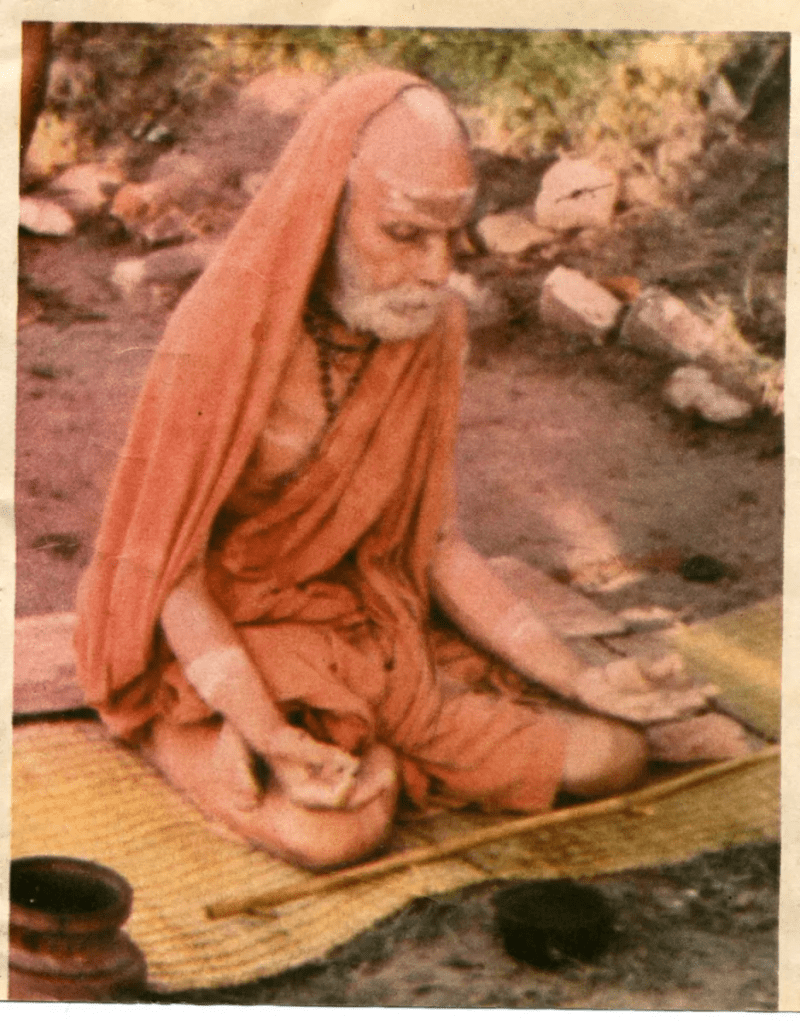
Many years ago — almost 30 years! — I had happened to avidly read, nay, devoured the book, “Deivattin Kural” of the great sage of Kanchipuram, Sri Chandrasekharendra Saraswati (Kanchi Periyava). The English translation of the book was titled “HINDU DHARMA“. In one chapter therein, the Kanchi Acharya had presented a brilliant narrative — so rivetingly informative indeed! — about the “sthala purana” of Therezhundhur. The Periyava’s gripping and fascinating narrative had made such a deep and powerful impact on my mind that, I remember, it had at once made me want to visit Therezhundhur …. just to see for myself the wondrous temple and its sylvan surroundings and to actually feel the lingering mystique of its ancient legends and folklore i.e. its “sthala purana“.
However, despite many failed attempts to visit Therezhdhur over the last 30 years, for one reason or the other, and in many inexplicable and inexcusable ways, my pilgrimage to Therezhundhur just did not materialise …. until, of course, now in April 2025!
While making my way by road from base-camp Mayavaram to Therezhundhur, my mind recollected — almost cinematographically, I might say, with a little bit of pardonable exaggeration — what I had so long ago read about the temple I was going to visit. That recollection is of the extraordinarily recounted “sthala purana” account bequeathed to us by Kanchi Acharya and before I pen my own brief travelogue about Therezhundhur, firstly, I am going to reproduce below the Acharya’s own “anubhavam” .
QUOTE:
The events described in one Sthala Purana are linked to those mentioned in another. Thus the strand of the same story is taken through a number of Puranas. We have to read them together to learn the entire story. That one Sthala Purana begins where another ends is one proof of their authenticity.
Another proof that could be adduced is that it is these Sthala Puranas that fill the gaps in the 18 main Puranas and Upa-puranas.
Once Siva and Ambã (Parvati) played dice in Kailãsa. “I have won the game,” said Ambā. “No, I am the winner,” said Siva. The two played thus to impart lessons in dharma to mankind. If now their game of dice ended in a quarrel it was because the divine couple wanted the world to learn that playing for stakes was an evil, that it leads to disputes and misconduct.
To resume the story. In his anger Siva cursed Ambā thus: “You shall be born a cow and shall keep roaming the earth.” Siva is Pasupati, lord of animals.
Yes, he is the Lord that controls the animal senses (the indriyas) that are in a frenzy. It is to demonstrate that he does not bless people with a big ego that he cursed even Parāsakti (the Supreme Power). Though she is Mahäsakti herself, she realised her error and, the great pativrata that she is, she became submissive to her husband. She began roaming the earth as an ordinary cow.
In her One Thousand Names (“Sahasranãma“) Ambà is extolled as “Gomatã, Guhajanmabhu.” She came to the earth as Gomata (Mother Cow).
Visnu is Ambã’s brother, is he not? He is very much attached to her and, as soon as he knew that his brother-in-law (Siva) had “driven her out” thought to himself: “Let him not protect her, lord of animals though he be. I will have my sister under my protection.”
So taking the guise of a cowherd he too followed and accompanied the divine cow wherever it wandered. Vishnu was not the victim of any curse that he should roam around the earth thus. (But he is a “deena dayaalan“, “daya vaatsalyan“… the embodiment of compassion; how could he let down his sister?). It was to demonstrate to the world the dharma of filial affection that he came down to the world of mortals with her. (He developed a great aptitude and liking for the job of the cowherd now! That is how he took delight in grazing cows in his incarnation as Krsna. He then came to be called Gopäla which name also meant “Pasupati“. If you reflect on these two names of Siva and Visnu you will cease to make any distinction betweer the two gods.)
Tiru-Azhundur is the place to which sister and brother came as cow and cowherd. It is the same as “Terazhundür“. It also happens to be the birthplace of Kambar and in fact there is a locality here called “Kambarmedu“. Tirumangai Azhwar performed the “mangala sasanam” in the temple here. Vishnu is in the sanctum sanctorum as Gopala with the cow. Since he came as a companion of the cow he is called “Gosakha”. “Gosakhaksetra” is another name for Terazhundür. “Gosakha” in Tamil is “Amaruviyappan”, and the initial “a” in the name means a cow.
There is a temple to Siva also here. According to our ancient system of town-planning there must be a temple to Síva at one end of a village or town and one to Visnu at the other. If the Visnu temple at Terazhundur is associated with the songs of the Azhvars, the Siva temple is associated with the Tevãram hymns of Tiru JñanasambandharT
The places sung by the azhvãrs are said to have had “mangala sãsanam“, while any place associated with the Tevãram is called “patal perra sthalam” [place that has been sung about]. Many places in the South have had both types of distinction. Terazhundür is one of them.
Near it is a village called Pillür where Visnu, as the cowherd, grazed the cow that was Amba. (“Pillur” means a place where grass grows, pil meaning grass. In the Tañjavur region pul is known as pil.) Mekkirimangalam also is one of the places where Visnu grazed the cow and An-angur is another (ăn = cow).
For brother and sister to worship Siva, Visnu installed Vedapurisvara (Siva) in Gosakhäksetra. (Both the Vedapurisvara and Amaruviyappan temples are today under the same management (?!).)
The cow as well as the Brahmin is essential to the practice of Vedic dharma. Milk and ghee are indispensable to sacrifices, while without the Brahmin the sacrifices cannot be performed. This fact is underlined in the prayer, “Gobrahmanebhyo subhamastu nityam” [May cow and Brahmin ever prosper).
The one (that is Siva) who had cast a curse on Ambã came as Vedapurisvara to the same place where Amba had also come. Until recently there were many Brahmins in this place learned in the Vedas and sastras. Sambandhar often refers to them as “Azhundai Maraiyor” (the great Vedic scholars of Azhundur). Vishnu is also known as “Samavediyane“. The Azhvars also call Vishnu by these names: “Chandoga”, “Pauzhiya”, “Taittiriya”,
One day, when the cow (that is Amba) was grazing, her hoof dug into the earth and a stone was revealed, It proved to be a Siva linga. The cow, thinking that she had committed an offence against Siva, ran about in bewilderment.
Visnu pacified her and brought her back. The place where this incident occurred is “Tirukkulambiyam”! Visnu was pained by all these developments and felt extremely sad for his sibling. He regretted that his sister had shown herself to be egoisic, albeit playfully, and that this fact had led to such unfortunate consequences for her.
It was Visnu who had married Meenakshi to Sundaresvara, is it not? Wishing to reunite them again, he now performed puja to propitiate Siva. The latter was pleased and he said to Visnu: “Keep grazing the cow until you come to the river Kaveri. Bathe her in the river and she will be restored to her original form. I shall tell you later when I will marry her.”
Visnu, as bidden by Siva, bathed the cow in the Kaveri. The place where the cow was seen after she had bathed in the river is “Tiruvaduturai”. (It is also important for the reason that it was here that Tirumular composed his Tirumantiram.)
Amba was restored to her original form and Siva himself appeared on the scene. But he wanted to play a game again. There is a place called Kurralam. (It is not the same as the Kurralam in Tirunelveli district that is famous for its waterfall. This Kurralam is near Mayuram in Tañjavur district. It was once called Tirutturutti. This is one of the 44 places which Appar, Sambandhar and Sundaramürti have sung).
A sage was performing austerities here for Amba herself to be born as his daughter. Siva thought that this was the opportune moment to grant his wish. He said to Amba: “Go and be born the daughter of the sage at Tirutturutti. I will come and marry you at the appropriate time.”
Siva made his appearance as promised. There is proof for the fact that the one who gave his word at Gosakhaksetra appeared here also in that, in this place too, the deity is called Vedesvara. The sage and Visnu – the latter had been waiting for the day his sister would be married again to Siva — received Siva and took him to the place of marriage. The spot where Siva was received came to be called “Etirkolpadi”. The “vrata” before the marriage was performed by Siva in a nearby place which later came to be called “Velvikkudi”. The spot where he saw Amba as the bride and performed the palikã ceremony is called “Kurumulaippali”. The marriage pandal was spread over two or three villages. The one in the middle came to be called “Tirumanañjeri”. It was here that Visnu married Parvati to Paramesvara and it was an occasion of great joy for him.
From this account you will realise how wrong it is to dismiss Sthala Puranas as of no significance.
The present story contains also a warning against the evil consequences of ahamkara and gambling and tells us how a wife should be dutiful towards her husband and how a brother should be affectionate towards, and concerned about, his sister.
Actually I did not tell the story with this idea in mind. I wished only to demonstrate how a number of Sthala Puranas fit into one another, how the incidents narrated in different Sthala Puranas are woven together – I mean those of Terazhundür, Pillür, Anangür, Tirukkulambiyam, Tiruvāduturai, Kurralam, Etirkolpädi, Velvikkudi, Kurumulaippāli and Tirumanañjeri. The interconnected narrative also shows that the story must be authentic.
UNQUOTE
*************
Now that Therezhundhur’s “sthala purana” has bee retold in some detail, in the following blogpost, I shall proceed to pen my own personal impressions of this great “Divya Desam” of Sri Gosakha Perumal.
(to be continued)
Sudarshan Madabushi
