The Pancharatra Agama stresses surrender to God (atma-nikshepa), humility, unwavering faith, and the recognition of Vishnu as the sole protector. These attitudes are woven into the prayers and ritual intentions throughout the Samprokshanam.
Vastra Samarpana (Offering Clothes): Fresh garments or cloth are offered to the deity.
Alankara (Adornment): The deity is adorned with ornaments, flowers, and sandal paste.
Gandha, Pushpa, Dhupa, Deepa (Fragrance, Flowers, Incense, Lamp): These offerings are made in sequence to please and honor the deity.
Naivedya (Food Offering): Sanctified food is offered.
Tambula (Betel Leaf Offering): Betel leaves and areca nut are offered as a gesture of hospitality.Food offerings (naivedya), incense, lamps, and flowers are presented, and the ritual concludes with aarti (waving of lamps), symbolizing the dispelling of darkness and the presence of divine light.
*************
During the course of all these elaborate and intensely emotive sessions of ritual procedures of “bhagavath upachaara” (ardent hospitality shown to the Deity), I was witness to truly heart-warming rite. It involves devoteess imagining Perumal and Thaayar to be relaxing in a state of divine repose in their heavenly realm and after having partaken of all the “upachaara” duly offered to them, the Divine Couple is now in an expansive mood of pleasantry. That is the moment being recreated here on earth when they are both treated to a musical treat! The musical feast is a soft and melodious playing on the “nagaswaram” windpipe-instrument of what is called traditional “mallaari” notes. Being witness to this extrordinary ritual as part of the Mahasamprokshanam was for me by itself an intensely emotional experience.
Mallari is a distinctive musical form played on the nagaswaram (a traditional South Indian wind instrument) during important temple rituals, including samprokshanam.
Symbolic Role: Mallaari serves as a ceremonial signal marking sacred processions or major ritual moments. Its majestic and rhythmic music signifies the divine presence and the formal beginning of the deity’s movement or ritual, making it clear to devotees that a significant event is underway. In the case of the Vilanagar temple, it was a prologue event signalling the climactic event of Vimaana Kalasha samprokshanam to be held the following day.
- Musical Features: Mallaari is typically rendered in the raga Gambheera Nattai, chosen for its grandeur and ability to evoke a sense of majesty and heroism, reflecting the lord’s majestic appearance during rituals. On this occasion that I witnessed, the Raga which the temple pipers played were the melodious strains in four more different movements as per the Agama sequence on cue given by the officiating priest. The Raga-s were Saaranga, Ananda Bhairavi, Desh and Neelaambari.
- Agamic Importance: According to temple traditions and agamas, rituals should begin with auspicious sounds and numbers, and Mallaari’s pentatonic structure (five notes) aligns with this principle, symbolising cosmic elements like the five elements (panchabhootha).
- Types of Mallaari: There are different Mallaaris for different ritual contexts—such as “Theertha Mallari” during tirumanjanam (ritual bathing), “Thaligai Mallari” during food offerings, and “Ther Mallari” during chariot (juggernaut) processions. Here I was witnessing the first two types.
In the context of samprokshanam, playing Mallaari heightens the sanctity of the event, announces the ritual’s commencement, and invokes an atmosphere of spiritual grandeur, aligning the senses of the devotees with the sacredness of the proceedings. Mallaari is associated with specific mantras and rituals in temple energization because both serve to invoke and channel spiritual energy during sacred ceremonies. Just as mantras resonate with particular energy centres and promote spiritual awakening, mallaari’s structured, auspicious music creates a vibrational atmosphere that aligns with the ritual’s intent. Together, the sound of mallaari and the chanting of mantras enhance the sanctity of the space, help focus collective devotion, and symbolically mark the transition of the temple into an energised, divine abode for the deity.
If you watch the below video-clips, you will understand what I mean.
****************
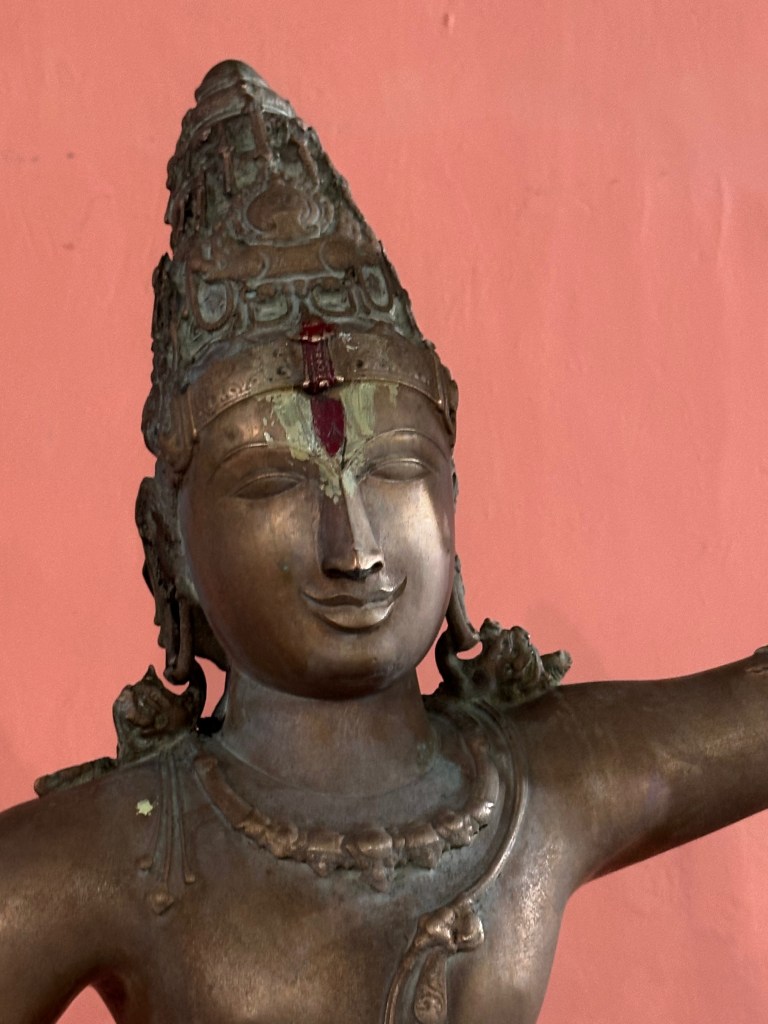
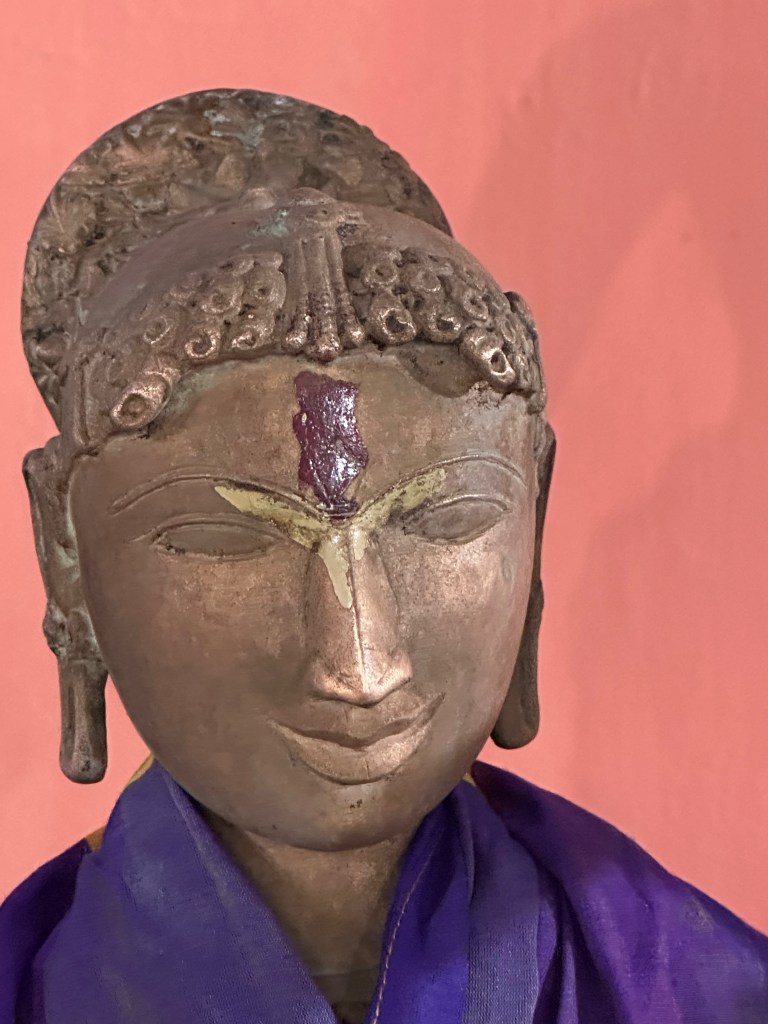
While the Mallaari and other cermonial upachaara for the deity was being conducted, I could not take my eyes away from the utterly bewitching beauty of the idols that were being consecrated.
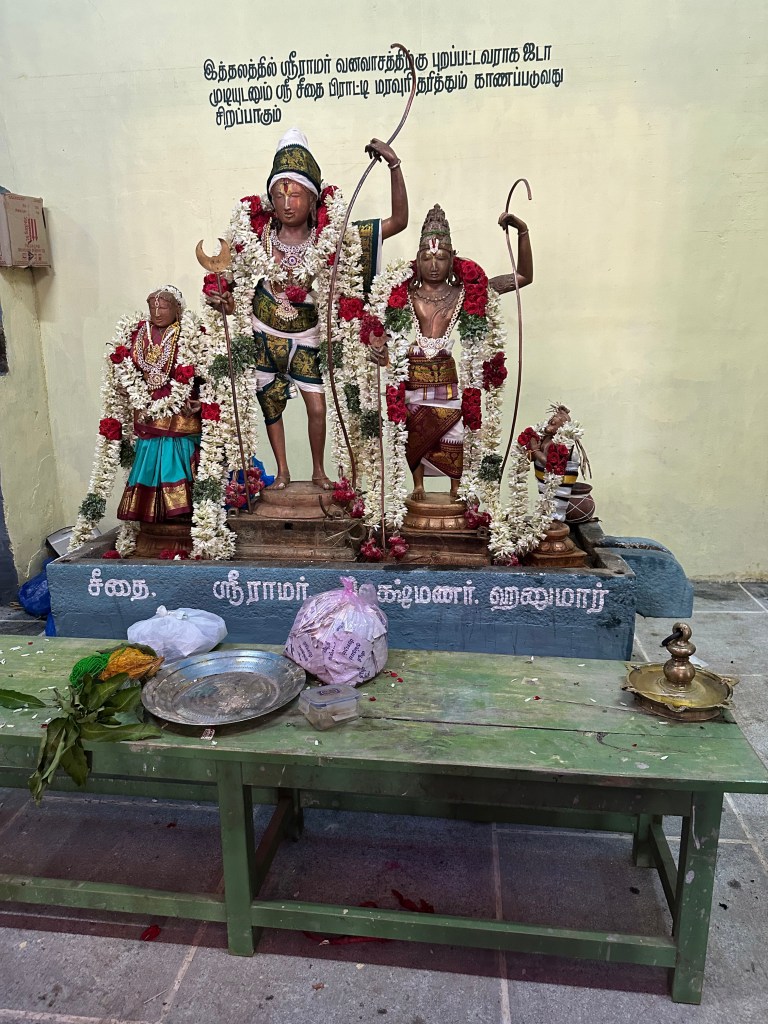
The sight of the Sri Rama, Sita-piraatti and Sri Lakshmana’s idols were marvelous and intriguing at the same time since the iconography revealed that the statuettes were not as usual sculpted to show them in finery, jewelry and regal attire (as one normally sees in the iconography of Patabhisheka (coronated) Rama. They were instead dressed in bare, rough-hewn hemp or tree-bark clothes. Their hairdress too consists of unkempt matted locks.
The sannidhi bhattar (priest) explained to me that the idols of Rama, Sita and Lakshmana here are to be visualised as representing the moment when, after being banished in the Ramayana from Ayodhya to go into the forests for a period of 14 years in exile, the divine trio were just about to set foot out of the palace to depart.
Rama’s visage on the idol is unperturbed and pleasant. The idol of Sita appears demure, a little nervous but very self-determined. But the face on the idol of Lakshmana appears surly, ill-tempered and smoldering with pent-up fury.

**************
Watching the three beautifully sculpted “archa-murthy-s”, my mind was flooded with recollections of those few “shloka-s” from Valmiki “Ramayana” Ayodhya Kanda, cantos 19, 23 and 27, which captured those fateful moments when Rama, Sita and Lakshmana each reacted in their own differennt way to the devastating news that Rama had been exiled by King Dasaratha and Queen Kaikeyi.
How did Sri Rama react?
तदप्रियममित्रघ्नो वचनं मरणोपमम्। श्रुत्वा न विव्यथे रामः कैकेयीं चेदमब्रवीत्।।2.19.1
Rama did not feel distressed to hear these words painful like death. To Kaikeyi he said:
एवमस्तु गमिष्यामि वनं वस्तुमहं त्वितः। जटाजिनधरो राज्ञः प्रतिज्ञामनुपालयन्।।2.19.2।।
Be it so I shall go from here to the forest and live there with matted hair and deerskin to keep the promise of the king.
मन्युर्न च त्वया कार्यो देवि ब्रूमि तवाग्रतः। यास्यामि भव सुप्रीता वनं चीरजटाधरः।।2.19.4।।
O Devi, you should not grieve. I declare in your presence that I shall go to the forest wearing tattered clothes (bark) and matted locks. So, rejoice (to hear this).
How did Sita react?
भर्तुर्भाग्यं तु भार्यैका प्राप्नोति पुरुषर्षभ। अतश्चैवाहमादिष्टा वने वस्तव्यमित्यपि।।2.27.4।।
A wife alone shares the destiny of her husband. I am also therefore, ordered to dwell in the forest; if a command has been given to you, it is a command to me too).
यदि त्वं प्रस्थितो दुर्गं वनमद्यैव राघव। अग्रतस्ते गमिष्यामि मृद्नन्ती कुशकण्टकान्।।2.27.6।।
O son of the Raghus if you set out for the impenetrable forest now itself, I shall also go, walking ahead of you and crushing the thorns and (spiky) kusa grass (rendering the path comfortable for you to walk).
प्रासादाग्रैर्विमानैर्वा वैहायसगतेन वा। सर्वावस्थागता भर्तुः पादच्छाया विशिष्यते।।2.27.8।।
Every woman, everywhere be it on the top of mansions or in lovely palaces or flying in the sky should take shelter at his (her husband’s) feet (by following his footsteps).
Finally, what was Lakshmana’s reaction?
तदा तु बध्द्वा भ्रुकुटीं भ्रुवोर्मध्ये नरर्षभः। निशश्वास महासर्पो बिलस्थ इव रोषितः।।2.23.2।।
Lakshmana, frowning between his eyebrows, hissed like a great serpent seized with anger in its hole.
तस्य दुष्प्रतिवीक्षं तद्भ्रुकुटीसहितं तदा। बभौ क्रुद्धस्य सिंहस्य मुखस्य सदृशं मुखम्।।2.23.3।।
With his face fuming with a malevolent frown, he looked like terrible as a lion provoked.
In the sculpted beauty of the three idols did I see being so accurately and poignantly reflected all three different moods above of Sri Rama, Sita-piraatti and Lakshmana in their respective faces!
***************
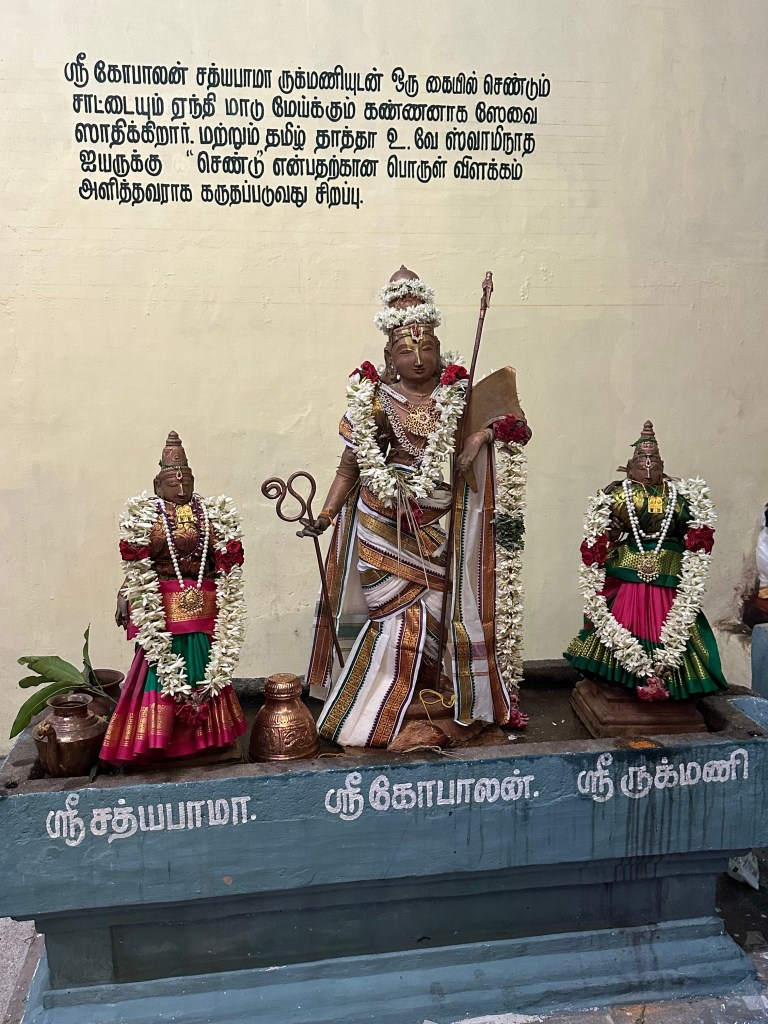
The “sannidhi bhattar”, Sri, Vijay, a young priest who I had been told had just about begun his career as an assistant to Sri Ranganatha Bhattar, who had taken him under his wings, further explained to me an even more intriguiging fact about the other equally enchanting idol of Sri Gopala Krishnan (see below). The anecdote he narrated to me about this captivating idol … it simply took my breath away!
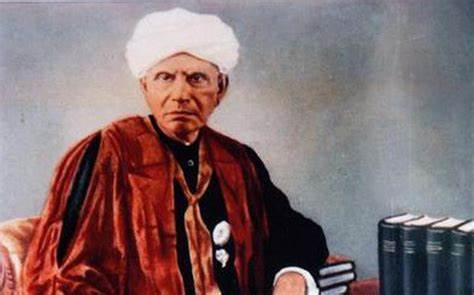
We all know the great Tamil scholar-extraordinaire, Sri. U.Ve. Swaminatha Iyer (19 February 1855 – 28 April 1942). He was an indefatigable researcher who was instrumental in bringing many long-forgotten works of classical Tamil literature to light. His singular efforts over five decades brought to light major literary works in Tamil and contributed vastly to the enrichment of its literary heritage. Iyer published over 90 books in his lifetime, on a variety of matters connected to classical Tamil literature, and collected over 3,000 paper manuscripts, palm-leaf manuscripts and notes of various kinds. He is affectionately remembered today as “Tamil Thatha“.
It is believed that during his long travels through many parts of Tamil Country in search of ancient long-bured palmleaf manuscripts, Tamil Thaatha came upon one with a strangely scripted Tamil word “chendu“. He was unable to find a suitable equivalent lexicographical explanation for the word. One night, in his sleep, this idol of Sri Gopala Krishnan appeared in his dream and told him to come to the Vilanagar and offer worship to him at the temple and he would then know what the Tamil word “chendu” meant.
U.Ve. Swaminatha Iyer, next day, hastened to Vilanagar kovil and there he beheld the idol of Sri Gopala Krishnan who wielded a whip and a goading instrument in his hands that was meant to gently goad herds of grazing cow to get a move on. In a flash of intuition, it was revealed to Tamil Thaatha that “chendu” was really an archaic Tamil word for the cowherd’s goad!
****************
What was major revelation for Tamil thaatha many years ago, had become somehow a minor epiphany for me too at Vilanagar on that auspicious penultimate day of the Mahasamprokshanam.
(to be continued)
Sudarshan Madabushi