
The Special Intensive Revision (SIR) of electoral rolls under the Election Commission of India has led to the removal of roughly 6.56 crore names from the draft electoral rolls across 12 states and Union Territories.
While the Commission frames this as a technical cleanup—striking off duplicate entries, non‑citizens, and those restored as deceased—the human reality is stark: a cohort larger than the population of many mid‑sized countries now finds itself, at least in the eyes of the State, on the wrong side of the voter list. If even a fraction of these people are eligible Indian citizens or residents, we are talking about a disenfranchised population of the order of 66 million in the world’s largest democracy.
How we got here
The SIR process, undertaken under the Representation of the People Act, 1950, and the Registration of Electors Rules, 1960, is meant to keep the rolls clean and accurate. Names are culled on grounds such as duplicate entries, non‑citizenship, or absence from residence. But the procedure is asymmetric: the State has a statutory obligation to follow due process, while the individual bears the onus of restoration. Once deleted, it is up to the affected person to file claims (Form 6), objections, or appeals within tight windows, often with no guarantee of speedy resolution.
There is no hard‑coded statutory rule that, after a fixed period, a deleted person is automatically re‑enrolled. The law insists only that the deletion itself be fair; it does not require that the system be so structured that restoration is inevitable.
In practice, that means the bureaucracy can render the enrolment process effectively endless, with opaque timelines, missing documents, and shifting standards for proof of citizenship or residence. When this happens to a few people, it may be a procedural glitch; when it happens to tens of millions, it becomes a structural risk to democracy itself.
The constitutional stakes
The right to vote is not listed as a fundamental right in the Constitution, but it is not a mere administrative privilege either. Articles 325 and 326, read with the Courts’ consistent emphasis on free and fair elections, place the right to vote at the core of democratic legitimacy.
The Supreme Court has repeatedly held that disfranchisement must be both justified and reversible, and that arbitrary or opaque exclusions from the electoral roll violate equality and due process.
The problem with the current SIR‑driven deletions is not just that names are removed, but that the architecture of restoration is weak. If the State can, through bureaucratic inertia, turn a time‑bound statutory exercise into an open‑ended loop in which millions of eligible citizens remain outside the rolls for years, the result is not mere administrative inefficiency—it is a de facto creation of a large, disenfranchised stratum within Indian society. That is hard to reconcile with the constitutional image of an “adult‑suffrage democracy” in which every citizen has, at least in principle, an equal voice.
What the Supreme Court can still do
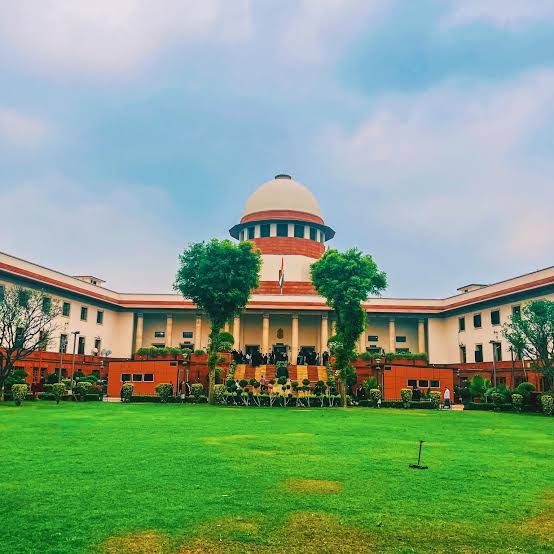
The good news is that the Supreme Court is not helpless. Under its Article 32 and Article 226 powers, the Court can, either on a writ petition or suo moto, intervene to ensure that the technical demands of electoral integrity do not swallow the democratic imperative of inclusion.
There are at least two powerful paths the Court can take:
Direct the Election Commission to frame a time‑bound restoration regime. The Court can require the ECI to prescribe that, if a person deleted in a mass SIR exercise is not finally proven ineligible within a specified period (say, six months or one revision cycle), they must be automatically or presumptively re‑enrolled, subject to later challenge if new evidence emerges. Such a rule would not rewrite the Representation of the People Act; it would flesh out due process and natural justice in a way consistent with Articles 14, 21, and the “basic structure” of democracy.
Build a hard‑coded automatic‑re‑enrolment safeguard. If voluminous evidence shows that endless bureaucratic delays are turning electoral‑roll revisions into a de facto disfranchising machine for the poor, the Court can go further: it can read in a constitutional‑procedural safeguard into the existing framework. That safeguard could be that repeated deletion without a clear, recorded, and time‑bound finality triggers a presumption of eligibility and a right to restoration, unless the State can demonstrate, within a strict deadline, compelling reasons for permanent exclusion.
The Court has already shown willingness to modify timelines and procedures in SIR‑related matters, including extending revision windows and insisting on transparency. The step from “fixing timelines” to “insulating citizens from permanent marginalisation” is not a doctrinal leap; it is a constitutional‑ethical imperative.
A democracy that proudly calls itself the “largest” cannot credibly tolerate a disenfranchised population of 66 million, even if they are left off the rolls by technicalities and bureaucratic inertia.
A necessary judicial nudge
The Government and the Election Commission can insist that no citizenship rights are being formally revoked, only voting rights in a particular constituency. But in a country where the Voter ID is woven into welfare entitlements, ration cards, and civic identity, deletion from the electoral roll is often the first step toward a broader erosion of dignity and voice.
The Supreme Court now has a historic opportunity to ensure that technical integrity and inclusive democracy travel in the same direction. It can, and should, insist that there be no permanent, invisible, disfranchised class in India’s electoral architecture. By directing the ECI to examine and announce a time‑bound automatic or near‑automatic re‑enrolment rule, the Court can convert a bureaucratic exercise into a constitutional safeguard—a reminder that, in the world’s largest democracy, every citizen has the right to be counted, not just to be deleted.
Sudarshan Madabushi