Finally, signing off on his rather prurient essay titled “The Parrot’s Erotic Secret” published in The Hindu dt. 19 January 2025, Devdutt Pattnaik urges his readers, especially womenfolk, to go and read an obscure and most probably a Jainist literary work in Sanskrit called “shukasaptati”… He wholeheartedly endorses the 70 lewd tales in that ancient text because, he says, they are “meant to distract housewives who sought company of other men while their husbands were away on business”. This is how he puts it across:
QUOTE: “A forgotten past: Feminists who wonder about the morality of Surpanakha are unfamiliar with the erotic tales of Sukasaptati, the 70 tales of the parrot told in Sanskrit, meant to distract housewives who sought company of other men while their husbands were away on business. … India’s erotic heritage, with love songs written in Tamil, Sanskrit and Prakrit, are not part of gender studies or the culture curriculum.” UNQUOTE
I must confess that until I had read Pattnaik’s essay, I had never even heard of this obscure, salacious and inconsequential Sanskrit literary work of the 15th century CE whose authorship even is uncertain. But, yes, out of mere curiosity I did look it up on Wikipedia and this is what I discovered — see below — about the Sanskrit masterpiece so close to Pattnaik’s heart that it is his recommendation “to mothers, sisters, daughters, devotees who are not pining lovers, wandering miserably in dark groves… whitewashed and sanitised .. confused with purity and purity with celibacy”. To him Shukasaptati is a “must read” for all modern feminists in India interested in “gender studies” and, if it were indeed left to him, he would perhaps insist it ought to be included in graduate curriculum at Indian universities.
“Śukasaptati, or Seventy tales of the parrot, is a collection of stories originally written in Sanskrit. The stories are supposed to be narrated to a woman by her pet parrot, at the rate of one story every night, in order to dissuade her from going out to meet her paramour when her husband is away. The stories frequently deal with illicit liaisons, the problems that flow from them and the way to escape those crises by using one’s wits. Though the actual purpose of the parrot is to prevent its mistress from leaving, it does so without moralising. At the end of the seventy days, the woman’s husband returns from his trip abroad and all is forgiven. Most of the stories are ribald and uninhibited, with some verging on the pornographic. The situations depicted in the stories not only test the bounds of marriage, some stray into taboo areas of incest and, in one case, zoophilia.
The collection is part of the Katha tradition of Sanskrit literature. Some of the tales are actually repeated from earlier well-known collections in Sanskrit literature. In the tradition of Sanskrit literature, the tales are frequently interspersed with verse, many original, some repeated from earlier works. Though it is not known when it was originally written, current scholarship accepts that the collection was in its current form by the 12th century CE, though currently the oldest known manuscript dates back to the 15th century CE.
If readers are interested to know more about Shukasaptati they can check out this Wikepedia link — https://en.wikipedia.org/wiki/%C5%9Aukasaptati — to find out that it is perhaps no more really than the medieval equivalent of the crass eroticism in today’s pulp-fiction liteature such as, for example, the best-selling novel — “Fifty Shades of Grey“.
However, what really should be of great interest to us is in examining further the fact that the subject of Eroticism or Kama in Hindu Mythology is explored in three distinct ways viz. as found in the (a) ancient Vedic texts (b) in the post-Vedic Purana period and (c) in contemporary popular cultural milieu.
(a) Vedic texts: Earlier in Part-2 were mentioned in passing that Shri Krishna calls himself Kamadeva in the Bhagavad Gita and says : “I am sexual activity that does not conflict with virtue or scriptural injunctions”
बलं बलवतां चाहं कामरागविवर्जितम् |
धर्माविरुद्धो भूतेषु कामोऽस्मि भरतर्षभ || 7.11||
balaṁ balavatāṁ chāhaṁ kāma-rāga-vivarjitam
dharmāviruddho bhūteṣhu kāmo ’smi bharatarṣhabha
Vishnu Sahasranamam in the Mahabharatha is a sacred Hindu litany of the 1000 wonderful names — “divya naama” of Bhagavan Vishnu — couched in 108 shlokas. One of them — in Shloka 70: “kAma-devah kAma-pAlah kAmI kAntah kRtAgamah” — is Kamadeva. The great Vedantic Acharyas — Sankara, Madhwacharya and Ramanujacharya — have all interpreted this unusual naama to mean that Krishna is verily the God of Kama and the serene, sublime source of virility in all creature, or what in Freudian terms might be called the libido that empowers all to seek fulfillment in life of through Desire i.e. Kama as a “purushaartha”. Such fulfillment however is subjected to a qualification:
"kAma-devah - a) The One who grants all desires. b) The Almighty who is desired by those who seek the four purushArtha-s.Thus, Krishna has the name kAma-deva as He grants all the desires of all beings". However, KAma or desire can be that which is consistent with dharma, or that which is contrary to dharma. The kAma that one should seek is the one consistent with dharma. Seeking it, one develops the enrichment of the desire that is consistent with dharma, and is able to move away from the kAma opposed to dharma. Those who are of dharmic disposition, see God in Kama; and those who (who perhaps like Devdutt Pattnaik?) are adharmic in outlook, view Kama itself as God. To win over the latter and to grow godly kAma, one contemplates on this nAma of "kAma-deva" with this meaning clear in one's mind. (courtesy: Narasimhan Krishnamachari)
In the Vedic view of Eroticism, it is Purpose, thus, which either elevates or debases Kama. When sexual activity is for sensual pleasure and is devoid of any higher purpose and is meant solely to sate base Pleasure Principle, it finds no fulfilment in purushaartha. Hence, it is considered adharmic. Whereas, Kama that is in line with Vedic scriptural injunctions and is not contrary to Dharma or virtue, and when it is carried out for procreative purpose by a householder, it is Dhaarmic Kama in pursuit of purushartha. It is in that qualified sense that Sri Krishna, in the Bhagavat-Gita, conveys the truth that He himself is the motive, kinetic energy and power controlling and regulating the sexual act. Kama with no purpose other than sense-gratification is Eroticism as Pattnaik essays it. Kama energised by the impulse towards purushaartha is the Esotericism of Eroticism which Devdutt Pattnaik fails to understand. In the Vedic Age, the approach of Hindu Mythology to Kama is fundamentally concerned with Procreation in nature.
(The Hindus)…. Knew that something besides unthinking enjoyment had to be brought into sexual life. So early Brahmanism made procreation its supreme motive. To this, it added, a beautifully effervescent affection, deep and sparkling at the same time. This picture of conjugal devotion is presented again and again in Sanskrit literature, and its locus classicus is, of course, Uttar-Ramacharita of Bhavabhuti. There is also a touching image in the second canto of the Raghuvamsa by Kalidasa, in which a wife is shown waiting for the return of her husband at the door of her cottage, and, as soon as he is seen at a distance, is described as drinking him with her eyes. Who knows but that ‘Drink to me only with thine eyes’ is an Hindu symbolism?
Procreation, on its part, was so exalted that it became an imperative religious duty to go to the wife at the close of her period. ‘Ritukalabhigami syat svadara-niratah sada’—Thou shal go at the period, and shall attend thine wife‘, declared the sacred law. That men did so was one of the features of the Hindu Golden Age.
The 6th Chapter of the Brihada-Aranyaka Upanishad of the Shukla Yajur Veda is unimpeachable proof that in the Vedic age, Sexuality and Procreation were intertwined inseparably. And those who did not or could not appreciate the fact were roundly condemned as fools — by the rishis, the wise men and the learned of society. The following are the relevant extracts from taken from an authentic source book: “The Principal Upanishads (Volume-III) – Brihadaranyaka Upanishad: (Text, English Translation and Brief Notes according to Sri Ranga Ramanujamuni) edited and translated by Vedanta Vidwan, Dr. N.S. Anantha Rangacharya (Bangalore).
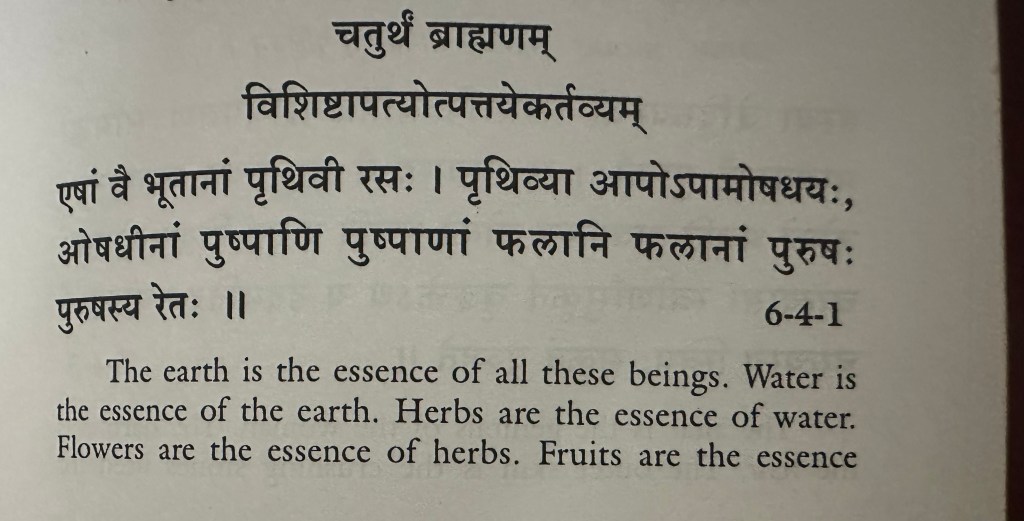
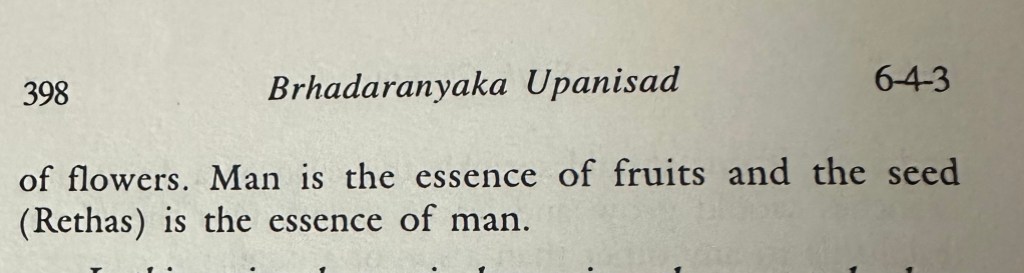

The Upanishad then proceeds to describe the act of Procreation as the mirrored microcosm of universal cosmic Creation. The descriptions are in the form of Vedic Mantras and are stark and graphic but then also so revelatory and celebratory in the use of erotic vocabulary and imagery.
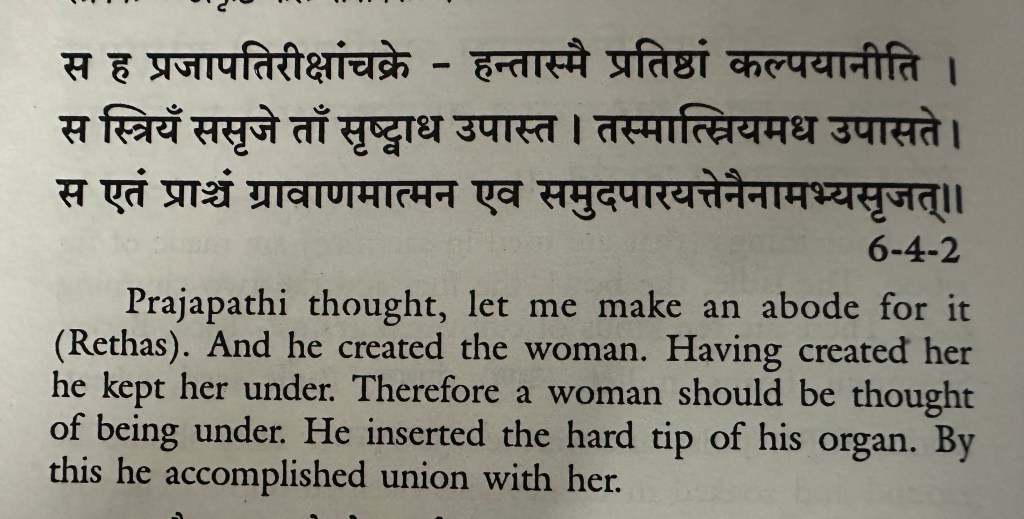
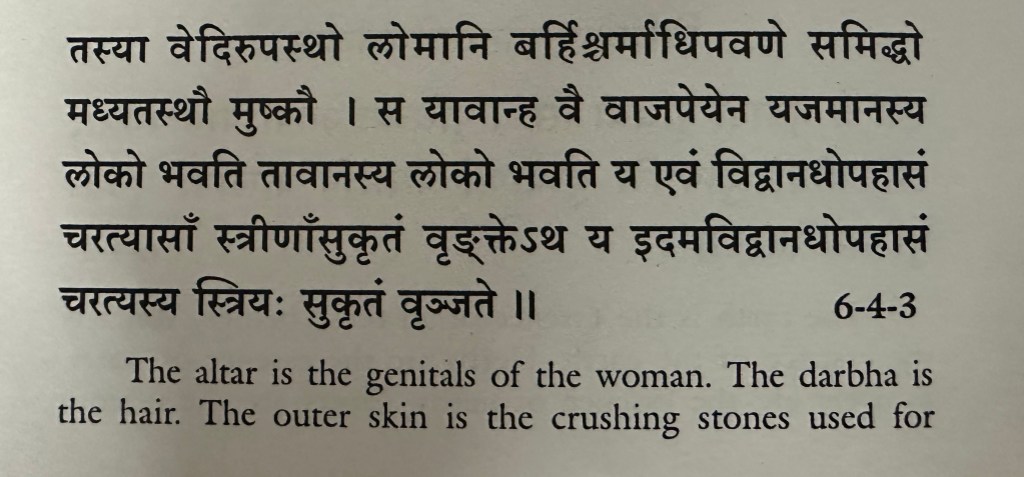
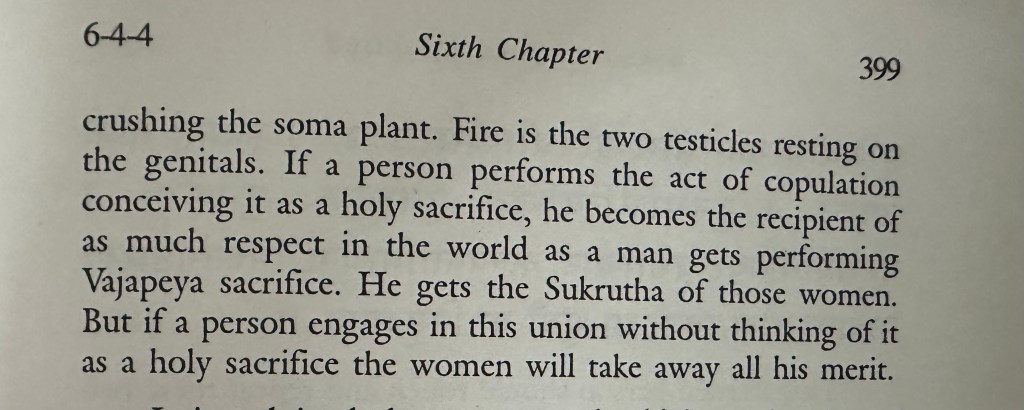
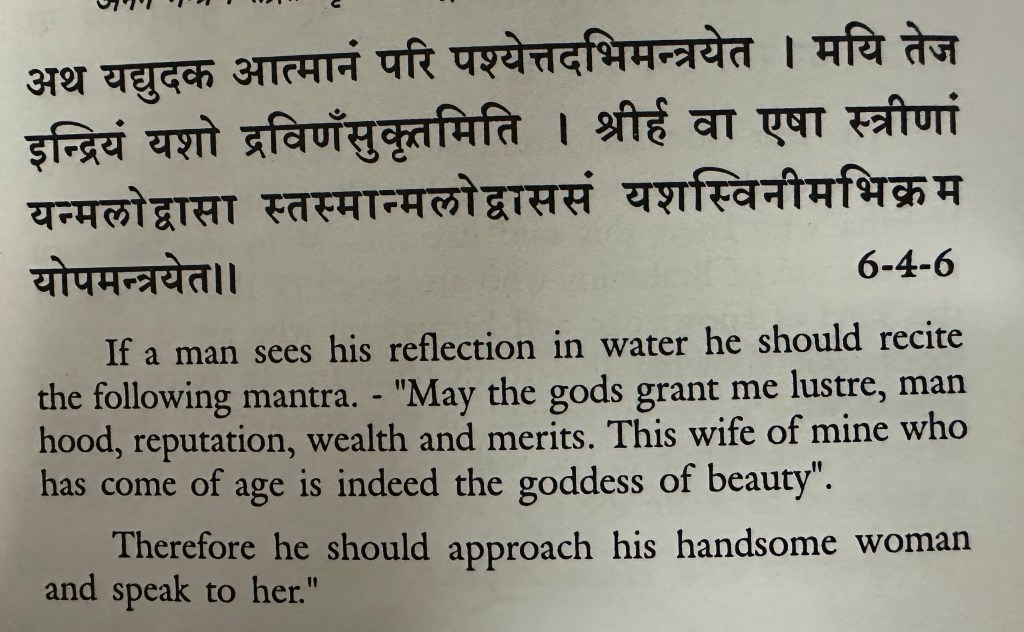
The above Upanishadic passage conceives the act of Procreation to be a Yagnya, a sacrifice equal in virtue to the Vajapeya.
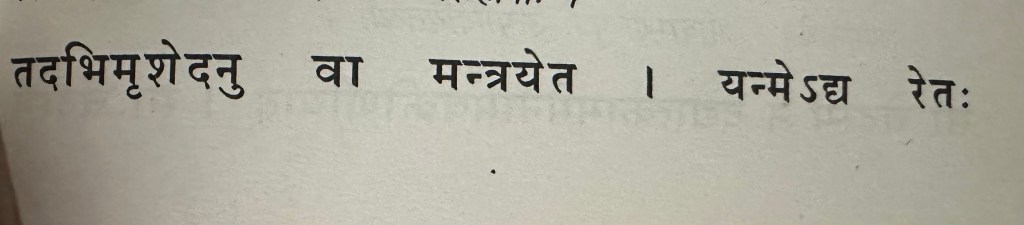
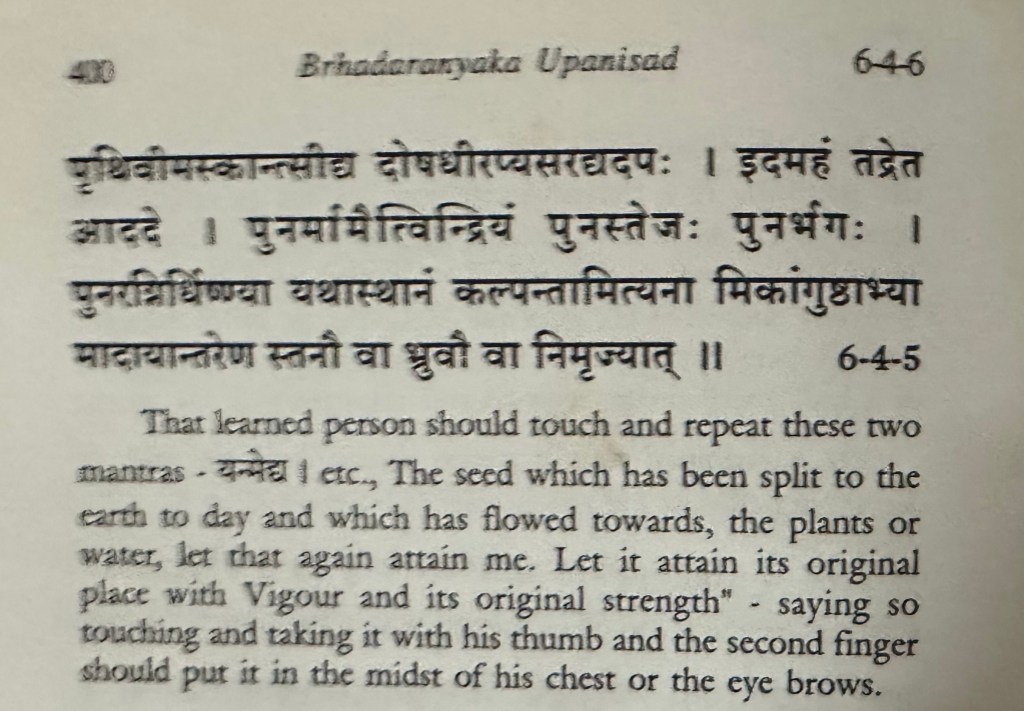

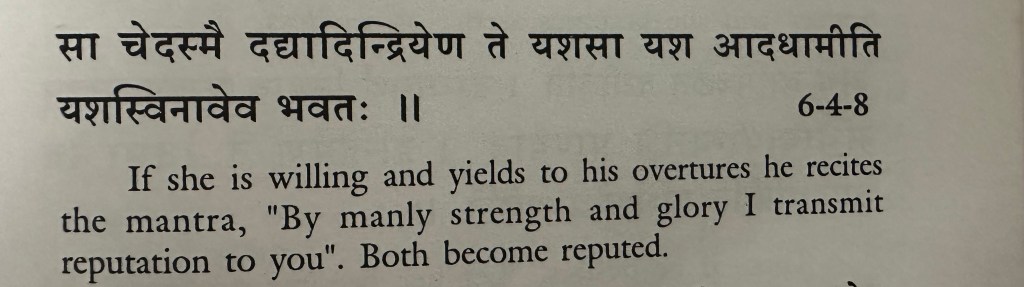
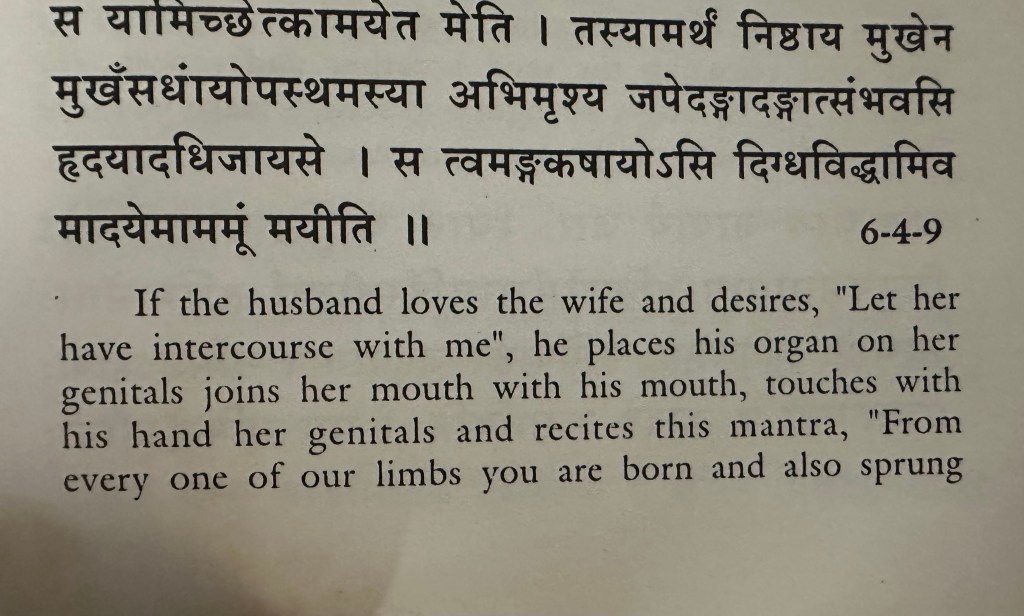
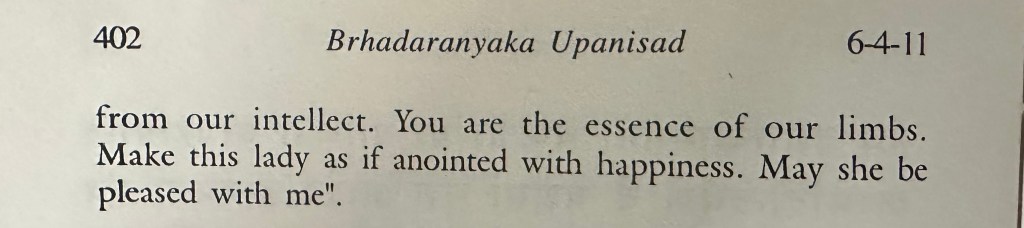

While describing sexual activity in holy matrimony between man and woman, the Brihadaaranyaka Upanishad pauses briefly to forbid all forms of adultery or extra-marital indulgence in severe terms.
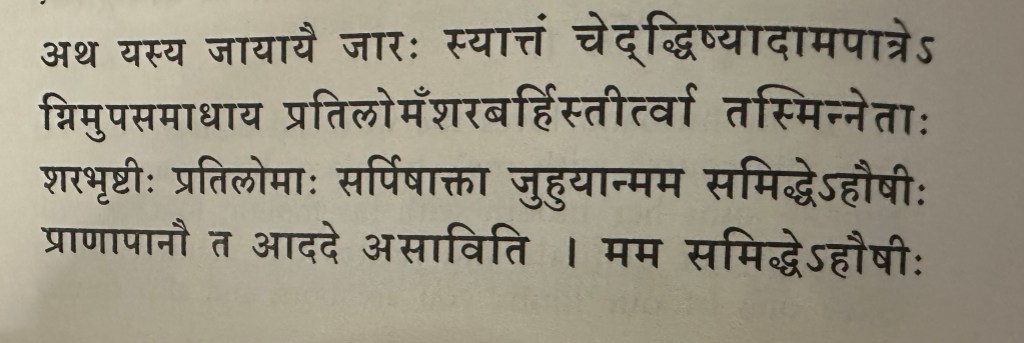
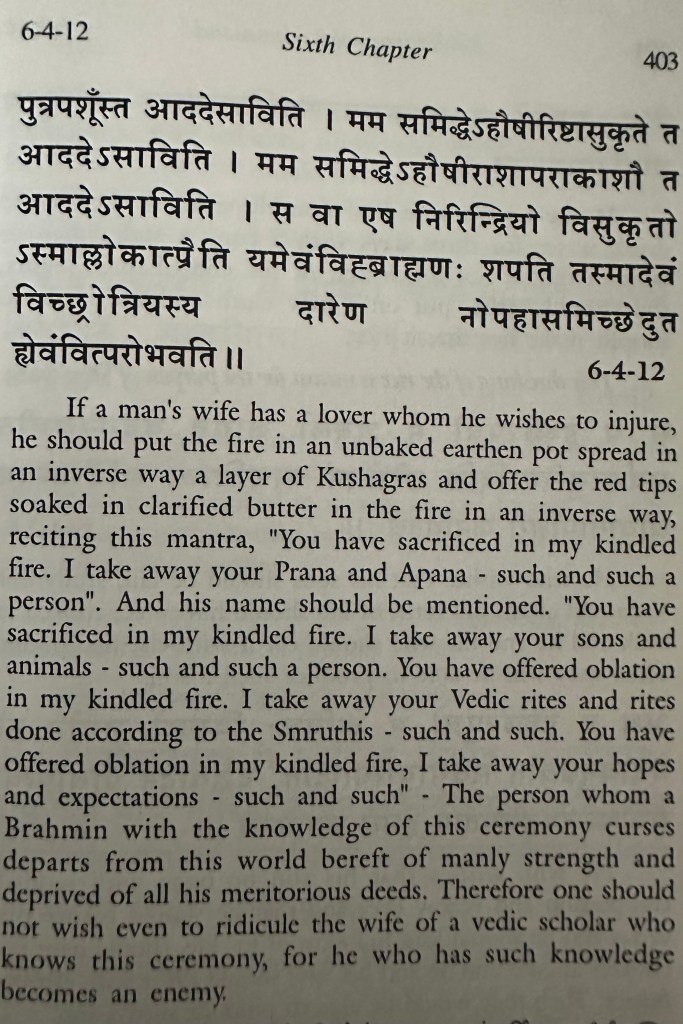
The Upanishad then proceeds to describe further the sexual union:
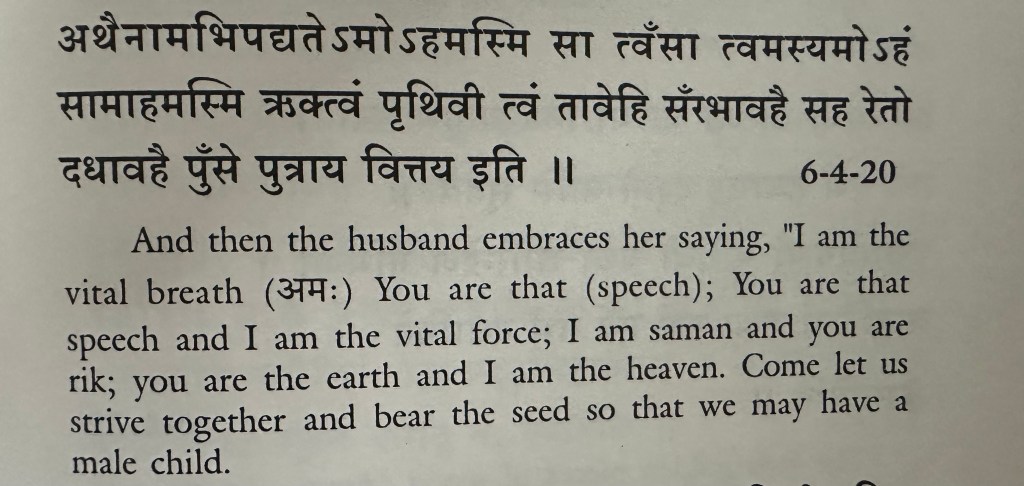

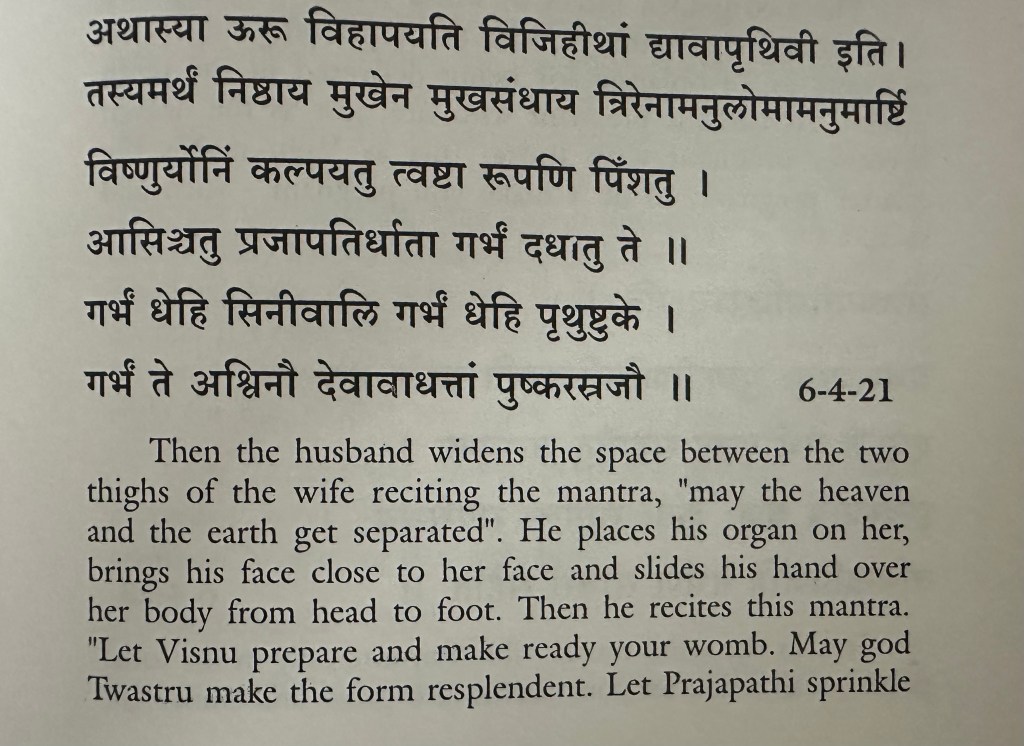

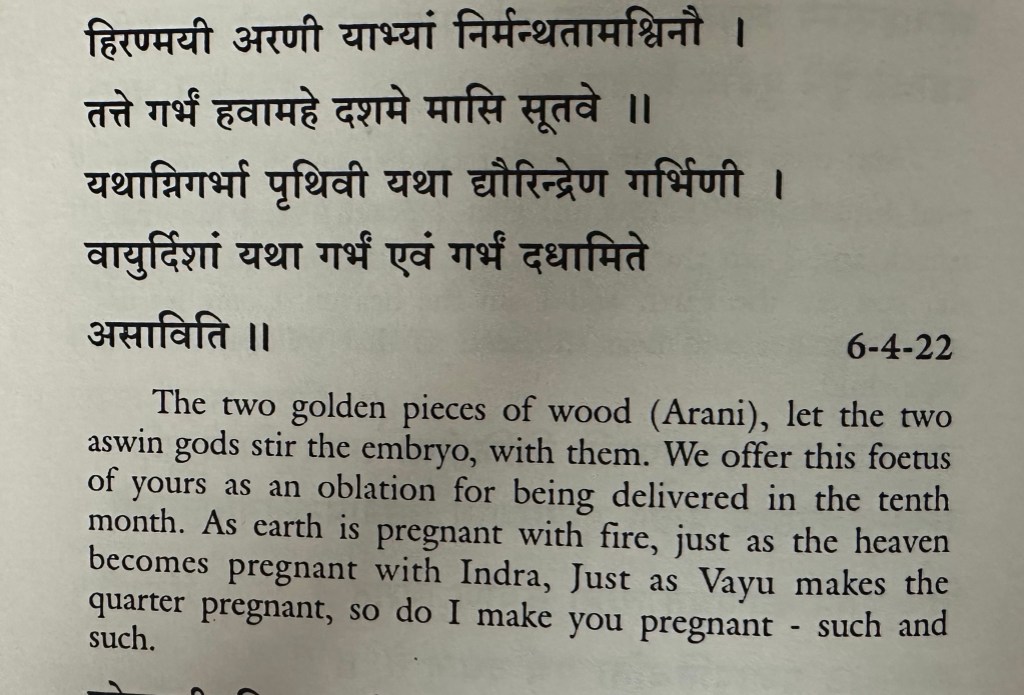
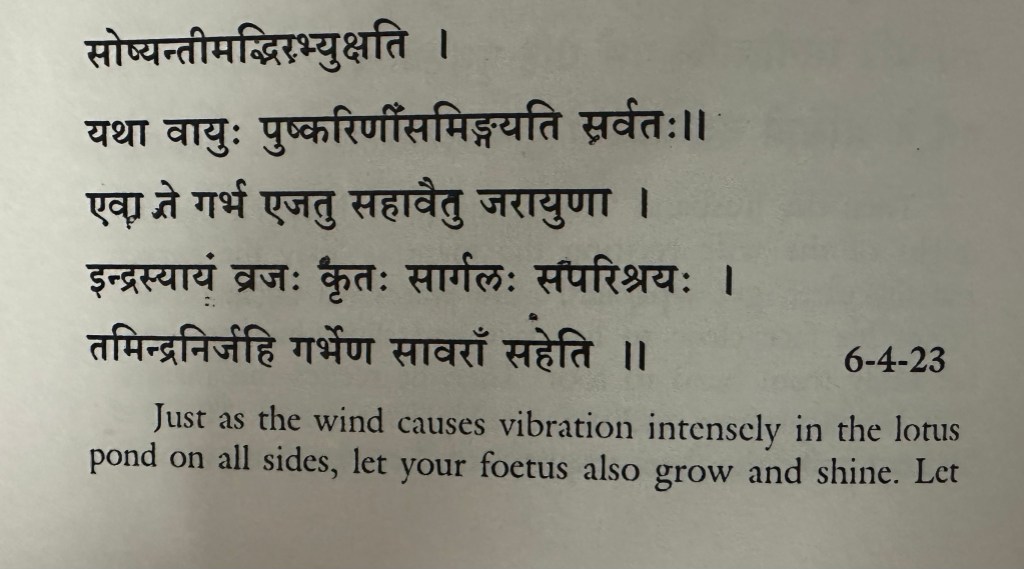
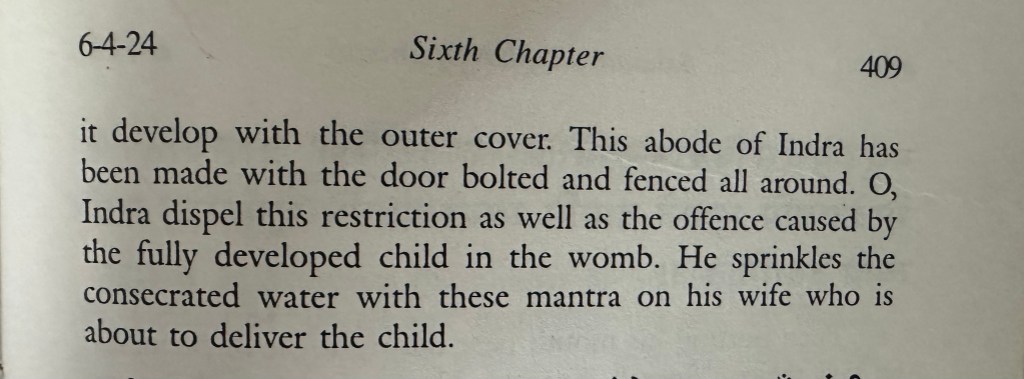
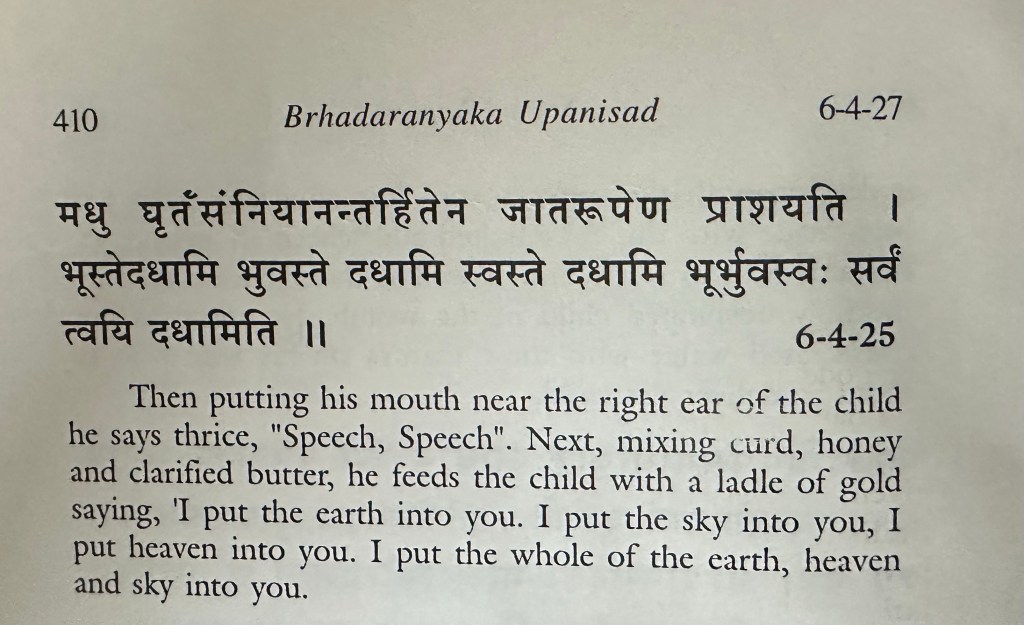
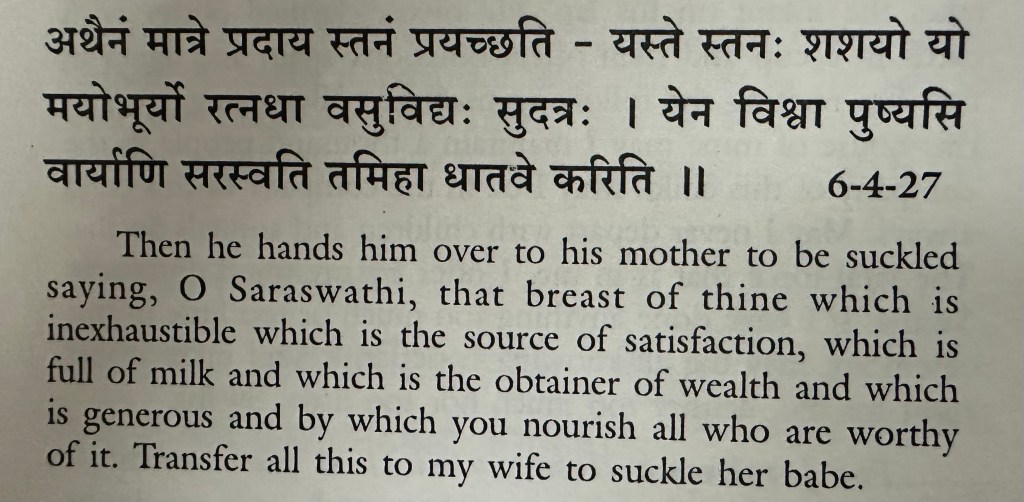
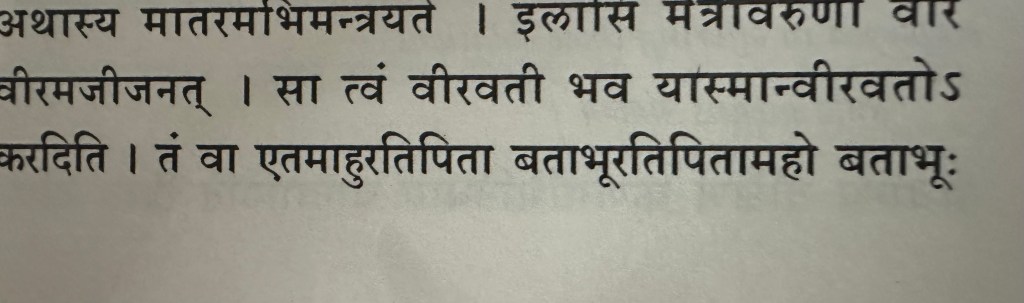
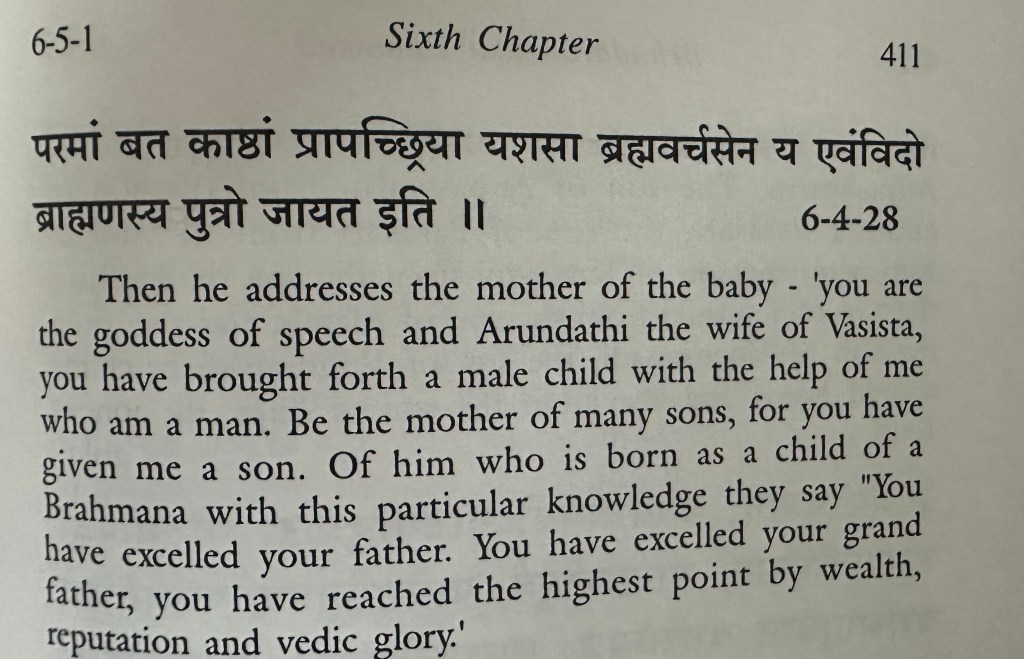
The true purpose of coitus is then stated by the Upanishad in the stirring passages below. It describes the growth of the embryo in the womb, the birth of the child and then how the parents embrace parenthood with an ardent prayer to Saraswathi, the Goddess of Intelligence and Speech:


************
Nirad Chaudhury (23 November 1897 – 1 August 1999) was an interpid Indian writer and social commentator who was in his times perhaps as controversial a literary figure as today they say Devdutt Pattnaik is. But “Nirad Babu” was never a purveyor of misrepresented Hindu mythology, gods or scriptural tales. In his famous (or, infamous?) book, “The Continent of Circe: An Essay on the Peoples of India” (1962-63), Nirad Chaudhury in one chapter wrote a brilliant passage to expatiate on the Vedic Age and its Sexual mores that were rooted in the Procreation Principle rather than the Pleasure Principle with the aid of a very telling Puranic story which is way more ennobling and educative than any tale in the Shukasaptati that Pattnaik has recommended to us. Below is a reproduction of Nirad Babu’s presentation:
QUOTE:
The procreation motive is brought out even more clearly in the (Hindu) epics describing the resistance of women to improper overtures and worse. I give one of the most famous of these, concerning the great sage Brihaspati, Preceptor of the Gods.
His brother Utathya had a beautiful wife with an equally beautiful name. Mamata. Vrihaspati had his eyes on her, and the fact that she was his brother’s wife, of course, meant nothing to him. Once, when Mamata was pregnant and Utathya away, the Preceptor of the Gods saw his opportunity. He rushed into her cottage in a wild rut, and seized her. Strange as it might seem, Mamata did not rebuke him in abusive language. Among the ancient Hindus lack of urbanity even in such a situation was considered very unbecoming and un-Aryan. The lady had to show her appreciation of the compliment paid, and still refuse in a courteous manner. So Mamata told Brihaspati that she was with child of his elder brother and the child was engaged even then in Vedic studies in all its six branches in the womb. On the other hand, she added, the semen of so great a sage could not be ineffectual, and therefore he should desist, as there was no room for two children within her womb.
This sweet reasonableness had no effect on the Preceptor of the Gods, and he began and continued his outrage. The baby had held peace til then, but seeing the affair nearing its climax, intervened to protect himself. “O uncle, he said, leave it. There is no room in this womb for two, and your semen cannot be sterile. I am. also the first to come into it and claim the right of primogeniture. You should not cause hurt to me.’
Even then Brihaspati would not listen, and the child, losing his temper, put out his little feet and spoilt the uncle’s orgasm. Infuriated beyond measure by the frus-tration, Brihaspati cried in his rage: “You have come in my way at the most delectable moment for all living creatures. So, may you be born blind!’ And born blind the baby was, for which reason he was called Dirghatama, Everlasting Darkness.
The point which I wish to make is this: that there was not one word in the expostulation either of the woman or of the baby which hinted at disapproval on the ground of lust; their objection was hitched on to the function of procreation. Western sexologists ( I suppose that is the vile word) who proclaim that the sexual act has a value wholly independent of procreation (it has needed the twentieth century to discover the beauty of functionalism in architecture and non-functionalism in sexual intercourse!), will perhaps be of opinion that Brihaspati’s anger was justified and the baby’s punishment deserved. But the Hindu conscience has never approved of the unjust victimization of the unborn child. The Hindu glorification of the sexual act had its code of honour.
This ordering of the man-woman relationship as a combination of social and biological duty, affection, and sexual pleasure at its most direct and naked, which the Hindu devised in the fist stage of his existence in India, worked for some time, and in a weakened form it has continued even till the present. But it also began to reveal its inadequacy soon enough. With a people who savour, set store by purely carnal pleasures, these had to retain their savour, and the savour could not be retained at so elementary a level without a great reserve of just such animal vitality.
*************
(to be concluded)
Sudarshan Madabushi