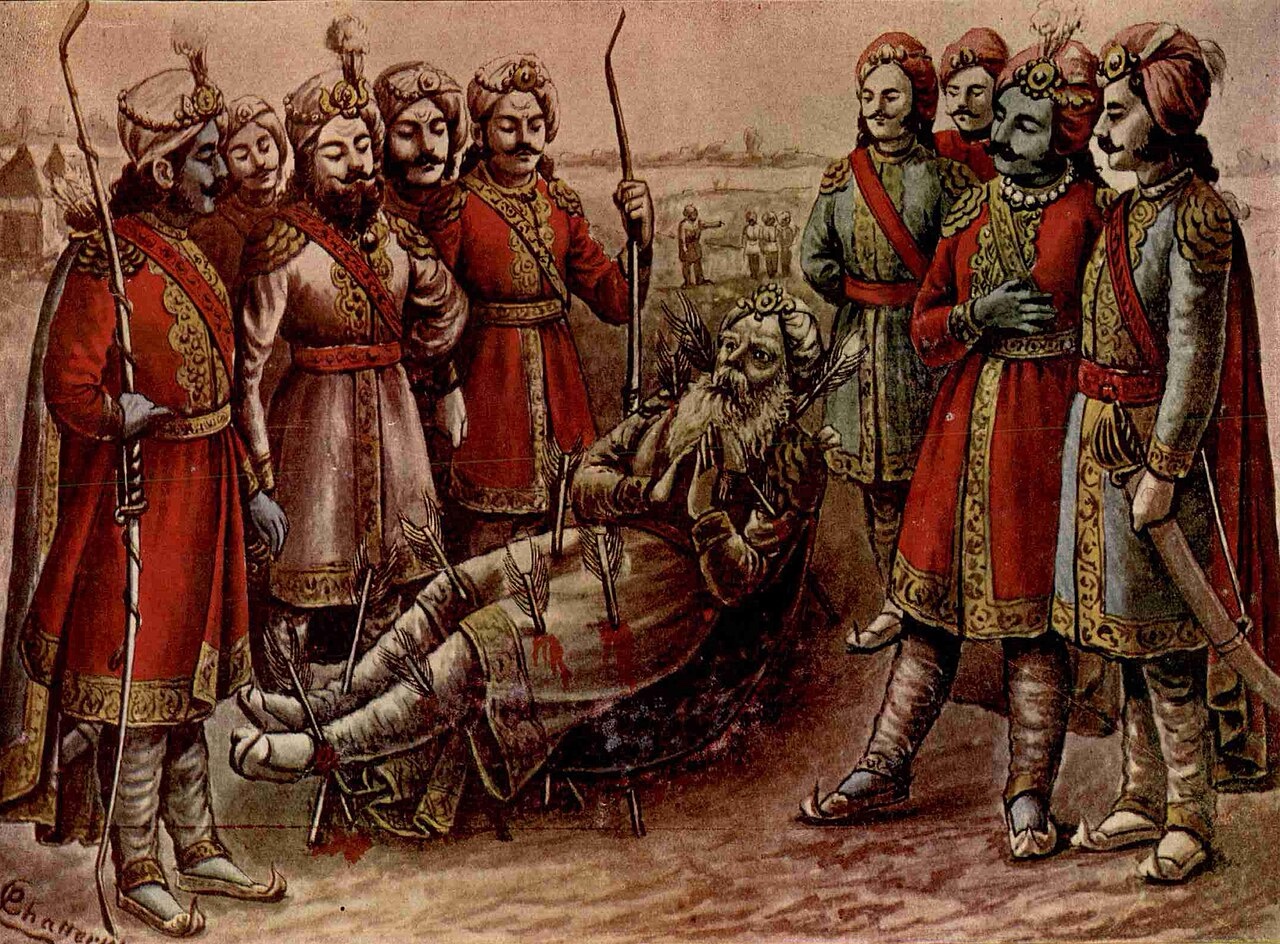
Author’s Note: The quotation discussed here in this essay below appears in Vedanta Desikan’s Rahasya Traya Saram, where a Mahabharata episode is re-read within a later Sri Vaishnava interpretive framework. The essay is merely an observation — neutral , non-judgmental and wholly academic. The writer’s purpose in penning the essay is solely to invite religiousContinue reading “Vidura, Birth, and Bhakti: A Tension in Reading and interpreting the Mahabharata”
Category Archives: psychology
From Gandhā Bharat to Vande Bharat: The Road Not Yet Travelled
Preamble: Fifty Years of the Same Observation In 1964, V.S. Naipaul arrived in India for the first time—a Trinidadian writer of Indian ancestry returning to his ancestral homeland. What he found shocked him. In his travelogue An Area of Darkness, he wrote a passage that would become infamous: “Indians defecate everywhere. They defecate, mostly, besideContinue reading “From Gandhā Bharat to Vande Bharat: The Road Not Yet Travelled”
A tale of Two Cities = A tale of Two Sects— A simplified version of the original review
AMARUVI DEVANATHAN MAY 26, 2026 Dear Reader, Two Class 8 children wanted me to re-write my original review in a simpler form so that they could understand in full. Hence this. Who are the Vadakalais and Thenkalais? Where do they come from? Why do they fight in Indian courts on completely insignificant matters? From whenContinue reading “A tale of Two Cities = A tale of Two Sects— A simplified version of the original review”
Ruins of the “Thanian War”: A Dialogue at Mahabalipuram”
Prologue Mahabalipuram is where the past becomes a touristic afterthought. The Pallava‑era rock cavities, the carved monoliths, the half‑ruined shrines—all stand serene under the coastal sky, admired for their stone, not their sacrament. Visitors pass by, take photographs, sip tea outside the temple, and move on. The devotion that once gave these stones life isContinue reading “Ruins of the “Thanian War”: A Dialogue at Mahabalipuram””
Why “Bahubali” and “Dhurandhar,” but No Mudrārākṣasa (मुद्राराक्षसम्)? Is Chanakya Less Cinematic Than the CIA?
Mudrārākṣasa (मुद्राराक्षसम्): The Classical Indian Drama of Intrigue, Intelligence, and Statecraft A Sanskrit political thriller Viśākhadatta’s Mudrārākṣasa is one of the most arresting works in the Sanskrit dramatic tradition. Unlike many classical plays that dwell on love, courtly sentiment, or aesthetic refinement, this drama is driven by politics, strategy, deception, and the struggle to consolidateContinue reading “Why “Bahubali” and “Dhurandhar,” but No Mudrārākṣasa (मुद्राराक्षसम्)? Is Chanakya Less Cinematic Than the CIA?”
Tamil Iyengars’s Quixotic squabbles
A note on the 500 years old Thenkalai Vadakalai wars of Southern India A Substack blog post on “Amaruvi Aphorisms“ is copied here below ⬇️ Sudarshan Madabushi https://mylapore.substack.com/p/tamil-iyengarss-quixotic-squabbles AMARUVI DEVANATHAN MAY 23, 2026 Subscriber Note Let me begin with a personal note. I belong to the Vadakalai school of thought. When I had sought toContinue reading “Tamil Iyengars’s Quixotic squabbles “
Amaruvi Devanathan’s Book Review: “A Tale of Two Cities: the decline and fall of the ‘Ubaya-vedantins” – The History of the Sri Vaishnavas of Tamil Nadu that was never told”
Amaruvi Devanathan is an Indian author, public speaker, and professional banking technologist. He frequently describes himself with the catchphrase “a banker by day and blogger by night,” balancing a corporate career in data architecture with a prominent role in the Tamil and English literary circuits. Professional Background Literary & Public Work Published Books He has written several notable worksContinue reading “Amaruvi Devanathan’s Book Review: “A Tale of Two Cities: the decline and fall of the ‘Ubaya-vedantins” – The History of the Sri Vaishnavas of Tamil Nadu that was never told””
How the “Law of Diminishing Marginal Utility”, “Moore’s Law” and “Jevon’s Paradox” teach us all the true Meaning of Life (Part 3 Concluded)
Human Nature, LDMU, and the Search for “Parama Puruṣārtha” Yet that sequence cannot go on forever. For all the empirical power of Moore’s Law and of Jevons’ Paradox, there is a deeper, more stubborn constant: human nature itself. And human nature, as the law of diminishing marginal utility suggests, is wired for satiation, for aContinue reading “How the “Law of Diminishing Marginal Utility”, “Moore’s Law” and “Jevon’s Paradox” teach us all the true Meaning of Life (Part 3 Concluded)”
How the “Law of Diminishing Marginal Utility”, “Moore’s Law” and “Jevon’s Paradox” teach us all the true Meaning of Life (Part 2 of 3)
– Part 2 – How One Blends into the Other At first sight, Jevons’ Paradox and Moore’s Law seem to march in tandem while the law of diminishing marginal utility trails behind, like a conservative chorus whispering, “Beware of excess.” But the deeper one looks, the more the three form a subtle choreography. Start withContinue reading “How the “Law of Diminishing Marginal Utility”, “Moore’s Law” and “Jevon’s Paradox” teach us all the true Meaning of Life (Part 2 of 3)”
How the “Law of Diminishing Marginal Utility”, “Moore’s Law” and “Jevon’s Paradox” teach us all the true Meaning of Life (Part 1 of 3)
– Part 1- Of Three Laws: Law of Diminishing Marginal Utility (LDMU), Jevons’ Paradox, and Moore’s Law I first encountered the law of diminishing marginal utility (LDMU) as an undergraduate student of economics in university, wrestling with the neat diagrams of descending marginal‑utility curves and the intuitive truth that each extra unit of a goodContinue reading “How the “Law of Diminishing Marginal Utility”, “Moore’s Law” and “Jevon’s Paradox” teach us all the true Meaning of Life (Part 1 of 3)”