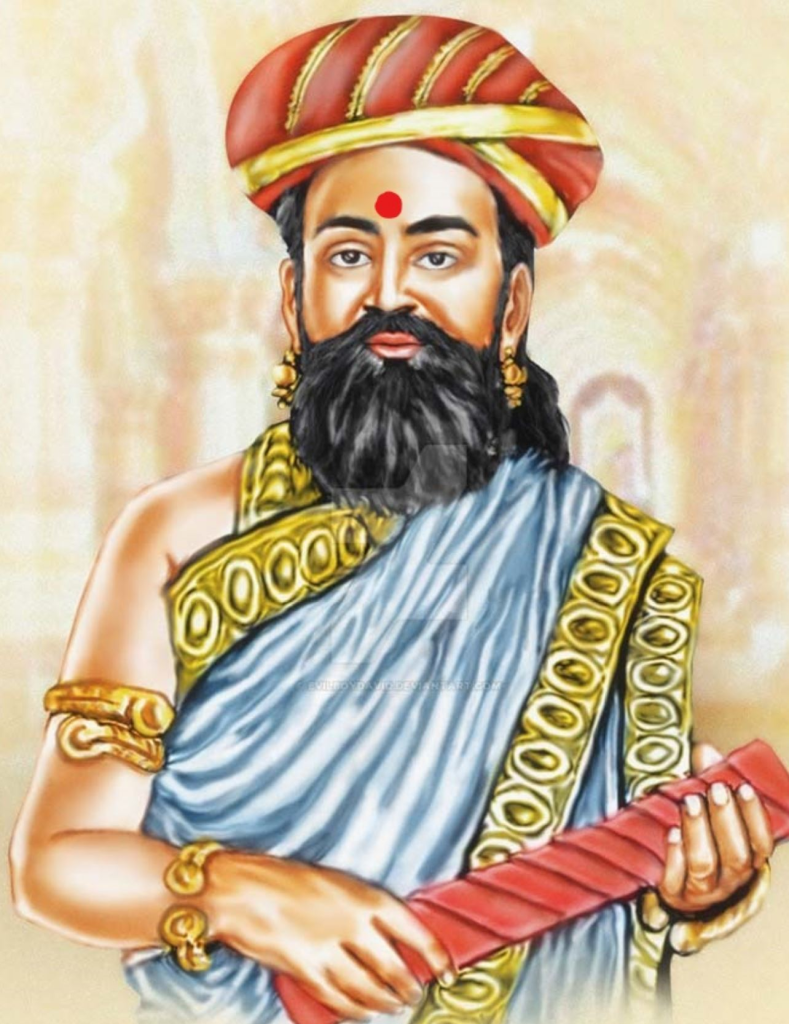
Me: Sir, further to our very interesting ongoing conversations in the past few days on the subject, I have few more queries to which I would request you to please offer your valuable feedback/views.
Eepa: Okay, Go ahead…
Me: In the very first and opening paragraph of your essay (quoted below) I think I sense you have tacitly endorsed a rather controversial conclusion of certain schools of Western and Indian historiographers regarding the date of Valmiki Ramayana and how it originated in the very first place. I refer below to what you wrote in your essay:
The story of Rama, perhaps, began in the collective unconscious of the ancient tribes, who inhabited India in the distant past.. The story could have remained as an oral tradition for a long time that later found expression in a written form in the Buddha Jataka tales (5th century BCE). It was an essential part of the spiritual mythography of Buddhism. It was a simple and straightforward fable, wherein Rama represented one of the evolutionary stages of Gautama, the Buddha, before he attained Nirvana. Valmiki, hailed as Atikavi (‘the first poet’), collected the various myths and legends of his time, obtained in the different parts of the Indian sub-continent and integrated them with the Rama story, bringing to bear upon the narration a thematic continuity, set in a vast canvass….
Me: Sir, the above passage suggests to me that perhaps you too subscribe to the view that Valmiki Ramayana was written either contemporaneously with — or even just after or around — the advent of the Buddha and his lifetime which is dated around 4th-5th century BCE. This theory to the best of my knowledge, Sir, has serious flaws which have been pointed out by many historians and Indic scholars in the recent past. Perhaps, at the time you wrote your essay 25 years ago, the fact-findings of these modern Indic historians were not yet published… and hence perhaps that is why you could not have been expected to be anticipating their arguments…. ?
Eepa: Have you read the book “The Cultural Heritage of India” in 5 hefty volumes published by the Ramakrishna Bhavan Institute of Culture in 1953? That book https://archive.org/details/culturalheritage01calc had very erudite articles written by very eminent Indian historians and scholars and they all reflect the same view that the Ramayana of Valmiki could have been influenced by Buddha Jathaka stories handed down through the generations via oral tribal traditions.
Me: If that were to be true, Sir, it would make Adi Kavi Valmiki a junior of Gautama Buddha…. Sir, do you seriously believe that Valmiki belonged to an era as recent as that the Mauryas? Personally , I find that to be implausible.
Eepa: Well, I have stated my case in the essay …. So go ahead and state yours… You have certainly got my curiosity aroused.
*************
Since stating my case necessarily involved quoting extensively from my own “pramaana” sources, I told Eepa that I would be separately emailing to him select extracts from my own reading of scholastic references on the topic of the “dating and the bardic origins of Valmiki Ramayana“ as set forth by historians of repute belonging to either camp — i.e. those who argued that Valmiki Ramayana was woven around a collection of Buddhist Jataka bardic traditions and those who vehemently rejected such a dating theory and insisted that Valmiki Ramayana was written several centuries before the Buddhist era.
Below is a transcript of the emails that I sent to Eepa:
Dear Sir,
I would like to draw your attention especially with regard to what you state in the very first paragraph of your elegant essay to the book “The Battle for Sanskrit” written by Rajiv Malhotra in 2016.
In that book, Malhotra has vigorously contested the above view of Valmiki Ramayana as a Buddhist-centred work, a theory which has for long been put forward by Western-Liberal /Marxist-school narratives of its principal champions viz.: celebrity-historians and writers like Prof. Sheldon Pollack of Harvard University and in India, scholars like Prof. Romila Thapar of Jawaharlal Nehru University.
Here below I quote, Sir, some extracts from Malholtra’s book for your information and after you have read it I would request you to please give your feedback.
QUOTE:
Pollock has modified the historical chronology of the Valmiki Ramayana by manipulating the evidence.
Pollock dates Valmiki to 150 cE rather than 800 cE or much prior, as has been similarly argued by many Indian and Western scholars alike. This dating enables Pollock to suggest that Valmiki had learned the Rama story from Buddhist Jataka writings.
Pollock appears to sideline the traditional view that the Ramayana is a reflection of actual events; he does not even discuss the issue of historical evidence. It is presented by him as a poem from a long bardic tradition constructed out of motifs drawn from ‘folk literature that the clever Valmiki tied together into a heroic story”. (And your essay’s very first paragraph, Eepa Sir, to me, honestly speaking, seems to be echoing this too).
Pollock is superimposing the model of European bards on to Valmiki. In pre-Christian British culture, a bard was a professional poet or travelling singer employed by a wealthy patron, such as a monarch or nobleman, to commemorate the patron’s ancestors. Later on, this bardic tradition disappeared and the term came to mean an epic author/ singer/narrator who mythologizes, and is therefore an unreliable source of history.
According to Pollock, the Vedic brahmins co-opted the new literary Sanskrit developed by the Buddhists in order to write the Ramayana as their first kavya. (Although Valmiki was not a Brahmin at all and Pollock ignores the fact). Doing so enabled them to propagate Vedic principles in popular poetic form. To fit this chronology, Pollock places the date of Valmiki’s Ramayana at about 150 cE, in the period when he says Buddhist writings had become well established. Other scholars propose a much older date for the Ramayana, However, such a date as his is important for Pollock because it enables him to claim that the Ramayana was written in part as a response to the Buddhist assault on the Vedas.
Robert Goldman disputes Pollock’s assertion of a Buddhist influence on the Valmiki Ramayana, an assertion which he traces back to Max Weber in the nineteenth century and which he critically and categorically argues and rebuts as follows:
“The suggestion that the story of the Ramayana could be traced to Buddhist sources was put forward by Weber who saw it as growing, under the influence of the Greek epics, to its present form out of the Buddhist legend of Prince Rama; the point of which was a glorification of the virtue of indifference to events in the real world. Weber then saw the Dasaratha Jataka as the original of the Ramayana, which was, he felt, a poetic expression of, among other things, brahmanical hostility, to the Buddhists. This theory was cogently refuted shortly after it was promulgated… There can be no doubt, however, that on the basis of the best historical and literary evidence available to us, the Dasaratha Jataka is substantially later than the Valmiki Ramayana and that it is both inspired by and derived from it”.
Pollock considers the Jataka tales of Buddhism to be the first literary expression in India. The content was what we might call the ‘secular realm’, i.e., devoid of any links or references to divinity or transcendence. The Vedic brahmins, he says, wanted to rise to the challenge posed by this new Buddhist trend of written works meant for mass consumption.
They wanted a resurgence of Vedic thought which would be achieved by appropriating the Buddhists’ style of producing Sanskrit literature. Their first major work of this new genre was the Ramayana. Pollock alleges Valmiki copied the Buddhist style and also the content of the Jataka tales (which, by the way, were in Prakrit) when he wrote the Ramayana, except he used Sanskrit.
Even his collaborator, Robert Goldman, accepts that the Jataka tales include references to the Ramayana because they were composed many centuries after Valmiki’s Ramayana.
Pollock suggests that the Valmiki Ramayana was influenced by the Jataka tales in matters of style, and by implication could suggest that its meter was sourced from Buddhist compositions. However, the Anushtubh meter used is traced back to the Vedas.
Pollock says that as a further response to the Buddhist threat, the Vedic brahmins enhanced their Sanskrit etymology and grammar in such a way as to formalize it and make it more widely usable. Then they started producing texts like itihasas, Yoga Sutras and Jnana Yoga, all of which were based on the Veda. He dates Yaska’s Nirukta, Panini’s Ashtadhyayi and Patanjali’s Mahabhashya after the Buddha in order to show these as being a response to Buddhism.
Nonetheless, the tradition disagrees with his dates and sees the grammar as having developed to a sophisticated level prior to the Buddha. Vedic scholars had already been developing lexicons, etymologies and grammars on their sophisticated oral platform. From the tradition’s perspective, Yaska, Panini and Patanjali all reference multiple sources which they draw on and summarize their own versions; this means lexicons and etymologies were in use centuries before the Buddha.
Another debate is over the purpose served by these texts. Tradition holds that they made the Vedic principles more accessible to the public, but Pollock sees them as a departure from the sacred domain and writes: ‘What began when Sanskrit escaped the domain of the sacred was literature decoupled from from the Vedas”. He calls this “literary Sanskrit’, and says it opened the floodgates for innovative literature.
Pollock’s overarching motive is to make a chronology according to which all Hindu innovations came only after the Buddha, the idea being that prior to Buddhism the Hindus were incapable of innovation as a result of their oral tradition because they were stuck in a childlike world of Vedic imagination and superstitious rituals. Rationality entered Indian culture only after the Buddha came, according to him, and only then did it become possible to compose complex rational texts.
The following is a summary of some of the red flags related to Pollock’s thesis concerning Buddhism’s role:
– His ideas of history heavily depend on delaying the dates of Valmiki. For these dates, he fails to supply solid proof. The date of Valmiki’s Ramayana is arbitrarily delayed by centuries because he wants it to be seen as a reaction to the new kind of literary Sanskrit and the kavya brought about by Buddhists.
– The date of Panini’s work is also postponed to make it fit his chronology. For, if Sanskrit grammar similar to Panini’s kind had existed earlier, at least in a preliminary form, it would contravene his claim that literary Sanskrit was something new and the result of interventions by Buddhist scholars and Kushan kings.
— He claims brahmins were incapable of innovating, and cites the mechanical practice of Vedic chanting as his evidence. It took the Buddhists to unshackle the static Vedas and associated discourse, which then enabled future brahmins to become literary producers.
— The intervention by the foreign Shakas and Kushans is positioned as a great breakthrough. This would hint that the current foreign intervention being led by him should also be considered a favour to Sanskrit.
Pollock implies the Ramayana is a purely laukika (this-world) text because it is not used for performing Vedic yajnas. However, this is a critical error in his assumption that only fire rituals concern paramarthika, and everything else is strictly laukika. This error is what leads him to think of itihasas, including the Ramayana, as being lauki with solely political (or otherwise as some other modern vernacular scholars regard it as being only “literary“) purposes.
Hindus would argue differently and assert that the tradition of bhakti, tantra, katha, meditation, etc., are considered among the numerous approaches to Brahman, parama-Shiva, moksha, (as purushartha) and so forth. Hence, the itihasa, based as it is on the knowledge from the Vedas, may lead to paramarthika. The Ramayana is a this-world (vyavaharika) text that provides a bridge to the paramarthika realm. Th Ramayana was and is seen by its adherents as itihasa, that is, as presenting the teachings of the Vedas in a manner accessible by most people who are inclined towards pleasure and play, rather than with introspective tendencies as are required by jnana. Contradicting this, Pollock says kavyas are laukika and concerned primarily with the aesthetic (or “purely literary“) expression of socio-political power.
**********
After I had emailed the above to Eepa, I followed it up with another. I forwarded to him also a few extracts from another celebrity Indian historiographer who too held views similar to Sheldon Pollock. I quoted her as below:
Dear Sir,
Prof. Romila Thapar in her book “The History of Early India : from the origins to 1300 AD” repeats almost exactly the same narrative about Valmiki Ramayana as Prof. Sheldon Pollock. Here below are a few extracts from her book:
“(The Ramayana) as attributed to the poet Valmiki… probably brought together bardic fragments and crafted them into poetry that was to become a hallmark of early Sanskrit literature.The many parallels to segments of the story from other narrative literature, such as the Buddhist Jatakas, would tend to support this. The language of the Ramayana is more polished and its concepts more closely related to later societies, although it is traditionally believed to be the earlier of the two. It is frequently described as the first consciously literary composition, the adi-kavya, a description not used for the other epic.
The narrative follows the recognized forms of the morphology of a folk-tale, with contests, heroic deeds, obstacles and their resolution. There are many variants of the basic story, some with a different ethical message such as the Buddhist and the later Jaina versions, and some of a still later date with striking changes in the narrative ….
These variations and their treatment in the divergent narratives point to the story being used as a means of expressing diverse cultures rather than conforming to a single homogeneous cultural tradition. The story travelled widely all over India and Asia, wherever Indian culture reached, and these variations reflect the perceptions of the story by different societies who interpreted the idiom and the symbols in their own way. The widespread appropriation of both epics is reflected in the tendency to link local topography all over the Indian countryside with the characters and events from the stories.
The original version of the Ramayana is generally dated to the mid-first millennium BC. The conflict between Rama and Ravana probably reflects an exaggerated version of local conflicts, occurring between expanding kingdoms of the Ganges Plain and the less sedentary societies of the Vindhyan region.
The versions we have today are generally placed in a chronological bracket between the mid-first millennium Bc to the mid-first millennium AD. Therefore they can hardly be regarded as authentic sources for the study of a narrowly defined period. Hence historians have abandoned the concept of an ‘epic age’. Incidents from the epics, in the nature of bardic fragments, can have some historical authenticity provided supporting evidence can be found to bear them out. Attempts are therefore being made to correlate archaeological data with events described in the epics. An example of this is the flood at Hastinapur, evident from archaeology and mentioned in the epic, which has been used to date the war to c. 900 вс.
But such correlations’ remain tenuous since chronologies and locations pose insurmountable problems. Poetic fantasy in epic poetry, undoubtedly attractive in itself, is not an ally of historical authenticity.
*************
Eepa took the trouble and time to patiently read through all my emails sent to him above. And after I knew he had completed reading them, we went back to our conversation which went as follows:
Me: So, in the light of all the above facts , would you, Sir, still contend that Valmiki Ramayana was inspired by Buddhist Jataka folklore and legends ?
Eepa replied in a very studied, thoughtful manner.
Eepa: Coming to think of it, I can say that, in fact, almost all those who came after Valmiki, including Kamban, who have written their re-tellings of the original Ramayana or adapted it to their vernaculars, have openly and wholly attributed their works all only to the Adikavi i.e Vamiki. We can say that their inspiration came from Valmiki’s Ramayana alone… none of them ever spoke about — not even vaguely — any Buddha Jataka tales … I think this linking the Ramayana with Buddhist Jataka tales came about only during the time of the early historians from the West who studied India. And after them, and after having been westernised , we …. I.e. our own historians and academicians … followed suit… You know we are as a people instinctively drawn to believe that history is more authentic than myths!
Me: Sir, Western historiographers and their Indian collaborators seemed to have an agenda . By placing the locus of the itihasa and purana tradition sometime in the mid-centuries of the first millennium, they hoped thereby to also deny the Vedic ethos and heritage its ancientness. It was all done in the name of a rational approach to the history of itihasa and purana literature. By doing so their aim was to deny India’s Hindu civilisational age and agelessness. When the past of a civilisation gets shortened , it somehow weakens/emasculates it. That was the agenda of Western colonial historians.
*************
Eepa then suddenly a shot at me a rather unusual question!
I did not at first understand where he was taking our conversation to but at the end I realised how skillfully and subtly he had led me to the same conclusion which I had just shared with him above.
Eepa: Tell me, was the Rishi Jabali, the rationalist philosopher, in Dasaratha’s court, mentioned in Valmiki Ramayana?
Me: Yes, sir, of course!…. There is famous encounter between Rishi Jabali and Rama at Chitrakoot when he tried along with Bharatha to persuade Rama to return to Ayodhya . Jabali presented all sorts of clever-by-half “rationalist” justifications for Rama returning to Ayodhya and ascending the throne…. notwithstanding Rama’s earlier firm Dharmic stand to give up his claim to kingship. Rama was furious with Rishi Jabali and gave him a tongue-lashing and a severe dressing down for trying to corrupt and misinterpret moral dictates of Dharma-sastra…. Sir, I don’t have to remind you that it’s a very stirring dramatic scene in the Ayodhya Kandam
Eepa: Yes, but you know, what that tells me is that King Dasaratha had kept scholars in his royal court belonging to varied schools of thought. It shows that his reign was an inclusive rule… and that it accommodated all schools of thinking… even rationalist or heretical ones opposed to the Vedic ethos.
Me: True Sir, yes … naasthika schools were there even during Dasaratha’s times …. So, that fact in itself would make it specious to assert that it was only Jains and Buddhist schools of thought who first ushered in the anti-Vedic and atheistic- rationalist ideologies in our country. Come to think of it, Sir, EVR’s so-called rationalism itself we can say had its roots in the very same Ramayana which he vilified and condemned all his life just to fight his brand of politics! What an irony!
As you rightly seem to be suggesting, Sir, Valmiki did not write his Ramayana to counter anti-Buddhist movement because it wasn’t there in his time in the first place … The Buddha came only centuries later… The Ramayana was actually more of anti-naasthikavada school counter-literature perhaps , although Valmiki was no propagandist by any stretch of imagination… So, no question of Valmiki Ramayana being inspired by Buddhistic Jataka folklores .
Me: Sir, you don’t know how glad you really have made me! Now that I know that you have more or less come around to the view that Valmiki predated the Buddhist Era and the Jataka traditions too associated with it.
*************
(to be continued)
Sudarshan Madabushi