
Mind your language, please !
Category Archives: Education
The “Pentagon Smokescreen”: The World’s Best-Selling, Most Expensive Literary Genre
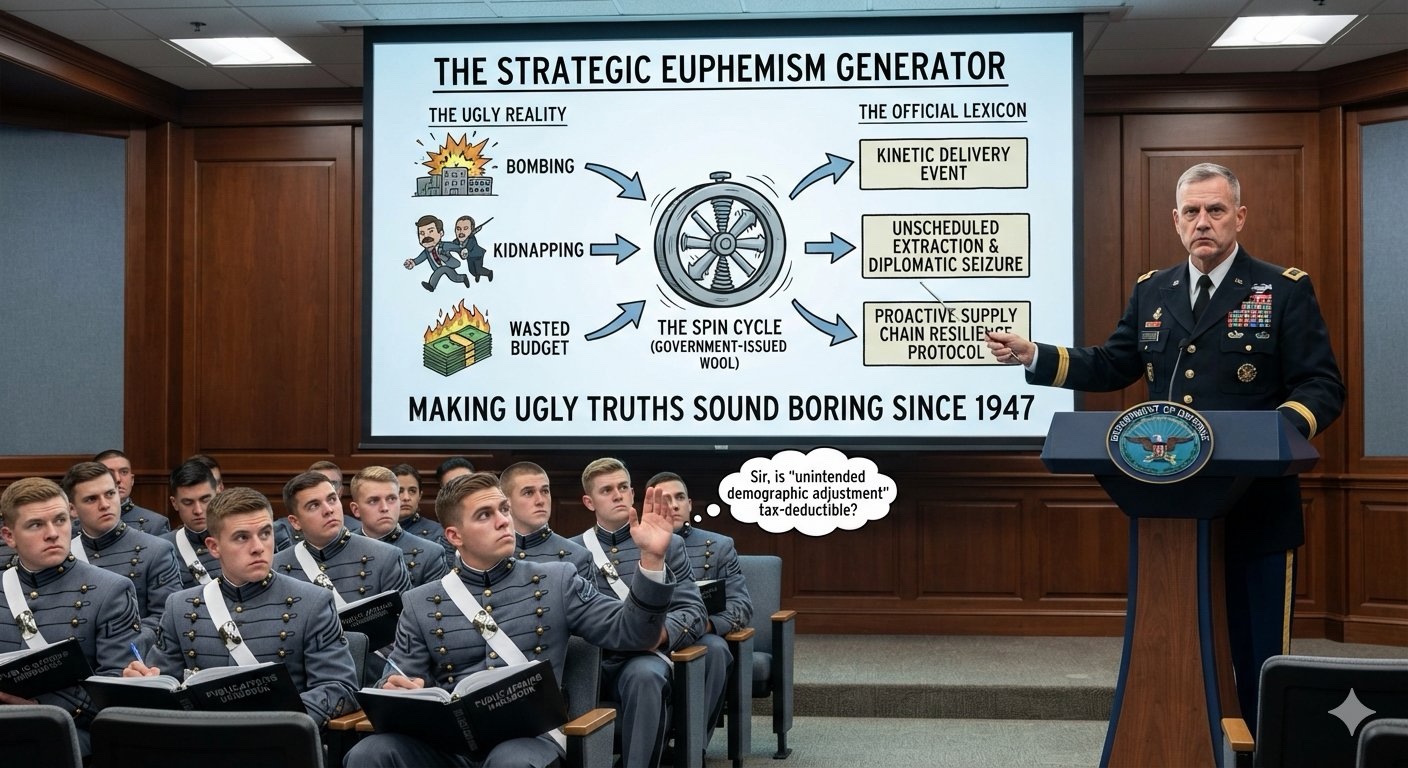
A sharp, tongue-in-cheek satirical spoof inside an elite military academy, revealing how the Pentagon rebrands raw violence, failed excursions, and exorbitant budgets into clinical, bureaucratic corporate synergistic spin.
When Footnotes Pretend to Be History:
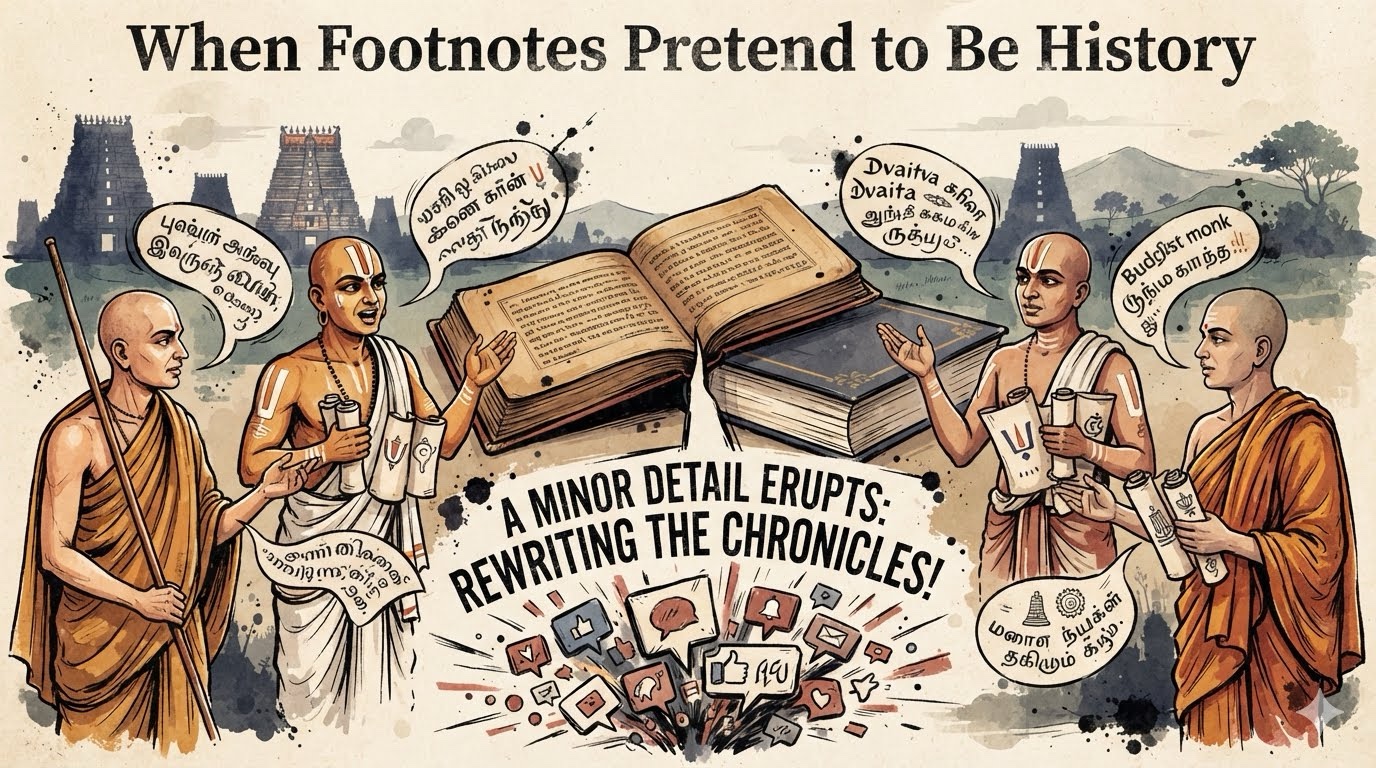
When Footnotes Pretend to Be History
Hindu philosophical traditions did not develop in a climate of uninterrupted harmony. Advaitins, Viśiṣṭādvaitins, Dvaitins, Buddhists, Jains, Śaivas, and Mīmāṃsakas often engaged in fierce—and sometimes deeply personal—polemics.
But a sectarian insult is not the whole history of a philosopher. A hostile hagiography is not a neutral biography. And a provocative footnote should not be presented as though it were a major chapter in the history of Indian thought.
From Śaṅkara and Rāmānuja to Vedānta Deśika and Madhva, the record reveals both acrimonious conflict and extraordinary intellectual creativity.
The real danger today is not that these old polemics are discussed. It is that social media detaches them from context, magnifies them, and turns historical trivia into historical truth.
When does a footnote become a distortion of history?
“Acharya devo bhava”: What ails the Indian Education system?”

by M.K. Sudarshan July 28, 2026: Chennai, India An informal email group discussion following the much trumped about triumph at Jantar Mantar of the Cockroach Brigade’s street-side heroics against NEET Below is reproduced a very spirited discussion on the subject of Indian Education system that I had with a small group of very eminent andContinue reading ““Acharya devo bhava”: What ails the Indian Education system?””
न्याय की ढलती सांझ: महाभारत के समय-कूप से उपजी एक परमाणु गाथा

by M.K.Sudarshan July 20, 2026: Chennai, India महाभारत से प्रेरित एक काल्पनिक पुनर्कथन संयुक्त राष्ट्र महासभा के भव्य कक्ष पर एक अकल्पनीय, दम घोंटने वाला साया मंडरा रहा है, जिसने वैश्विक महाशक्तियों की पूरी व्यवस्था को एक भयावह और पूर्ण जड़ता में तब्दील कर दिया है। स्तब्ध और अवाक खड़े वैश्विक नेताओं के सामने एकContinue reading “न्याय की ढलती सांझ: महाभारत के समय-कूप से उपजी एक परमाणु गाथा”
When Eepa Met Churchill: A Birthday Quip on Who Really Writes the Rules
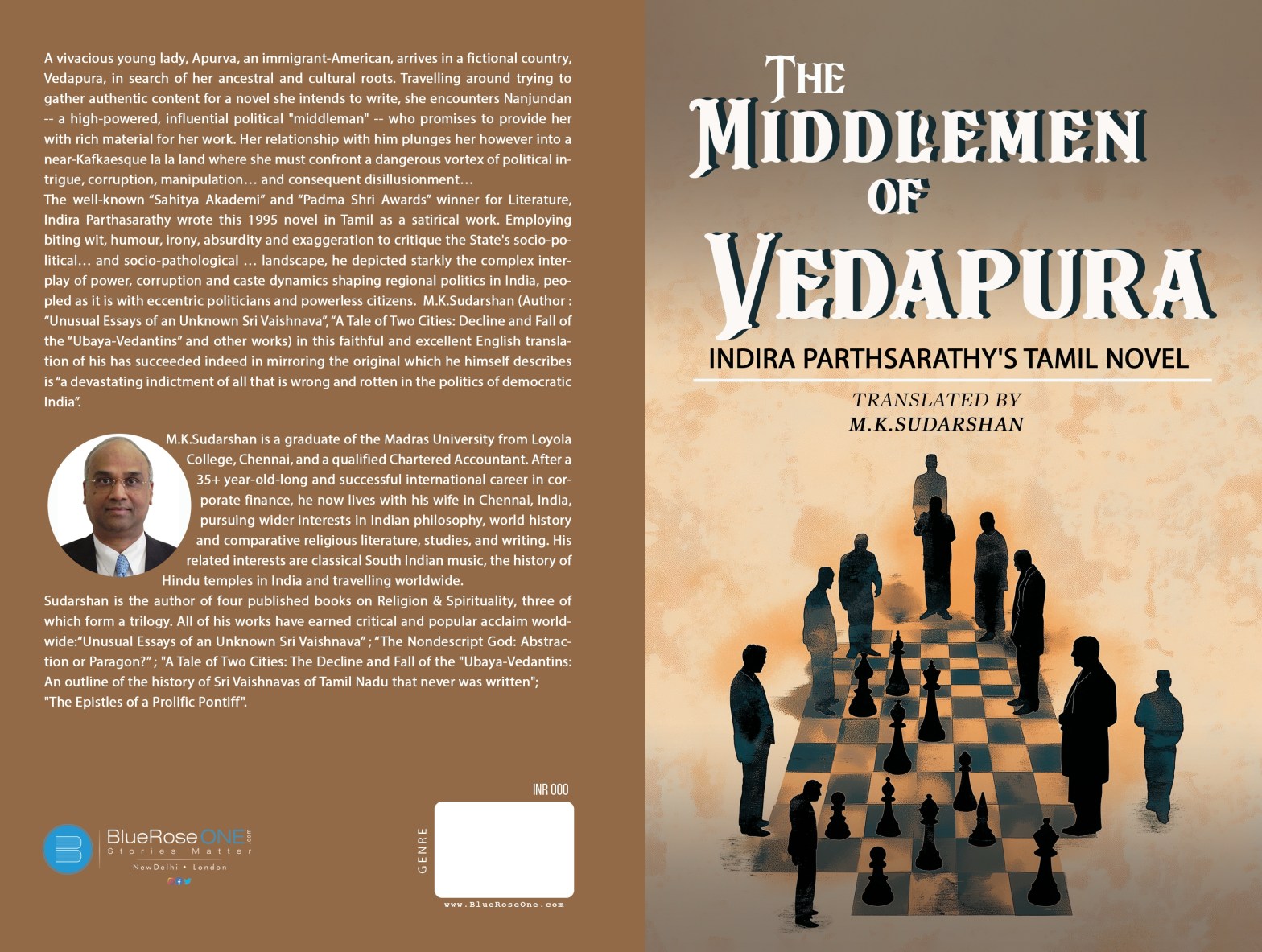
by M.K. Sudarshan July 12, 2026: Chennai, India What happens when you send birthday greetings to a doyen of Tamil literature? If the doyen is Indira Parthasarathy (affectionately known to generations as Eepa), you don’t just get a standard “thank you”—you get a masterclass in razor-sharp wit and historical cynicism. The legendary playwright, Sahitya Akademi winner, andContinue reading “When Eepa Met Churchill: A Birthday Quip on Who Really Writes the Rules”
My Semantic Note on “Saivam” and “Asaivam”

மரக்கறி Vegetarian food என்பதற்கு “மரக்கறி உணவு” என்ற சொல்தான் பயன்பாட்டில் இருந்தது. அதை மாற்றுகிறேன் பேர்வழி என்று யாரோ ஒருவர் “அசைவம்” என்று ஒரு பொருத்தமற்ற சொல்லை உபயோகத்தில் விட, அரசாங்கம் உட்பட அனைவரும் அதையே பயன்படுத்தத் தொடங்கி விட்டனர். சிவனை வணங்குதலே “சைவம்” எனப்படும். சைவத்தைப் பின்பற்றுவோர் சைவர். அவர்கள் அனைவரும் vegetarian ஆகத்தான் இருக்க வேண்டிய கட்டாயமும் இல்லை. கண்ணப்ப நாயனாரே சைவர்தான். “பிள்ளைக் கறி” சமைக்கச் சொன்னவரும், சைவர் உருவில் வந்தContinue reading “My Semantic Note on “Saivam” and “Asaivam””
Vedantic Retrospective Re-reading of Indian Fiction
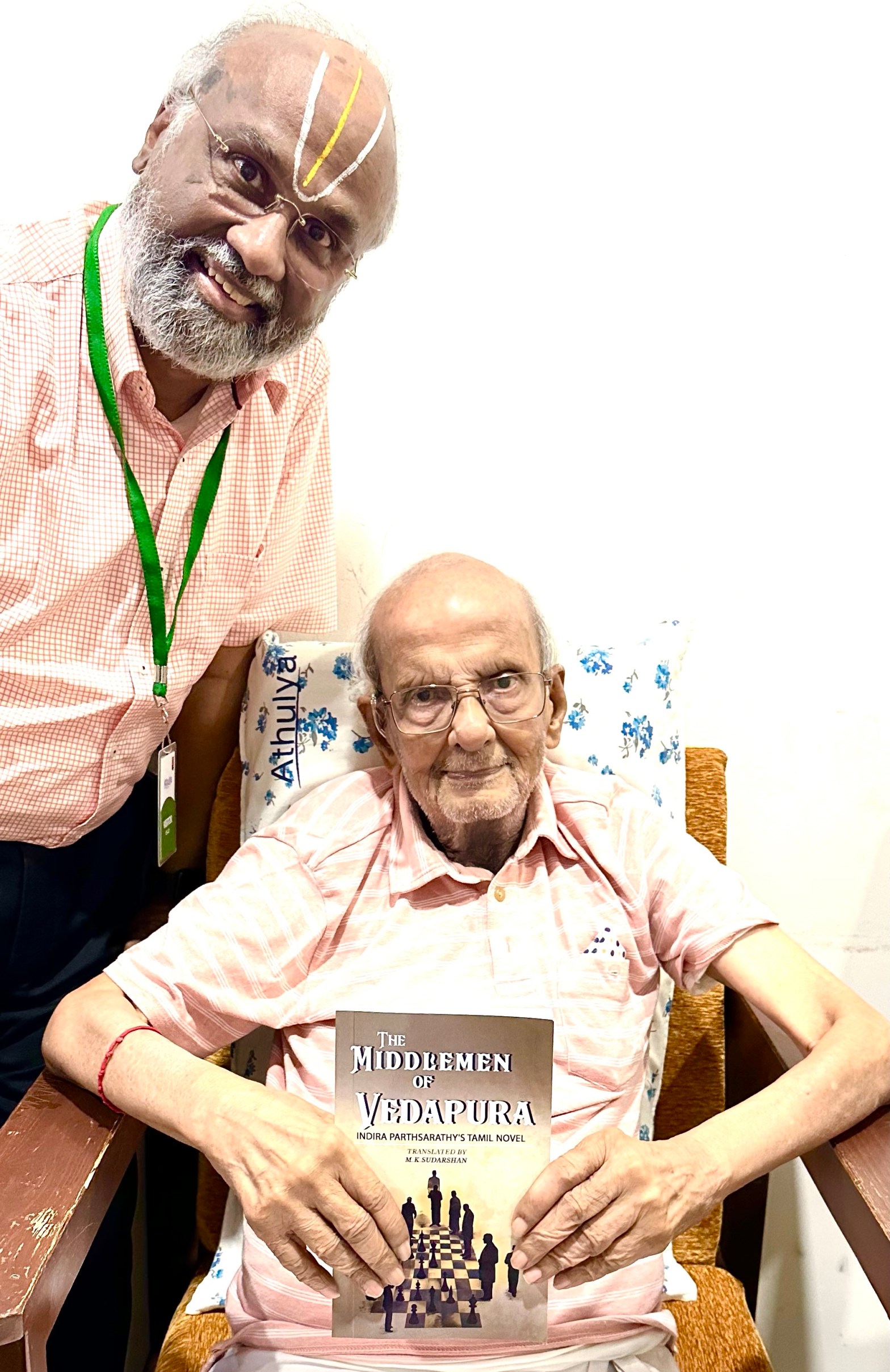
Not every novelist writes within a Vedantic framework, yet many works of Indian fiction do lend themselves remarkably well to Vedantic rereading. This is especially true when a novel or short story is shaped by inwardness, moral conflict, duty, renunciation, suffering, attachment, or the search for a stable self. In such cases, the Vedantic lensContinue reading “Vedantic Retrospective Re-reading of Indian Fiction”
Reading the short-story “The Choice” (சாய்ஸ்) through a Vedantic Lens … with Indira Parthasarathy and J. Raghunathan
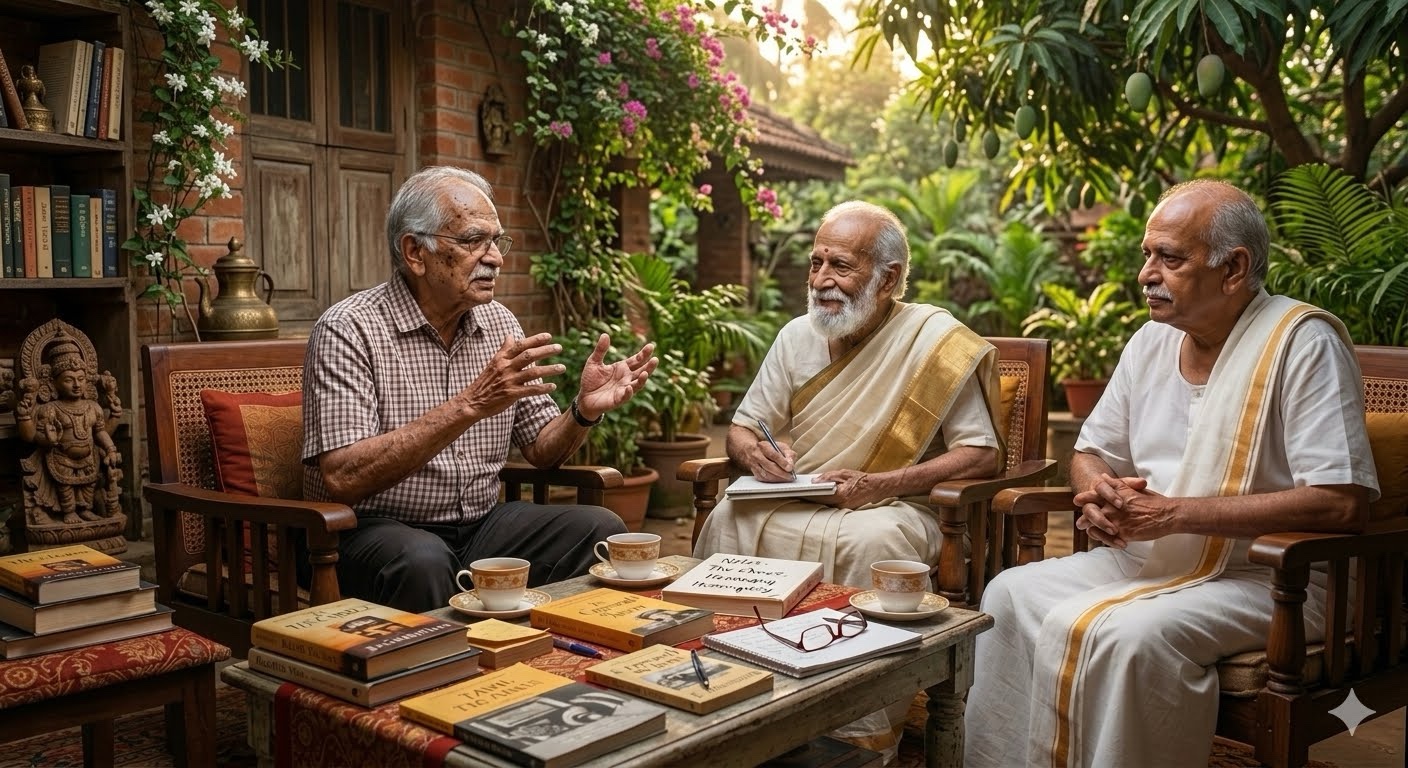
J. Raghunathan’s short story The Choice is compelling not merely because it stages a conflict between patriotic duty and domestic love, but because it leaves the moral structure of that conflict unresolved in a fruitful way. The story’s emotional power lies in the fact that the reader is never allowed the comfort of a simpleContinue reading “Reading the short-story “The Choice” (சாய்ஸ்) through a Vedantic Lens … with Indira Parthasarathy and J. Raghunathan”
Vidura, Birth, and Bhakti: A Tension in Reading and interpreting the Mahabharata

Author’s Note: The quotation discussed here in this essay below appears in Vedanta Desikan’s Rahasya Traya Saram, where a Mahabharata episode is re-read within a later Sri Vaishnava interpretive framework. The essay is merely an observation — neutral , non-judgmental and wholly academic. The writer’s purpose in penning the essay is solely to invite religiousContinue reading “Vidura, Birth, and Bhakti: A Tension in Reading and interpreting the Mahabharata”