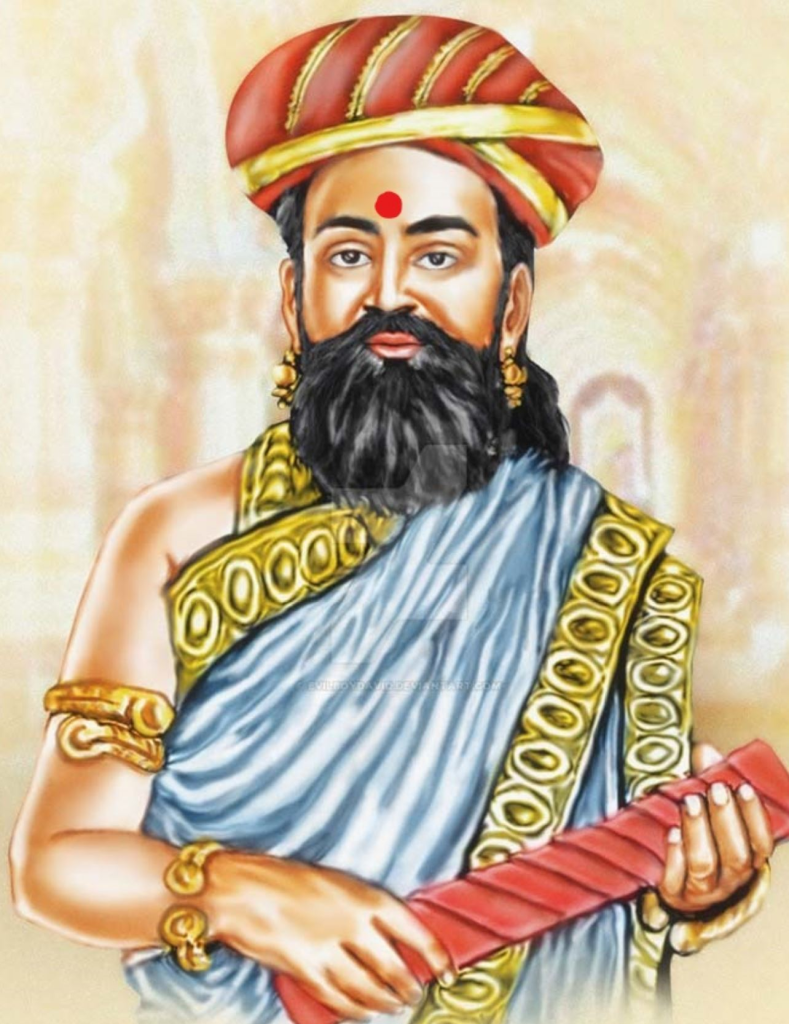
After my initial exchange of views with Eepa on the question whether Kamba Ramayana was a “purely out and out literary work” — or a “literary work” laced with many elements of religion” which I for one was convinced that it was — and on why it also carried within its pages what Eepa calls “sectarian” theology …. I began to ask myself this question:
Would it be right to claim that Kamba Ramayana is exclusively a literary text and has little to do with religion ?
With Eepa I knew I could never disagree on the firm conviction he held because I too shared that with him: that Kamba Ramayana was indeed a masterpiece of poetic excellence, renowned for its poetic beauty, rich imagery, and innovative use of language, narrative skill of extraordinary variety, and storytelling marked by creativity, empathy, and a deep understanding of human emotions. No one could deny what Eepa said: that Kamba Ramayana also provides invaluable insights into medieval Tamil society, culture, and values. Nor could I ever disagree that the work explores what Eepa calls universal themes like love, duty, loyalty, and the human condition, making it relatable across cultures and faiths. Eepa was absolutely right too that this Tamil classic offers rich symbolic interpretations of the original Ramayana, and invites readers to reflect on the human experience, morality, and the complexities of life.
Notwithstanding all the above, I wondered still whether it would be right to say that Kamba Ramayana was pure, “out and out literature” as Eepa told me it was — albeit, he hastened to add, with deeply philosophical and spiritual discourse woven into its narratives — and therefore, it could not be associated with any particular religious or “sectarian” school or strain of thought in India?
I asked myself the question: If so, why then do many sectarian “sampradaya” or orthodox traditions celebrate Kamba Ramayana as nearly a canonical text?
Can it be denied that many orthodox, sectarian traditions in India (especially in Tamil Nadu) celebrate, in fact, the Kamba Ramayana because it resonates with their respective spiritual, philosophical, and cultural values, offering a rich tapestry of meaning and inspiration?
Don’t so many contemporary religious scholars remind us that Kamba Ramayana is not just a retelling of the Ramayana story but is also an exploration of spiritual and religio-philosophical themes, such as bhakti (devotion), dharma (righteousness), and karma (action)? Are these only literary constructs or are they religious belief-systems too?
We know that bhakti resonates with many sectarian traditions that prioritize devotion to a personal deity or guru; and don’t we also know that Kamba Ramayana, so rich in symbolism, metaphors, and allegories, offers such wide interpretive flexibility, allowing different different sampradayas to find relevance and meaning in the text?
As a masterpiece of Tamil literature, the Kamba Ramayana is widely recognized, in fact, as a source of cultural pride and identity for many Tamil-speaking communities, including those affiliated with various sectarian sampradayas. To name only a few examples:
– Sri Vaishnavism: This tradition, founded by Ramanuja, places great emphasis on bhakti and considers the Kamba Ramayana a sacred text.
– Madhva Sampradaya: Followers of Madhvacharya, the founder of Dvaita Vedanta, also revere the Kamba Ramayana for its spiritual and philosophical insights.
– Other traditions: Various other sampradayas, such as the Ramanandi and Vallabha traditions, also revere the Kamba Ramayana as a sacred text.
**************************************
Now, quite expectedly, the above argument may be countered with the statement that Kamban’s approach to bhakti in the Kamba Ramayana is more focused on the universal principles of devotion, love, and surrender, rather than promoting any specific sectarian ideology or theology.
But then we may ask oureselves, isn’t the concept of surrender (saranagathi) a central tenet of Sri Vaishnava sampradaya ? So, isn’t Kamba Ramayana thus, in fact, a reaffirmation of Sri Vaishnava deity being Sriman Narayana ?
The concept of surrender (prapatti) is at the very core of Sri Vaishnava sampradaya, and Kamban’s emphasis on surrender in the Kamba Ramayana can be seen as a categorical affirmation of Sri Vaishnava philosophy. Kamban’s portrayal of characters like Rama, Sita, and Hanuman, who embody the principles of surrender and devotion, thus resonates strongly with Sri Vaishnavism’s emphasis on prapatti, does it not?
Eepa is quite correct, of course, when he writes in his essay that Kamban’s work doesn’t explicitly mention Sriman Narayana and only evokes the image of One Supreme Being. But then can it be denied that the underlying philosophy and themes of surrender, devotion, and divine love abounding in Kamban’s Ramayana are all consistent with Sri Vaishnava theology which posits Sriman Narayana alone as the supreme, universal deity?
Moreover, do we all not also know about Kamba Ramayana’s distinctly Sri Vaishnava connections? Kamban is believed, for instance, to have been influenced by Sri Vaishnava philosophy and traditions that are reflected in the work of Sri Nammazhwar, the principal Acharya of Sri Vaishnava fold. Tamil scholars in the Sri Vaishnava sampradaya tell us that Nammazhwar’s Tamil works, particularly the Tiruvaymoli, had a profound impact on Kamban’s poetry and literary style. Nammazhwar’s Tiruvaymoli explores intense devotional and mystical themes, which resonated deeply with Kamban’s own spiritual and literary inclinations. Kamban was also influenced by Nammazhwar’s innovative use of Tamil language, poetic meters, and literary devices, such as metaphors, similes, and allusions. And so, won’t it be right to say that Nammazhwar’s emphasis on bhakti (devotion) and prapatti (surrender) as the ultimate means of attaining spiritual liberation more than likely influenced Kamban’s portrayal of the same themes in the Kamba Ramayana? Kamban, as we know in fact, also openly pays tribute to Nammazhwar in his works, demonstrating his reverence for the Alvar saint and poet.
************
Keeping all the above broad facts and context in mind, Eepa and I continued our leisurely but lively conversation. Below is a transcript of the same:
Me: Sir, is it not true that several prominent Sri Vaishnava traditional scholars (vyaakhyaana kartas) have made references to the Kamba Ramayana in their various exegetical works and commentaries on Sri Vaishnava scripture? Here are a few notable examples which I was able to search and collect from the Internet:
Periyavachan Pillai (1228-1312 CE): A renowned Sri Vaishnava commentator, Periyavachan Pillai frequently quotes and references the Kamba Ramayana in his works.
Vadakku Thiruveedhi Pillai (14th century CE): This scholar’s work, the Kamba Ramayana Padhati, provides a detailed commentary on the Kamba Ramayana, highlighting its theological and philosophical significance.
Manavala Mamunigal (1370-1443 CE): Manavala Mamunigal, a prominent Sri Vaishnava acharya, references the Kamba Ramayana in his works, such as the Eedu commentary on the Tiruvaymoli.
Pillai Lokacharya (1205-1311 CE): Pillai Lokacharya, a renowned Sri Vaishnava scholar, makes references to the Kamba Ramayana in his works, such as the Mummanikkovai and the Arthapanchaka.
Given all the above facts, Sir, is it not true then that these scholars’ references to the Kamba Ramayana demonstrate the text’s significance within the Sri Vaishnava sectarian tradition and its continued relevance in Sri Vaishnava scholarship and theology?
Eepa: Your internet search is misleading. Vadakku Thiruveedhi Pillai’s work is called Eedu not Manavala Mamunigal’s. All of them mentioned are belonging to the Thengalai Sri Vaishnava sect. But let me say this: For all I know only Periyavacchan Pillai has quoted from Kamba Ramayanam according to Purushthama Naidu who had edited and published ‘Eedu’ for Madras University as was requested by Rajaji when he was CM of Madras in 1952. BTW, not everything thrown up by the internet can be taken to be right! Meta Al makes me the author of ‘Ponniyann Selvan‘, I am told!
I laughed and continued.
Me: Sir, Kamban’s Ramayanam was greatly influenced by Nammazhwar works , wasn’t it? He wrote “Sadagopar Andhaadhi” too, did he not ? So, why can’t it be said therefore that Sri Vaishnava sampradaya or sect does have a legitimate claim on Kamban’s Ramayana as one of its very own religious/ sectarian theological texts? Why deny the sect that genuine claim?
Eepa: No doubt, they can make that claim. After all Rama is beloved deity to millions of people and sects. Let it be remembered that Kamban named his epic ‘இராமாவதாரம்’. It was only later that his work came to be eponymously called ‘Kamba Ramayanam ‘.
Let me tell you an apocryphal story. The Chola king wanted him to inaugurate his epic — a book launch event — in his royal court. Kamban refused to do it and he had it launched instead at the Srirangam temple in the holy presence of 1001 Vaishnava scholars. That is why he added ‘Prahlada Charithiram’ in his work which you won’t find in the Valmiki Ramayanam. Prahlada charitram is very a very dear and important purana tale for Sri Vaishnavas. Vibhishana narrates the story, in fact, to Ravana just to make him understand that Rama is an avatar of Vishnu.
Me: Yes , sir , I’ve read somewhere too that the book launch of Kamban’s Raamaavataaram was held inside the Sri Rangam temple … And in the assembly of Sri Vaishnava priests , scholars and laity. There is today inside Sri Rangam temple a separate stone ‘mantapam’ called Kamban Mantapam where it is believed the book launch event took place…. So, given what you yourself say then, Sir, why can’t we conclude that Kamban was indeed a Sri Vaishnavite thinker , poet and litterateur? And that he did intend his Ramayana, replete as it was with all the main themes of Sri Vaishnavism, to be a religious, sectarian theological tract? He was after all, also greatly influenced by Nammazhwar too. Which is why, Sir, I’m so very intrigued by what and why you wrote in your essay that Kamba Ramayana is not a religious work. Let me quote exactly what you wrote:
“The commentators for the religious works, at the time of Kamban,
profusely quoted from Valmiki to drive home their sectarian views, which could have, perhaps, unsettled Kamban that he decided his work should be uncompromisingly literary giving no leeway for religious hijacking”.
Sir, I simply don’t understand what is this so-called “religious hijacking” that you say “unsettled“ Kamban ? It sounds a little far-fetched to me.
Eepa: Well… let me just say that what I firmly believe is this: that Kamba Ramayana should not be read only in the religious context. Not like Valmiki Ramayana always is … although the Adi Kavi too might not have intended it to be. Valmiki gets interpreted only in the context of religion and that too by the religious or sectarian orthodoxies. I believe that Kamban perhaps wanted that the same fate that befell Valmiki’s Ramayana should not visit his epic too.
Me: Sir, be that all as it may, how can anyone deny that today Kamban’s Ramayana is very much regarded and celebrated as a religious text only by the Sri Vaishnavas of Tamil Nadu? Even you have admitted that Sri Periavachan Pillai in his commentaries on the Azhwar Prabhandhams quotes and alludes to Kamban’s Ramayanam . Today, even orthodox Sri Vaishnavite Muttaadhipathis, pravachanam pundits and other scholars in their public religious discourses (kaalapshepams) profusely quote from Kamban’s Ramayana to delineate many Sri Vaishnava theological and doctrinal themes. If Kamban had been alive today , would you then say that he would’ve have deeply resented that his magnum opus Raamaavataaram has been “hijacked” by the religious order of the Sri Vaishnava orthodoxy ?
Am I to understand, Sir, that you are in favour of the Kamba Ramayana remaining only a purely literary work and be feted only at Kamban Vizhas and Kamban Patti Manrams and therefore religious sects like Sri Vaishnavas by interpreting it as a religious text are, in fact, doing injustice to Kamban’s intent and purpose in writing his masterpiece ? Could you please explain, Sir ?
Eepa: Well… all I can say is that like what Gandhiji’s teachings are for many of his so-called followers today, the Kamba Ramayanam too is a big industry today for Kamban Vizha gangs! Literature, however, becomes the casualty. When I say that Kamba Ramayana is a literary work predominatnly, I don’t mean it that way … that it is meant for the Kamban Vizha forums… I’m not talking about “religious hijacking” being carried out in that sort of way… i.e. as these gangs have hijacked it for their own special purposes. My real contention is that first and foremost Kamban must be seen as a literary genius… and only thereafter and secondarily as any kind of religious scholar! Instead of “religious work” I would call his Ramayana as a philosophical manual.
Let us for a moment, consider Kamban’s work without the lens of religion or sectarian bias.
Kamban lived during the period of Imperial Cholas. But considering that he dedicated his epic in a way, wholly to an ordinary, simple philanthropist of his times, by mentioning that gentleman’s name ten times in the course of his narrations, one may be tempted to conclude that Kamban did not enjoy royal patronage as many other inferior poets of his times did. And there are many apocryphal stories about the master poet not wanting royal patronage … and that in fact can only strengthen the view that Kamba Ramayana was not purely a religious text. More importantly, in my view, it was a commentary on far more universal and much more transcendental themes than simply those of religion.
Me: Sir, talking about the imperial Cholas of Kamban’s times, let me share with you below what I came across as a comment on social media :
“Kamba Ramayana received royal patronage. It was patronized by Thiruvennai Nallur Sadayappa Vallal, a chieftain of the Pannai lineage, whose name appears every 1,000 verses as a mark of gratitude. Additionally, Kambar enjoyed the patronage of King Kulothunga Chola III, who recognized his literary genius and supported his work. This patronage was crucial for the composition and dissemination of the epic”.
Eepa: No… I wouldn’t agree with that … Ottakuthar, a much inferior poet, enjoyed royal patronage and he was the poet-laureate of the Chola court. And by the way, Sadaiappa Vallal was not a chieftain of any territory but just a rich landlord who patronized Kamban. There is also an apocryphal story that Kamban left the Chola kingdom in sheer disgust he felt for the Chola court.
Me: Why? What was the real reason? Sir, can we say therefore that Kamban was “under recognised” by Kulothunga-1 or -2, maybe because he was suspected by the King to be a closet Sri Vaishnava and the Chola dynasts at that time in history were Saivite bigots ?
Eepa: Again, why are we bringing in religion into all this?! … No, I think the apparent reason could be that whereas when all his contemporary poets like Ottakuthar, Pugazhendhi and others eulogized the Chola king, Kulothungan-I, Kamban kept eloquent silence in this regard although he was hailed as the foremost and greater poet by the general public. That could have provoked the king and could be the reason why he banished Kamban from his kingdom!
Me: Sir, I hope you don’t mind me saying this… If that were true, it only makes me think that Kamban moved to self-exile himself out of Chola land more out of a sense or fit of personal peevishness than any matter of principle ? Am I wrong, Sir?
Eepa: When the inferior poets were dancing to the tunes of His Majesty, would you call a self-confident poet’s independent nature like Kamban’s as mere ‘peevishness’? ”யாம் யார்க்கும் குடியல்வோம் நமனை அஞ்சோம்’ … that was his true spirit!
Me: Alright Sir, maybe you’re right … But then as you yourself said .. it’s all an apocryphal story . We don’t know what really motivated the poet’s disillusionment with Kothunga. Sir, let’s leave the matter here and let’s please move on to yet another remarkable aspect of Kamba Ramayana which you have highlighted in your remarkable essay.
***********
(to be continued)
Sudarshan Madabushi
PS: This morning , as an afterthought , Eepa messaged me this brilliant insight to buttress and clinch his arguments:
“Except Periyavaccan pillai a Manipravala commentator for Prapandams no vaishnava vedantic scholar has commented on Kamba Ramanayanam because it was not kept in the puja room!”
And my reply to him was this below :
Great point , sir !
Sri Vaishnava homes keep Valmiki Ramayana in puja room and worship it ritually also .
Kamban’s Ramayana is not conferred that honour .
Great point made by you !
Sudarshan