Srinivasa Sastry greatly respected Mahatma Gandhi for his deeply spiritual aspirations. But Gandhi’s spiritual militancy, such as his agitational methods of Sathyagraha employed against the British, received only his grudging admiration. And even such admiration was often conveyed to the Mahatma only with a large dose of brotherly admonition.
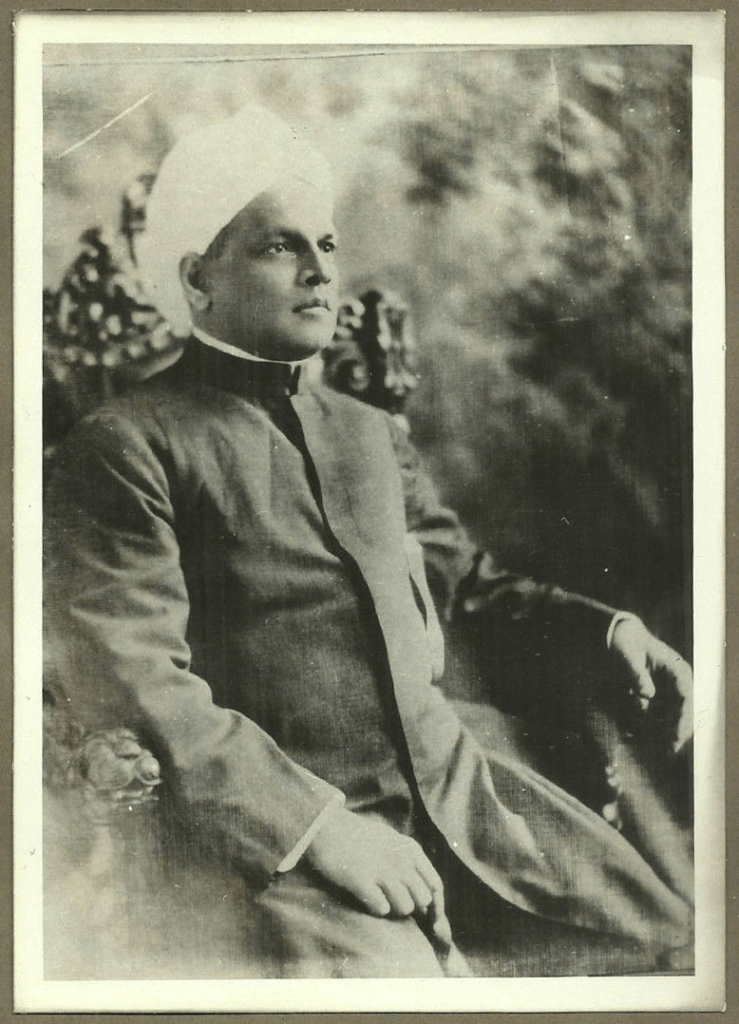
Sastri as a friend advised Gandhi that his great “experiments with Truth“ that consisted of mixing political work with spiritual “saadhana” — such as fasting, self-abnegation and self-flaggelatory practises — was not a healthy idea. It was, in fact, Sastri said, Gandhi’s “disease of grimness“. He told Gandhi that it was that disease that caused all his mental disturbances and depressive states. It turned his political engagement often into an obsession with personal angst, agony and self-doubt leading eventually to the Mahatma’s not infrequent bouts of melancholy.
In one of his most affectionate letters to Gandhi, Sastri wrote asking the Mahatma to stop meditating on his navel, as it were… to cheer up instead and to stop brooding over his spiritual failings, and to surround himself with less grim and more jovial friends and colleagues.
“You live in a difficult world. Waking or dreaming, you are racked by thoughts of sin and penance, confessions and truth-quests, satyagraha and moral self-flagellation. Those having sent home my dart of criticism, I folded my hands and prayed. “Enlighten me, for my soul is cast in doubt and you know all.”
The atmosphere in such circumstances is apt to be thick with disappointment and grievous failure. And if the only correction possible were self-correction, the master must needs find himself doomed to the cell of penitence, which is next door to suicide….. You appear to me to be confounded by anxious thought.
“I have written objecting to (your) too frequent references to the “Inner Voice” that talk to you or correspond with you continually pose doubts and serious problems, only deepening the grimness and suffocation around you. Few bring lightness of talk, familiar expletives, innocent jokes, revealing banter. You badly need a privileged jester in your establishment.
**************
In response to Sastri’s suggestion to cheer up and fill his surroundings with “lightness of talk, familiar expletives, innocent jokes, banter …”, Gandhi replied chirpingly to his friend in Mylapore, telling him that he very much appreciated especially the suggestion to appoint a “jester within the establishment” whose job would be to keep his spirits up from falling into the pit of melancholy.
“Let them learn that closest friendships can subsist between persons of contrary temperaments. As the public know, Sastri and I have opposite views on many important questions. Our mutual regard and affection have never suffered on that account. There is no reason whatsoever why the same rule cannot be extended to parties and groups representing opposite schools of opinion (in our politics).… Would that the affection subsisting between Sastri and me prove so deep and extensive as to reach and affect the whole society!
“But enough of this. I almost hear Sastri’s spirit whispering to me: ‘ You are misusing the medicine I prescribed to wean you from your disease of grimness and the like’. Therefore, let me hasten to tell him and the public that I have in my little camp of four a specially privileged jester in Sardar Vallabhbhai Patel. He succeeds in bending me almost double every day with laughter over his unexpected sallies. Gloom hides her fiendish face in his presence. No disappointment, however great, can make him gloomy for long. And he will not let me be serious for two consecutive minutes He will not spare even my ‘ saintliness’! It may deceive simple people but never the Sardar …. (he) tear(s) down the mask and compel(s) me to see myself as … (perhaps Sastri might) … delight to see me…. The thing that Sastri wants in our little family is there cent per cent. Next time he enters the Assembly or some such place, he must vote special thanks to the Government for putting Vallabhbhai with me or me with him.
But this consoling information does not in any way release Sastri from his self-imposed obligation. For the Sardar will not do what Sastri can be trusted to do mostly. Unlike him, the Sardar has the wretched habit in the end of saying ‘ ditto’ to all I say. And that is bad for anybody.
*************
The admonitory tone of Sastri’s letters to his friend Gandhi was reserved not only for matters personal but also included political affairs and especially, on occasions, when Sastri felt Gandhi was carrying Sathyagraha to extremes.
In August 1933, while in prison, Gandhi threatened the British authorities with what came to be called the ‘Harijan facilities fast”.
On 1st August, the Mahatma and his chosen band of individual resisters had been arrested at Sabarmati. Gandhiji was released on 4th August, and immediately after served with an order restricting his movements. On disobeying the order, he was re-arrested. Release and re-arrest happened also to his followers.
Soon after his arrest, Gandhiji wrote to the Government seeking permission for the use in prison of what he called the freedom to use “facilites for Harijan work” which he had enjoyed as prisoner in 1932. It meant that even while from prison, Gandhi be allowed to engage in political activity (such as writing, publishing, broadcasting, giving interviews, propagandizing etc.) outside so long as it was related to Harijan causes and Harijan welfare. On the 14th instant, after Gandhi had sent four reminders and announced his mtention to fast, the Government reluctantly gave him certain facilities but imposed certain conditions. He was to give no interviews for publication in the press.
Gandhiji considered the facilities “far short of the original orders of the Govenment of India and of my requirements“. It was clear Government gave the facilities grudgingly. They had, moreover, passed an unfair criticism that whenever the Mahatma was free he devoted more time to political work than to Harijan work. So, Gandhiji went immediately on a fast on the 16th of August. The British however released him on the 23rd instant.
Sastri was not aware of the entire correspondence that had been earlier exchanged between Gandhi and the British authorities. But from whatever he learned about the Sathyagraha staged in prison, he made it clear that he felt it arose more from either Gandhi’s petulance or from a surge of intemperate indignation that the Maharma felt against the British and far less from any overriding sense of sympathy for the Harijan cause.
Sastri’s frank view was expressed in a letter to Gandhi that he wrote. This letter has reference to what is called the “Harijan Facilties Fast” which resulted in Gandhiji’s release on the seventh day and transfer to Parnakuti where he broke the fast. Sastriar had evidently no access to the long correspondence that had taken place earlier between Government and Gandhiji, all that he however was insisting on was that the privileges Gandhi had enjoyed as prisoner during the year 1932, could not be demanded in 1933 or everytime the British saw cause to place him under arrest.
Expressing rare disappointment and exasperation which he felt over Gandhi-ji’s near-anarchist methods of agitation, Sastri then went on in the letter to urge the Mahatma to even (a) give up Civil Disobedience, (b) to rein in his own dictatorial tendencies as the leader of the Indian National Congress, (c) to quit the Party and (d) to let its younger leaders shoulder the burden of carrying on the freedom struggle!
Sastri also advised Gandhi to instead focus all his energies and attention on building the blueprint of a modern Constitutional architecture for the independent nation that India was bound to emerge as, sooner or later, and in any case, not too far in the future, given the imminent collapse of Imperial Britain.
COIMBATORE: 27th August 1933
Dearest Brother
Government might well have given you the old facilities. A curse has disabled them from generous or timely action. But they haven’t conferred a right on you or made you a promise. What they conceded to you at one time and in one set of conditions they are not bound to concede to you at another time and in another set of conditions The order made (earlier) after the Poona Pact, from which you quote, does not amount to an irrevocable or unconditional promise. You indulge in special pleading of a bad type when you charge them with a breach of promise. The addition of the words ‘made to a prisoner in their custody’ (made by you) loses the point it might have had otherwise.
It might be said by an observer who wasn’t prejudiced against Government that, while Harijan uplift was dear to you, putting blame on Government was dearer. It has been said in my hearing by well-disposed persons that you would love nothing so much as to die in gaol and leave Government hurdened with the responsibility.
Behind and beyond your present tussle with Government lies the future of the country. How can Congress best secure that future? Your answer is clear. But another answer is taking shape in people’s minds. It is that civil disobedience, both mass and individual, must be given up.
A new policy, aiming at constructive national good in legistation, finance and administration all round, has long been overdue and must be tried over and above what is now called the constructive programme of Congress. I believe this feeling is common outside Congress, and is gaining ground inside Congress. How can this orientation be brought about?
It is so different from your present polices, in look so opposed to it, that one doubts whether you can undertake it. Perhaps your whole preparation and equipment lie in a different direction. It is no disparagement to any one that he is not fitted to lead the nation in all contingencies and in all directions. Unfortunately no man, however big, can be always trusted to know his limitations and make room when the cause to which he is devoted requires it. His very greatness stands in the way of change. And as I have told you more than once, you have out-topped all other leaders so long and so decisively that there is no man in sight to take your place at once.
What a blessing it would he if you could be transformed and re-made, as it were, for the fresh era . But you are too good, too true to yourself to pretend you are the same teacher when the creed is no longer yours and the ritual is something you have never conducted.
In this sore strait, the country looks to you to play a greater part than you have ever played. (Pardon me: what I mean is the greater part of the country as I figure out the parties). Save your individual conscience, pursue civil disobedience, seek the goal and embarrass Government as you like; but leave Congress free to evolve a new programme. It simply cannot do so, while it has to give authority and countenance to individual disobedience.
You rememher I begged you to adopt this course when I was last with you at Parnakuti. You told me you put it to the working committee, but they would have none of it. Naturally and in a way properly too. The committee couldn’t face the odium of abandoning you. I don’t wonder the thought was abhorrent to them. The moment is come-in my opinion it came long ago-for you to say, ‘I set Congress free to try other methods. I have plenty of God’s work to do, for the nation’s welfare, with Harijans’.
There, then, I’ve told you the truth as it seems to me.
May one hope that you will see the problem from a new angle? I know one thing. There is no self-effacement to which you are not equal. The only thing is, it must seem to you to be called for.
All that a friend and brother can do is to give an indication.
Yours affectionately
V. S. SRINIVASAN
************
To Srinivasa Sastry’s very blunt but equally sincere and friendly message to him, Gandhi replied defensively as follows in a slightly acerbic yet unoffended tone:
30th August 1933: Parnakuti
Dear Brother
I treasure your letter.
I do not mind anything you have said. On the contrary I appreciate all you have said. Having said this, I must say that I utterly dissent from your interpretation of Government orders. If you saw all the correspondence, perhaps you will revise your judgement. I am not given to special pleading consciously. You may not have noticed that the Government have themselves dropped the idea of ‘another set of conditions’. On the contrary, they said that they made a mistake in making what you call ‘ concession in the first instance’, and the mistake made was not one on merits but had reference to their own convenience.
However, I shall not strive with you in connection with your pronouncement upon my statement, but if you will care to study the whole question I would gladly send you the whole of the correspondence. I hope that you yourself do not consider me to he capable of desiring to blame the government for the sake of doing so or that that performance would be dearer to me than Harijan uplift. I consider myself capable of a just discrimination and therefore of knowing when, the Government is in the right.
But this is all beside the point. I have taken so much space with what is now immaterial, in order to tell you that I do not plead guilty to the charge you have made against me.
Now for the central point of your letter. I quite agree with you that I am wholly unfit for the constitution building at the present stage. In my opinion that time is not yet. It will come only when the nation has developed a sanction for itself. I would therefore gladly retire from the Congress and devote myself to the development of civil disobedience outside the Congress and to Harijan work. The difficulty is how to do it? Can I do it by seceding from the Congress? That was the question that troubled me at the time of the informal conference and that is the question that confronts me again. I am seeking light.
As soon as I have regained sufficient strength I shall again sound the mind of Congressmen and if I can possibly retire from the Congress I shall gladly do so. My impression, however, is that the Congress mentality has not changed. Whilst it is true that a large number of Congressmen have got tired, very few would care to subscribe to the white paper or work for securing certain improvements in it. They want a radical change. But I am in no hurry to come to any final decision. I can give you this assurance that nothing will deter me from taking any steps that might he in the best interests of the nation. There is no question even of self-effacement. Performance of duty I have held always to be a thing of beauty and a joy for ever. The awful fact, however, has often been to know where duty lies.
You won’t give me up, but continue to guide me and you will not hesitate to come if you felt like coming.
I am not going to hesitate to ask you to come when I feel that I need your personal contact and a constant exchange of thoughts.
Love
M. K. GANDHI
****************
Sastri immediately replied to Gandhi’s letter, providing more clarification on what he had intended to convey to the Mahatma:
COIMBATORE: 4th September 1933
Dear brother
I was touched by your reply. It was full and reasoned.
Neither of us forms an opinion in a hurry or drops it in a hurry. But there is a satisfaction in knowing the other side. In all circumstances, we shall carefully understand and make allowances for each other.
So let us dismiss the past.
I plead for Congress being freed from your rule. If you wait for its consent to the course, a very long delay is inevitable. Grant the freedom immediately. Must you like the British Raj, put off the consummation till it becomes inevitable?
Certainly Congress are not going to bother about improving on the white paper. With the Tories in power and our minorities clamouring for alms, that is an impossible dream. Few progressive politicians in India indulge in it any more.
You write in your letter of forging & national sanction. Let one assume for a moment that yours is the only way of doing it, still must it be in point of time continuous absolutely without intermission or respite to the nation?
May it not be, in certain conditions, another way can be tried with advantage? The belief is widespread that such conditions are now in being. I will name two of these.
(1) The ascendancy of the Tories which looks likely to last long. (2) The danger to Indian Nationalism from the passing of the political power into the hands of minorities backed by and dependent on the British people.
If the ill effects of these conditions should be kept at a minimum, the national forces must combine effectively and must make themselves felt in all directions and all the time. ‘Victory or Nothing’ is a rousing cry on the battlefield. When the day is lost, it has no meaning.
Where legislatures exist, even such manacled legislatures as ours, much may be done, were it only to prevent evil by vigilant opposition. It is first rate to be the Government. If you can’t be that, the next best thing is to be a strong united opposition. Bacon said we must have our hands constantly in affairs, and he was a man of the world.
I know you have no faith in this method. But do not forget it takes all sorts to make a world. ‘God fulfils Himself in many ways lest one good custom should corrupt the world.’
You seemed to think, when we last talked of this matter, that one wing of Congress might apply this method while another wing went on with individual Civil Disobedience.
I am clear the two methods are utterly incompatible.
Congress must choose one. Nor can the liberal and progressive schools be trusted to employ their methods on the necessary scale or with appreciable effect. I am a liberal, but not so partisan as not to see the nation’s good except through liberal spectacles. It is my heart’s wish that Congress and liberals and others similarly devoted to the cause of the future nation should merge together and form one large party. But the idea is too good for the moment. We must be content to have these parties, with their several labels but cooperating for common purposes, as clearly defined as possible.
If there is sense in this plan, pray give it a chance. Two conditions are necessary. Civil Disobedience must go. Dictatorship must go.
Yours lovingly
V. S. SRINIVASAN
*****************
The reply that Gandhi dispatched back to Sastri revealed at once his mind on who his political successor was going to be! And that in itself was an unambiguous hint conveyed to Sastri that the time had,at last, come when “the old order changeth, yielding place to new”!
PARNAKUTI : 9th September 1933
My dear Brother
I like your letter.
I want you to continue to strive with me and believe, as Gokhale used to believe of me, that whilst I often appeared to be uncompromising, I had a compromising and accommodating nature. I have always prized the certificate that he gave me and have endeavoured to live up to it.
If the freedom that you desire for the Congress was in my giving, I assure you that I would give it today, but it is not such a simple performance. When at Patna I surrendered all powers to the Swaraj party, Motilalji (Motilal Nehru) handsomely admitted that, though I was always ready to give, the party was only then to take them. The fact is that I do not want power. I look upon it as a privileged service. The moment I feel that I can get out of it to the benefit of the Congress, I will not fail.
However, you may depend upon me that I shall strain every nerve to adopt your advice. A great deal will depend upon Jawaharlal, whom I expect here on Saturday.
Love
M. K. GANDHI
************
That very last line in Gandhi’s letter perhaps was the “writing on the wall” that he hoped Srinivasa Sastri would read, absorb and understand its full implications. The Rt. Hon’ble Srinivasa Sastry’s philosophy of constitutionalism and the liberal–humanist path he had always stoutly been advocating as the principal means to the end of Swaraj would not cut any ice in the new era that was about to dawn on the political firmament of India under the leadership of Jawaharlal Nehru.
The last line, presaging as it did the rising spirit of Indian Nationalism that Nehru’s India was soon going to be enveloped in, also perhaps in a veiled way, signalled Srinivasa Sastri’s last bow and graceful exit from the political stage of India.
***************
(to be continued)
Sudarshan Madabushi