My 3 questions to AI this morning:
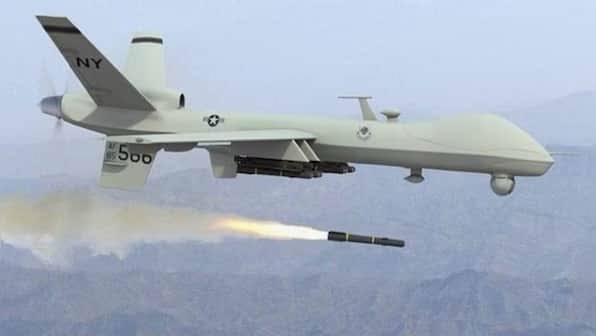
The ongoing war in Iran and Ukraine confirm that modern warfare today is prosecuted not with battle tanks and fighter jets but with lethal drones .
1. Is India equipped and weaponised in that department?
2. Is there a major chink in India’s Defence preparedness for modern warfare.

AI response :
Drones have indeed become pivotal in modern conflicts like Ukraine and the Iran-Israel war, enabling precision strikes and reconnaissance while minimizing risks to personnel, though tanks and jets retain critical roles in combined arms operations.
India lags in operational lethal drone numbers compared to peers, highlighting a gap in high-end UCAV readiness, but rapid procurements and indigenous efforts are addressing this.
Drone Roles in Conflicts:
In Ukraine, FPV and long-range drones like Shaheds dominate, destroying tanks and disrupting advances, with over 4,400 launched monthly by Russia in early 2026—reshaping tactics toward drone-heavy attrition.
Iran’s ongoing exchanges with Israel feature drone interceptions and retaliatory swarms alongside missiles, underscoring air defense vulnerabilities.
Tanks and jets persist for breakthroughs and air superiority, but cheap drones amplify asymmetric threats.
India’s Position
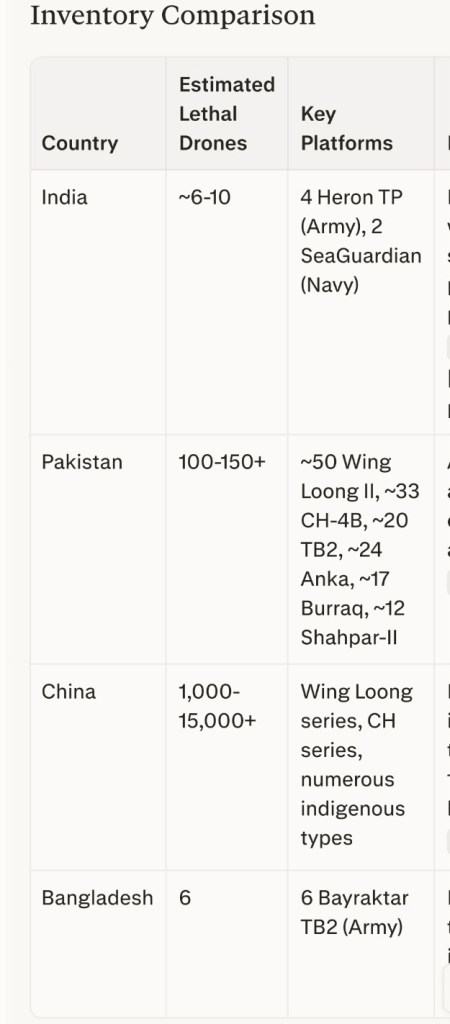
India’s ~6-10 lethal drones pale against Pakistan’s 100+ and China’s thousands, potentially exposing gaps in sustained strike endurance.
However, doctrines emphasize swarms, kamikaze munitions (e.g., 850 procured), and AI integration, with 31 MQ-9Bs incoming to bolster maritime and border ops.
India’s armed forces maintain a modest inventory of lethal (armed or combat-capable) drones, primarily consisting of reconnaissance UAVs with limited strike capabilities and a small number of dedicated armed platforms.
Exact current figures as of March 2026 are not publicly disclosed due to military sensitivity, but estimates from reliable defense analyses indicate fewer than 10 operational lethal drones, with the total UAV fleet (mostly unarmed) under 200 units.
Current Estimates
The Indian military’s drone fleet totals around 179 units as of late 2023, dominated by Israeli Heron and Searcher models used mainly for reconnaissance.
Only a handful qualify as lethal: 4 Heron TP (potentially armable) in the Army and 2 leased SeaGuardian (recon-attack) in the Navy.
No large-scale armed drone squadrons are confirmed operational yet.
Key Platforms
- Heron TP: 4 units (Army); medium-altitude long-endurance, capable of strikes but primarily recon.
- SeaGuardian (MQ-9B variant): 2 leased units (Navy); armed with missiles for maritime strikes.
Most others (e.g., 108 Searcher, 65+ Heron 1) are unarmed surveillance types.
Procurements
India is expanding rapidly: 31 MQ-9B Predators approved from the US (not yet delivered), plus plans for 56 Heron TP and 87 indigenous MALE drones by 2029-30.
Loitering munitions like 850 kamikaze drones are in procurement but represent expendable, tactical assets rather than reusable inventory. These will significantly boost lethal capacity soon.
Enhancement Efforts
Procurements include 87 MALE drones and Shaktibaan regiments for unmanned warfare; total UAV pool exceeds 100k including tactical assets. This aligns with global shifts, mitigating the “chink” through scale and autonomy rather than sheer numbers alone.
3. Are comparative figures of Pakistan , China and Bangladesh available ?
Comparative figures for lethal drone inventories (armed UCAVs and combat-capable UAVs) are available from open-source estimates as of early 2026, though exact numbers remain classified and vary by source. These focus on reusable strike platforms, excluding most loitering munitions or unarmed recon drones unless explicitly armed.
Key Insights
Pakistan leads regionally in operational armed MALE UCAVs, leveraging Chinese/Turkish imports and indigenous production.
China dwarfs all with its vast production, emphasizing swarm and AI integration.
Bangladesh’s small fleet is modern but limited, while India’s growth hinges on incoming MQ-9B deliveries.
(Figures exclude one-way munitions like kamikaze drones, which all nations are scaling).
Sudarshan Madabushi