In God We Trust: The Mother of All Trust Deficits — and the Death and Resurrection of Trust

Is “In God We Trust” a prayer—or a confession?

We print trust on currency, promise it in elections, demand it from banks, courts, doctors, journalists, and algorithms—then watch it thin beneath the winds of betrayal, spin, and institutional failure.

Beginning tomorrow: “In God We Trust: The Mother of All Trust Deficits—and the Death and Resurrection of Trust.”
Nine dialogues between two students of a Vedic university in South India—Ānanda, the restless sceptic, and Madhava, the contemplative Vedāntin—move from Eden’s first broken trust to the modern crisis of credibility, media, democracy, and institutional entropy.

At the centre lies a Sri Vaishnava question: when every earthly refuge trembles, can the soul find its final shelter in mahāviśvāsam—unshakeable trust in the Lord’s grace?

Nine days. Nine dialogues. One question: can Trust rise again?

Narayana! Narayana! Narayana!

The Refineries That Saved India’s Pumps

Title: The Refineries That Saved India’s Pumps

Subtitle: While America and Europe face a looming refining-capacity crisis, self-sufficient India should thank its public sector—and Ambani

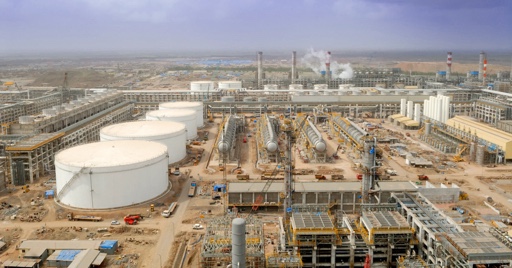
The article argues that India’s relative freedom from the diesel shortages now troubling the United States and Europe is not luck, but the result of a seven-decade effort to build domestic refining capacity. While Western economies face pump-level supply stress, India remains broadly self-sufficient in petrol and diesel, even though it imports most of its crude oil.

It traces India’s refining history from the first post-Independence refinery in 1954, through IndianOil’s creation in 1959 and the nationalisation of the oil industry in 1976, to the public-sector refinery network that still forms the backbone of national fuel supply.

The piece credits successive governments—especially those of Nehru, Indira Gandhi, P. V. Narasimha Rao, Vajpayee and Manmohan Singh—for building and expanding this capacity across very different political eras.

Reliance’s Jamnagar complex receives substantial but qualified praise. Commissioned in 1999 and expanded in 2008, it became the world’s largest single-site refinery, with about 1.4 million barrels per day of capacity, giving India export strength and flexibility during the current global diesel squeeze.

The article’s central argument is balanced: India should credit both the public sector, which built the foundation, and Reliance, which added world-scale private capacity. But it also cautions that Jamnagar’s success does not settle concerns about crony capitalism, market concentration or unequal access to state policy.

India’s energy security, it concludes, was built by long-term public and private investment—and must not be taken for granted in future crises.

What happens in a world where red lines drawn by Goliath are no longer respected by Davids?

As Washington’s deterrence fades, regional powers are rewriting the rules of global diplomacy. Discover how a fractured giant and asymmetric defiance are ushering in a volatile new era of messy multipolarity.

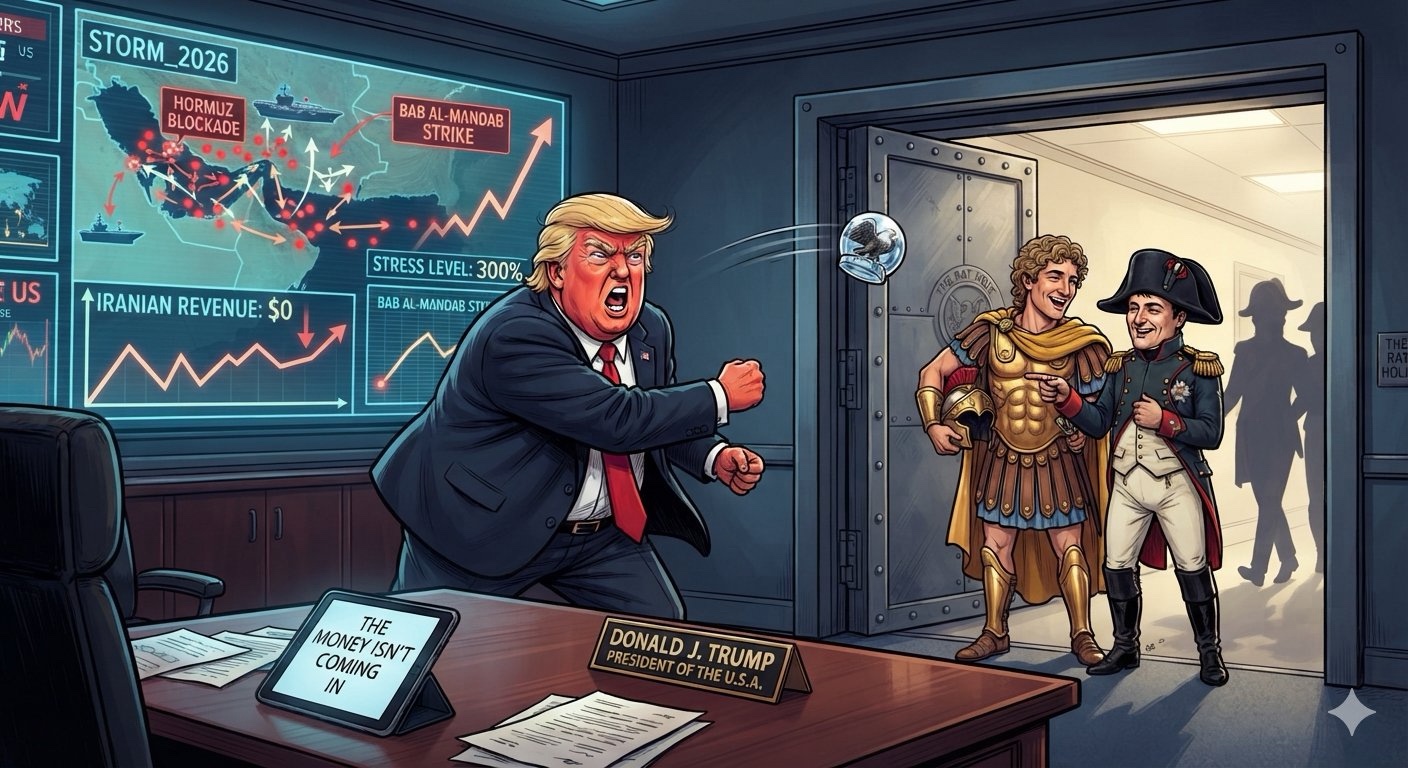
THE FORTRESS IN THE MIRROR

What happens when Alexander the Great and Napoleon Bonaparte stride into the Situation Room to lecture Donald Trump on military strategy?

A hilarious, sharp 3-act satirical script on the impossible geometry of modern asymmetric warfare in Persia.

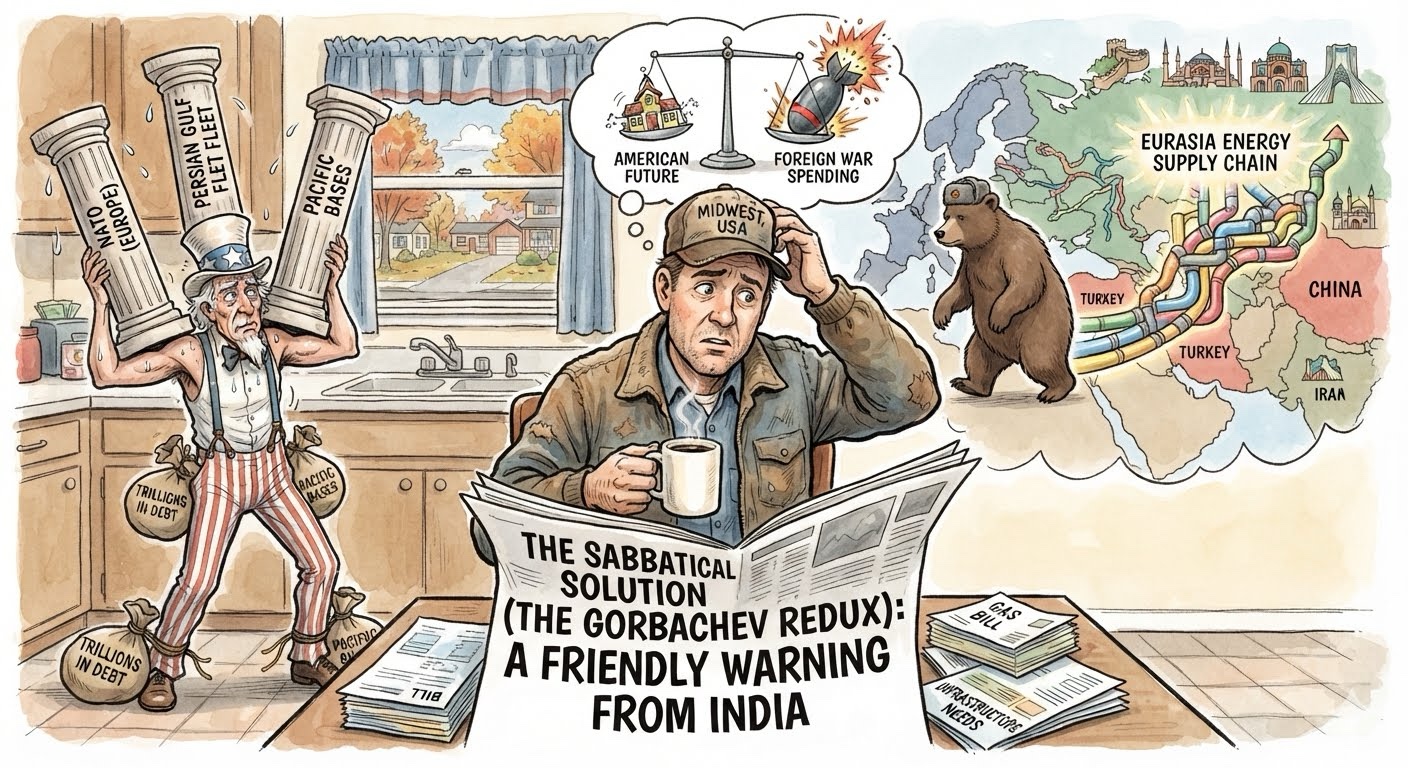
The Sabbatical Solution (The Gorbachev Redux)

A Friendly Warning from India to the American Midwest The Sabbatical Solution: An Open Letter to the American Heartland What if the best way to save the American century is to step off the global chessboard entirely? Writing as a friend from India, “The Unknown Sri Vaishnava” delivers a blunt, numbers-backed warning to the averageContinue reading “The Sabbatical Solution (The Gorbachev Redux)”

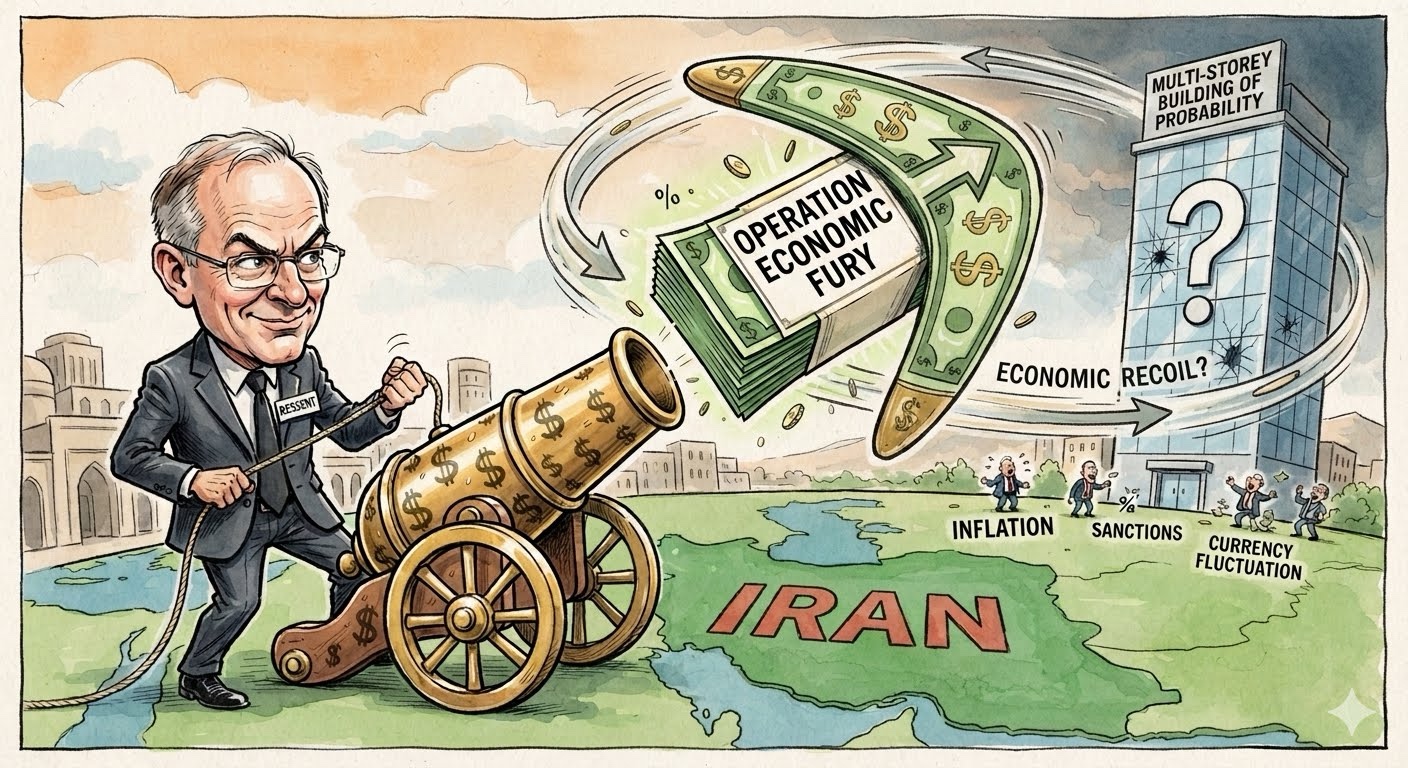
“Operation Economic Fury”: Strategic Sound and Fury Signifying Nothing?

The US Treasury’s new “Economic D-Day” campaign against Iran represents a masterclass in macroeconomic coercion. However, as geopolitical realists point out, breaking an economy does not automatically halt an asymmetric military machine.My latest Op-Ed breaks down the structural flaws of the attrition model, the reactions of vital neighbors like Turkey and Pakistan, and why total isolation might trigger a global energy crisis instead of a stable political transition.

INDIA INDEPENDENCE DAY SPECIAL: The Dynamic Use of “Soft Power”: How America and India, in Their Own Ways, Have Enlarged Joseph Nye’s Theory

by M.K.Sudarshan August 15, 2026 : Chennai, India This Op-Ed is dedicated to India on its Independence Day, 15 August 2026. America and India possess immense “soft power”, but they deploy it toward different ends. America has often used cultural attraction, political ideals, and diplomacy to legitimise global leadership and sustain a hegemonic order. India,Continue reading “INDIA INDEPENDENCE DAY SPECIAL: The Dynamic Use of “Soft Power”: How America and India, in Their Own Ways, Have Enlarged Joseph Nye’s Theory”

The morning after Donald Trump took the world down with him over a precipice (an imagined scenario)

by M. K. Sudarshan August 13, 2026: Chennai, India The sun rose over Washington on Wednesday, August 12, 2026, casting a pale, sickly amber light through the windows of the Oval Office. President Trump sat behind the Resolute Desk, his television screens muted but flashing a chaotic montage of fire and steel. Seventy-five days ofContinue reading “The morning after Donald Trump took the world down with him over a precipice (an imagined scenario)”

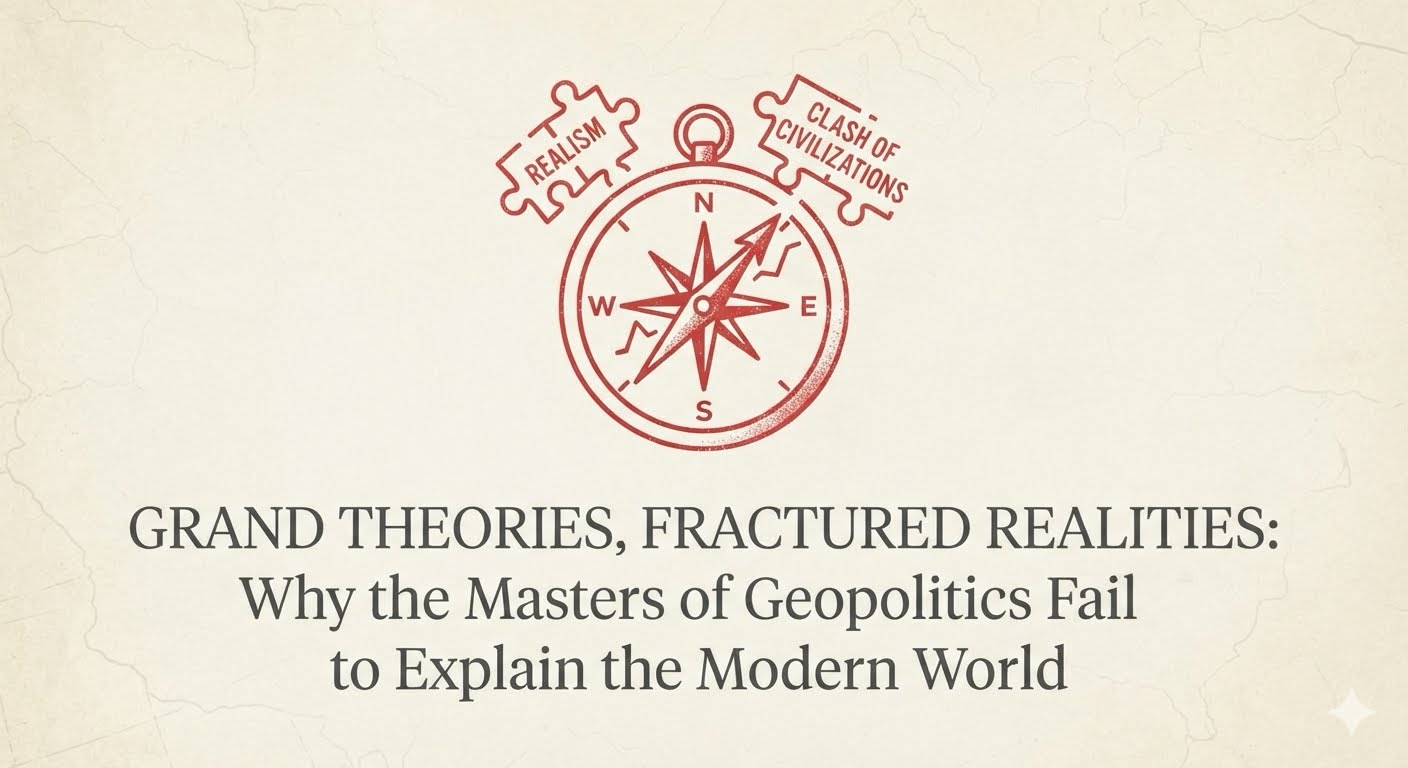
Why I Dare to Critique the Worldviews of Both Samuel Huntington and John Mearsheimer (Concluded)

by M.K.Sudarshan August 7, 2026: Chennai, India

Why I Dare to Critique the Worldviews of both Samuel Huntington and John Mearsheimer

by M.K. Sudarshan August 6, 2026: Chennai, India IntroductionThe global architecture is fracturing in real-time. From the devastating missile strikes in the Persian Gulf to the shifting security matrices of the Indo-Pacific, the modern world feels increasingly chaotic. To make sense of it all, the foreign policy establishment routinely relies on two towering academic frameworks:Continue reading “Why I Dare to Critique the Worldviews of both Samuel Huntington and John Mearsheimer”