“A satirical yet in-depth exploration of the 300-year-old Vadakalai vs. Tenkalai sectarian feud at Kanchipuram’s Varadaraja Perumal Temple and the legal stalemate that keeps it alive.”
Introduction
If you ever find yourself weary of standard political theater, pack your bags and head to the ancient pilgrim city of Kanchipuram. Here, at the magnificent Varadaraja Perumal Temple, a 300-year-old liturgical cold war is being waged with the tactical intensity of a nuclear standoff. This is the domain of the Sri Vaishnavas, a community split into two sub-sects: the Vadakalai (the Northern culture) and the Tenkalai (the Southern culture).
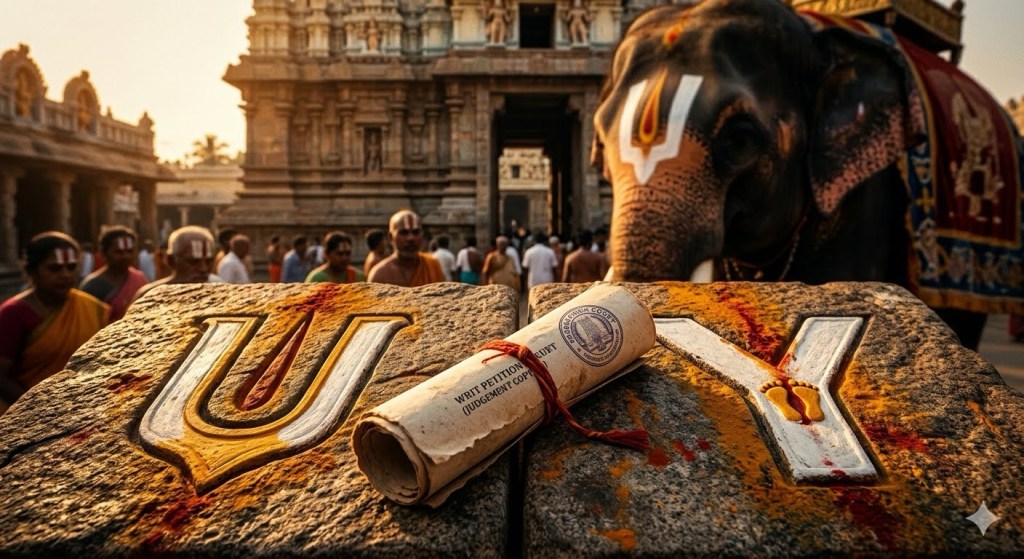
To the modern, smartphone-wielding layperson, the battle lines might seem surreal. This is a universe where a single initial, the shape of a white clay mark on an elephant’s forehead, or the exact millisecond a specific verse is uttered can trigger an avalanche of legal injunctions, police deployments, and supreme court appeals. Welcome to India’s grandest religious theater of the absurd, where theological obsession meets a highly bureaucratic legal system to create a permanent loop of litigation.
Part 1: The Anatomy of a Sacred Schism — Y, U, and Elephant Foreheads ┌─────────────────────────────────────────────────────────┐ │ THE GREAT FOOTPRINT SCHISM │ └────────────────────────────┬────────────────────────────┘ │ ┌──────────────────┴──────────────────┐ ▼ ▼ ┌───────────────────────┐ ┌───────────────────────┐ │ VADAKALAI (North) │ │ TENKALAI (South) │ ├───────────────────────┤ ├───────────────────────┤ │ • Tilak Shape: 'U' │ │ • Tilak Shape: 'Y' │ │ (Touches nose bridge) │ (Has a stem/foot) │ │ • Language: Sanskrit │ │ • Language: Tamil │ └───────────────────────┘ └───────────────────────┘
To understand the perversity of the feud, one must first appreciate the architectural anatomy of the sectarian divide. The conflict is not over territory or cash flow; it is over branding and intellectual property.
The Great Branding War
The Vadakalais and Tenkalais are separated by an invisible but absolute liturgical wall. The most famous visual indicator is the Namam (the sacred forehead mark):
The Vadakalais wear a U-shaped mark that stops precisely at the bridge of the nose.
The Tenkalais wear a Y-shaped mark that features a distinct stem or “foot” extending down the nose.
In Kanchipuram, this is not a minor cosmetic preference; it is a battle for total visual dominance. For generations, both sects have fought over which shape gets painted onto the temple walls, the temple umbrellas, the brass bells, and—most famously—the forehead of the temple’s ceremonial elephant.
The poor elephant has historically required police escorts and judicial mediation just to get its morning bath, lest an overzealous priest sneak into the stable with a bucket of white clay to transform a “Y” into a “U” before the morning procession.
The Battle of the Hymns
The deeper, more intractable battle involves the Prabandham (the Tamil hymns of the Alvars). Before these hymns can be chanted during a procession, a short invocation verse (mantram) must be recited to honor the sectarian lineage:
The Vadakalais demand their verse: Ramanuja Dayapatram…
The Tenkalais demand their verse: Srisailesa Dayapatram…
Because you cannot chant both simultaneously without creating a chaotic noise that would offend the deity, the procession routes became competitive battlegrounds. For three centuries, groups of septuagenarian scholars from both sides have physically blocked temple pathways, engaging in shouting matches over who gets to chant their initial line first.
Part 2: Enter the Accidental Theologians — How the Judiciary Became a Priesthood[Sectarian Squabble] ➔ [Civil Procedure Code Sec. 9] ➔ [Judges as "Accidental Theologians"]
When an immovable theological force meets an unyielding liturgical wall, the parties do not appeal to a Pope. Why? Because Hinduism lacks a single, papal-style institutional authority capable of passing a binding decree over both sects. Naturally, the feuding parties turn to the only other secular entity with an all-powerful gavel: the Indian Civil Courts.
The Section 9 Trap
Under Section 9 of the Civil Procedure Code, Indian courts are legally required to hear any civil suit involving a right to an office, a livelihood, or religious honors (Mirasi). The moment a Tenkalai priest claims that a Vadakalai chanting out of turn deprives him of his hereditary right to a piece of sacred coconut or a silk tassel, the state’s legal machinery is triggered.
Accidental Theologians
This dynamic forces secular, Western-educated judges into the bizarre role of “accidental theologians.” Instead of analyzing corporate balance sheets, high court judges find themselves reading 14th-century Sanskrit commentaries to determine whether an ancient saint preferred a “U” or a “Y”. ┌─────────────────────────┐ │ THE JUDICIAL SANCTUM │ └────────────┬────────────┘ │ ┌────────────────────────────┴────────────────────────────┐ ▼ ▼ ┌───────────────────────────────┐ ┌───────────────────────────────┐ │ CONSTITUTIONAL REALITY │ │ THEOLOGICAL REALITY │ ├───────────────────────────────┤ ├───────────────────────────────┤ │ "We must apply the │ │ "We must interpret the exact │ │ text of Article 25 & 26." │ │ meaning of a 600-year-old │ │ │ │ Sanskrit invocation verse." │ └───────────────────────────────┘ └───────────────────────────────┘
Through historic rulings like the Shirur Mutt Case, the courts created the “Essential Religious Practices” doctrine. This doctrine dictates that to protect freedom of religion, the court must first define what the religion actually is.
Consequently, the archives of the Madras High Court have essentially become a modern addition to the Hindu Agamas and Sastras. Judges do not play God; they play God’s copyeditors, issuing legal dictums that reshape how rituals are conducted on the ground.
Part 3: The 2025/2026 Legal Circus — Justice Kaul’s Infinite Loop
The theater reached its absolute peak in the mid-2020s. After decades of lower-court skirmishes, the Madras High Court delivered a comprehensive verdict in November 2025, ruling decisively in favor of the Tenkalai sect. The court declared that the Tenkalai mantram and Tamil Prabandham held exclusive rights during the temple’s official processions.
The Strategic Appeal
The Vadakalai sect, refusing to accept total disenfranchisement, immediately appealed to the Supreme Court of India. They did not just argue about the hymns; they raised a high-stakes constitutional issue: they claimed that by giving the Tenkalais an absolute monopoly, the High Court had violated the individual fundamental rights of Vadakalai devotees to express their own faith under Article 25.
The Supreme Court’s Escape Route
Faced with a highly complex constitutional issue that could disrupt hundreds of temples across South India, the Supreme Court deployed its favorite tactical tool: The Judicial Mediator. On January 28, 2026, the apex court appointed retired Justice Sanjay Kishan Kaul as the Principal Mediator, instructing him to bring both warring sects to the table for a consensual resolution.
What followed was pure Catch-22:
The Mediation Sessions: Justice Kaul diligently convened meetings, flanked by language experts and historical scholars. Both sects attended, drank tea, and politely refused to yield a single syllable of their respective mantrams.
The Stagnation: Justice Kaul quickly realized what 300 years of history had already proven: you cannot compromise on an absolute invocation. You cannot chant half a Vadakalai verse and half a Tenkalai verse without offending both lineages.
Realizing that a forced compromise would simply trigger a fresh wave of secondary lawsuits, the mediation process quietly ground to a halt. No status reports were issued, and the file was placed into an indefinite judicial deep-freeze.
Part 4: The Catch-22 of Modern Devotion — Why Nobody Wants a Solution
To the outside observer, a permanent legal stalemate looks like a failure of the system. But within the unique eco-system of temple litigation, the stalemate is actually the desired outcome for almost every protagonist involved.+───────────────────────────+───────────────────────────────────────────────────────────+ | PROTAGONIST | THEIR SPECIFIC CATCH-22 STRATEGY | +───────────────────────────+───────────────────────────────────────────────────────────+ | The Feuding Priests | Winning completely is dangerous because it ends the | | | struggle that defines their institutional identity. | +───────────────────────────+───────────────────────────────────────────────────────────+ | The Secular State | Resolving the conflict removes their justification for | | (HR&CE Department) | maintaining regulatory control over the temple. | +───────────────────────────+───────────────────────────────────────────────────────────+ | The Supreme Court & | Issuing a final verdict creates a clear loser, sparking | | Justice Kaul | public protests and endless secondary appeals. | +───────────────────────────+───────────────────────────────────────────────────────────+
The Perpetual Motion Machine
This creates a perfect Catch-22 loop. The sects sue because they want a definitive victory, but they ensure mediation fails because they cannot accept a compromise. The court agrees to hear the case because it involves civil rights, but refuses to issue a final judgment because it cannot police daily religious speech. The state intervenes to maintain public order, and its ongoing presence keeps both sides on edge, ensuring the next round of litigation is filed right on schedule.
Part 5: The Secular Constitutional Quagmire — The Cosmic Cul-de-Sac
Ultimately, the Indian judiciary has realized that it can neither adopt the Pontius Pilate stratagem of washing its hands (because Section 9 forces it to act) nor play King Solomon by finding a clever legal solution for all parties.
A Tacit Acknowledgment of Structural Failure
Instead, the courts opt for a more pragmatic approach: the “do-nothing” strategy. What looks on the surface like administrative foot-dragging is actually something far more profound: a tacit acknowledgment of the inescapable secular constitutional quagmire into which the State, the Judiciary, and the Litigants have all happily plunged themselves.
By keeping mediation processes technically active but fundamentally stagnant, the Supreme Court achieves a comfortable paralysis. The state’s legal machinery is trapped in a loop of its own design: it cannot exit religious administration without abandoning its secular regulatory mandates, yet it cannot execute those mandates without functioning as an unauthorized theological tribunal.
The result is a shared, comfortable wallowing. The feuding sects get to maintain their existential battle lines under the prestigious cover of constitutional litigation, while the courts avoid delivering a definitive verdict that would inevitably trigger widespread public unrest or force an uncomfortable re-evaluation of India’s secular framework. ┌─────────────────────────────────────────────────────────┐ │ THE CONSTITUTIONAL EXPANDING LOOP │ └────────────────────────────┬────────────────────────────┘ │ ┌────────────────────────────┴────────────────────────────┐ ▼ ▼ ┌───────────────────────────────┐ ┌───────────────────────────────┐ │ CHIDAMBARAM HIGHWAY │ │ KANCHIPURAM HIGHWAY │ ├───────────────────────────────┤ ├───────────────────────────────┤ │ Denominational Autonomy vs. │ │ Individual Faith vs. │ │ State HR&CE Expansion. │ │ Denominational Monopolies. │ └───────────────┬───────────────┘ └───────────────┬───────────────┘ │ │ └───────────────────────┬───────────────────────┘ │ ▼ ┌─────────────────────────────────────────────────────┐ │ THE SUPREME COURT TERMINUS │ ├─────────────────────────────────────────────────────┤ │ An expanding, timeless cul-de-sac where litigation │ │ goes to be indefinitely preserved. │ └─────────────────────────────────────────────────────┘
Recommended Reading for a Community in Crisis
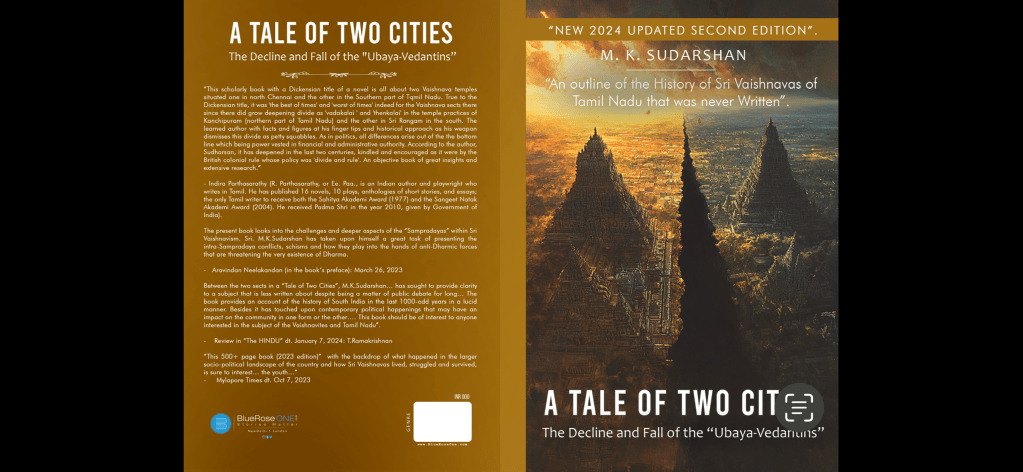
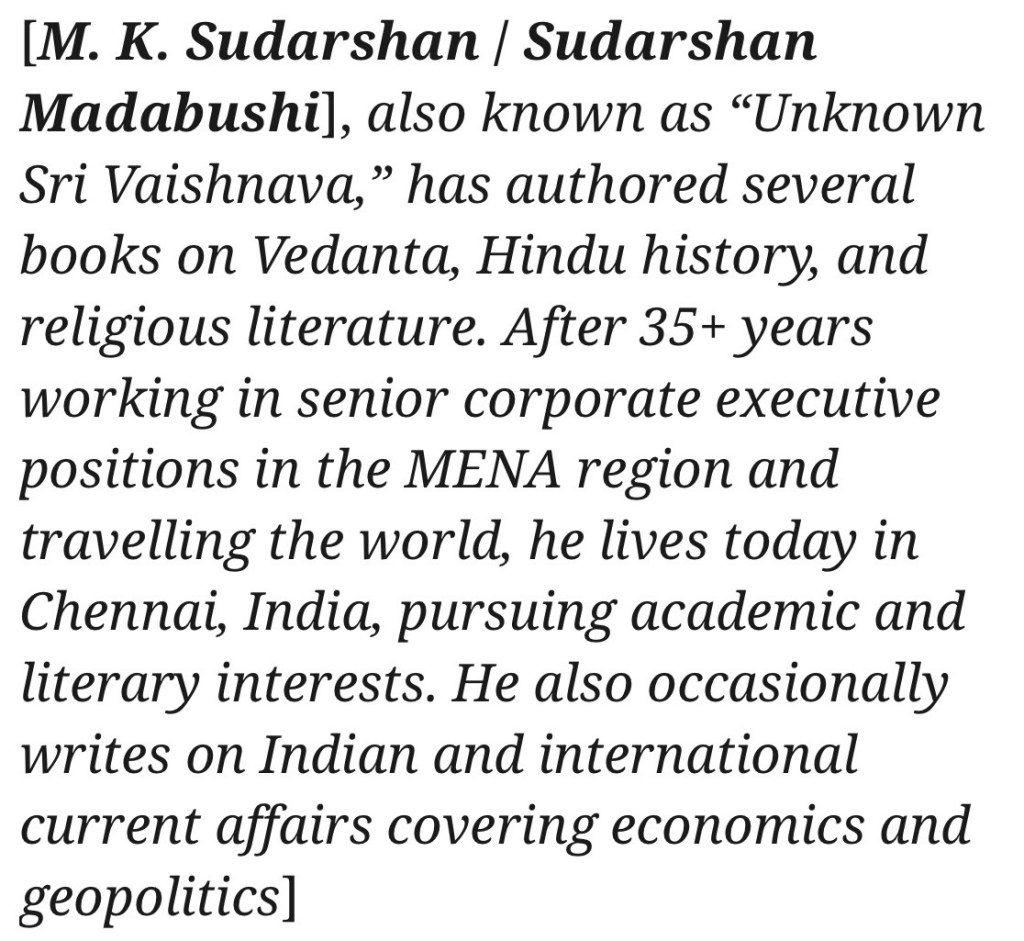
For those seeking to look past the superficial comedy of alphabet marks and shouting matches to understand the profound institutional rot beneath, one must turn to the definitive literature on the subject. In his critically well-acclaimed 2024 book, “A Tale of Two Cities”, author M.K. Sudarshanprovides a comprehensive, beautifully well-researched history of this very crisis. Subtitled as the chronicle of the “Decline and Fall of the Sri Vaishnavas of Tamil Nadu that was never told,” Sudarshan’s work strips away the legal jargon to expose the tragic sociological reality: how a once-magnificent spiritual and intellectual empire allowed itself to be hollowed out from within by centuries of petty, self-destructive litigation.
Available on Amazon / FlipKart/ Blue Rose Publishers online retail platforms
The Endless Road
It is this self-destructive loop that the younger generation of Sri Vaishnava devotees looks upon today with a mix of amusement and exhaustion. They watch their elders spend millions on legal fees to fight over alphabet shapes and chanting orders, while the broader spiritual heritage of the temple takes a backseat to bureaucratic legal battles.
Both the roads from Chidambaram and Kanchipuram ultimately lead to the exact same destination: the Supreme Court of India. All participating factions march down this road fully aware of the reality: that the apex court is not a dispenser of final clarity, but an expanding, timeless cul-de-sac.
The can has been kicked down the dusty roads of Tamil Nadu for over 300 years, traversing colonial courts, Madras High Court benches, and the halls of the Supreme Court. It will likely keep traveling for many more miles—safely protected by a legal system that understands that in the theater of Indian secularism, keeping the file open forever is much safer than ever writing the final chapter.