M. K. Sudarshan
November 26, 2026: Chennai, India
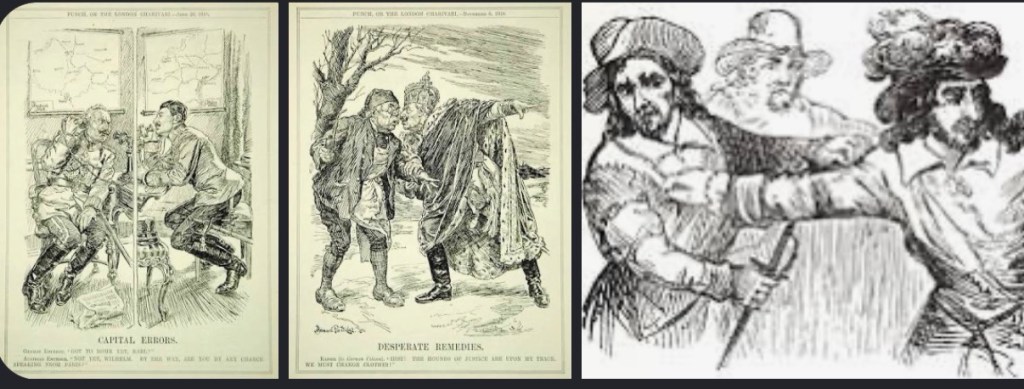
Historical Reruns of Erratic Ego, Institutional Defiance, and Insider Revolt
It is a well-worn truth that Donald J. Trump does not read history. He has bragged about navigating the world by “gut,” operating on a primal wavelength of immediate leverage, media dominance, and a hyper-personalized worldview. For Trump, the past is a barren landscape, and the future extends only as far as the next news cycle or election cycle.
History though has a funny way of paying attention to those who ignore it. If a leader has no time to read and learn from the past, history does not simply vanish; it waits at the finish line to teach him a lesson.
To look at Donald Trump—with his boasts that “the victor takes the spoils” and his unapologetic declaration that “I follow my own morals”—is to witness a modern psychological rerun of some of the most volatile eras in human governance.
Trump operates less like a constitutional magistrate and more like an archaic sovereign who views the globe not as a network of delicate alliances, but as a personal arena for transactional dominance.
Across the world stage, he has handed out public humiliations like a playground bully: slapping up to 25% tariffs on India’s economy while treating its trade policies as unreasonable, scaling back joint military exercises with South Korea over costs, threatening and mocking France, and triggering an international standoff with Denmark over his persistent demands to annex Greenland. His foreign policy plays out like a mob movie, epitomized by the brazen capture of Venezuelan President Nicolás Maduro by U.S. forces and the explicit expropriation of Venezuela’s oil revenues to fill American strategic reserves, which Trump casually paraded at the UN as “spoils to the victor.” Even closest neighbours are not spared, as seen in his trade wars and public gloating that Canada—strapped with punitive tariffs—ought to simply become America’s “cherished 51st state.” And more than once, he has threatened to “bomb Iran back to the Stone Age”.
Yet, across the centuries, the ghosts of errant kings and forgotten rulers offer a stark, haunting warning: the very traits that allow an autocrat to bend the system to his will are precisely the ones that eventually engineer his collapse.
Kaiser Wilhelm II: The Peril of the Erratic Ego
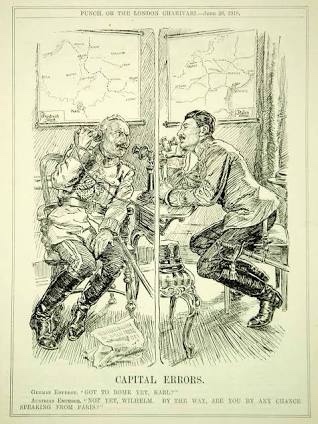
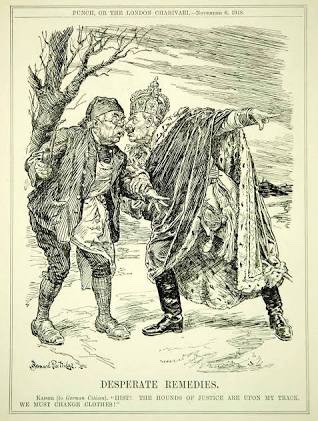
Long before Donald Trump used late-night social media and unscripted podiums to berate international partners, Kaiser Wilhelm II believed his personal charisma could override decades of systematic statecraft. In his infamous 1908 Daily Telegraph interview, Wilhelm bypassed his cabinet to unleash a torrent of unvarnished ego, declaring that his British allies were “mad as March hares” and humiliating his own nation on the global stage.
It is an episode that perfectly mirrors Trump’s public broadsides against long-standing partners, his dismissal of allies as “delinquent,” and his preference for treating geopolitical relations as a series of reality-TV style performances. Wilhelm, too, believed that traditional boundaries were for the weak. But the Kaiser’s karma was not a sudden explosion; it was a slow, agonizing drift into total irrelevance.
Sidelined by his own military apparatus during World War I, he was ultimately forced into a midnight abdication, spending his final decades chopping wood in a quiet Dutch exile—forgotten by a world that had simply grown exhausted by his tantrums. For Trump, who feeds exclusively on the oxygen of public attention, a similar karma of cultural sidelining could prove far more punishing than any courtroom verdict.
King Charles I: The Consequence of Institutional Defiance
King Charles I of England stands as the ultimate warning against institutional defiance and absolute overreach.
Charles possessed an unshakeable belief that his authority superseded legislative boundaries. When Parliament refused to fund his whims, he simply shut it down, ruling unilaterally through legal loopholes and archaic taxation. Sounding strikingly like a modern political figure who muses about being a “dictator on day one,” demands total executive immunity from the judiciary, or coordinates campaigns to contest constitutional processes, Charles viewed political opposition not as a healthy civic friction, but as a personal betrayal.
Worse still, Charles operated with a total deficit of strategic goodwill. He treated treaties, political compromises, and alliances as entirely disposable, believing that his word was inherently flexible if circumstances shifted. His opponents eventually arrived at a terrifying realization: the King was fundamentally un-negotiable because he did not recognize the co-equal rules of the game.
When a leader pushes a constitutional system to its absolute precipice, the system eventually stops trying to accommodate him. Parliament did not just defeat Charles; to protect its own survival, it took the revolutionary step of putting the reigning monarch on trial for treason, culminating in his execution outside Whitehall Palace.
When a leader acts as though laws are only for the powerless, the institutional reckoning—whether it manifests as congressional impeachments, federal criminal indictments, or unprecedented Supreme Court showdowns over the outer boundaries of executive power—is historic and absolute.
Governor John Harvey: The Inevitability of Insider Revolt
Perhaps the most intimate warning comes from early American shores, long before the Revolution, in the figure of Sir John Harvey, the 1635 governor of colonial Virginia, USA.
Harvey was an executive who governed by anger, entitlement, and transactional corruption. He heavily favored his inner circle of business cronies, seized private property, and treated the local colonial legislature with utter contempt.
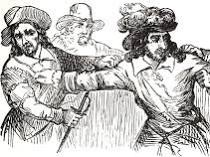
During a heated council meeting in Jamestown, when a lawmaker dared to question his high-handed trade deals, Harvey flew into a rage, struck the councilman across the face, and demanded his arrest for treason. Like a boss demanding total, unquestioning loyalty while offering none in return, Harvey severely miscalculated his position. Instead of shrinking back, his own hand-picked council stood up, drew their weapons, and declared him under arrest for tyranny. In the first act of political mutiny on American soil, Harvey was packed onto a ship and sent packing by his own inner circle.
Trump would do well to look at the mounting list of his own former cabinet members, top generals, and closest advisers—from former chiefs of staff to defense secretaries—who have broken ranks to write scathing exposes and publicly denounce his volatile management style. When you govern exclusively through fear, demands for absolute personal loyalty, and transactional sycophancy, you build an empire of sand.
Harvey’s fate reminds us that the ultimate betrayal rarely comes from the formal opposition; it comes from the insiders who finally tire of the chaos, recognize the threat to the republic’s guardrails, and decide to save themselves.
The Patient Creditor
Donald Trump may continue to live in a perpetual present, convinced that his personal brand can insulate him from the consequences of his actions. But history is a patient creditor. Whether it takes the form of Wilhelm’s agonizing irrelevance, Charles’s total institutional crushing, or Harvey’s insider revolt, the lesson of the past is clear: arrogance is a terrible shield against karma. History will have its say, and if Trump refuses to learn its lessons, he is destined to become one.
(Concluded)