In God We Trust: The Mother of All Trust Deficits — and the Death and Resurrection of Trust

Is “In God We Trust” a prayer—or a confession?

We print trust on currency, promise it in elections, demand it from banks, courts, doctors, journalists, and algorithms—then watch it thin beneath the winds of betrayal, spin, and institutional failure.

Beginning tomorrow: “In God We Trust: The Mother of All Trust Deficits—and the Death and Resurrection of Trust.”
Nine dialogues between two students of a Vedic university in South India—Ānanda, the restless sceptic, and Madhava, the contemplative Vedāntin—move from Eden’s first broken trust to the modern crisis of credibility, media, democracy, and institutional entropy.

At the centre lies a Sri Vaishnava question: when every earthly refuge trembles, can the soul find its final shelter in mahāviśvāsam—unshakeable trust in the Lord’s grace?

Nine days. Nine dialogues. One question: can Trust rise again?

Narayana! Narayana! Narayana!

Is America a rogue state?

At the 81st UNGA, President Trump declared “to the victor belong the spoils.” Explore how his administration’s mass withdrawal from 66 global pacts—along with sudden H-1B curbs and oil tariffs affecting India—is rewriting international statecraft, pushing the world away from reciprocity and toward a new era of hyper-sovereignty and anarchy.

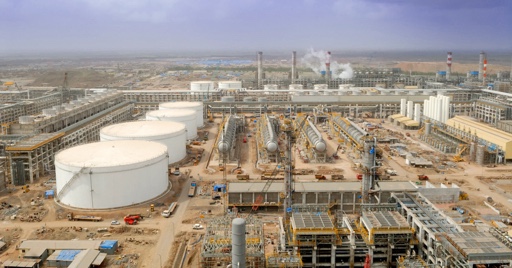
The Refineries That Saved India’s Pumps

Title: The Refineries That Saved India’s Pumps

Subtitle: While America and Europe face a looming refining-capacity crisis, self-sufficient India should thank its public sector—and Ambani

The article argues that India’s relative freedom from the diesel shortages now troubling the United States and Europe is not luck, but the result of a seven-decade effort to build domestic refining capacity. While Western economies face pump-level supply stress, India remains broadly self-sufficient in petrol and diesel, even though it imports most of its crude oil.

It traces India’s refining history from the first post-Independence refinery in 1954, through IndianOil’s creation in 1959 and the nationalisation of the oil industry in 1976, to the public-sector refinery network that still forms the backbone of national fuel supply.

The piece credits successive governments—especially those of Nehru, Indira Gandhi, P. V. Narasimha Rao, Vajpayee and Manmohan Singh—for building and expanding this capacity across very different political eras.

Reliance’s Jamnagar complex receives substantial but qualified praise. Commissioned in 1999 and expanded in 2008, it became the world’s largest single-site refinery, with about 1.4 million barrels per day of capacity, giving India export strength and flexibility during the current global diesel squeeze.

The article’s central argument is balanced: India should credit both the public sector, which built the foundation, and Reliance, which added world-scale private capacity. But it also cautions that Jamnagar’s success does not settle concerns about crony capitalism, market concentration or unequal access to state policy.

India’s energy security, it concludes, was built by long-term public and private investment—and must not be taken for granted in future crises.

The Illusion of Failure: Why the Wars in Iran and Ukraine Are Going Exactly as per Plan, and Why Huntington is Not Dead

Discover why media narratives of Western failure in Ukraine and Iran are an illusion.

This Op-Ed exposes the financial oligarchy and civilisational architecture driving the 21st-century global order.

What happens in a world where red lines drawn by Goliath are no longer respected by Davids?

As Washington’s deterrence fades, regional powers are rewriting the rules of global diplomacy. Discover how a fractured giant and asymmetric defiance are ushering in a volatile new era of messy multipolarity.

In the “Alice in Wonderland” of the World’s Central Banks, how our World is Hostage to the Dollar, and the US is Hostage to its Own Debt.

What happens when a veteran Chartered Accountant tries to explain $40+ trillion in sovereign debt to his engineer son, whose head is stuck in the mud?

A fiery dinner-table debate about an economy where the world is hostage to the dollar, and the US is hostage to its own debt.

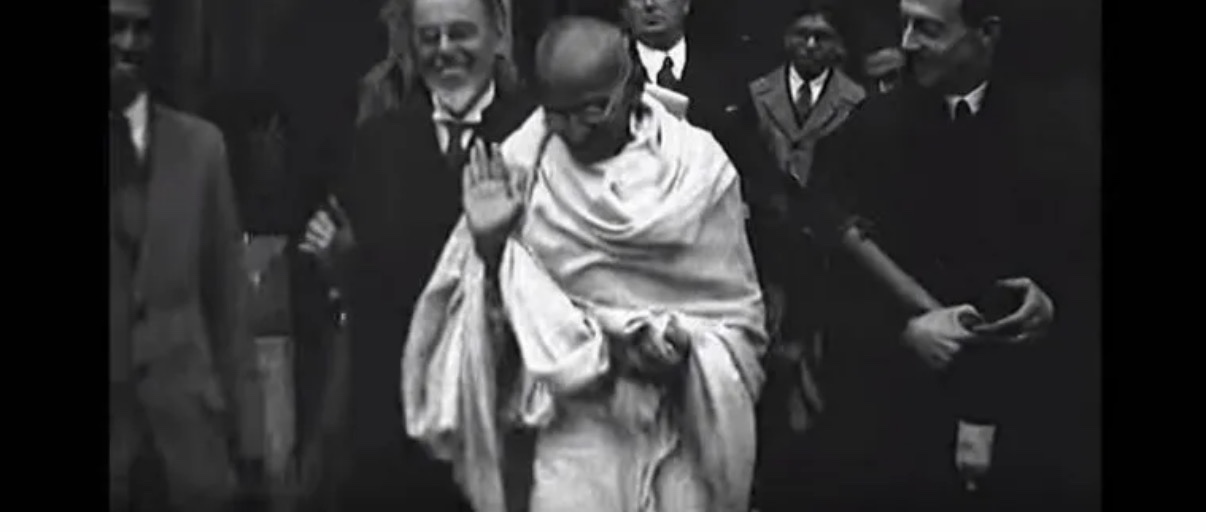
“Mr. Gandhi, what do you think of Western Civilisation?” — Part II of 2

“Mr. Gandhi, what do you think of Western Civilisation?”“I think it’s a good idea.”

A century after Mahatma Gandhi delivered his famously sharp retort to a condescending British press, the global architecture he challenged faces an unprecedented twilight.In this new two-part long-form essay, I take a bird’s-eye view of the last 500 years of global history.

From the violent internal fractures of pre-industrial Europe to the cold, zero-sum geopolitical chessboards of Sir Halford Mackinder, the essay explores how Western Civilisation successfully turned its localized concepts into a global monoculture—often by ruthlessly marginalizing alternative frameworks.

Today, as the ten great ideological pillars of this half-millennium framework face systematic collapse, the world is stepping into a profound ideological void.📖 Read the full deep dive here:

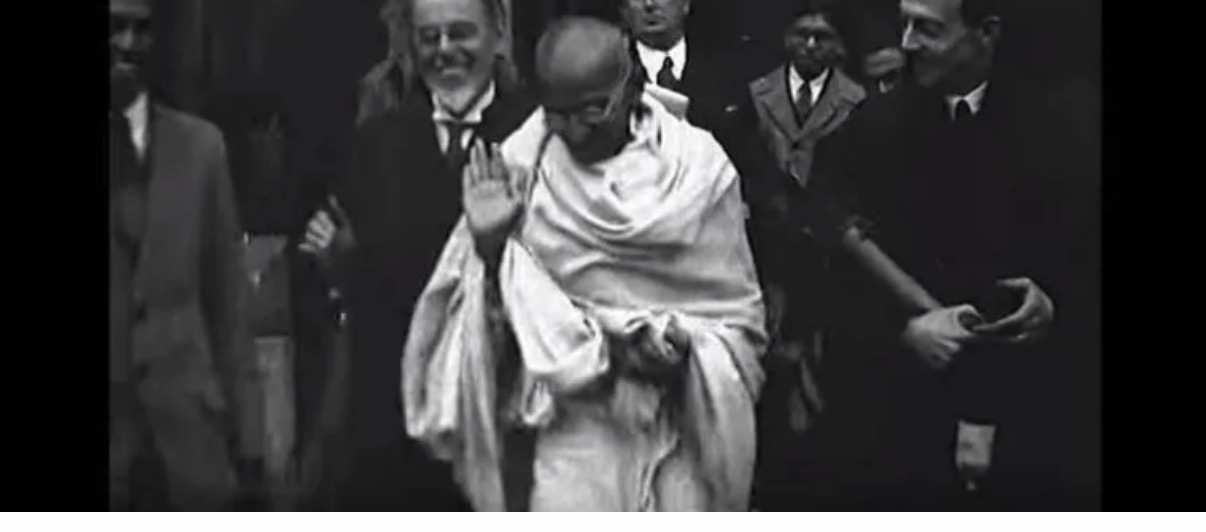
“Mr. Gandhi, what do you think of Western Civilisation?” — Part I of 2

A century after Mahatma Gandhi delivered his famously sardonic critique of Western Civilisation, the global monoculture he challenged faces an unprecedented twilight.

Spanning the volatile centuries before the Industrial Revolution to the cold, zero-sum geopolitical chessboards of Halford Mackinder, this two-part long-form essay traces how the West exported its systems through military and financial might while aggressively silencing alternative ideas. As the ten great ideological pillars of this 500-year-old framework face systemic collapse, humanity now steps into an ideological void.

Explore a bird’s-eye view of history, the inquisitional nature of institutional orthodoxy, and why Gandhi’s inscrutable retort remains the ultimate epitaph for an empire in retreat.

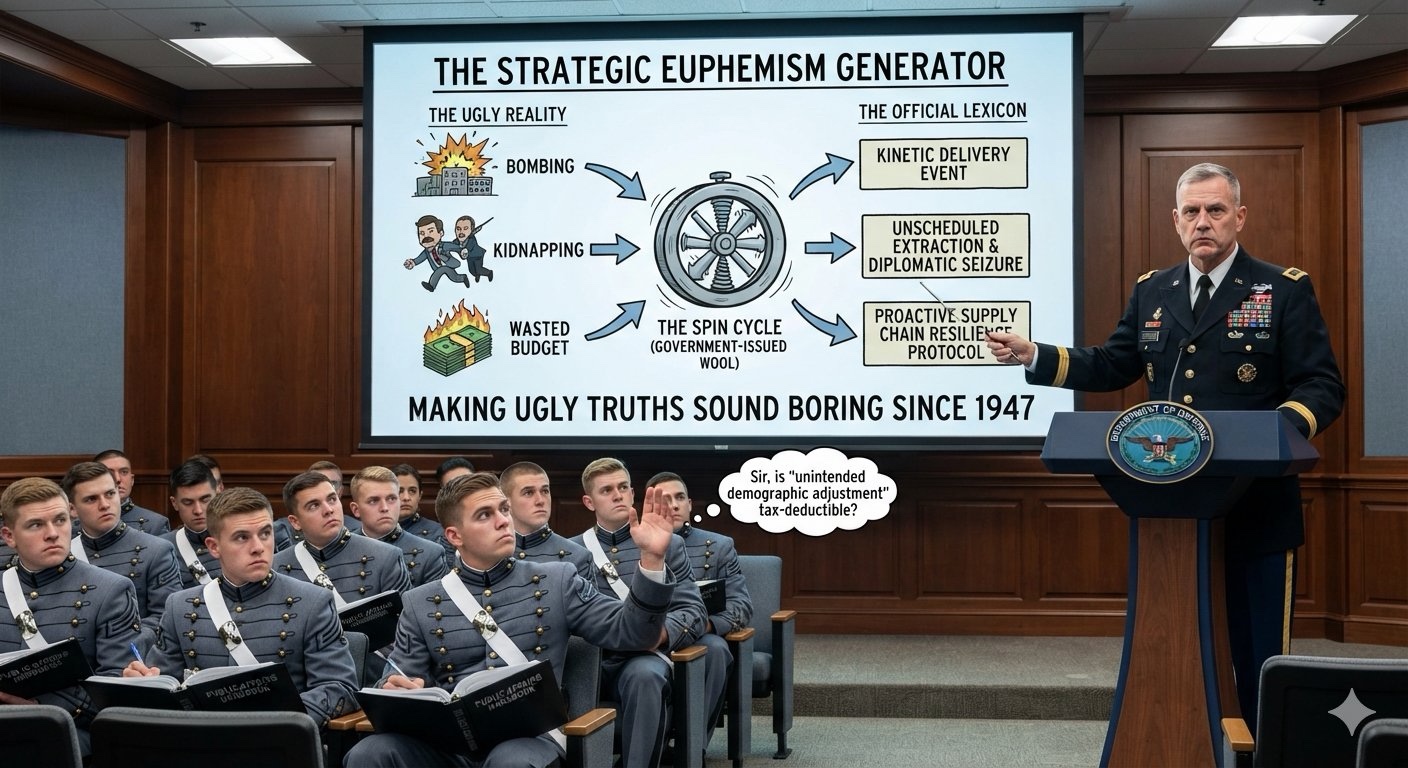
The “Pentagon Smokescreen”: The World’s Best-Selling, Most Expensive Literary Genre

A sharp, tongue-in-cheek satirical spoof inside an elite military academy, revealing how the Pentagon rebrands raw violence, failed excursions, and exorbitant budgets into clinical, bureaucratic corporate synergistic spin.

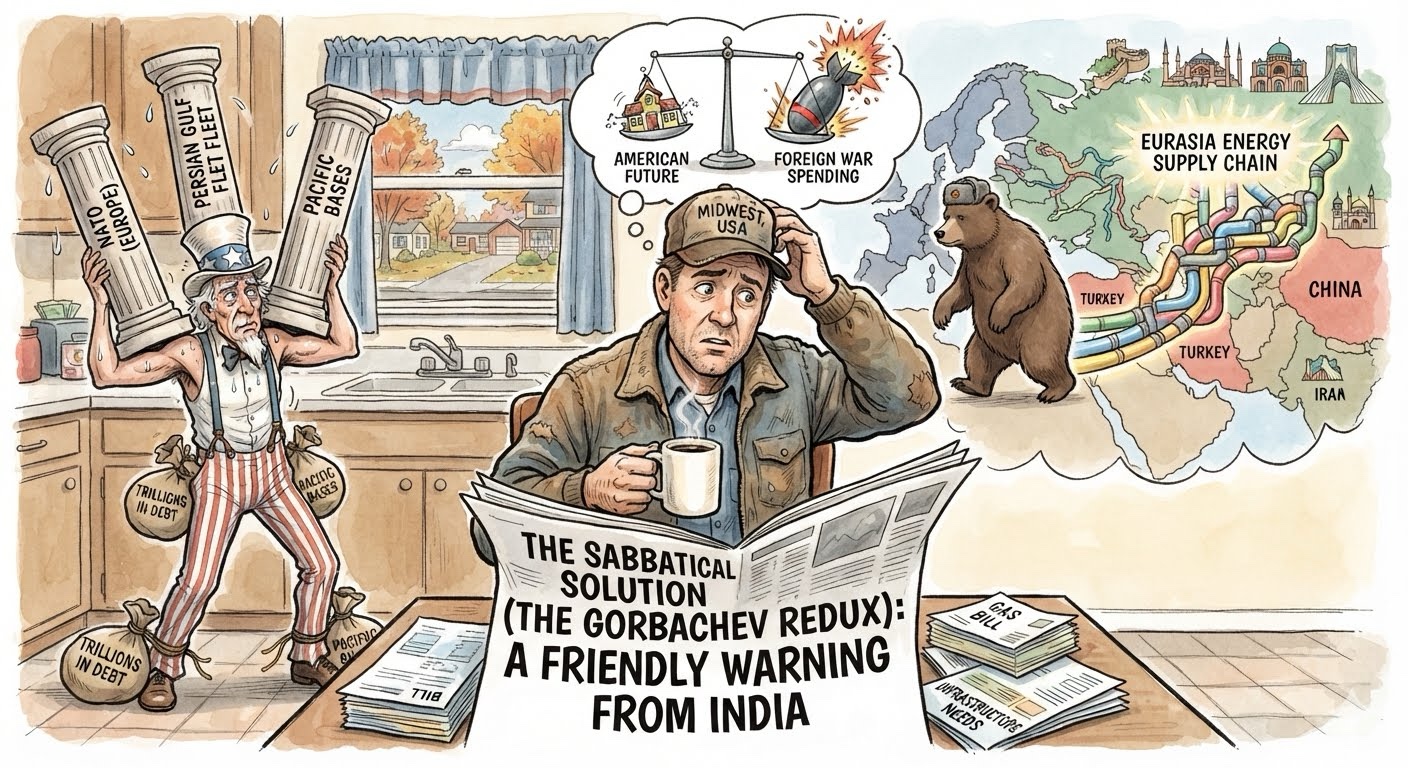
The Sabbatical Solution (The Gorbachev Redux)

A Friendly Warning from India to the American Midwest The Sabbatical Solution: An Open Letter to the American Heartland What if the best way to save the American century is to step off the global chessboard entirely? Writing as a friend from India, “The Unknown Sri Vaishnava” delivers a blunt, numbers-backed warning to the averageContinue reading “The Sabbatical Solution (The Gorbachev Redux)”