According to (Western clinical) Psychologists, there are four types of Intelligence:
1) Intelligence Quotient (IQ)
2) Emotional Quotient (EQ)
3) Social Quotient (SQ)
4) Adversity Quotient (AQ)
- Intelligence Quotient (IQ): this is the measure of your level of mensa. You need IQ to solve maths, memorize things, and recall lessons.
- Emotional Quotient (EQ): this is the measure of your ability to maintain peace with others, keep to time, be responsible, be honest, respect boundaries, be humble, genuine and considerate.
- Social Quotient (SQ): this is the measure of your ability to build a network of friends and maintain it over a long period of time.
People that have higher EQ and SQ tend to go further in life than those with a high IQ but low EQ and SQ. Most schools capitalize on improving IQ levels while EQ and SQ are played down.
A man of high IQ can end up being employed by a man of high EQ and SQ even though he has an average IQ.
Your EQ represents your Character, while your SQ represents your Charisma. Give in to habits that will improve these three Qs, especially your EQ and SQ.
Now there is a 4th one, a new paradigm:
- The Adversity Quotient (AQ): The measure of your ability to go through a rough patch in life, and come out of it without losing your mind.
When faced with troubles, AQ determines who will give up, who will abandon their family, and who will consider suicide.
Parents please therefore expose your children to other areas of life than just Academics. They should adore manual labour (never use work as a form of punishment), Sports and Arts.
Try to Develop their IQ, as well as their EQ, SQ and AQ. They should become multifaceted human beings able to do things independently of their parents.
Finally, do not prepare the road for your children. Prepare your children for the road.”
Now, here below is my own take on the same subject :
The 4Q theory is very interesting behavioural theory indeed … It gets more interesting when studied along with the Chinese theory of Yin-Yang and the Vedantic conceptual framework of the 3 Guna-s, the 4 Ashramas and the 4 purushaarthas.
IQ & SQ represent the Yang and EQ & AQ represent the Yin. A person who is balanced in Yin and Yang is said to be a yogi .
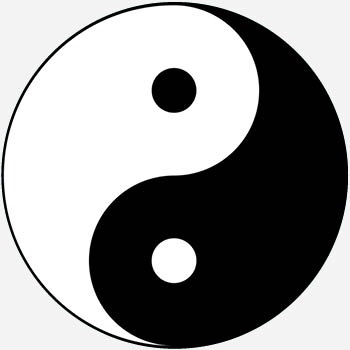
Yin is a symbol of earth, femaleness, darkness, passivity, and absorption. It is present in even numbers, in valleys and streams, and is represented by the tiger, the colour orange, and a broken line.
Yang is conceived of as heaven, maleness, light, activity, and penetration.
That’s Chinese philosophy / psychology .
In Vedantic philosophy /psychology , the 4 quotients are represented by the 3 Guna-s mapped onto the 4 purushaartha-s
Sattva guNA rules IQ + SQ
Rajas rules EQ
Tamas rules AQ
The 3 guNA-s impel human behaviour towards the 4 purushartha-s … the principal motivating drivers in life :
Sattva Guna impels one towards Dharma (aram in Tamizh) — Virtue and Purity — as means ultimately to secure Moksha (Veedu) — Liberation.
Rajas impels us towards Artha (porul) — acquisition of material prosperity .
Tamas impels one towards Kaama (inbam) .. the Pleasure Principle …
Vedantic philosophy then can also be used to map the 4Qs to the 4 different stages of a human lifetime known as Ashrama — brahmacharya, gruhasthaashrama, vaanaprastham and sannysasa…
During the first stage it’s IQ that is cultivated; in the second, it’s EQ that’s important to cultivate; in the 3rd stage it’s SQ that must be cultivated so as to be able to “give back to society what one had been able to take from it” in the earlier 2 stages ; and finally in the sannyaasa aashrama, it’s AQ that comes to the fore in life when we are faced with the need to grapple with the ultimate questions of life and of the true meaning of existence … Now, that is a sort of “spiritual adversity” that must be encountered and conquered if life is to discover fulfilment.

The Vedantic conceptual framework for analysing human behaviour — and its motivational drives— is indeed highly sophisticated, very nuanced and brilliantly illuminating psychology that can be easily overlaid upon that of the Chinese Yin-Yang and the Western clinical behavioural 4Q theories to gain more depth of insight into human nature and how it works.
Sudarshan Madabushi