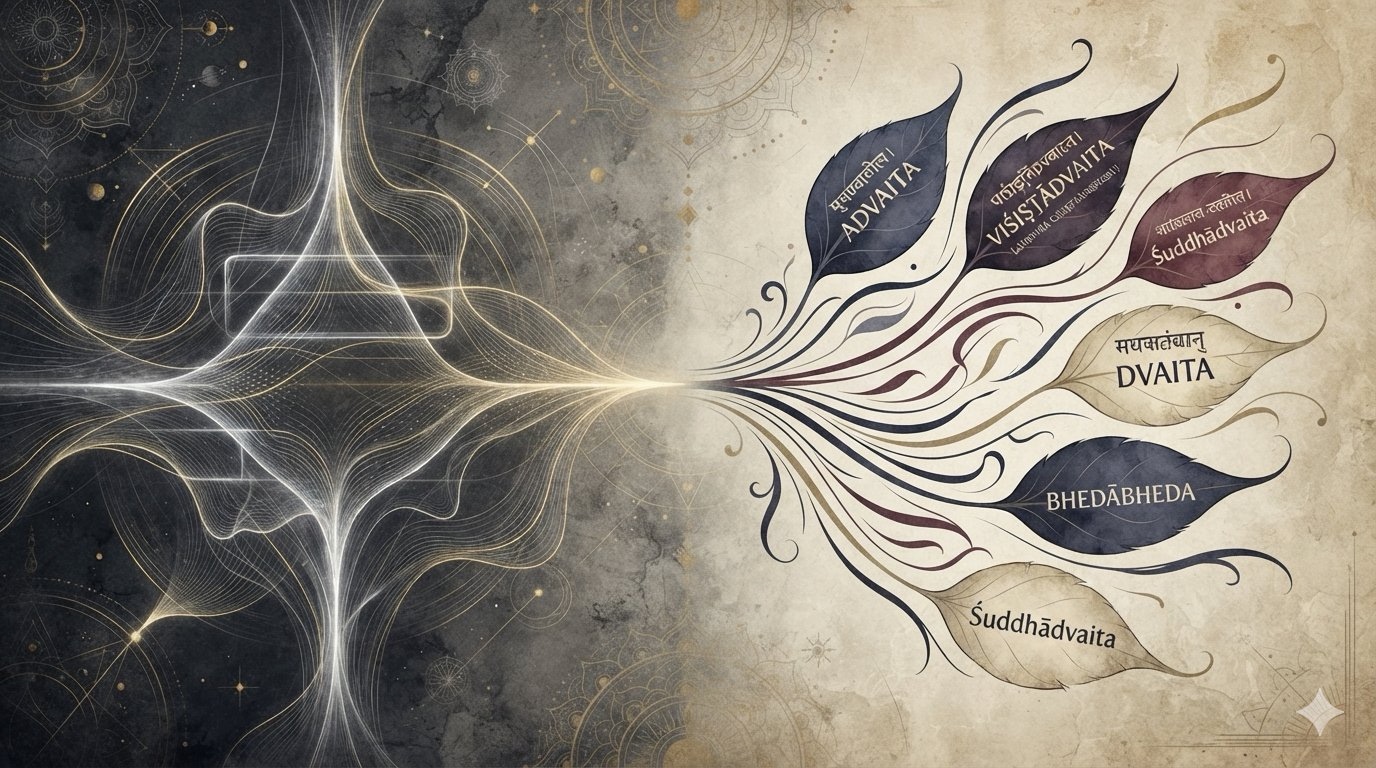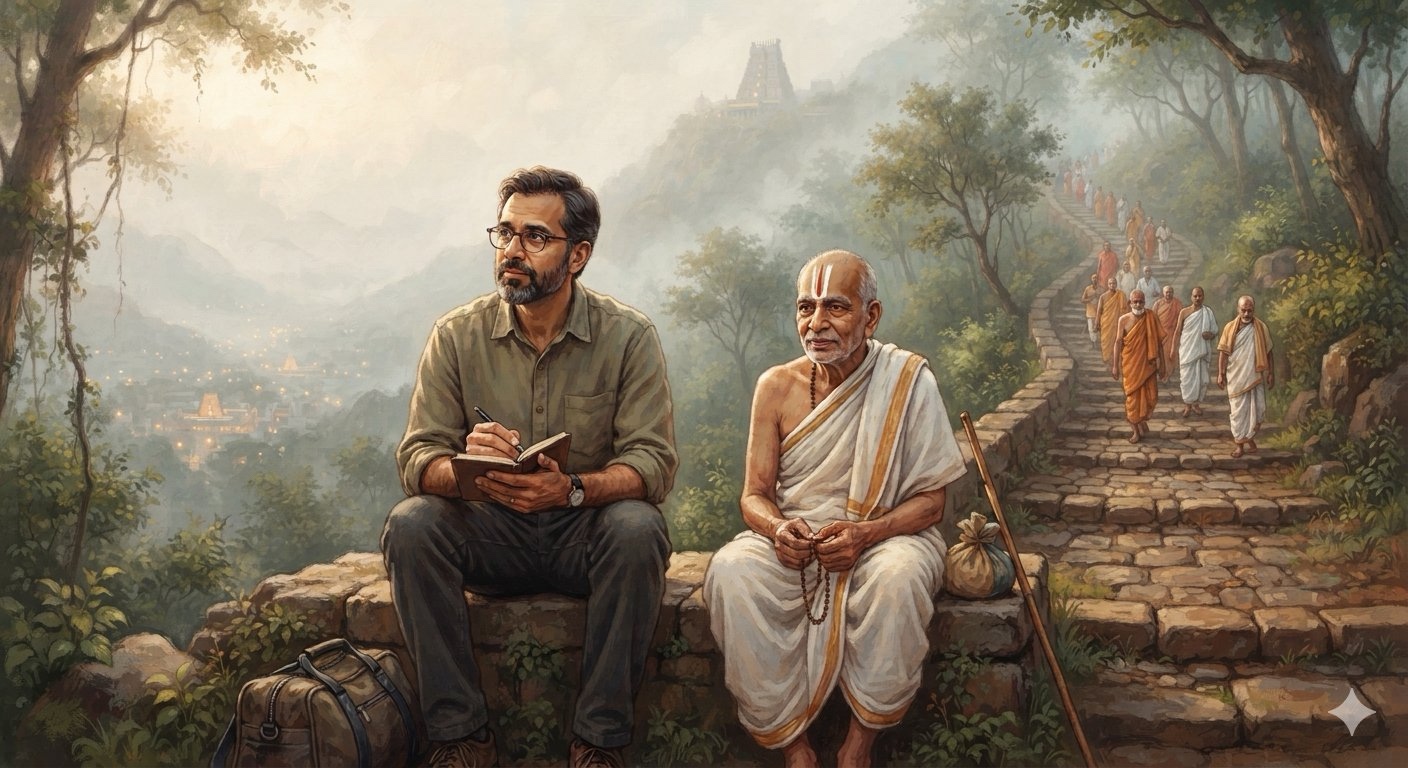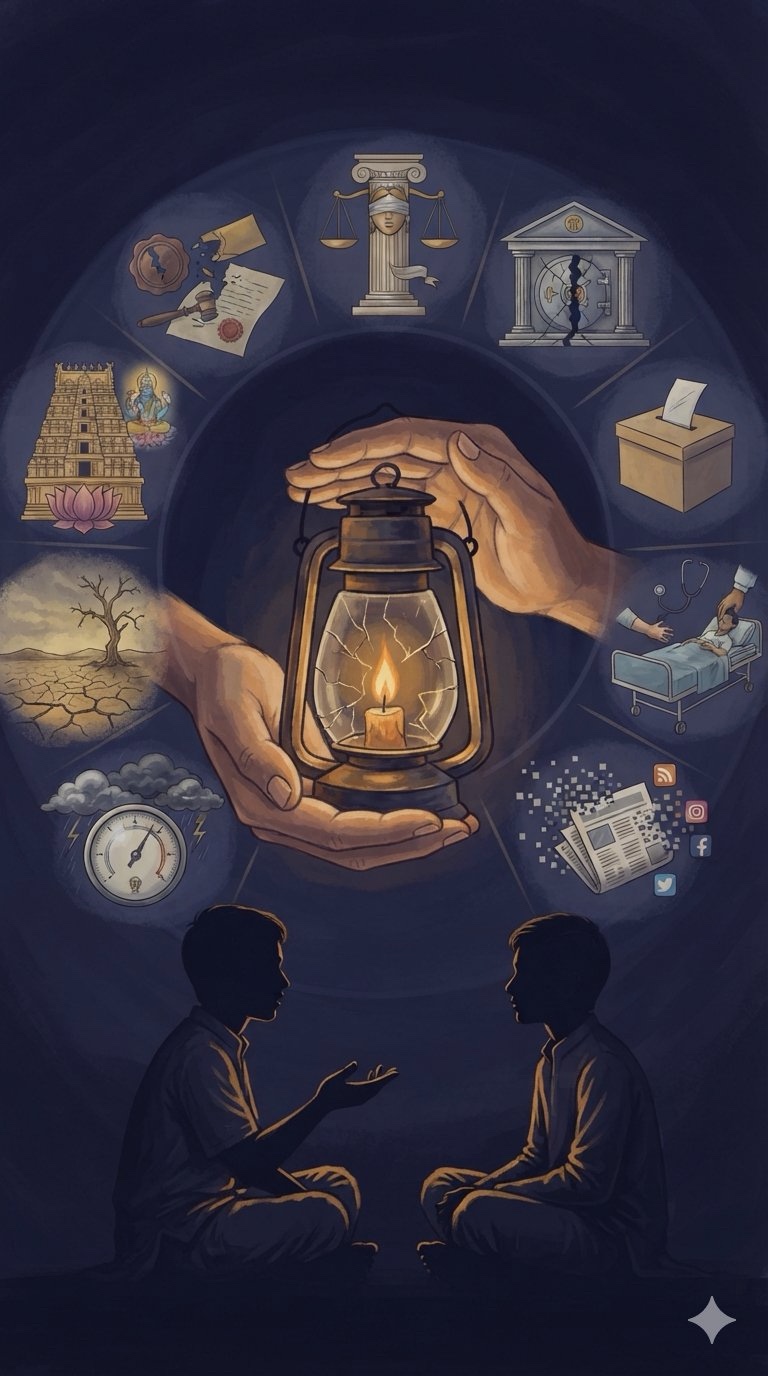
by M.K. Sudarshan July 12, 2026: Chennai, India A dialogue between two postgraduate students of Indian Philosophy in a university coffee shop The coffee shop on campus was neither elegant nor noisy, which made it ideal for argument. It had enough hum to protect privacy, enough light to encourage thinking, and enough bitter tea andContinue reading “Vedanta at the Threshold: From “Vichara” to “Vyakhyana””
Tag Archives: vedanta
Vedantic Retrospective Re-reading of Indian Fiction
Not every novelist writes within a Vedantic framework, yet many works of Indian fiction do lend themselves remarkably well to Vedantic rereading. This is especially true when a novel or short story is shaped by inwardness, moral conflict, duty, renunciation, suffering, attachment, or the search for a stable self. In such cases, the Vedantic lensContinue reading “Vedantic Retrospective Re-reading of Indian Fiction”
Is a special mental attitude needed to study the “Sri Rahasya Traya Saram” of Sri Vedanta Desika (1268-1368 CE)?
Swami Sri Vedanta Desika’s monumental treatise on Sri Vaishnava Siddhanthic soteriology, the Srimad Rahasyatraya Sāram is a uniquely layered work that is, at once, (a) a philosophical treatise, (b) a theological manual, and (c) a catechetical‑homiletic guide. A disciple undergoing a program of serious study of this text even under the guidance and tutoring ofContinue reading “Is a special mental attitude needed to study the “Sri Rahasya Traya Saram” of Sri Vedanta Desika (1268-1368 CE)?”
“Better to reign in Hell than to serve in Heaven” versus the Sri Vaishnava Ideal of “Nitya Kainkarya Praapthi”
Understanding Sri Vaishnava Soteriology with the aid of Milton’s ‘Paradise Lost’. (A) A comparative glance at moksha and salvation in the three Vedānta schools, Christianity, and Islam Across traditions, liberation or salvation — moksha — is conceived as the final release from bondage, suffering, and separation from the divine. But the nature of that release differs remarkably in ontology,Continue reading ““Better to reign in Hell than to serve in Heaven” versus the Sri Vaishnava Ideal of “Nitya Kainkarya Praapthi””
How the mantric “ma” syllable (“म”or “ம”) inspired Andal’s “Tiruppavai” and Vedanta Desikan’s “Paduka Sahasram”
Today’s Tiruppavai “paasuram” is Verse 9 which reads as follows : தூமணி மாடத்து சுற்றும் விளக்கெரியத்* தூமம் கமழத் துயிலணைமேல் கண்வளரும்* மாமான் மகளே மணிக்கதவம் தாழ்திறவாய்* மாமீர் அவளை எழுப்பீரோ உன்மகள்தான்* ஊமையோ அன்றி செவிடோ அனந்தலோ* ஏமப் பெருந்துயில் மந்திரப் பட்டாளோ* மாமாயன் மாதவன் வைகுந்தன் என்றென்று* நாமன் பலவும் நவின்றேலோர் என்பாவாய்! ஆண்டாள் நாச்சியார் In this verse , it is intriguing to see theContinue reading “How the mantric “ma” syllable (“म”or “ம”) inspired Andal’s “Tiruppavai” and Vedanta Desikan’s “Paduka Sahasram””
A Dialogue on the Veda, the self-existent, uncaused revealed scripture un-authored by human agency: the Visishtadvaita “darsana” (Part 2 of 2 CONCLUDED)
The Acharya and his student continued their dialogue as follows: The Swami:Dear one, your question is subtle and worthy of deep reflection. You say that calling the Veda “apauruṣeya” seems like a human attribution, a mental concept applied by human intellect. But hear me out carefully: The Veda is not an object of mere humanContinue reading “A Dialogue on the Veda, the self-existent, uncaused revealed scripture un-authored by human agency: the Visishtadvaita “darsana” (Part 2 of 2 CONCLUDED)”
Now Available for sale in a bookstore near you: “The Epistles of a Prolific Pontiff” (My book of English translations of the Tamil “arul mozhi” of the 44th Azhagiyasingar of Sri Ahobila Mutt)
Musings on “Bhakthi”explained in Swami Vedanta Desikan’s “Rahasya Traya Saaram” as a “virtuous cycle”
ஸ்வாமி வேதாந்த தேசிகரின் “ரஹஸ்ய த்ரய சாரம்” எனும் அபூர்வ கிரந்தத்தில் விளக்கப்படும் பக்தி தத்துவம் குறித்து எழுந்திருக்கும் சிந்தனைகள் — அது ஒரே நேரத்தில் ஆன்மீக உயர்வையும் நற்பெருக்கையும் விளைவிக்கும் ஒரு புனிதச் சுழற்சியாகப் பதிவாகின்றன. எங்கள் ஸ்ரீ வைஷ்ணவ சமூஹத்தின் காவலனாகிய ஸ்ரிமத் வேதாந்த தேசிகரின் “ரஹஸ்யத்திரய ஸாரம்” என்பதின் திவ்யார்த்தங்களை விளக்கும் ஸதாசார்யர் உ.வே. ஸ்ரீ வளையப்பேட்டை இராமாச்சார்ய ஸ்வாமிகள் அவர்கள் ஆவாராந்திரம் ஓவ்வொரு வார இறுதியிலும் அருளும் கலாசேபங்களில், அடியேன் தன்னுடையContinue reading “Musings on “Bhakthi”explained in Swami Vedanta Desikan’s “Rahasya Traya Saaram” as a “virtuous cycle””
Belief and Faith: what’s the difference?
“What is the exact Tamil word for faith?”, asked an old ex-colleague and friend of mine who lives now with his children in far away America. It was a casual question but I somehow could not get myself to be anything but serious about it. I replied: Sir, you are the expert …Is it நம்பிக்கை?Continue reading “Belief and Faith: what’s the difference?”
The “thanian” for Sri Vedanta Desikan: a “manthra” in itself.
Swami Sri Desikan’s “thaniyan“ It is customary for all Sri Vaishnavites reciting the Sanskrit hymns of Swami Desikan to commence with a invocatory verse called “thaniyan“, and it runs as follows: “Sriman Venkatanatharya: kavi-tharkika-kesari, Vedhanthacharya-varyome Sannidhatham Sadha-hrdi!” The above ‘thaniyan‘ for Swami Desikan was composed by his son, and one of foremost disciples, Sri. KumaraContinue reading “The “thanian” for Sri Vedanta Desikan: a “manthra” in itself.”