Why no Hindutva or contemporary Brahmin scholar ever writes in Sanskrit ? Asks the well- known Dalit academician, thinker, activist and writer, Kancha Illiah….:
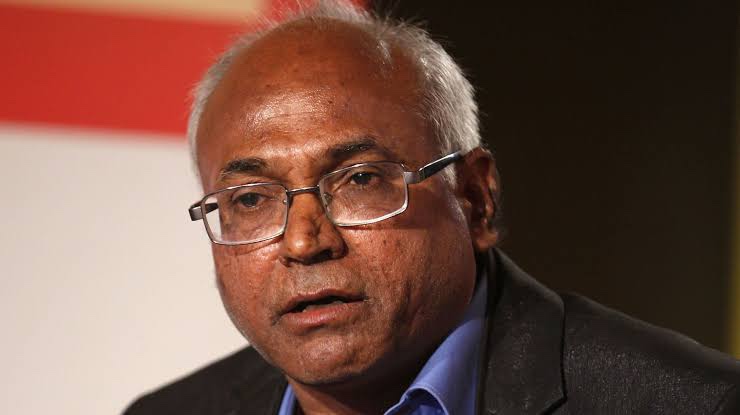
“ Brahmins do not write in Sanskrit. Why is it so? Is it because they hate the language but continue to praise it to deceive the gullible Shudra/Dalit/Adivasi masses?”
Kancha Illiah’s question is valid indeed and, in my own view (I am a Sri Vaishnava Iyengar), which no Brahmin today in India will ever be able to answer convincingly or even coherently .
However, Kancha Illiah the “academician and thinker” is himself so completely blinded by his all-consuming Brahmin- hatred that he doesn’t realise how wrong he gets some of his historical facts .
For example, in ancient India , Sanskrit cannot be conclusively said to have been the exclusive preserve of Brahmins and Kshatriyas castes. The language was most certainly used and used extensively by many non-Brahmin castes including shudhras and Dalits. The Ramayana, the Mahabharata and the Srimad Bhagavatham, the three most enduring classics of Hindu civilisational literature reflecting pan-Indian culture were all written in Sanskrit by non-Brahmins . Valmiki belonged to the tribal caste . Veda Vyasa belonged to the fisherfolk caste . Later came that titan of Sanskrit poesy and drama , Kalidasa. Was he a Brahmin? No, he was of the Kuruba caste — shepherds.
What do the examples reveal ? There is no doubt that Sanskrit was never in ancient India a tool in the hands of the Brahmin-Kshatriya nexus used for evil social exploitation of Shudras. To say that the language was used as means of social oppression is nothing but an insidious conspiracy theory hatched by historians during the British colonial period in India’s history and political ideologies later, like Kancha Illiah, simply got totally brainwashed by it.
Furthermore, Kancha Illiah makes this preposterous and ludicrous argument. I reproduce below his words :
QUOTE : “Interestingly, in their entire discourse on civilisation, there is no mention of the role of agriculture, science, and technology—the very foundations built by ancient Shudras, Dalits, and Adivasis. Even a cursory reading of any translation of Sanskrit books indicates the absence of social forces from the Shudra, Dalit, and Adivasi communities. These books primarily focus on two castes, Brahmins and Kshatriyas, centered around themes of war, yagnas, and kratus. However, the entire systems of food production, gathering, and animal grazing are completely absent from these books.” UNQUOTE
Because the Sanskrit classics of Hindu religion, the epics Ramayana and Mahabharata deal with the affairs of state — wars, yagnyas, governance, public policy etc. — administered in those times by Kshatriya castes assisted by the Brahmin clergy, Kancha Illiah rushes to conclude in one fell swoop that the two dominant castes conspired thus to ensure that all cultural discourse of the times in Sanskrit — the zeitgeist, as it were — was all only about those matters that related to their particular domain of social contribution and they excluded the other great contributions of the shudhra castes such as agriculture, animal husbandry, food-processing etc.
If Kancha Illiah’s argument is to be given any degree of credence, then its validity must be tested by applying it across the board to other social occupations, affairs and vocations too. Why restrict it to only agriculture and animal husbandry? What about the arts of stonework and sculpture found in our great temples ? What about “Shilpa sastras” written in Sanskrit language ? Do these ancient Sanskrit texts not deal with non-Brahmin, non-Kshatriya skills and vocations? And with their artisanship and social contribution too ?! Were “Ayurveda” texts in Sanskrit — manuals of invaluable medical knowledge and practices, about alchemy, herbs, potions etc. — all meant only for Brahmins or Kshatriyas ?! Was the engagement of other castes with all these varied subjects and domains of social intercourse banned by the 2 dominant caste to impose their idea of social exclusion of the Dalits ? What arrant nonsense !
*****************
A very learned email-friend of mine after reading Kancha Illiah’s challenge to Brahmins wrote to me in the following truthful but equally rueful words:
QUOTE : We have to plead guilty to the charge. But. There is always a But.
Baby steps are being taken by several Veda Patasalas in TN. The Sri Chathurveda Vidyaganapathi Gurukulam in Athur Chengalpat district was established and is being run by Sri Kamakoti, who gave up his IT job in the US and settled down in his native Chennai quite some time ago There are 200 students in studying in 5 branches of Vedic studies – Rig, Krishna Yajur, Sukla Yajur, Sama and Atharvana Vedas Some of the students are from upper middle class and a few are children of NRIs. Sankarapuram in Kumbakonam district is another example. A successful lawyer gave up his lucrative practice in Chennai and has been building this village from scratch for the past 12/13 years. In the Veda Patasala in that village there are 100 students learning 7 branches of the Vedas. A handful are children of NRIs.
In both these Patasalas formal instruction in Samskrit is given to the students Kamakoti is starting a Vyakaranam class from the coming academic year.
Only time will tell whether these experiments will lead to a revival of Samskrit as a spoken language. UNQUOTE
***************
While not disagreeing at all with the view expressed above, I nonetheless had to put forward to my good, learned friend a bit of nuance that needs to be injected into the subject. Many may not agree with me , but then many may well do … So, here I go :
Too little and too late is what can be said of the many good efforts being made today in India to revive Sanskrit as our civilisational mother tongue. (Kancha Illiah calls it “father-tongue” in a barely concealed hint of “pariah-lyzing” the language).
Kancha Illiah is absolutely right about one thing though in throwing the challenge at Brahmins as he does and it is up to Brahmins to take up the gauntlet. The great question is How ?!
More and more young Brahmins must come forward to revive Sanskrit by taking up not only or simply traditional Vedic studies in Veda Paatashaalas and seminaries. Nor must they necessarily have no choice but to traverse only the well-trodden journey of trying to master age-old syllabi— of Purana, Itihasa and other such classical Sanskrit scholarship …
Young Brahmins today must learn Sanskrit in much more creative or “smarter” ways. The experience of learning the language in “smarter ways” should in good time soon enable them to start churning out by the hundreds modern novels, short stories, essays and screenplays in Sanskrit; they must start to think of setting up national daily newspapers / magazines in Sanskrit devoted to current affairs; young Brahmins must start penning thousands of online blogposts in Sanskrit on a number of contemporary themes and topics , not just on Hindu religion or philosophy…
Our young Brahmin boys and girls at home even at school-going ages are today seen to be encouraged by parents to take up Bharatha Natyam dancing or Carnatic music… aren’t they? Now, I ask why not the Brahmin families and parents ask their children also take to writing poetry or composing filmy songs on modern life in India — all in Sanskrit ?
In my view (I am a lover of Sanskrit religious literature with no claims at all of mastery over it… and at my present age as a senior citizen, I can’t teach myself to speak more than a smattering of Sanskrit), what is the crying need of the hour to revive Sanskrit in our country is rapid “colloquialisation” of this rich, ancient language … I am convinced that for too long now the Brahmins of India have all been consumed by their obsession to “classicize” it. And that in my opinion is not the way for Sanskrit revivalism. On the contrary , it is perhaps the surest way to “anachronicize” it .
Brahmins and Hindus, in general, must find many more creative ways to de-Brahminize Sanskrit language . That’s the only most befitting way to shut up the shops and hatred-mills of these apostles of Casteist Dravidianism peddled and purveyed by academicians and rabid ideologues like Kancha Illiah.
Sudarshan Madabushi
The Samskrit Bharathy in the last decade is able to make a mark in spreading Sanskrit among masses. Have seen and known many non beahmin non Kshstriya caste people taking up study of this language through the courses conducted by SB. The four tier exam model leads one to get a qualification equivalent to a basic degree.
Putting the onus of reviving the Samskritam language on Brahmins only, will be falling into the trap laid by Kancha Illiah that Samskrit has been the language of Brahmins. Samskrita Bharati, Vyoma Labs etc are the examples of the efforts being taken for the revival of the language, cutting across the caste and even the religion. I have seen a few Europeans attending the online classes conducted by Vyoma Labs and actively participating in the discussions. The way forward will be to make more and more people join in such classes and learn the language.
It is one thing to say that Sanskrit has to be revived but to motivate people to learn and propagate the language you need more than just that. Today, when education is largely centred around job opportunities one has to explore how it could be integrated with machine learning and AI considering that it is said to be ideal for programming etc. While some of us were privileged to be exposed to Sanskrit as a language prescribed to pass an exam as students, it stopped there. We didn’t see any purpose in pursuing it.
Sanskrit’s impact transcended the Indian subcontinent, permeating through the realms of Southeast Asia and beyond. Its profound influence contributed to the development of regional languages such as Thai, Malay, and Javanese. Buddhist scriptures and Hindu epics were skillfully translated into these languages, shaping a Sanskritized linguistic and cultural landscape that endures to this day.
https://www.indianetzone.com/39/sanskrit_language.htm
The Brahmins, originating from the divine realm according to Hindu beliefs, have played a pivotal role in shaping and preserving India’s cultural and spiritual heritage. Their dedication to knowledge, rituals, and education has left an indelible mark on Indian society. While they have faced criticism and challenges related to the caste system, their enduring legacy remains a testament to their cultural significance.
https://www.indianetzone.com/21/brahmins_indian_caste.htm
The entire solution you offered is “by the brahmins”, “to the brahmins” and “for the brahmins” proves that Kanchi Illiah is correct.
Why dont you come up with a better more democratic solution of dispersing Vedic knowledge to everyone irrespective of caste?