Tag Archives: Mahabharata
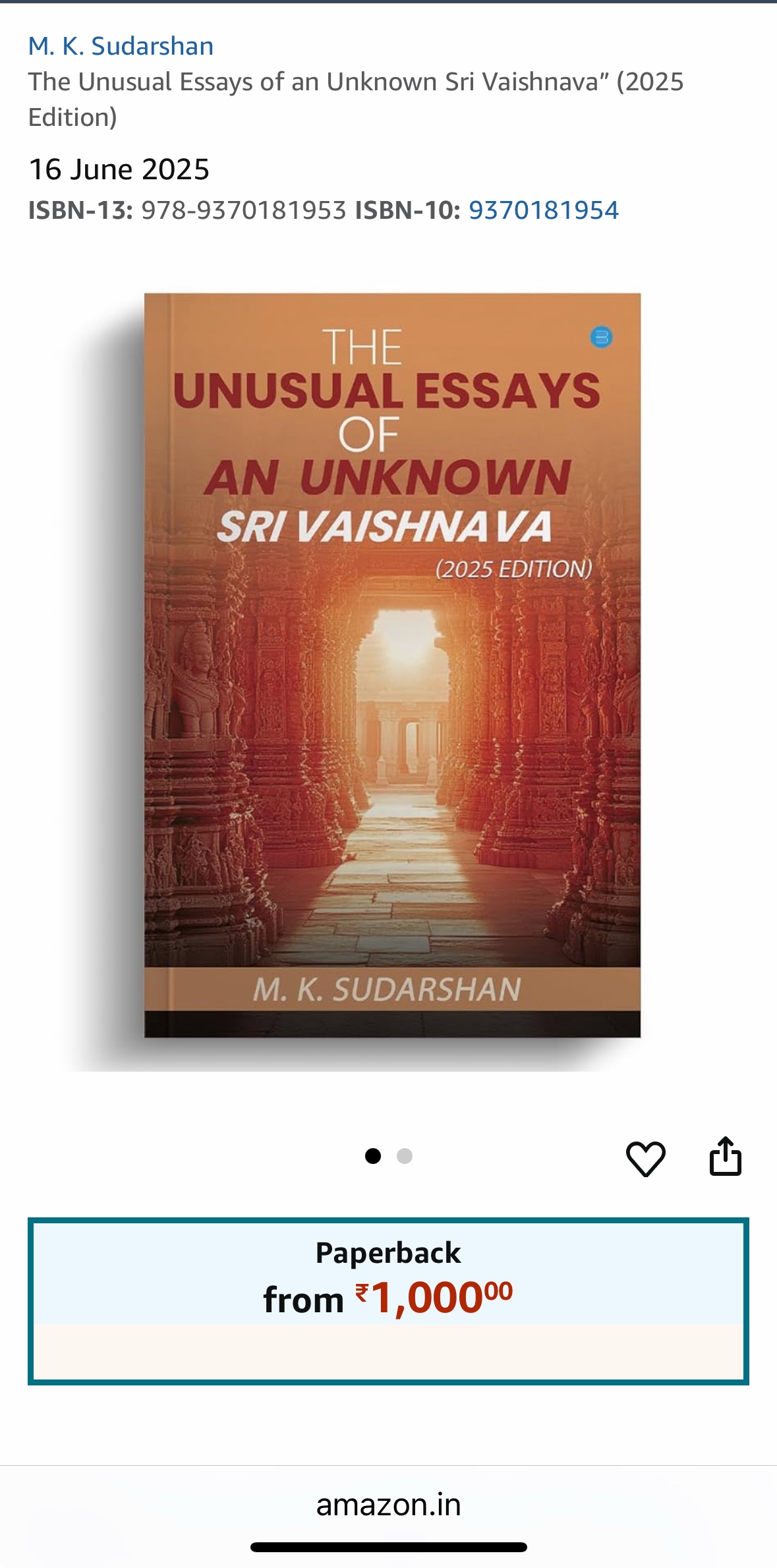
Three Words, One Surrender:

In Srīvaiṣṇava thought, three words keep appearing together: śaraṇāgati, prapatti and nyāsa. Are they synonyms? Not exactly.
Set on the Tirumala hills during a pilgrimage to the temple of Venkaṭeśvara, this dialogue between an American professor of Indian Religious Studies and an unknown Srīvaiṣṇava pilgrim explores their distinctive shades of meaning.
Śaraṇāgati names the heart’s turn to God—the bhakti inflection point of taking refuge.
Prapatti is that surrender developed as a complete upāya, with doctrine, inner disposition, and often ritual.
Nyāsa is the Vedic ideal of self‑entrustment, crystallised in the Mahānārāyaṇa Upaniṣad’s recurring prapadye mantras.
The dialogue also asks whether the wide presence of śaraṇāgati in Advaita, Dvaita, Śaiva Siddhānta, Gauḍīya Vaiṣṇavism, and modern devotional movements makes it a Srīvaiṣṇava borrowing or possession. Its answer is no: surrender is a shared Vaidika–Vedāntic spiritual grammar, though each tradition gives it a different metaphysical and soteriological accent.
Srīvaiṣṇavism’s distinctive contribution lies in its unusually exact and comprehensive articulation of the principle through prapatti and nyāsa.
Moving through the stories of Vibhīṣaṇa, Draupadī, Arjuna, Bharata and Kākāsura, the conversation shows how “coming to refuge”, “surrendering” and “placing oneself in God’s hands” can be read as different facets of one profound movement of the soul toward the Divine.
The Brahma–Brahman Knot / பிரம்மம்–பிரம்மா முடிச்சு

A Light-Hearted Guide for the “Incompetent Reader” of Sanskrit / சமஸ்கிருதத்தின் “அறிவில் இன்னும் பயிற்சி பெறாத வாசகருக்கு” ஒரு நகைச்சுவை கலந்த வழிகாட்டி By Sudarshan Madabushi August 31, 2026: Chennai, India 1. The Day I Became an “Incompetent Reader” / நான் “பயிற்சி குறைந்த வாசகன்” ஆன நாள் It began innocently enough. I was reading about the Upaniṣads, where BrahmanContinue reading “The Brahma–Brahman Knot / பிரம்மம்–பிரம்மா முடிச்சு”
The day Lord Krishna revealed yet another “Vishvaroopa” in the United Nations General Assembly
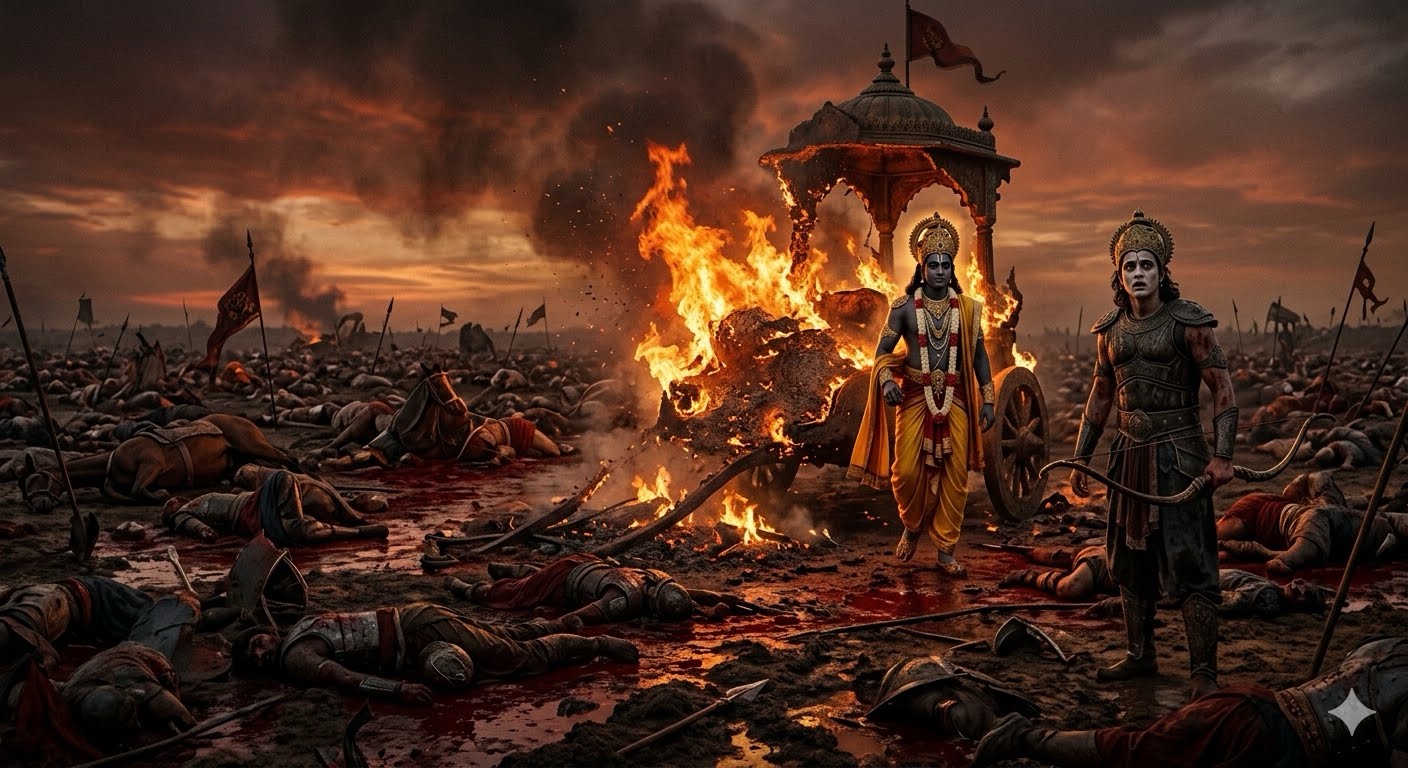
What happens when diplomacy collapses and escalation takes over? In this powerful four-part imaginary retelling, Sri Krishna manifests His Vishwaroopa before the United Nations General Assembly to deliver a final, chilling warning about modern warfare, human hubris, and the devastating cycle of self-inflicted civilizational ruin.
न्याय की ढलती सांझ: महाभारत के समय-कूप से उपजी एक परमाणु गाथा

by M.K.Sudarshan July 20, 2026: Chennai, India महाभारत से प्रेरित एक काल्पनिक पुनर्कथन संयुक्त राष्ट्र महासभा के भव्य कक्ष पर एक अकल्पनीय, दम घोंटने वाला साया मंडरा रहा है, जिसने वैश्विक महाशक्तियों की पूरी व्यवस्था को एक भयावह और पूर्ण जड़ता में तब्दील कर दिया है। स्तब्ध और अवाक खड़े वैश्विक नेताओं के सामने एकContinue reading “न्याय की ढलती सांझ: महाभारत के समय-कूप से उपजी एक परमाणु गाथा”
Vidura, Birth, and Bhakti: A Tension in Reading and interpreting the Mahabharata

Author’s Note: The quotation discussed here in this essay below appears in Vedanta Desikan’s Rahasya Traya Saram, where a Mahabharata episode is re-read within a later Sri Vaishnava interpretive framework. The essay is merely an observation — neutral , non-judgmental and wholly academic. The writer’s purpose in penning the essay is solely to invite religiousContinue reading “Vidura, Birth, and Bhakti: A Tension in Reading and interpreting the Mahabharata”
“Eepa” (Sri. Indira Parthasarathy) and I discuss T.M.Krishna’s caricature of the “guru sishya sambhandham”

https://scroll.in/article/1090081/how-the-traditional-guru-shishya-system-undermined-critical-thinking-in-india https://swarajyamag.com/culture/no-the-guru-iya-parampar-was-never-about-blind-obedience This morning I forwarded/ Shared the above to links to “Eepa” Sir to read and give his views. He is a deep scholar in the traditional literature of India and I was keen to know what he would make out of TM Krishna’s specious thesis on the ancient Hindu educational institution handed downContinue reading ““Eepa” (Sri. Indira Parthasarathy) and I discuss T.M.Krishna’s caricature of the “guru sishya sambhandham””
Tharoorian balderdash: ‘Why am I a Hindu?’: (Part 2 of 2-Concluded)
In the book Ten Heads of Ravana edited by Rajiv Malhotra, the well-known Hinduism scholar and historian, and his co-author, Divya Reddy, compiled ten excellent essays portraying ten prolific and very influential contemporary Hinduphobic writers in India and abroad. Shashi Tharoor finds a place of pride in the pantheon of those notorious ten who areContinue reading “Tharoorian balderdash: ‘Why am I a Hindu?’: (Part 2 of 2-Concluded)”
Reality of “bhagavath avataara” eludes even the best minds: No wonder Vedanta says it “avataara rahasya”
A very senior and highly distinguished IAS officer (retired) –whose name I shall not disclose here since I respect his privacy — is a good friend of mine for whom I have great respect, knowing as I do his yeoman services rendered to the Goverment of India in his career heydays as a top-bureaucrat. ThisContinue reading “Reality of “bhagavath avataara” eludes even the best minds: No wonder Vedanta says it “avataara rahasya””
The Presidential Pardon Joe Biden gave his son and the Doctrine of “Saranagathi” in Vedantic Theology
Reminds me of how in the Mahabharata, King Dhritarashtra was ready to grant pardon to his beloved son Duryodhana for every misdeed of his. A father’s love for a son is blind … more blind than the mother’s even… and Queen Gandhari seems to have exemplified that truth! My knowledge of law is very limitedContinue reading “The Presidential Pardon Joe Biden gave his son and the Doctrine of “Saranagathi” in Vedantic Theology”