Below is reproduced one Chapter from my book published (2016, 2017 and 2021) as “The Unusual Essays of an Unknown Sri Vaishnava”. https://www.amazon.in/Unusual-Essays-Sri-Vaishnava-Sudarshan/dp/1641336633
Today January 11, 2024 is an “amaavasya” day when all we Brahmins are mandated to perform the ritual of “pitru Tarpanam” to please our departed parents and ancestors.
It is therefore especially apt I thought that my essay from the book on today’s “Andaal paasuram” is commemorated:
****************
Chapter 54
Tiruppaavai “paasuram” in praise of the “pitru” (ancestors)
A few months ago, in October 2013, my father passed away at the ripe old age of 87. Although I had been mentally prepared for his departure in recent years due to his failing health, when the end came it still left a painful void in life just as I suppose it does in everyone else’s life when a beloved parent passes away.
Today, being the blessed Tamil month of “maargazhi”, as I began the customary morning recital of the Tiruppaavai, as I have done it with faith all these last 25 years of my life, the beautiful “paasuram” of the day (10 January 2014) — “maale mani vanna….”, the particular phrase in it: “melaiyaar seyyvanagaL….”, for some mysterious and disturbing reason, continued to linger long and hauntingly in my mind, bringing back memories of my departed father.
Andaal’s graceful expression “melaiyaar seyyvanagaL” in this “paasuram” refers to the myriad sacrifices, vows and “vratam” undertaken by generations of her forebears in bygone years. She and her band of cow-maidens, Andaal says in this stanza, have faithfully followed the example of ancestors (melaiyaar) in the observance of their month-long “maargazhi vratam”; and hence, she beseeches the Almighty to bless her and her companions with everlasting grace – the grace described in her own unique metaphor as“saalap~perum~parai”.
In my case, however, reciting the paasuram only brought about grace of a mundane but nonetheless intense kind. It suddenly aroused a flood of fond remembrances, some distant and some near as well, of my departed father but, strangely enough, of my grand- and great-grandparents too, both paternal and maternal. Events and incidents I had thought long erased and gone from my memory suddenly and vividly reappeared before my eyes. The mind, as we all know, does play tricks now and then on us; so I asked myself what the reasons might be for a single phrase as “melaiyaar seyyvanagaL” triggering the onset of a powerful mood filled with somber sentimentality. I seemed to find none…. except maybe that I have been lately engaged in ritual Vedic ceremonies of “shrAddha” mandated upon a son to perform during each of the 12 months immediately following the demise of the father.
Ritual, especially Vedic ritual, is not only liberation for the departing soul; for the surviving souls it is a kind of revival too.
************************************
The phrase in the 26th stanza “mElaiyaar seyyvanaggal vEnduvena kettiyEl…” is a beautiful poetic phrase in itself but is rendered ever more beautiful when read in conjunction with another phrase in the 2nd Stanza: “seyyum kirissaiggal …. seyyadana seyyOm teekurallai sendrOthOme…”. Between these two simple phrases at the two ends, as it were, of the Tiruppaavai, there are littered indeed several gems of truth that we can reflect upon about human life on earth, its ancestry and its destiny.
“melaiyaar seyyvanaggal….” is a tacit tribute to forefathers or ancestors (called “pitru-s” in our land). In India, we venerate our forebears out of deep gratitude for the countless individual sacrifices they each made selflessly in their respective lives with no other selfish motive than the well-being and happiness of their future progeny. The personal sacrifices that my father, grand-father, great-grand-father made in their lives are now perhaps only vague recollections or otherwise stuff of private family-legend. But what about the sacrifices of forebears and ancestors who went even before them? Indeed, their personal sacrifices — unacknowledged, forgotten and vanished into the mists of time — were no less too? The pains, trials and tribulations they each endured in their respective lifetimes were undertaken for my sake too, weren’t they? Their collective sacrifices, in the aggregate or culminate sense, have led to my own present state of well-being, comfort and civilization in life?
It makes me think that it is through this particular phrase in the Tiruppaavai that Andaal proudly affirms the exalted status of the “pitrus”, the ancestors, in our life. Therefore, in my reading of the Tiruppaavai, the 26th stanza truly deserves a very special status as “pitru-paasuram”.
*****************************
Even outside the context of the Tiruppaavai, I now ask myself the question, “What were my ancestors’ acts and examples of selfless sacrifice”? The search for the answer however leads me back again to Andaal’s Tiruppaavai.
In the 2nd stanza there is the expression “seyyum kirissaiggal kElliro! …. seyyadana seyyOm teekurallai sendrOthOme…”“Aiyyammum pichhaiyyum aanthannayum kaikaati…. uyyumaaru enni….”. The ancestors of the 26th stanza, it seems to me, observed the sacrifices described in the spirit of the 2nd stanza.
Our ancestors indeed did make several sacrifices for our sakes during their lifetimes: they treaded ever so carefully on the long, narrow and straight path of righteousness: through several deeds of virtuous commission and omission, through self-discipline, self-restraint and self-denial; and much above all, through Charity and Wisdom. They did this because they recognized Sacrifice (or “yagnya”) to be the overarching Law of Life by which all the world is built and sustained: “jeevO jeevasya jeevanam”.
The “melaiyaars” truly realized the import of the words in the Bhagavath Gita: “naayam lOkO~sthya~yagnyasya kuthOnyah: kurusathamma” (BG IV.31).
“If there is no place here in this world for him who cannot Sacrifice nor knows what it is, what prospects then for him in the worlds beyond?”
**************************
In the purely scriptural sense of ancient Vedic lifestyle, the Sacrifices of the ancestors meant lifelong commitment to performance of “yagnyas”: e.g. the 5 “maha-yagnyas” of “brahma-yagnya”,”deva-yagnya”, “pitr-yagnya”, “bhuta-yagnya” and “manushya-yagnya”. Then there were other Sacrifices too: the 7 “paaka-yagnyas”, the 14 “srauta-yagnyas” etc. These were all highly formalized and elaborate Vedic rites and rituals involving great personal effort in life, the exercise of severe mental disciplines and the arduous cultivation of great spiritual qualities.
However, beyond the literal sense of the word “yagnya” is the more important “meta-sense” of the term the Bhagavath-Gita enlightens us about:
“srEyaan dravyamayaad yagnyaad gnyaana-yagnya parantapa…..
na hi gnyaanEna sadrusham pavitramiha vidhyatE ….” (BG IV. 33, 38)
“Better than all these sacrificial offerings of mere objects and oblations is the Sacrifice of one’s inner awareness or wisdom, Arjuna, for there is no greater sanctifier of the world, (no greater sustenance to the world) than Wisdom.”
**************************
I ask then “What is this “Wisdom or Inner Awareness”?”
Our ancestors, the “melaiyaars” of the Tiruppaavai, seem to have understood the words of the Gita not merely in an abstract or philosophical way. They grasped the significance in a very practical and realistic sense too, and we find that very significance expressed in the pages of the great epic Mahabharatha:
sarva yagnyEshu vaa daanam sarva theerthEshu chaaplutham !
sarva daana phalam chaapi naitatthu tulya ahimsayaa I
ahimsrassya tapO~kshaya~ahimsrO yajatE sadaa II (Anusaasana Parva 116.40-1)
“Gifts and oblations made in all sacrifices; ablutions performed in all sacred with waters; and the merit acquired by making all possible kinds of alms-giving — all these do not ever equal the virtue of abstaining from Cruelty. The penances of a man in life who abjures violence and cruelty of any sort — “ahimsrassya” — that special penance indeed is the noblest of all. He who desists from inflicting Cruelty on the world or fellow beings (in thought, word and deed) is regarded always as engaged in the continuous performance of sacrifices.”
**************************
“melaiyaar seyyvangaL” is a phrase therefore that implicitly refers to the highest ever form of Sacrifice Man can perform in life viz. shunning all forms of Cruelty— the ideal of “ahimsa”.
Three particular expressions in the 3rd stanza of the Tiruppaavai help in our understanding of the true “ahimsa” our “melaiyaars” practiced. And that understanding is so very relevant and instructive even for the times we all live in today.
(1) “neyyunnOm paalunnOm” : “ahimsa” towards Food and all sources of natural sustenance for humankind
(2) “seyyadana seyyOm teekurallai sendrOthOme: “ahimsa” towards all natural wealth or resources of the Land on which mankind lives
(3) “Aiyyammum pichhaiyyum aanthannayum kaikaati…. uyyumaaru enni…”: “ahimsa” shown to one and all – i.e. in other words, “Malice towards none and Charity towards All”.
*******************************
What is meant by “ahimsa” towards Food? It simply means self-restraint in matters of personal diet….. “neyy UnnOm, paal UnnOm……”. Such self-restraint is a form of showing ahimsa towards oneself. It is also “vratam”.
The key to good healthy human existence is Food. The modern world eats either too much or too little and, in both cases, with too little wisdom. It is the reason why every government of the world today is gravely concerned over “Food Security” in the decades ahead. We are told that a third of population in the rich nations of the world suffer from a disease called Obesity and that almost half the population in poorer countries from another disease called Malnutrition. If you think about them deeply, both are forms of Man’s self-inflicted self-cruelty. Mankind today no longer merely “eats-to-live” as it should; but has instead been brainwashed into believing that part of living the so-called “Good Life” is actually being able to “live-to-eat” ….. that too in hundred different commercial and self-indulgent ways: glitzy restaurants, fast-food chains and food fads. This is the very opposite of “ahimsa”; it is simply the Abuse of Food.
If only one half of the world that today shamelessly overeats were to find wise and generous ways of sharing food equally with the other deprived half, both sides would become so much healthier and happier populations, wouldn’t they? It is to such universal “sharing” and “giving” of Food as practiced by the “melaiyaars” that Andaal alludes in the beautiful line: “Aiyyammum pichhaiyyum aanthannayum kaikaati…. uyyumaaru enni….”.
***********************
Then there is in today’s world Man’s yet another act of extreme Cruelty or “himsa”. It is the rampant “Cruelty” shown towards the world’s environment and natural resources.
Our ancestors left us the legacy of a world clean in air, rich in land and pure in water. Our ancestors had great pride in, and the deepest respect and love for the land they considered themselves privileged to have been born in, lived and died. Ever mindful and respectful of the unwritten yet sacred border separating the realm of Nature and the world of Man, they wise enough to leave the planet’s forest lands, rivers and streams, oceans and hills alone. They scrupulously maintained that delicate balance which exists on earth between the competing demands of human selfishness and the fragile bounteousness of Nature. And it was through Sacrifice indeed (“yagnya”, “vrata” and “ahimsa”) — both personal and communal levels — that such balance was sought to be sustained throughout the centuries and millennia by our ancestors.
Andaal describes in glorious Tamil poetry the land of her ancient ancestors as she found it: verdant, pristine and fertile, fed by copious rains and by rivers that flowed perennial and unsullied, where flora and fauna flourished, where the natural habitats of birds and bees (the “aanaichaathan”, the “illankiLi” for example) and the pasture-lands of healthy livestock (“maatraadha paal soriyum vallal perum passukal”) all remained un-touched, un-polluted and utterly productive.
“…. teenginnri naadellaam tinggaL mummaari peyydu
Ongu perun~senelludu kayalugaLa;
poongu vaLai pOdhil pori vandu kann~paduppa
tEngadE pukk~irundu sItra~mullaipatri vaanga
kudam niraikkum vallal perum passukkal
neengaatha selvan niraindhu…..”
In contrast, we see the world in which we live today as tragically different. The savagery with which the modern world exploits and pollutes the ecology of the world was simply unknown to our gentle ancestors. We live in world of bizarre phenomena: “climate-change”, “vanishing tropical rain-forests”, “dwindling marine life in over-fished oceans”, “rapid desertification of river-basins”, “deadly virus and contagions from industrialized dairy and poultry farming”, “receding coast-lines” ……
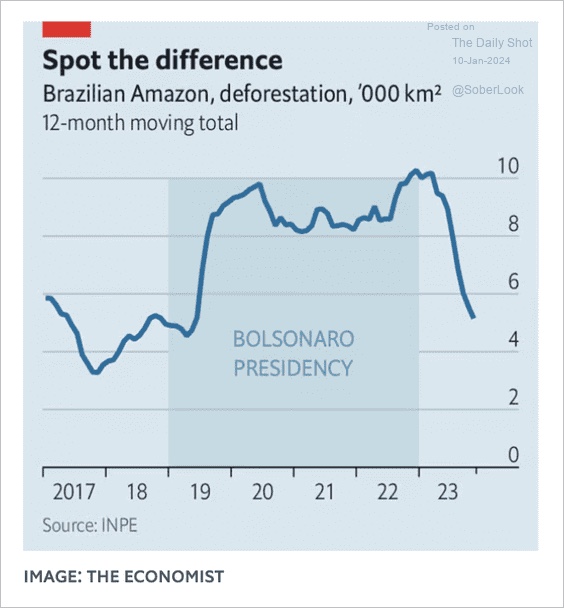
Mankind has lost all sense of self-sacrifice, self-restraint and self-discipline. In the name of economic progress and human development, modern Man today unleashes nothing but immoral “Cruelty” upon the very same Land from which he draws sustenance.
It is the saddest and supreme irony of existential condition today that the plight and role of Nature and Man indeed have been reversed. In the days of our ‘melaiyaars’, Man’s condition was generally one of dependence on Nature; and hence it was Man who had to beseech Nature for her gifts of generosity and charity. Today, however, it is Nature who is at the abject mercy of Man and his rapacity. Everywhere in the world, it is she who now seems to beg Man plaintively borrowing the words of the Tirupaavaai: “Aiyyammum pichhaiyyum aanthannayum kaikaati…. uyyumaaru enni….”
************************
“Aiyyammum pichhaiyyum aanthannayum kaikaati…. uyyumaaru enni“ was indeed the mantra, the life-principle of our ancient “melaiyaars”, our wise and gentle ancestors. “Through Sharing and Charity in full and generous measure with all beings on Earth, shall we seek our own enrichment in life”, was their guiding motto and abiding belief all their lives.
This is again the very same mantra which I have heard within my own family was the philosophy embraced my beloved father and mother, my grand- and great-parents on both maternal and paternal sides. I have heard it being told to me, through family narratives and anecdotes handed down from one generation to another in our homes, throughout the passing of years, that all their lives my own “melaiyaars” had sacrificed much indeed, each in his or her own way, big and little, at once both humble yet proudly, just in order to remain faithful and cling steadfastly to this one glorious principle of SriVaishnavism expounded in a single expression in the Tiruppaavai:
“Aiyyammum pichhaiyyum aanthannayum kaikaati…. uyyumaaru enni“
***********************