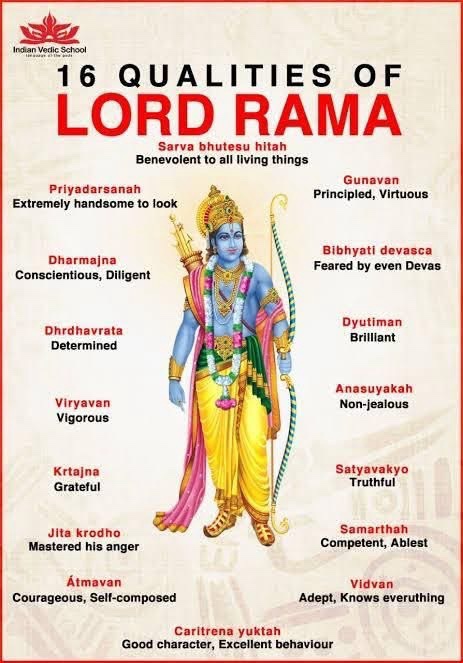
Today Sunday, April 6, 2025 is auspicious “RAMA NAVAMI”, the birth anniversary of Sri Rama as per the calendar of South India . In Tamil Nadu this day is celebrated with great joy and reverence in all homes and great temples across the length and breadth of the land.
At home today, my family’s own observance of Sri Rama Navami consists of worship of “maryaada Purushottama” enshrined at home as a book of Valmiki Ramayana that had been handed down the generations from the time of my grandparents and is preserved today intact and hopefully will in time be bequeathed to my own children and theirs.
Many years ago, between my mother (who is no more) and myself, we divided up the task of carefully transcribing all the 24,000 verses of the Valmiki Ramayana of all 7 Kandam-s in several thick bulky volumes of ledger-notebooks. We both believed in the very last shloka in the “sarga” (canto) Valmiki wrote describing the “Rama Pattabhishekam” (Rama’s coronation in Ayodhya) wherein the Sage-Poet affirmed the spiritual grace and blessings of Sri Rama that would surely accrue to anyone who transcribed the entire “Ramakatha” — the great epic story of this ageless “itihasa”. My mother I am sure is somewhere in the high celestial worlds already experiencing such grace and bliss.
भक्त्यारामस्ययेचेमांसंसितामृषिणाकृताम् ।।
येलिखन्ती ह च नरास्तेषांवासस्त्रिविष्टपे ।
6.131.123
“Eternal residence in heaven is assured for those who transcribe this Ramayana with devotion and with full awareness of its meaning, composed by the great sage”.
********** ************* *************
Today at home the observance of Rama Navami follows the same practice as it has for many years now without a break— viz. selected readings from Valmiki Ramayana “sargas” after reciting the litany of customary preliminary invocations which include:
(a) Nrisimha-Panchaamruta Stotra
This is a Sanskrit eulogy attributed traditionally to having been sung by Sri Rama himself . This sthothram is delectable to listen. Hence it has been described as equivalent in rasanai to the tasting of PanchAmrutham, (divine elixir) which is made up of many fruits, honey, and sugar. The DevAs, who who enjoyed listening to this hymn of Sri Rama, found it most delectable to the ear and so described it as “PanchAmrutham Anutthamam”.
Sri RamachandrA with Sowmithri stopped at Ahobila kshetra on his southward trek towards Lanka to fulfill his avathAra mission. He worshipped Sri Narasimhan of Ahobila Kshethram and received His blessings and with the power of those blessings destroyed the evil RavaNA and returned home victorious with His consort.
This fact has been recorded in the Hari vamsam in the section on Sesha Dharmam (chapter 47) which describes how during Sri RamA’s sojourn at Ahobilam, he sang the sthothram composed by himself at the sanctum of Sri PrahlAdha Varadan There are five shlokas in this hymn.
(b) Sri Raghuveera Gadyam (composed by Sri Vedanta Desika)
After the recitation of the above two Sanskrit invocations, the proceedings are followed by a reading of the “SRI RAMA SAHASRANAMA”.
This is a very unique compilation of 1008 “divya naama” (divine names) of Sri Rama found in various cantos and shlokas of the Valmiki Ramayana as uttered by various characters therein . Each “naama” denotes one of the several auspicious and divine attributes of Sri Rama — the names and attributes generally known in Sri Vaishnava tradition as “Ananthakalyaana guna”.
We have all heard of the famous commentary written on the Sri Vishnu Sahasranama by the great Sri Rangam Sri Vaishnavite theologian, Sri Parashara Bhattar. It carries the title “Bhagavath Guna Darpana”…. meaning that his commentary holds up a mirror (darpana) to the 1008 glorious attributes (guna) of Vishnu.
In similar fashion, the Valmiki Ramayana contains within itself — and found strewn across its 24,000 shlokas — the 1008 nama-s and guna-s of Sri Rama as were revealed to the Epic’s many other characters. And each such name “mirrors” his glorious attributes in such a way that they constitute “Sri Rama Sahasranama”, a veritable “Sri Rama Guna Darpana”!
********* ************* ************
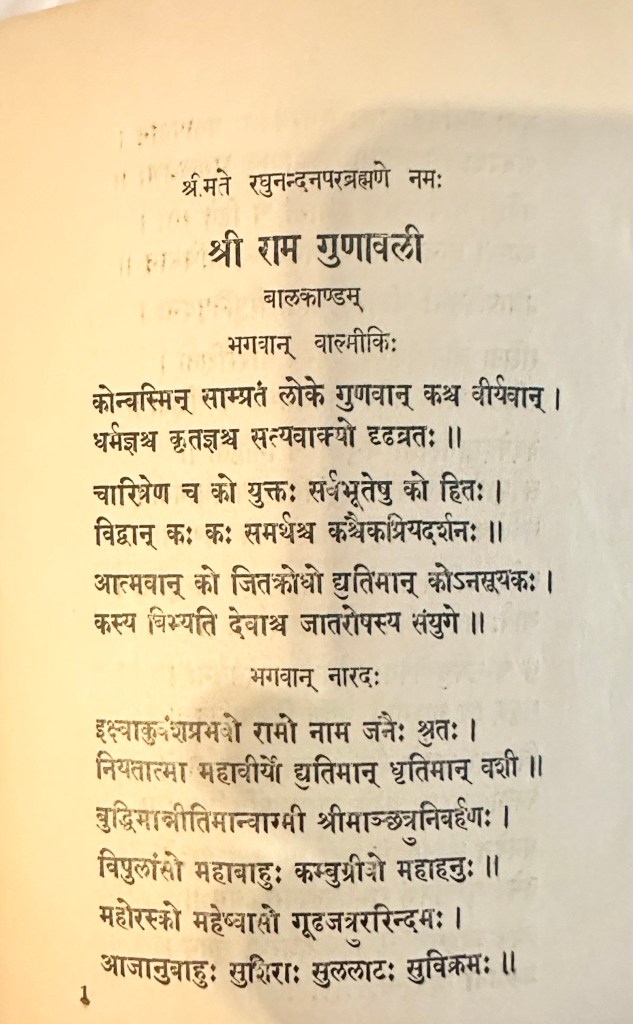
It was my good fortune to come across this rare 1963 CE compilation of “Sri Rama Sahasranama” some years ago. And to this day, it adorns our household “puja arai” (shrine) and I make it a point to worshipfully read it (“paaraayanam”) on every Sri Navami day each year.
It had been published by one Sri T. Srinivasa Raghavacharya , a devout Sri Vaishnava scholar who was helped in his effort by none other than two venerable stalwarts : the HH the 44th Azhagiyasingar of Sri Ahobila Mutt and U.Ve. Sri Uttamur Veeraraghavachariar !
A brief description of this rare old book is seen below :


It is my earnest wish that a few philanthropy–minded Ramayana Bhaktha -s come forward to republish this valuable stotrapaatam book for the benefit of all “aasthikas”.
Sudarshan Madabushi