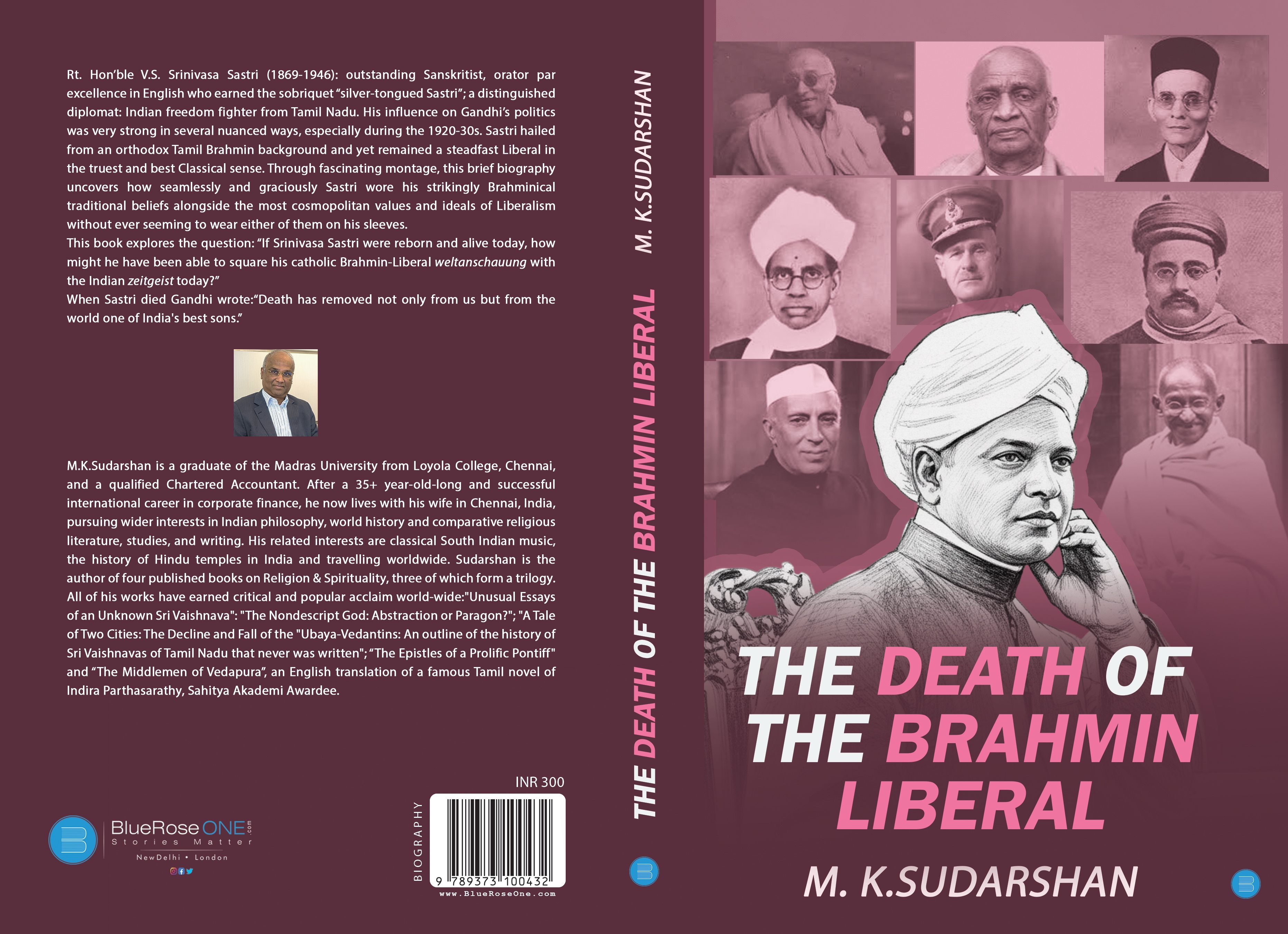
The book’s central thesis is that the balanced and principled “Brahmin–Liberal” ethos embodied by V S Srinivasa Sastri—marked by civility, ethical liberalism, and a harmonious blend of tradition and modernity—has all but vanished from India’s public life, and its absence has deep consequences for political and social discourse today.
Three Key Themes
• The complex relationship between tradition and liberal reform: The book explores how Sastri managed to uphold his Brahminical roots while championing secular, liberal, and progressive ideals, demonstrating that tradition and modernity need not be adversaries.
• The decline of civility, decorum, and ethical idealism in contemporary politics: By highlighting the contrast between Sastri’s mode of engagement and today’s public sphere, the narrative laments the loss of respectful debate and dharmic values in Indian society.
• The intellectual and personal isolation of the moderate: Drawing on Sastri’s marginalization by both right and left, the work reflects on how principled moderation is often misunderstood and sidelined in times of political polarization, yet remains vital for a healthy democracy.
************
Each of the three central themes in “The Death of a Brahmin-Liberal” is most vividly illustrated in specific chapters:
1. Tradition and Liberal Reform
Best Illustrated in: Chapter 14–16: “Anti-Sanatanist Liberal or Orthodox Performative Brahmin?”
These chapters detail Sastri’s navigation of his Brahminical heritage and his progressive advocacy, highlighting his debate over the Sarada Act with the Sringeri Shankaracharya and his ability to work within and reform tradition without abandoning core values.
2. Decline of Civility, Decorum, and Idealism
Best Illustrated in Chapter 20: “Death of a Brahmin-Liberal”
This concluding chapter directly addresses the thesis that the ethos of ethical idealism, civility, and respectful debate—embodied by Sastri—has declined drastically, serving as the author’s meditation on the cultural consequences of this loss in modern India.[amazonaws]
3. Isolation of the Principled Moderate
Best Illustrated in Chapter 9: “The Years in Political Wilderness” and Chapter 18: “New Delhi Ignores, Durban Short Shrift and Mylapore Forgets Him”
These chapters document Sastri’s marginalization by more radical political actors and his organizational and intellectual solitude, offering poignant examples of both external neglect and inner steadfastness typical of the isolated moderate
*************