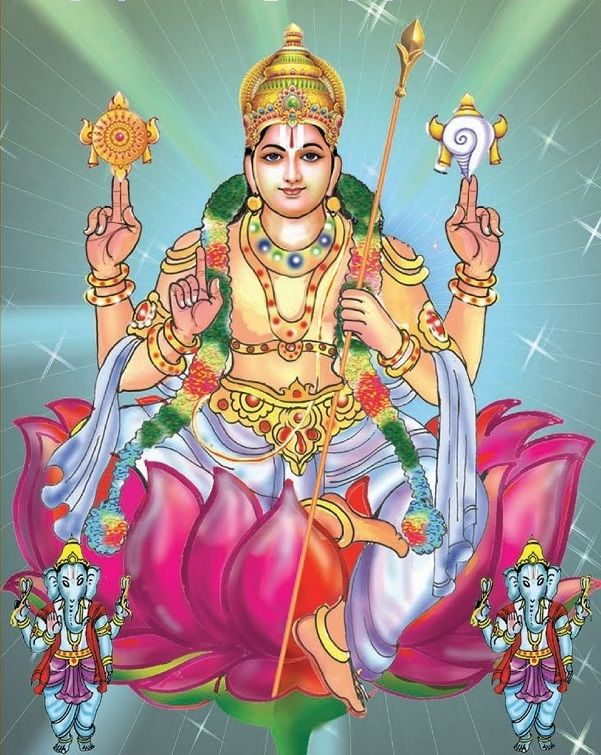
Today in the month of ஐப்பசி (or Pooradam asterism of the Vedic lunar almanac) is a very sacred day being the “tirunakshatram” (the anniversarial ascent of asterism) of Sri Viswaksenar (known in Tamil as “Senai Mudaliyaan) who appears as the 3rd of the foremost Acharyas in Guruparampara — the lineage of preceptors — worshipped in Sri Vaishnava “sampradaaya” (tradition).
On this auspicious day, let us offer worship to this Acharya of ours by delving into the details of his divine presence as gleaned from the Sri Vaishnava scriptural annals. He holds a very unique position indeed in the Acharya Parampara as will be explained below.
**** ****
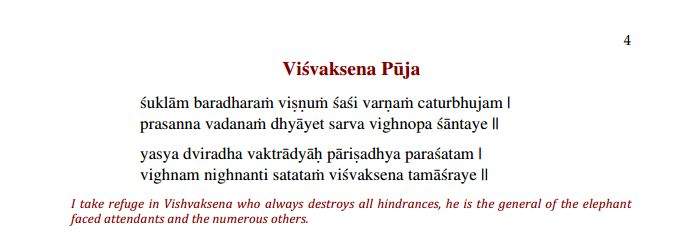
सर्वविघ्ननाशकं सर्वशान्तिकरं च।
श्रीविष्णुसैनानां सेनाध्यक्षं नमामि॥]
The above couplets are generally chanted at the beginning of any Hindu ritual or religious event invoking the presence of Sri Vishvaksena to ward off any physical or spiritual impediments to conducting it.
என் உயிர் தந்து அளித்தவரை சரணம் புக்கி யான் அடையவே அவர் குருக்கள் நிரை வணங்கி பின் அருளால் பெரும்பூதுர் வந்த வள்ளல் பெரிய நம்பி ஆளவந்தார் மணக்கால் நம்பி நான் நெறியை அவர்க்கு உரைத்த உய்யக்கொண்டார் நாதமுநி சயகொபன் சேனை நாதன் இன் அமுதத் திருமகள் என்று இவரை முன்னிட்டு எம்பெருமான் திருவடிகள் அடைகின்றேனே.
The verse above is commonly recited by all Sri Vaishnava sects or denominations. It is a very special form of invocation to the memories of a hallowed Sri Vaishnava Acharya “paramparai“. It is called a “thaniyan“—a lineage panegyric recited by Sri Vaishnavas—which beautifully lists the acharya paramparai, from the Supreme Brahman or Emperumaan (Sriman Narayana) who as immanent uninversal spirit inhered himslef for the sake of his devotees (“என் உயிர் தந்து அளித்தவர்”) down through a long succession of acharyas, including Nathamuni, Alavandar, Periya Nambi, Manakkal Nambi, and culminating in Satakopan (Nammalvar) and Senai Nathan (Vishvaksena).
This thaniyan articulates the tradition that Sri Vaishnavas, on the path of surrender (prappatti or saranagathi) , who venerate the entire lineage—explicitly mentioning both Vishvaksena (சேனைநாதன்) and Nammalvar (சயகோபன்)—as the spiritual guides culminating in surrender to the feet of Emperuman (Vishnu). It does not say that Nammalvar was a direct, living disciple of Vishvaksena, but it does affirm the Vishvaksena-Nammalvar link as enshrined in the paramparai tradition and so is chanted in Sri Vaishnava rituals. Such lineage verses are found in acharya parampara texts, Divya Desam traditions, and are cited at the beginning of major Vaishnava ceremonies to honor the flow of grace through this unbroken line.
This showcases how the tradition recognizes Vishvaksena as a prior acharya and Nammalvar as a recipient of divine grace in the lineage, following the sampradaya principle rather than historical teacher-disciple succession
According to the Sri Vaishnava guru-parampara, Vishvaksena is considered the celestial commander and acharya who revealed the esoteric meanings of Vishishtadvaita philosophy and the three rahasyas (mysteries) to Nammazhwar, effectively making Vishvaksena his spiritual preceptor. This is recorded in traditional Sri Vaishnava lineage accounts that detail how Vishvaksena descended to the temple of Alwar Thirunagari (near Tirunelveli) and gave Pancha Samskara initiation and instruction to Namazhwar “विष्णुसेनः सर्वविद्भानुर् सर्वगः सर्वविद्युत् प्रभुः”.
The poet and acharya Parashara Bhattar in his works and other Sri Vaishnava commentators also mention Vishvaksena as the divine link between Vishnu and the human acharyas, with Nammazhwar considered an incarnation or direct disciple initiated by Vishvaksena. This theological framework is central in Sri Vaishnava theology and is further codified in later stotras and the taniyan above that places Vishvaksena as the third acharya after Lakshmi and Nammazhwar.
**** ****
Although Sri Vishwaksena is the 3rd foremost in the pantheon of Sri Vaishnava “acharya paramparai”, yet, we find hardly any “stotra” , “Stuthi” or panegyric sung in his praise in the scriptural annals of Sri Vaishnavism . Nor are there any many well known mythological legends about him .
Thus one may ask: Why is that so ? Why the short shrift given him ?
Vishwaksena, the commander-in-chief of Lord Vishnu’s army, occupies an important yet somewhat understated role in Sri Vaishnavism. While he is highly revered as the remover of obstacles and supervisor of rituals, the relative scarcity of extensive stotras or mythological legends about him in Sri Vaishnava scriptural annals is due to his primarily functional and service-oriented role rather than a personalized deity with elaborate narratives.
Vishwaksena acts as the chief of Vishnu’s army and the gatekeeper of Vaikuntha. In temple rituals, especially Vaikhanasa and Pancaratra traditions influential in Sri Vaishnavism, ritual worship begins with invoking Vishwaksena to remove obstacles and ensure ritual success. He is considered the embodiment of the Tantras (sacred Agama scriptures) and presides over the smooth functioning of the cosmic and ritual order. Thus, his role is more administrative and protective, focused on enabling the worship of Vishnu rather than being the primary focus of devotion himself.
Unlike Vedic deities such as Ganesha or Skanda, or even other Vishnu’s celestial servitors (nithyasuris)… like Garuda, Sudarshana or Anantha... who have rich mythological stories and a distinct sectarian following, Vishwaksena’s importance lies solely in his service to Vishnu. In fact, Ramanuja and later Sri Vaishnavas worship Vishwaksena in places where others might worship Ganesha or Kartikeya—he functions as the principal remover of spiritual obstacles in the Vaishnava tradition but does not have an extensive independent mythological corpus. His identity overlaps closely with Vishnu’s attributes, reinforcing his subordinate and functional position.
Scriptural references like the Kurma Purana and the Pancharatra texts describe Vishwaksena chiefly in his military and ritual roles, with few elaborate stories or hymns. His very nature as the commander and regulator of divine forces leaves him less as a protagonist and more as a facilitator of Vishnu’s cosmic work. There are no large-scale legends or epics centered on him because the Sri Vaishnava tradition focuses primarily on the worship and praise of Vishnu, Lakshmi, and the Alvars, with Vishwaksena’s role being more tacit, self-effacing and supportive.
In essence, the so-called “short shrift” given to Vishwaksena in popular hymns and stories arises from the theological focus of Sri Vaishnavism on Vishnu as the supreme deity, with Vishwaksena’s role defined as that of the divine executor of Vishnu’s will, protector of rituals, and remover of obstacles. He is important but is functionally oriented, which naturally limits the presence of extended panegyrics or elaborate mythologies dedicated to him. This functional and service-based significance explains the relative paucity of stotras, stuthis, or mythological legends glorifying Vishwaksena compared to other deities in the Sri Vaishnava tradition.
**** ****
In the Vaikhanasa and Pancharatra texts, Vishvaksena is portrayed as the supreme commander-in-chief of Lord Vishnu’s army and the gatekeeper of Vaikuntha, his celestial abode. He is a key figure embodying the sacred Tantras, essential for the smooth and auspicious conduct of rituals.
Vishvaksena in Agama traditions
In the Vaikhanasa Agama tradition, which primarily worships Lord Vishnu, Vishvaksena holds an essential ritualistic role. He is worshipped first in any Vaishnava ritual to remove obstacles and protect the ceremony from evil or negative energies. His form is described as having a fair complexion (not blue like Vishnu), and he carries Vishnu’s attributes such as the shankha (conch), chakra (discus), and gada (mace). His posture often includes one hand in a blessing gesture (Avgana Hasta) while holding a weapon in another, symbolizing his protective and facilitating role. The Vaikhanasa sect regards Vishvaksena as indispensable for beginning temple festivals and rituals.
The Pancharatra Agama texts also describe Vishvaksena in a similar authoritative and protective capacity. He is acknowledged as an incarnation or extension of Vishnu’s potency, specifically linked to controlling the cosmic order and protecting devotees. Pancharatra scriptures mention him as one among the deities to whom the esoteric teachings of Vishnu (Keshava) were imparted, marking him as a significant divine figure involved in maintaining universal balance and dharma. Vishvaksena is celebrated as the embodiment of Vishnu’s power and regarded as the controller of the universal forces, often surrounded by his divine army including elephant-headed ganadhipathis. He is often visualised and portrayed in the following forms:
- Commander and protector in Vishnu’s army.
- Portrayed as a deity carrying Vishnu’s iconic weapons and symbols.
- Embodiment of Tantra scriptures, essential for rituals.
- Worshipped first in Vaikhanasa and Pancharatra ceremonies to remove obstacles.
- Symbolizes divine administrative and cosmic order functions.
- Accompanied by an army of divine beings, including elephant-headed ganadhipathis.
Thus, both Vaikhanasa and Pancharatra Agamas depict Vishvaksena as a powerful, functional deity deeply tied to the ritual and cosmic order under Vishnu’s supreme command, highlighting a role focused on protection, auspicious beginnings, and the correct execution of divine will.
Is there any Sukta (hymn) in any Veda or Vedanga (such as in Kalpa Sutras) in praise or worship of Vishwaksena ? Or is there any specific Azhwar paasuram in praise of him as an Acharya ?
There is no known Sukta in any of the four Vedas or their Vedangas (including the Kalpa Sutras) that specifically praises or involves the worship of Vishvaksena. Likewise, there is no direct evidence of a Vedic hymn or ritual portion in the Kalpa texts that addresses Vishvaksena as a principal deity or invokes him in the same manner as deities like Indra, Agni, Vishnu, or Rudra are addressed in Vedic literature. Ritual, grammatical, phonetic, and other Vedanga texts do not mention Vishvaksena in a context of worship or eulogy, as supported by summaries and overviews of the Vedas and Vedanga traditions.
Similarly, among the 4,000 Divya Prabandham hymns of the Alwars, there is no prominent paasuram specifically composed in praise of Vishvaksena as an Acharya. The Alwars’ poetry generally centers on direct devotion to Vishnu-Narayana and his avatars, as well as Sri Lakshmi and the holy shrines. While the Alwars abhor barriers to Vishnu’s service and celebrate his entourage, their hymns do not contain individual stanzas for Vishvaksena as are found for Garuda or Hanuman, for example.
While Sri Vaishnava tradition does venerate Vishvaksena as a primary link in the acharya parampara, identifying him as the bridge between Vishnu-Lakshmi and mortal lineages, this status is upheld within the Guru-parampara verses, upadesa (oral transmission), and later stotras, not in the verses of the Azhwars themselves. The scripted parampara lists, thaniyans, and upachara stotras (by later acharyas) acknowledge Vishvaksena’s intermediate acharya status, echoing the classical belief but not based on Azhwar paasurams.
Vishvaksena’s scriptural prominence in Sri Vaishnavism is based chiefly on Agama (Tantric, ritual) and later sectarian tradition, not on direct references in Vedic Suktas, Vedangas, or early Tamil Azhwar poetry. His role is thus functional-ritualistic, grounded in post-Vedic, Agamic, and temple praxis rather than in ancient Vedic or classical Tamil devotional poetry.
**** ****
Did Sri Ramanuja extol Vishwaksena in any of his works? By whom and when was the Sri Vaishnava Acharya paramparai pantheon get established ?
Regarding the establishment of the Sri Vaishnava Acharya paramparai (lineage pantheon), this tradition was systematized and formalized over centuries, though the main foundational spiritual framework was clearly laid by Sri Ramanuja (11th-12th century CE) himself. The paramparai starts with Vishvaksena as an integral link, followed by the Alwars, then Ramanuja, and subsequently the later acharyas like Yamunacharya and Vedanta Desika. The formal panegyric (one of which is quoted above … ” என் உயிர் தந்து அளித்தவரை ) listing and ritual acknowledgment of Vishvaksena as the third foremost acharya after the Alwars and Ramanuja emerged progressively in Sri Vaishnava tradition during the post-Ramanuja centuries—largely codified by the 13th-15th centuries by scholars and temple institutions such as Srirangam, which consolidated the lineage for ritual and theological purposes.
Thus, Vishvaksena’s role as a divine acharya and the custodian of Vishnu Dharma in the Kali Yuga is both recognized and extolled by Ramanuja in his philosophical and ritual corpus. The Sri Vaishnava Acharya paramparai pantheon was established starting with Ramanuja’s formalization of the tradition, and later disciples and institutional figures systematized it, affording Vishvaksena his key position as the third leading acharya for ritual invocation and theological respect.
Sri Ramanuja thus clearly did affirm the revered but somewhat service-oriented role of Vishvaksena in the Sri Vaishnava spiritual lineage. His example was thus followed by successive Acharyas such as Vedanta Desika. Early commentators within Ramanuja’s tradition consistently record Vishvaksena as a principal attendant (Senai Mudalvar), commander-in-chief, and essential guardian in Sri Vaishnava ritual practice. Texts and commentaries from the post-Ramanuja Sri Vaishnava tradition—drawing upon both Agama and Puranic sources—highlight a few core themes in their acknowledgment of Vishvaksena’s role:
Vishvaksena is explicitly called the “dispeller of difficulties” and regarded as essential to the commencement of any major Vaishnava ritual or temple ceremony. Early sampradaya texts note that it is Vishvaksena who is worshipped before even beginning worship of the central deity, ensuring all obstacles are removed—a role nearly paralleling that of Ganesha in Shaiva traditions. Vaikhanasa and Pancharatra Agama texts reinforce this prominent pragmatic place for Vishvaksena in temple protocol and festival openings.
What is most important to appreciate in all this is the Philosophical Position of Vishwaksena: His status is not so much as an independent supreme deity but is more as an empowered cosmic administrator, reflecting and embodying the will and authority of Vishnu. His placement at the head of the Sri Vaishnava acharya paramparai emphasizes the sect’s focus on faithful service (seshatva or daasabhutattva) and the doctrinal necessity of an unbroken guru lineage extending from Vishnu’s court to the mortal world.
**** ****
Catalogues of manuscripts preserving the Visvaksena–Nammalvar tradition exist chiefly within temple libraries, Vaishnava manuscript collections, and research archives documenting Tamil and Sanskrit Vaishnava religious texts, with key catalogues held at Tirupati, Srirangam, Madras, and Kerala institutions. These catalogues cover Agamas, Samhitas, Divya Prabandham commentaries, and acharya parampara lineages, forming the primary textual repositories confirming this tradition.
Bibliography
- Catalogue of Sanskrit manuscripts in traditional temple libraries such as the Tirupati Central Library (Kendriya Sanskrit Vidyapith), which preserves the Vishvaksena Samhita manuscripts and commentaries relevant to Visvaksena’s worship and Vaishnava ritual use.
- Archives cataloguing the Naalayira Divya Prabandham and associated Tamil commentaries which include mentions of Vishvaksena’s role in the acharya line and its connection to Nammalvar, such as collections maintained at Srirangam, Kanchipuram, and other Vaishnava heritage temples.
- Printed catalogues such as “Studies in the Puranic Records on Hindu Rites and Customs” detail lists of Purana and Smrti manuscripts containing traditional Vaishnava lore, which indirectly preserve references relevant to Visvaksena–Nammalvar lineages.
- The rare book collections of institutions like the Madras Government Oriental Manuscripts Library and Kerala University Oriental Research Institute hold catalogues listing manuscripts on Pancharatra Agamas and Sri Vaishnava theological compendiums referencing Vishvaksena and Nammalvar’s spiritual link.
Let us on this blessed day of Sri Vishwaksenar “tirunakshatram” day pray for his blessings of protection and the dispelling of all obstacles, difficulties and impediments that lie on the path of our spiritual and material progress in life!
Sudarshan Madabushi