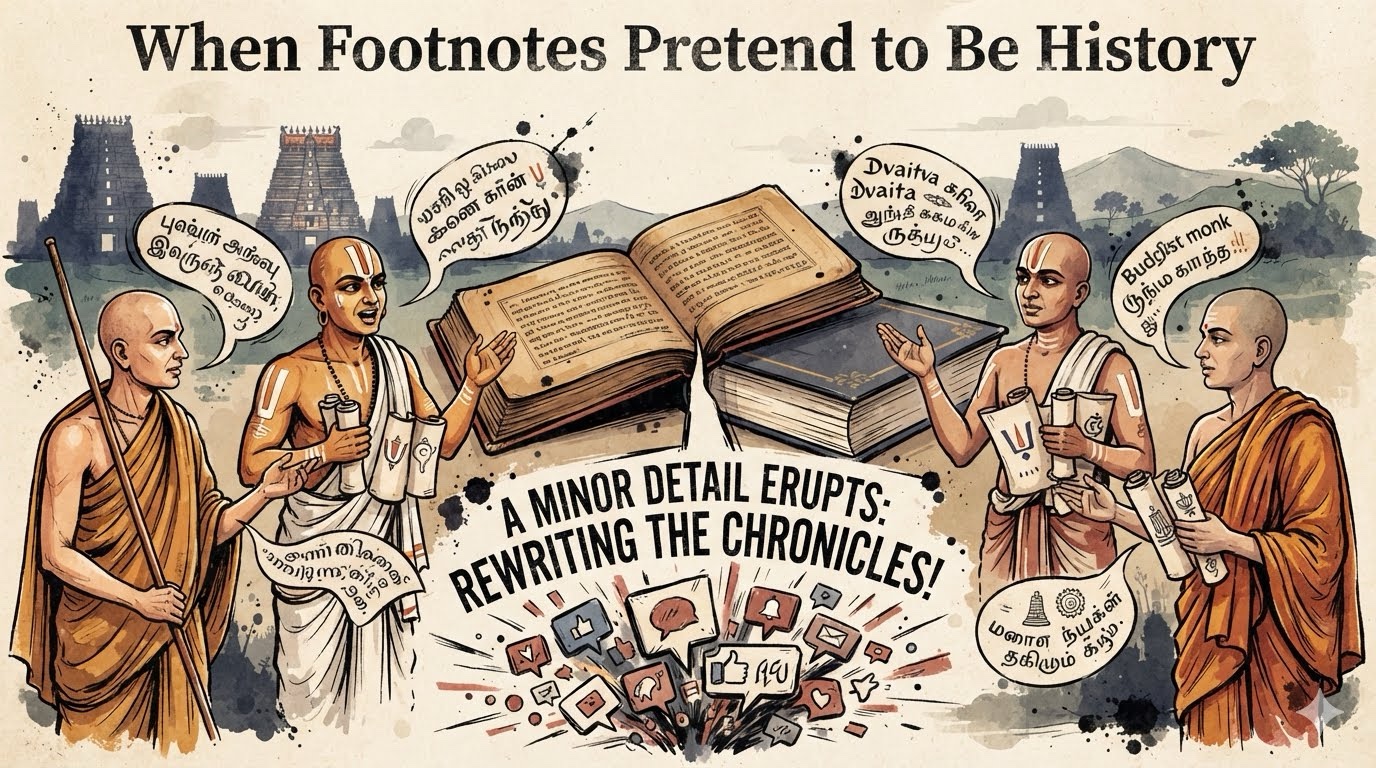
When Footnotes Pretend to Be History
Hindu philosophical traditions did not develop in a climate of uninterrupted harmony. Advaitins, Viśiṣṭādvaitins, Dvaitins, Buddhists, Jains, Śaivas, and Mīmāṃsakas often engaged in fierce—and sometimes deeply personal—polemics.
But a sectarian insult is not the whole history of a philosopher. A hostile hagiography is not a neutral biography. And a provocative footnote should not be presented as though it were a major chapter in the history of Indian thought.
From Śaṅkara and Rāmānuja to Vedānta Deśika and Madhva, the record reveals both acrimonious conflict and extraordinary intellectual creativity.
The real danger today is not that these old polemics are discussed. It is that social media detaches them from context, magnifies them, and turns historical trivia into historical truth.
When does a footnote become a distortion of history?
Tag Archives: Ramanujacharya
பாராசர பட்டரால் அருளிச் செய்யப்பட்ட தனியன்: அர்த்த பஞ்சகம்: இராமானுஜ தரிசனத்தின் முழுமையான கட்டமைப்பு
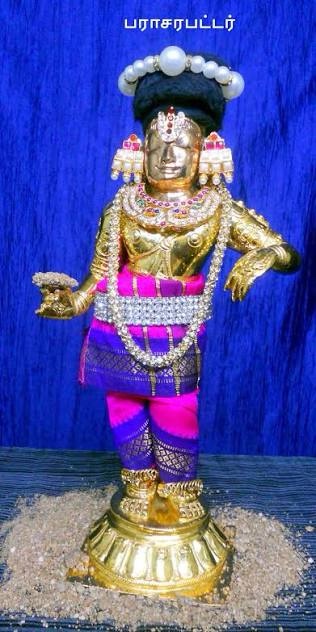
Parashara Bhattar’s “Tanian”: Artha Panchakam: The Integral Architecture of “Ramanuja Darsana” by M. K. Sudarshan August 27, 2026 (the sacred day of Avani Avittam – Upakarma- Vedaarambha Day): Chennai, India அர்த்த பஞ்சகத்தை வெறும் “ஐந்து அடிப்படை உண்மைகள்” என்று மட்டும் கூறுவது அதன் உள்ளார்ந்த தத்துவ விரிவைச் சுருக்கிவிடுகிறது. ஸ்ரீவைஷ்ணவ சம்பிரதாயத்தில் இது ஆன்மா, பரமன், அடைய வேண்டிய பேறு, அதற்குரிய உபாயம், அதற்குContinue reading “பாராசர பட்டரால் அருளிச் செய்யப்பட்ட தனியன்: அர்த்த பஞ்சகம்: இராமானுஜ தரிசனத்தின் முழுமையான கட்டமைப்பு”
“The Threshold of the Infinite”: A Socratic Dialogue in the Ubhaya Vedanta Tradition
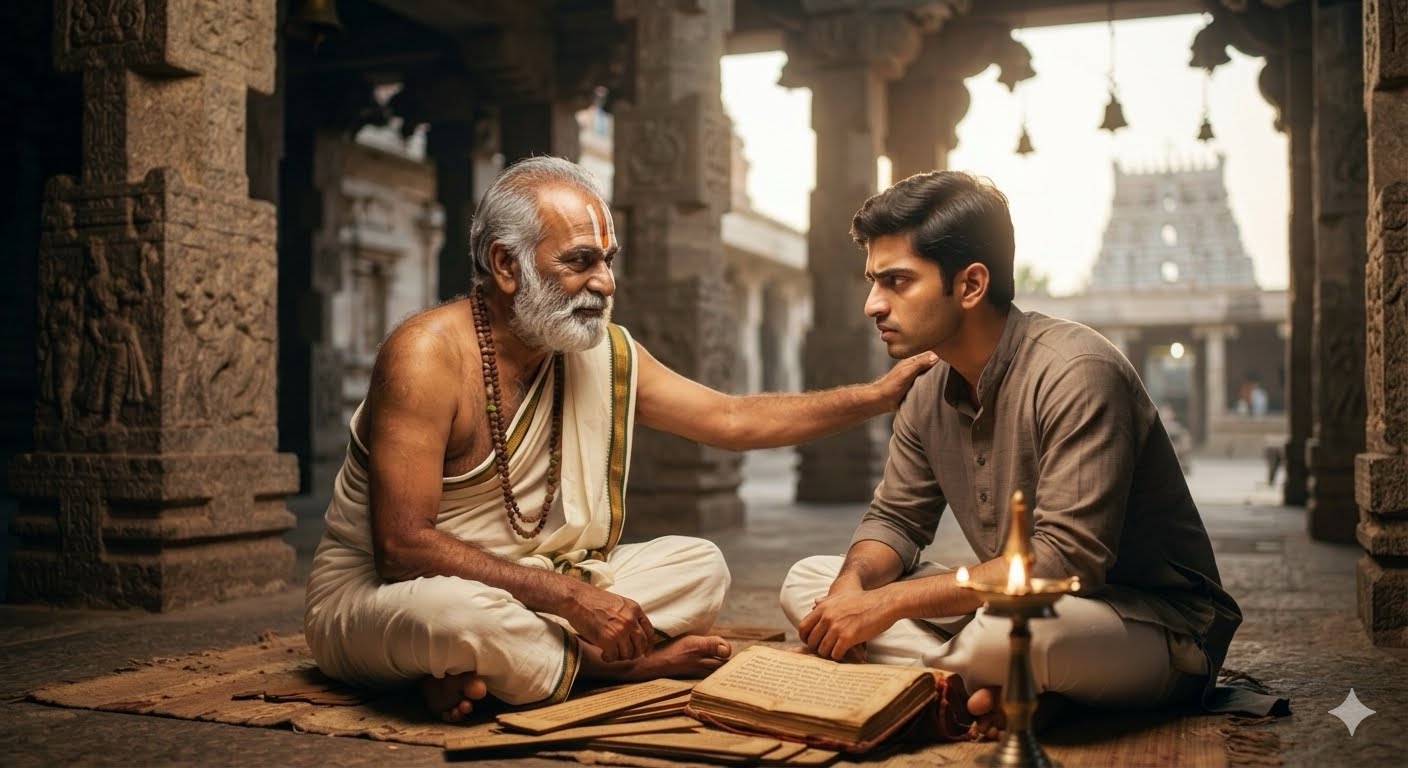
by M.K. Sudarshan August 2, 2026 : Chennai, India Here below is an imaginary, freewheeling conversation between a bright young Philosophy major student and the Unknown Sri Vaishnava Characters: Setting:A bright, sunlit stone-pillared pavilion (Mandapam) attached to a historic temple in South India. The warm afternoon light washes over the intricately carved pillars. Scattered palm-leafContinue reading ““The Threshold of the Infinite”: A Socratic Dialogue in the Ubhaya Vedanta Tradition”
Vedanta at the Threshold: From “Vichara” to “Vyakhyana”

by M.K. Sudarshan July 12, 2026: Chennai, India A dialogue between two postgraduate students of Indian Philosophy in a university coffee shop The coffee shop on campus was neither elegant nor noisy, which made it ideal for argument. It had enough hum to protect privacy, enough light to encourage thinking, and enough bitter tea andContinue reading “Vedanta at the Threshold: From “Vichara” to “Vyakhyana””
ரமணரிடமிருந்து ராமானுஜருக்கு; ஐன்ஸ்டீனிடமிருந்து ஹாக்கிங்கிற்கு: காலமின்மையிலிருந்து கால நிறைவிற்கு
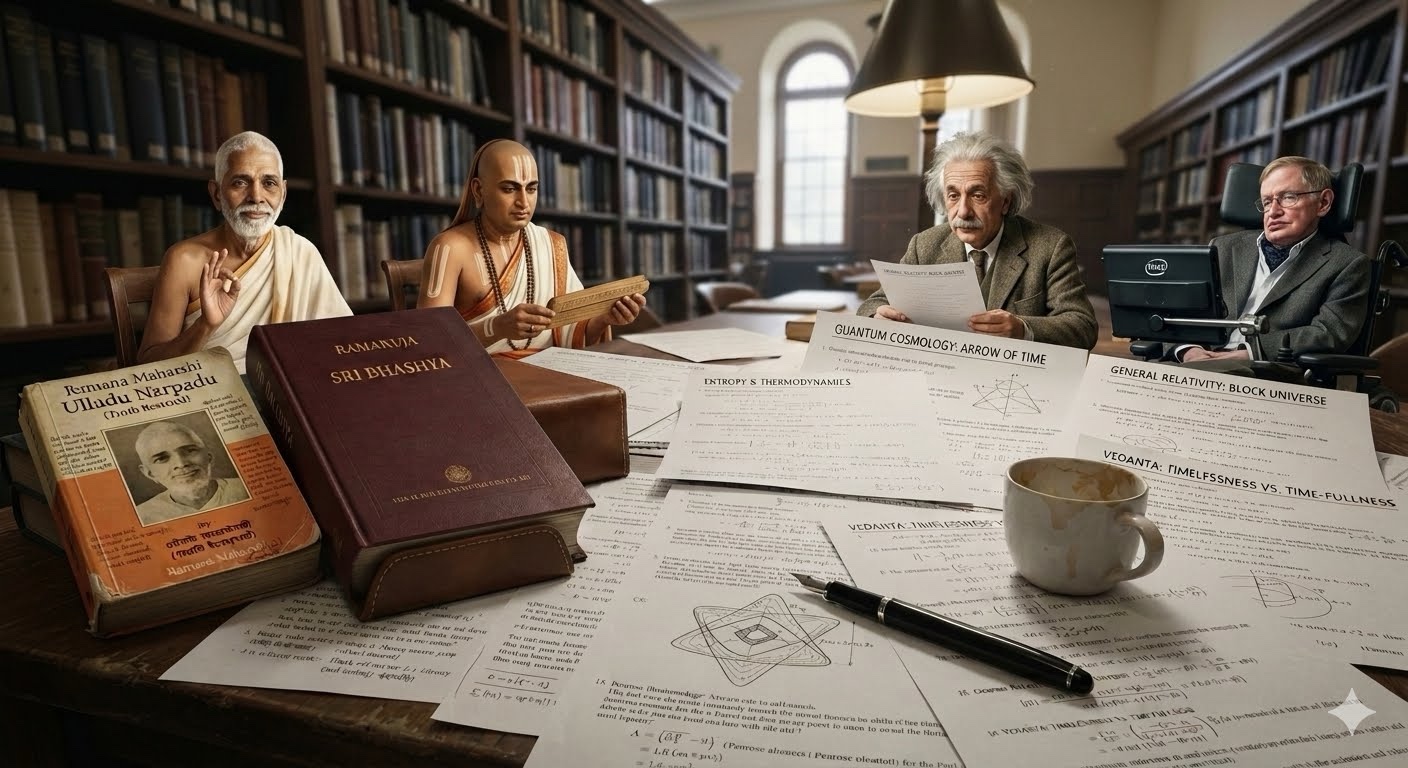
by M.K.Sudarshan July 8, 2026, Chennai, India Disclosure: below is an AI-aided translation in Tamil of my English blog-essay : https://mksudarshans.blog/2026/07/08/from-ramana-to-ramanuja-and-from-einstein-to-hawking-timelessness-to-time-fullness/ சூழல்: ஒரு பல்கலைக்கழக நூலகத்தின் அமைதியான மூலை. மேசையின் மீது ரமண மகரிஷியின் உள்ளது நாற்பது மற்றும் ராமானுஜரின் ஸ்ரீ பாஷ்யம் நூல்கள் இருக்கின்றன. அவை பொதுச் சார்பியல், குவாண்டம் அண்டவியல் மற்றும் வெப்ப இயக்கவியல் தொடர்பான தாள்களுக்கு இடையே புதைந்து கிடக்கின்றன. மாணவர்: ரமண மகரிஷியின்Continue reading “ரமணரிடமிருந்து ராமானுஜருக்கு; ஐன்ஸ்டீனிடமிருந்து ஹாக்கிங்கிற்கு: காலமின்மையிலிருந்து கால நிறைவிற்கு”
From Ramana to Ramanuja; and from Einstein to Hawking: Timelessness to Time-Fullness
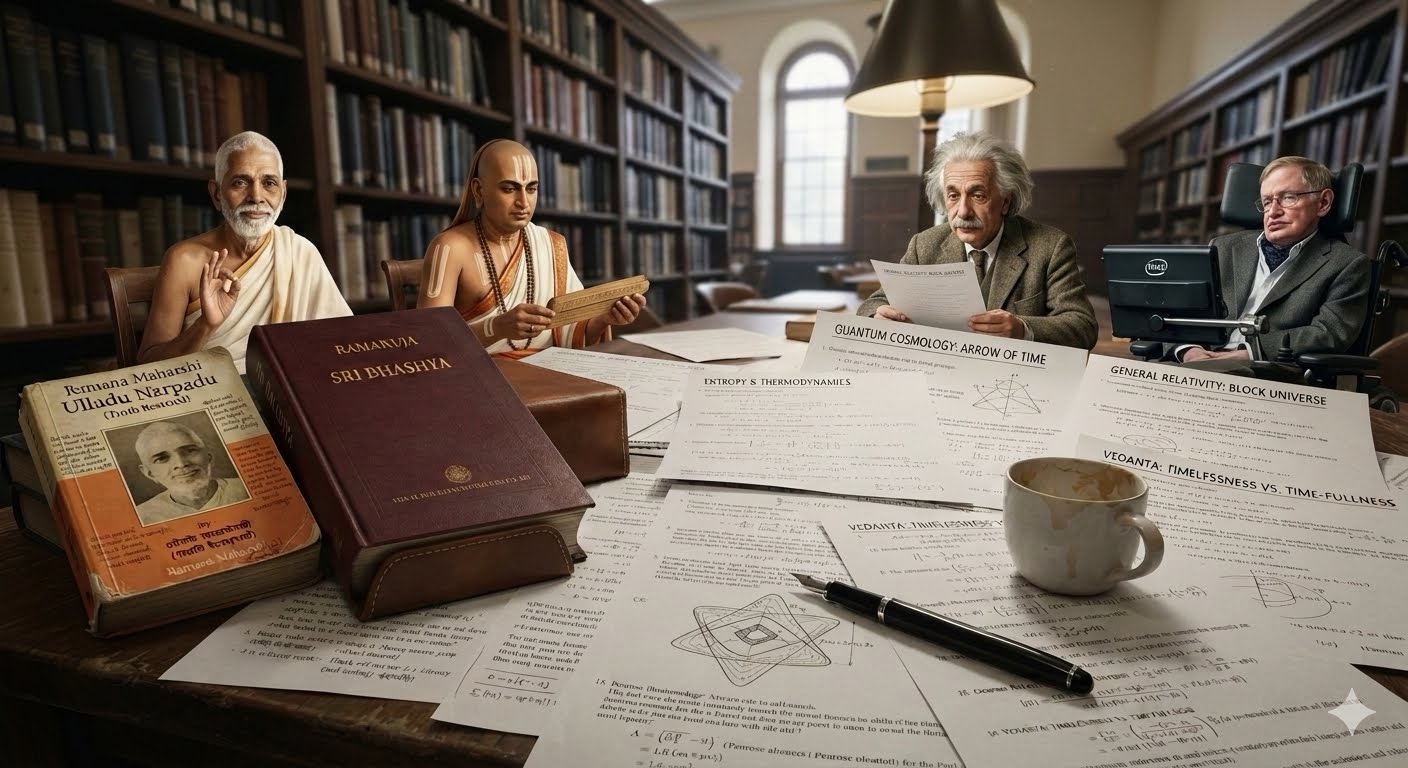
by M.K. Sudarshan July 8, 2026 : Chennai, India Setting: A quiet corner of a university library. On the table sit copies of Ramana Maharshi’s Ulladu Narpadu and Ramanuja’s Sri Bhashya, now buried under papers covering general relativity, quantum cosmology, and thermodynamics. Student: Look at this quote from Ramana Maharshi. It’s devastatingly simple: “There isContinue reading “From Ramana to Ramanuja; and from Einstein to Hawking: Timelessness to Time-Fullness”
The Chidambaram Rahasyam: How a Sri Vaishnava Shrine became a Proxy War Pawn in Tamil Nadu politics

by M.K.Sudarshan June 30, 2026/Chennai, India Introduction The Chidambaram Nataraja Temple is globally celebrated as the cosmic stage of Lord Shiva’s Ananda Tandavam. Yet, deep within its sacred geometry lies a quieter, parallel sanctuary: the Thillai Govindaraja Perumal shrine. For centuries, this physical coexistence of Shiva and Vishnu symbolized a rare, uneasy theological truce. Today,Continue reading “The Chidambaram Rahasyam: How a Sri Vaishnava Shrine became a Proxy War Pawn in Tamil Nadu politics”
““Eureka” at Srirangam: The Shared Dawn of Viśiṣṭādvaita””
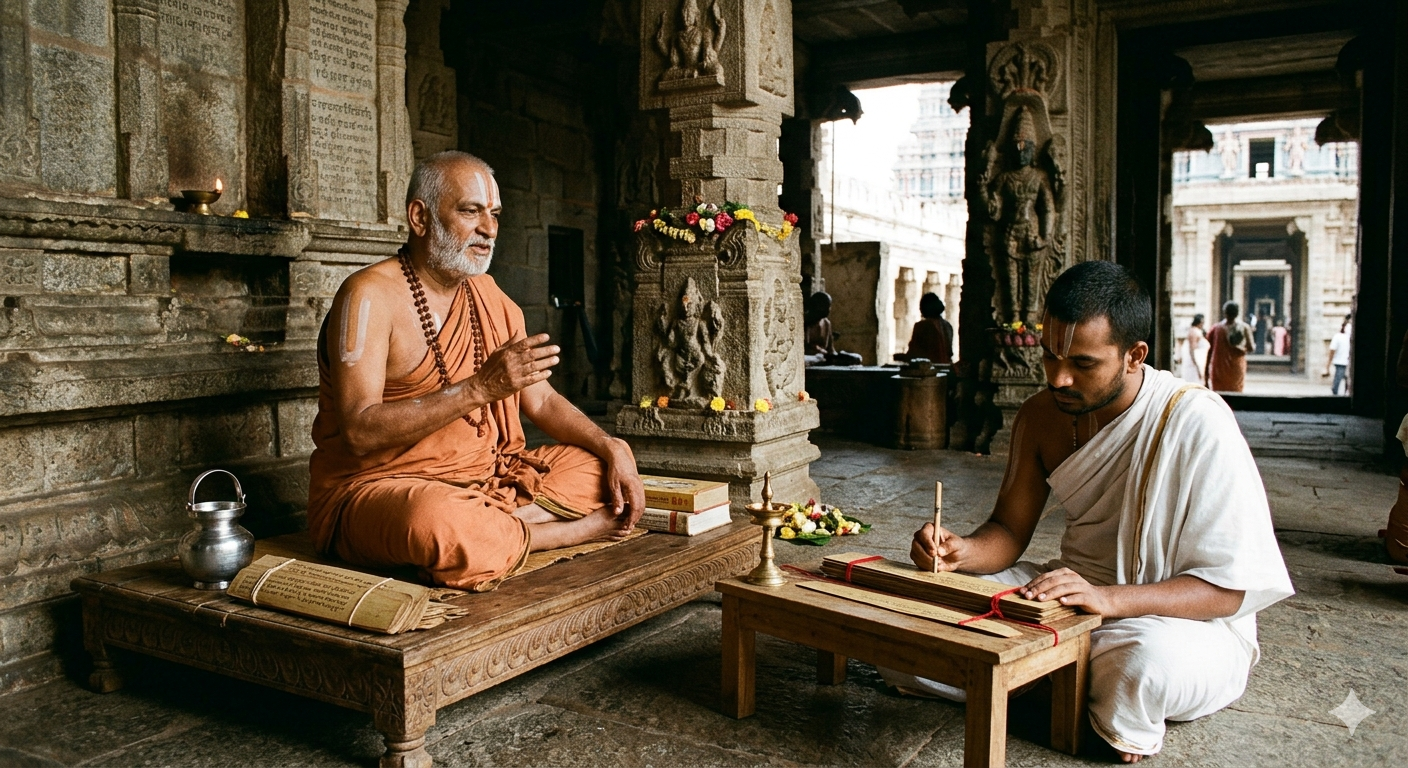
“When the teacher and his faithful disciple together beheld the soul and the world as truly real, and the living truth of Viśiṣṭādvaita dawned.” by M.K. Sudarshan ______________________________ I. The teacher and the disciple: setting and relationship In the great temple-town of Śrī Ranganātha, where the tidal hush of devotion meets the disciplined flame ofContinue reading “““Eureka” at Srirangam: The Shared Dawn of Viśiṣṭādvaita”””
Vidura, Birth, and Bhakti: A Tension in Reading and interpreting the Mahabharata

Author’s Note: The quotation discussed here in this essay below appears in Vedanta Desikan’s Rahasya Traya Saram, where a Mahabharata episode is re-read within a later Sri Vaishnava interpretive framework. The essay is merely an observation — neutral , non-judgmental and wholly academic. The writer’s purpose in penning the essay is solely to invite religiousContinue reading “Vidura, Birth, and Bhakti: A Tension in Reading and interpreting the Mahabharata”
A tale of Two Cities = A tale of Two Sects— A simplified version of the original review

AMARUVI DEVANATHAN MAY 26, 2026 Dear Reader, Two Class 8 children wanted me to re-write my original review in a simpler form so that they could understand in full. Hence this. Who are the Vadakalais and Thenkalais? Where do they come from? Why do they fight in Indian courts on completely insignificant matters? From whenContinue reading “A tale of Two Cities = A tale of Two Sects— A simplified version of the original review”