

The ongoing Russo-Ukraine War has badly exposed the fragility and instability of the political unity and integrity of Europe and NATO. Watching the scenes and debates inside the European Parliament makes one suspect that the Union is rapidly fraying at its seams which may give way anytime soon.
As an Indian looking at the the EU from outside, I cannot help comparing the European Union of 27 states and the Indian Union of States of 25 States and concluding that the Indian one is by far more solid and enduring than the former.
1. In what fundamental and characteristic ways — i.e. constitutionally, structurally, culturally, economically, politically and militarily — is the EU different from the Indian Union ?
2. What are the reasons why, relatively speaking, the EU of the First World look so ragged and disunited in contrast to the Indian Union of the so-called “global South”?
3. Why does the EU look like a “banana tin-pot republic” in stark contrast to India’s sophisticated and enduring political Union?
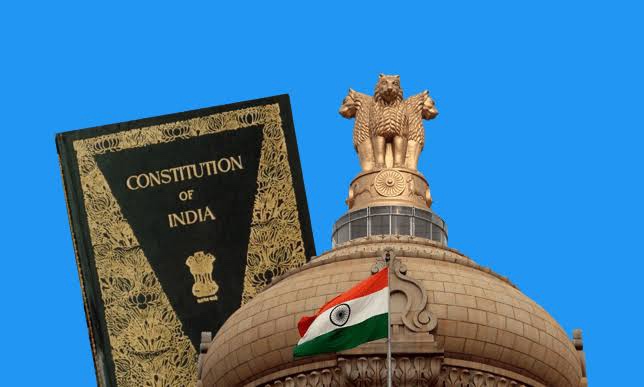
In trying to further explore the question, we come up with the following comprehensive answers shedding quite some light on it.
*********
The European Union (EU) and Indian Union differ fundamentally in their foundational design, with the EU functioning as a confederation of sovereign states and India as a centralized federal republic. These distinctions, amplified by historical, cultural, and geopolitical factors, contribute to perceptions of EU fragility amid crises like the Russo-Ukraine War, contrasting with India’s relative cohesion.
Constitutional Differences
India’s Constitution establishes a “union of states” with a strong center, blending federal and unitary features through a single written document that vests sovereignty at the national level and limits state secession. The EU lacks a unified constitution; instead, treaties like the Lisbon Treaty create supranational institutions, but ultimate sovereignty remains with member states, allowing opt-outs and vetoes. This makes India’s framework more integrated, as states cannot unilaterally exit, unlike EU members.
Structural Variations
India operates a hierarchical structure with a dominant Union government controlling defense, foreign affairs, and finances, while states handle local matters under central oversight via bodies like the GST Council and NITI Aayog. The EU’s structure is decentralized, with the European Commission proposing policies, the Council representing states, and the Parliament providing limited oversight, leading to fragmented decision-making. India’s “national federalism” pools resources centrally, fostering uniformity, whereas EU “executive federalism” relies on intergovernmental consensus.
Cultural Factors
India’s ancient ethos of “unity in diversity,” rooted in shared philosophical traditions and historical assimilation, underpins national identity despite linguistic and ethnic pluralism. The EU, comprising historically independent nations with distinct languages, religions, and memories of conflict (e.g., Franco-German wars), pursues “unity in diversity” post-World War II but lacks deep cultural homogeneity. India’s civilizational continuity promotes instinctive solidarity, while Europe’s nation-state loyalties often override EU allegiance.
Economic Distinctions
The EU features deep integration via a single market, common currency (eurozone for 20 states), and customs union, but fiscal policies vary, causing tensions like during debt crises. India’s economy is a unified internal market with centralized taxation (e.g., GST), enabling resource redistribution from richer to poorer states without veto risks. EU economic interdependence exposes divisions over burdens, such as Ukraine aid funding, unlike India’s cohesive fiscal federalism.
Political Dynamics
India’s parliamentary system ensures single-party or coalition majorities at the center, enabling decisive action and national parties bridging states. EU politics involve multi-party fragmentation across 27 states, with frequent vetoes (e.g., Hungary/Slovakia on Ukraine/Russia), populist rises, and bilateral preferences over EU unity. This confederal politicking amplifies disunity in crises, contrasting India’s electoral federalism that channels regionalism into national stability.
Military Aspects
India maintains a unified armed forces under central command, with no state militaries, ensuring seamless defense. The EU has no army; defense relies on NATO (22 overlapping members) and national forces, revealing fissures like burden-sharing disputes and varying threat perceptions (e.g., Eastern vs. Western Europe on Russia). NATO’s expansion and Ukraine debates highlight these cracks, absent in India’s monolithic military structure.
Reasons for Perceived Disunity
The EU’s recent strains stem from its voluntary, shallow integration—recent sovereign states with clashing interests (e.g., energy ties to Russia, migration)—exacerbated by the Ukraine war’s economic costs and populist nationalism. India’s endurance arises from post-colonial centralization to avert balkanization, shared anti-colonial memory, unified institutions (judiciary, bureaucracy), and cultural resilience amid diversity. Despite First World resources, EU confederalism prioritizes national vetoes over collective action, making it appear “ragged” relative to India’s robust union model.
**********
Any Indian today who is able to read and appreciate the above stark contrast between the European and Indian models of political union will have compelling reason to be proud of the sagacity and foresighted-ness of our founding fathers of nationhood who designed and established for their progeny generations a rock-solid Constitutional Order that assures the sovereignty, integrity and cultural identity of nation as vast and diverse as ours.
There are many powerful politicians and interest-groups in our country today who go around decrying and denigrating the way our Indian Union of States functions, the way our Constitution serves the people and the way many institutions of federalism lay and regulate jurisdictional boundaries. Rahul Gandhi, M.K.Stalin, Mamata Banerjee, to name only a few political big-honchos, are known to hold views that range from anarchist to near-secessionist stances. Then there are also legal luminaries like Kapil Sibal and P. Chidambaram — and half a dozen other Supreme Court of India lawyers —- who constantly gripe about the Union of India resembling some sort of “elected autocracy”, “crony-capitalist republic” or a “dictatorship disguised as a parliamentary democracy” …. Etc. They even oftentimes, when invited on to speak in international forums in the West, hail the model of the EU as a role-model for modern sovereign governance!
Well… if the Stalins and Rahul Gandhis, and the Chidambarams and other ragtag civil-liberties champions and activists like Prashant Bhushan and Yogendra Yadav … really took a good hard look at the way the European Union is today slowly coming apart at its seams, they would surely feel happy and more humble that they still remain citizens of the Indian Union.
Jai Hind !
Sudarshan Madabushi
(PS: A few AI-contributed inputs are part of this blogpost).