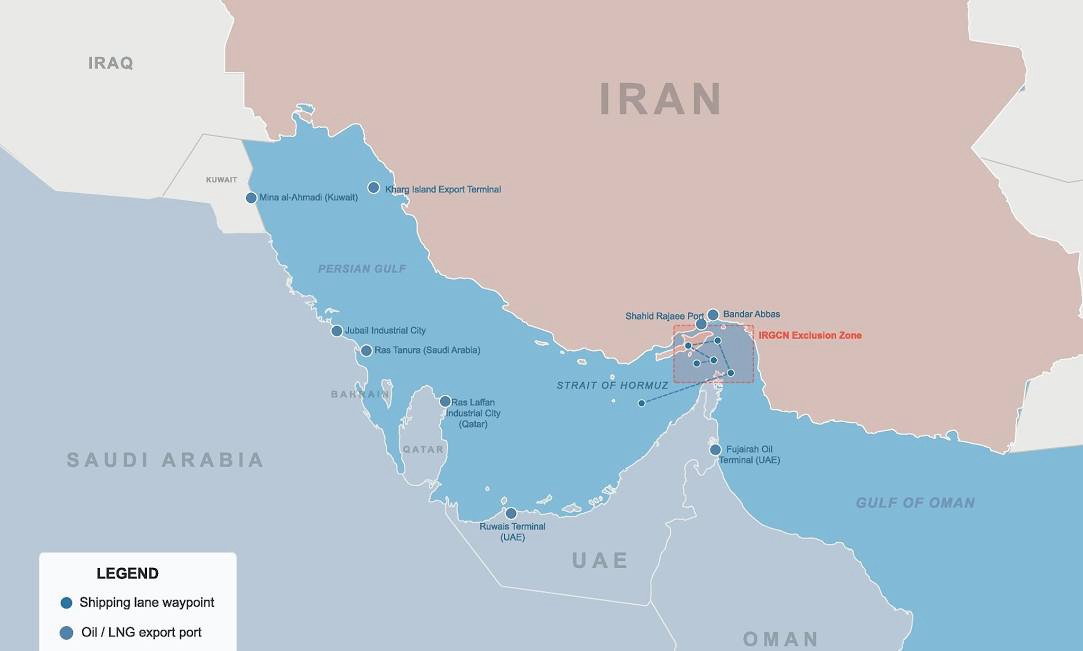
For more than seven decades, American grand strategy toward Iran has been guided by a single, narrowing obsession: how to secure U.S. access to oil and gas in Iran and the broader Central Asian energy belt. From the 1953 coup against Dr. Mohammad Mossadegh to the present crisis in the Strait of Hormuz, Washington’s gaze has never shifted far from the barrel of crude.
Iran, in American eyes, was never a full‑fledged nation with its own history, dignity, and strategic geography; it was a reservoir of energy to be controlled, and a potential spoiler of that control to be contained.
After the 1979 Islamic Revolution shattered the Shah’s pro‑Western order, Washington’s posture hardened into what many Iranians now see as a policy of “Death to Iran.” This was not, at first, a formal military declaration. It was a slow‑motion economic war, built on sweeping sanctions, banking cutoffs, and export bans that strangled not only the Iranian leadership but the lives of ordinary citizens. Hospitals, medicine, agriculture, and basic imports all fell within the shadow of American‑designed hardship.
The United States mistook the policy of impoverishment for the policy of containment, believing that if the people were made to suffer, the regime would either collapse or be forced to surrender on Washington’s terms.
In this grim calculus, Israel acted not merely as an ally, but as mentor and active abettor. Eager to see Iran weakened, Jerusalem nudged Washington toward ever‑more maximalist measures, subtly reinforcing the idea that pressure through sanctions, cyber‑sabotage, and covert action could substitute for a genuine long‑term strategy.
Arab Gulf states too, in turn, watched from the sidelines, silently applauding; their rulers were relieved that the United States, not their own militaries, bore the risk and cost of confronting Tehran. The GCC, in this way, became silent beneficiaries of a policy that spoke of “regional security” but in practice meant outsourcing Iran’s management to Washington.
What is most striking in this entire arc is what did not occupy the foreground of American strategic thinking. The Strait of Hormuz, and to a lesser degree the Bab al‑Mandeb, never figured in any serious, sustained way as the central nodes of power in the Middle East. American planners in the White House, State Department, Pentagon, and CIA chased the “shadow” of the demon—regime rhetoric, nuclear ambitions, ballistic‑missile tests, militia proxies—while ignoring the demon’s real bodily presence : Iran’s geographic position at the heart of the world’s most critical energy chokepoints.
For decades, Washington treated Hormuz as a technical problem for navies, not a strategic inflection point for the entire global order. The United States relied on the Gulf monarchies, on periodic patrols, and on the illusion that the status quo could be preserved through a mix of gunships, satellite surveillance, and sanctions. The demon, in this reading, was ideological or nuclear; it was not the simple, brutal fact of geography that gave Iran the power to choke the arteries of global trade.
Now, that demon has finally stepped out into the open. With the 2026 U.S.–Israeli strike campaign against Iran’s leadership and nuclear‑related infrastructure, and the subsequent Iranian decision to assert direct control over the Strait of Hormuz, the demon has shown what it truly is: a geographic weapon that requires no nuclear bomb to wield decisive power.
Iran has demonstrated that by threatening, or even selectively controlling, the flow of oil and gas through Hormuz, it can put America, Israel, and the GCC on a single, shared leash. The strait, once treated as a footnote to grand strategy, has become the very center of gravity in the region.
America, Israel, and the Gulf monarchies are now caught with their pants down. The policy of impoverishment did not topple the Iranian state; it deepened Iran’s defensive resolve and pushed its leadership to invest in asymmetric tools that could exploit their geographic advantage. The policy of containment, never honestly conceived, has collapsed against the reality of a chokepoint that Tehran can now claim to control.
The GCC, which once believed itself insulated by American protection, now finds that its own survival is hostage to decisions made in Tehran and Washington.
In this moment of reckoning, the old narrative must be reversed. The demon is not elsewhere, in speeches or missiles; it sits in the strategic decisions that were never made—the planners who failed to see Hormuz as the hinge of power, the leaders who mistook economic cruelty for geopolitical wisdom, and the allies who cheered from the sidelines while assuming the United States would carry the burden forever.
The lesson is not simply that Iran has grown stronger. It is that those who ignored geography, and who mistook pressure for strategy, have now found themselves staring at the very chokepoint they spent decades pretending did not matter.
Sudarshan Madabushi
Excellent analysis of the present quagmire into which USA has sunk. They have entered a war without any clear strategy or exit route and now find themselves caught with their pants down. The ground invasion by USA, if it takes place, will intensify the war without any clear many casualties on both sides. When American soldiers return home in coffins, Trump may be forced to declare victory and withdraw. The war may spread to GCC countries , with deadly consequences. Iran is reported to be having a huge army and to eliminate them is not going to be easy. The war may prolong for months.Trump has landed himself and USA in a big mess.
There is no doubt in my mind that the superior fire power of Israel and America, the open sky’s to provide cover for the ground troops will enable the aggressors to win this illegal war. With two narcissists leading the charge, the Middle East and the world are in a state of chaos.