Great powers project invincibility, yet current wars expose their Achilles’ heels: military might fractures without complementary domains, while moral posturing reveals boundless double standards.
Russia’s Ukraine quagmire proves even nuclear-armed giants cannot conquer land decisively absent naval mastery. America’s Iran campaign reveals the inverse—even unmatched sea power falters without ground forces.
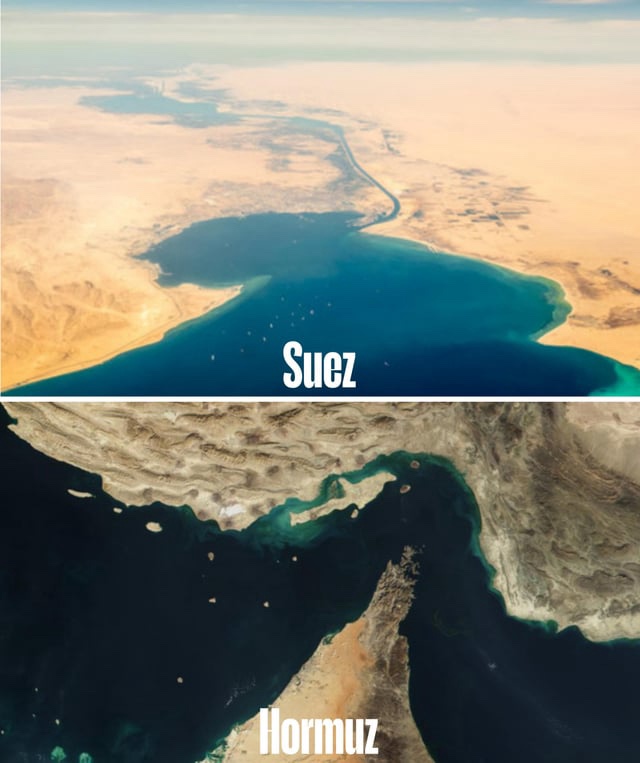
Parallel hypocrisy underscores both: Egypt’s Suez tolls are sacrosanct; Iran’s Hormuz fees, a casus belli. Uncle Sam’s rules reign supreme.

The Ukraine Bind: Russia’s Rediscovery of Mahan
Three years into Russia’s “special operation,” Putin controls neither Kyiv nor Odesa. The Black Sea Fleet—once 80 warships—lies neutralized by Ukraine’s $10,000 drones against $1B frigates. Sevastopol limps; grain corridors flow. Naval denial preserved Ukraine’s economy while Putin’s tanks bog down in Donbas mud.
This painful lesson rediscovers Alfred Thayer Mahan, the 19th-century US admiral whose “The Influence of Sea Power Upon History” (1890) proved naval supremacy dictates global outcomes.
Mahan identified six essentials—geography, population, government, commerce, fleet quality, strategic bases. Russia ignored them: no sea control means no land conquest. Napoleon failed Egypt sans Nile; Hitler, Britain sans Atlantic. Putin validates Mahan empirically.
The Iran Mirror: No Army, No Regime Change
Flip to Hormuz. US carriers unleash “Operation Tidal Surge,” cratering Kharg Island’s oil piers. F-35s own the skies; Tomahawks gut power grids. Yet Tehran’s mullahs endure, proxies bleed US bases in Iraq. Trump threatens “Stone Age” demolition—civilian infra next—still no collapse.
Why?
Naval power degrades, doesn’t decapitate. Iran’s 1,500-mile depth, 500,000 Basij militia, Hezbollah tunnels demand 200,000+ boots— that’s unsustainable for America post-Iraq and post-Afghanistan. Air-craft Carriers project, don’t conquer. Falklands worked (small island); Iran won’t.
*********
Suez vs. Hormuz: Imperial Rules
Enter hypocrisy’s masterpiece.
Egypt extracts $9 billion yearly from Suez tolls—$1 million per supertanker, unquestioned. Man-made canal, sovereign right.
Iran proposes Hormuz “transit fees” ($2 million/ship)—natural international strait, UNCLOS violation.
So, US Navy responds: airstrikes.
What’s the Legal nuance here ?
Suez = artificial waterway (Egypt built/maintains). Hormuz = natural chokepoint (20% global oil), free transit passage mandated.
Yet it is principle that dissolves: might defines right. US aid flows to Cairo ($1.3B/year); aircraft carriers and flotilla pound Bandar Abbas. Rules for thee, not for me.
Iran’s blockade inflicts pain—oil at $120/barrel—but Egypt’s tolls extract rent legally. Same ships, opposite verdicts. Hypocrisy isn’t error; it’s policy.
The Deeper Reckoning
Great powers discover limits when domains misalign. Russia rediscovers Mahan’s sea power necessity; America, land war’s indispensability.
Simultaneously, they also police hypocrisy selectively—Suez sovereign, Hormuz piracy. This isn’t aberration but essence of hegemony: power writes rules, then enforces exception.
Multipolarity looms.
BRICS reroutes oil in yuan; drones cheapen aircraft carriers. And the Ukraine-Iran diptych warns the Great Powers: military might can fray at the edges, and hypocrisy certainly erodes legitimacy. Greatness endures not by unmatched force, but only by matched restraint.
Sudarshan Madabushi
(A Chennai-based keen observer of contemporary geopolitics; also, student of classical Indic traditions calling himself “Unknown Sri Vaishnava”)