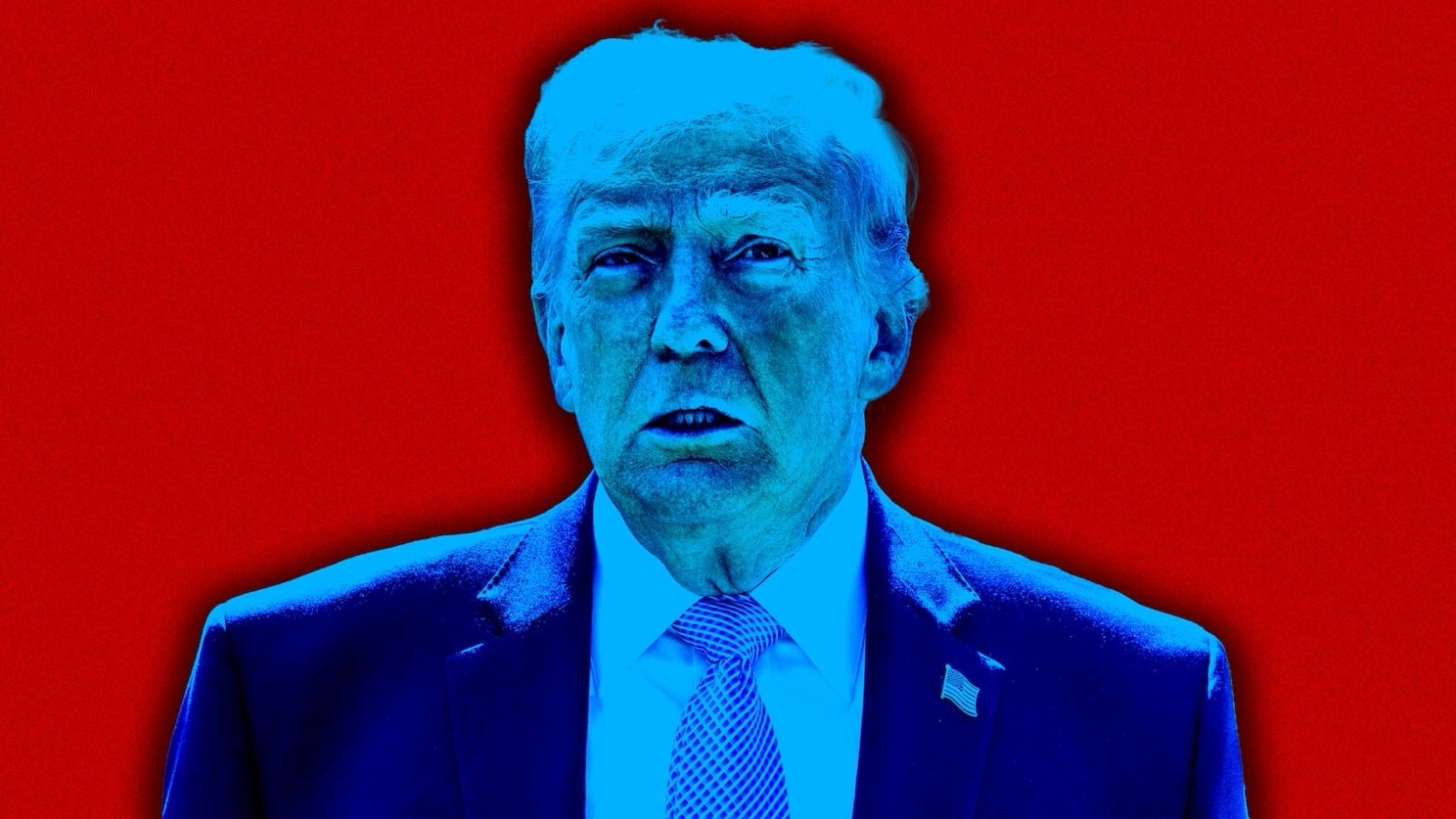
Upon learning two US airmen were missing after their F-15 was downed in Iran on Good Friday (April 3, 2026), Trump screamed at aides for hours, fixating on gas prices ($4.09/gallon), absent European support, and fears of a 1979-style hostage fiasco. He demanded instant rescues despite terrain challenges unused by US forces since the 1970s, hindering real-time updates from the field.
The Wall Street Journal reported on President Trump’s intense reaction that happened in the White House Situation Room on April 3, 2026, during ongoing US-Israeli strikes that began February 28.
Trump screamed at aides for hours in a “frenzied state,” fixating on gas prices at $4.09 and lack of European ally support, becoming such a terrible distraction that White House aides were forced to ask that he be barred from the Situation Room and only to be briefed intermittently. The White House Press Spokeswoman however denied this, with Press Secretary Karoline Leavitt spinning it all as the behaviour of a “steady leader.”
Thankfully, one airman was rescued quickly, the second after over 24 hours in a high-risk operation that saw America lose quite a few military assets like helicopters and armoured getaway vehicles. Trump then posted expletive-laden Truth Social threats demanding Iran reopen the Strait of Hormuz, including praising “Allah” on Easter … all of which seemed “unstable,” alarming lawmakers and his own voter base.
**********
The fact of the matter was however that it was Trumps aides that day who bravely managed to stem the damage that POTUS could have otherwise caused in the Situation Room, given the his state of mind that had lapsed into uncontrollable rage — a mental state called “losing ones’s marbles” or “going doolaly”.
Aides barred Trump from the Situation Room during the crisis, briefing him only intermittently to avoid disruption from his hours-long screaming fits. This decisive action shows they prioritized operational control over deference to his rage. Chief of Staff, Susie Wiles, barred him out of the Situation Room to enable the rest of the team to focus on operations, briefing him intermittently by phone instead; she deemed his “impatience” counterproductive.
Wiles coordinated, briefing him by phone intermittently rather than allowing disruption. Reports name no others explicitly, but context points to national security principals like Gen. Dan Caine or deputies who physically escorted him out.
Wiles earned Trump’s trust through disciplined campaign management, positioning her to override his impulses without backlash. This inner circle—trusted from 2024 election wins—repeatedly contains his volatility, as in prior war room exclusions, ensuring rescues proceeded despite his rage.
Trump’s outbursts have long led to public putdowns and firings of cabinet members like Jeff Sessions and Scott Pruitt, fostering fear of humiliation more than intimidation. Recent reports indicate ongoing purges of advisers he deems disloyal, suggesting his temper drives turnover rather than compliance. In this Iran incident,, thank God! his staff contained his frenzy despite White House denials of exclusion, revealing a team experienced in navigating his volatility without being cowed.
**********
US media often treats WSJ leaks as insider drama amid broader Iran strikes, pilot rescues, and ceasefire talks, diluting focus; conservative outlets downplay it while liberals amplify for 25th Amendment calls without sustained traction. Internationally, Times of India and Hindustan Times referenced it briefly in context of US exclusion from the war room, but it’s overshadowed by Pakistan mediation and Strait disruptions.
If I were an American citizen I’d be really more than merely anxious over the fact that My President — who promised to make America great again — has to be bridled in by a nanny whenever he throws a fit anytime things go wrong for him! And yet the American people seem to be blithely indifferent to the mental composure or condition of their sovereign!
Many remain blithe due to fatigue from years of Trump scrutiny—verbal slips, outbursts, and “nanny” management are normalized as his style, not disqualifiers, especially with successes like the pilot rescues from Iran. Media framing thus splits along partisan lines and dilutes outrage, while war fatigue and economic woes overshadow fitness debates; no mass 25th Amendment push has materialized despite biographer warnings of a “civil emergency.”
This public tolerance or apathy risks complacency, as unchecked, Trump’s “fits” during a likely nuclear-armed standoffs, only echo critics’ fears of unfit leadership, while voters yet prioritize perceived strength over composure. America’s sovereignty today rests with an electorate split by loyalty over alarm.
*********
Prof. John Mearsheimer asks pertinently: “Can you imagine what would have happened to the world if during the Bay of Pigs crisis, Kennedy had behaved like Trump?” And all that I can do is just wonder .
In April 1961, Kennedy authorized a CIA-backed exile invasion of Cuba that disastrously failed, killing over 100 and capturing 1,200, due to poor planning and no US air support—yet he accepted full responsibility publicly, firing CIA Director Allen Dulles and firing no aides, which fortified his resolve for the 1962 Missile Crisis.
A Trump-like tantrum—screaming for hours, fixating on optics like gas prices, and demanding rash rescues as in the Iran F-15 incident—would have derailed containment of Khrushchev, likely provoking Soviet escalation or airstrikes on US assets. Kennedy’s aides never sidelined him; Trump’s team, led by nanny, Susie Wiles, physically barred him from the Situation Room to avert disruption, a “nanny” dynamic absent in JFK administration.
Kennedy’s composure averted nuclear war by negotiating missile withdrawal via backchannels; Trump’s “frenzied” style amid Iran strikes risks miscalculation with Russia or China, where aides’ bridling succeeds tactically (e.g., pilot rescues) but signals systemic fragility. Mearsheimer implies such volatility could cascade into superpower clash, unlike JFK’s pivot to de-escalation.
John Mearsheimer’s analogy sharply underscores the peril of impulsive leadership in nuclear-age crises, contrasting Kennedy’s measured restraint with Trump’s recent volatility.
Addled thinking or bravado ?
President Trump’s Iran strategy—launched with Netanyahu’s backing via strikes starting February 28, 2026, aiming for regime decapitation and collapse—has faltered very badly, as Iran’s leadership endured the loss of Khamenei without internal implosion, instead gearing for attrition warfare.
Trump nonetheless persists in his strategy due to sunk-cost commitment and Netanyahu’s pressure, overriding U.S. advisors like Rubio and Caine who deemed regime-change “bullshit” from the start. Strikes failed to destroy nuclear assets or force surrender, yielding only two fragile April ceasefires amid Strait disruptions, yet he doubles down on “maximum pressure” sanctions rather than pivot.
Pakistan Mediation Humiliation
Pakistan’s role as mediator for U.S.-Iran talks in Islamabad marks a stark reversal; Trump once branded both nations “terrorist regimes” in 2019-2020 rhetoric tying them to militancy.
Iran now resists Pakistan’s facilitation over trust issues, underscoring the mess: Trump, needing any off-ramp, relies on a former foe despite prior disdain.
If this isn’t addled thinking on Trump’s part, it then is hallmark Trump: bravado masking adaptability gaps, where loyalty to allies like Netanyahu have had him trapped him in escalation loops. Outcomes like pilot rescues succeeded because of staff intervention, but broader quagmire risks echo past patterns, which only heaped humiliation on America as a great power — amplifying it through improvised threats as Iran now has conjured up in the Hormuz.
If it is only God Almighty who can and must now save the world, first he’s got to make Americans must first save themselves by removing from office a POTUS gone doolaly and has clearly lost his marbles.
Sudarshan Madabushi
(A Chennai-based keen observer of contemporary geopolitics; also, student of classical Indic traditions calling himself “Unknown Sri Vaishnava”)