
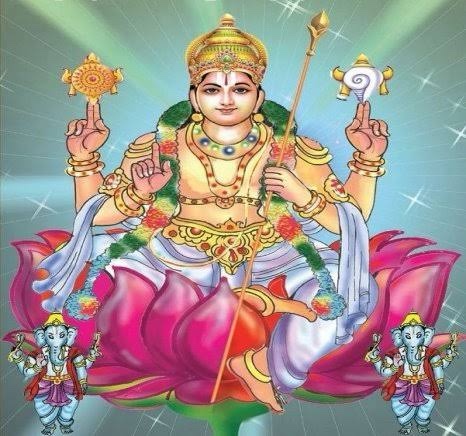
At the outset, let me state that as a Sri Vaishnava, I deeply revere Sri Viśvaksēna as a nitya‑sūri and an Ācārya‑figure in the Śrī‑vaishnava paramparā. Let there be no doubt.
It is only philosophical‑hermeneutical curiosity that leads me to ask a few questions on this celestial Acharya in this brief essay:
— Why has our sampradāya specifically inscribed his ācārya‑status in the Guru‑Paramparā‑vṛkṣa when other Vedāntic traditions do not?
— Why is the literal śruti‑smṛti‑pramāṇam label for him is not as explicit?
— And, in recent or past times, whether any Śrī‑vaishnava Ācārya or Vedic scholar explicitly addressed this as a saṁśaya?
Introduction:
The figure of Viśvaksēna occupies a curiously unique position in Śrī Vaishnavism: he is venerated as a nitya‑sūri and senādhīpati of Viṣṇu, yet not merely as a kaimkārin in the heavenly host—Śrī‑vaishnava guruparamparai‑texts inscribe him as an Ācārya‑figure, the third node in the Guru‑Paramparā‑vṛkṣa, placed between Śrī Lakṣmī and Nammāḻvār.
This insertion raises a series of intertwining questions:
— is there Vedāntic‑pramāṇam for treating him as an Ācārya;
— why is he elevated above other nitya‑süris such as Garuda in the sampradāya‑vṛkṣa;
— and how does the anādi (beginningless) revelation claim of the Guru‑Paramparā withstand historically sensitive scrutiny?
This essay below explores the theological‑function, scriptural‑reception, and socio‑historical‑construction of Viśvaksēna in Śrī Vaishnavism, mapping the Viśvaksēna‑puzzle from Vedas‑to‑Purāṇas‑to‑Pāñcarātra‑Āgama‑to‑guruparamparā‑literature, and situating it within the broader Vedāntic and Vaishnava landscape.
Abstract
This essay below examines the theological status of Viśvaksēna in the Guru‑Paramparā‑vṛkṣa of Śrī Vaishnavism (Viśiṣṭadvaita).
It addresses the following questions:
Why is Viśvaksēna—a nitya‑sūri and senādhīpati of Viṣṇu—inserted as an Ācārya‑figure in the Śrī‑vaishnava lineage when he is absent from the Vedas and not counted as an Ācārya in Advaita, Dvaita, or Gauḍīya‑Caitanya paramparās?
This essay analyses the scriptural‑pramāṇa‑status of his upadeśa, the Lakṣmī‑Tantram and Pāñcarātra‑reception, the Vāḍakalai‑Teṅkalai‑consensus‑on‑the‑vṛkṣa, and the anādi‑revelation‑question. It argues that the Guru‑Paramparā narrative is best understood as revelatory‑cum‑historically shaped: the content of the rahasya‑upadeśa stems from Sriman Nārāyaṇa (via Śrī Lakṣmī and nitya‑süris), while the institutional‑form of the vṛkṣa is codified by embodied Ācāryas (Nāthamuni, Yāmuna, Rāmānuja, Deśika, etc.), and accepted as paramparā‑pramāṇam in the sampradāya.
- Introduction: The Viśvaksēna‑Puzzle in Śrī Vaishnavism
In Śrī Vaishnavism, the Guru‑Paramparā‑vṛkṣa (Ācārya‑lineage) is not merely a genealogical record but a theological‑symbolic structure. The sampradāya accounts the vṛkṣa as:
• Anādi (beginningless):
Sriman Nārāyaṇa → Śrī Lakṣmī → Viśvaksēna → Nammāḻvār → Nāthamuni → Yāmunācārya → Rāmānuja → later Ācāryas.
• Revelatory:
The rahasya‑upadeśa‑flow from Nārāyaṇa to Śrī Lakṣmī to Viśvaksēna to Nammāḻvār and Nāthamuni is regarded as paramparā‑pramāṇam. - At the same time, several historical and hermeneutical puzzles emerge:
• Viśvaksēna appears in Purāṇic‑Pāñcarātra‑circles as the nitya‑sūri and senādhīpati of Viṣṇu, but not explicitly in the Vedic Saṁhitās;
• There is no Vedic‑Gāyatrī mantra to him, and no Śruti‑verse that directly states Lakṣmī imparted upadeśa to him;
• Other Vedāntic traditions (Advaita, Dvaita‑Madhva, Gauḍīya‑Caitanya, Rāmānandi) do not include him as an Ācārya in their guru‑paramparās; - Some scholars privately or peripherally ask:
“Why is Viśvaksēna in the Śrī‑vaishnava vṛkṣa if the structural‑pramāṇam‑for‑him is not as explicit as in other saints and Ācāryas?” - This essay tackles the Viśvaksēna‑puzzle from three angles:
Source‑theology: Is the Guru‑Paramparā‑vṛkṣa revealed; and, if so, whose revelation? Historiography‑cum‑hagiography: How did this vṛkṣa‑narrative come to be formulated? - Comparative‑siddhānta: Why is Viśvaksēna treated as an Ācārya in Śrī Vaishnavism alone, and not in other Vedāntic schools?
- Viśvaksēna: Nitya‑Sūri, Senādhīpati, and Ācārya‑Figure
Viśvaksēna in Purāṇic‑Āgamic‑Vaishnava Literature
Viśvaksēna (Vishvaksena) is identified in Purāṇa‑ and Pāñcarātra‑Āgama‑traditions as:
• The eternal commander‑in‑chief (senādhīpati) of Viṣṇu’s army,
• Gatekeeper and chamberlain of Vaikuṇṭa,
• An emanation of Viṣṇu’s suddha‑sattva‑śakti who safeguards the kaimkaryam of the heavenly hosts.
He is also linked to the transmission of Vishṇu‑dharma: in Pāñcarātra‑style texts, he is portrayed as the custodian of Viṣṇu’s tantras and dharmas in the Kali‑yuga.
Thus, Viśvaksēna emerges in broader Vaishnava circles as a nitya‑kaimkāri and administrative‑cosmic‑functionary of Viṣṇu, but not primarily as a guru‑to‑mortal Ācārya in the Śrī‑vaishnava sense.
7. Within Śrī Vaishnavism, Viśvaksēna is explicitly placed in the Guru‑Paramparā‑vṛkṣa as:
• The third foremost Ācārya in the Orāṇ‑Vazhi and Desika-sampradaya genealogy:
• Sriman Nārāyaṇa (first Ācārya),
• Śrī Lakṣmī (Periya‑Pirāṭṭi; second Ācārya),
• Viśvaksēna (third),
• A nitya‑sūri and “Ācārya‑in‑Vaikuṇṭa”, who mediates Bhagavat‑icchā and rahasya‑upadeśa between Śrī Lakṣmī and Nammāḻvār.
In Śrī‑vaishnava liturgy (e.g., Orāṇ‑vazhi‑pūjās), Viśvaksēna is invoked before Ganeśa‑pūjā as the senādhīpati who removes obstacles in kaimkaryam‑rituals; this is ritually grounded in Pāñcarātra‑texts and guruparamparā practise‑notes.
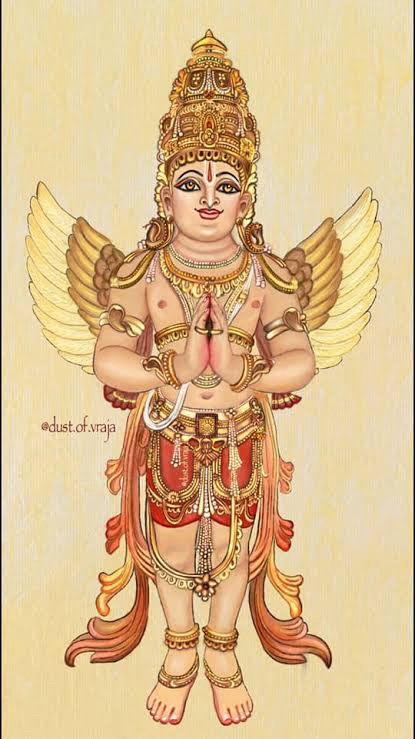
8. Viśvaksēna vs. Garuda: The Vedas‑Garuda‑Gayatrī‑Vishvaksēna Gap
• There is Vedic and post‑Vedic‑ritual symbolism of an pakṣi‑/śyena‑bird carrying the sacrificial fire; later Purāṇic‑Mahābhārata‑literature identifies this as Garuda, Viṣṇu’s vāhana and Vedasvarūpi.
• There are Garuda‑Gayatrī‑mantras in Smartha‑Vaishnava‑circles, but no Vedic‑Saṁhitā‑mantra named “Garuda‑Gayatrī” in the strictly Rig‑Vedic sense.
• In contrast, Viśvaksēna has no Vedic‑Saṁhitā‑mention and no Vedic‑Gayatrī‑mantra;
his name, nitya‑sūri‑status, and Ācārya‑position are known mainly from Pāñcarātra‑Āgama‑texts and later Śrī‑vaishnava‑hagiography.
Thus, Garuda has a stronger Vedic symbolic basis, while Viśvaksēna has a stronger Pāñcarātra‑Purāṇic hagiographical basis, yet the Śrī‑vaishnava guru‑paramparā awards the Ācārya‑node‑position to Viśvaksēna in the vṛkṣa, and not to Garuda. This asymmetry is a key hermeneutical question.
9. Source‑Theology: “Whose Revelation?”
The Anādi Claim
The Śrī‑vaishnava sampradāya treats the Guru‑Paramparā‑vṛkṣa as anādi (beginningless) in the sense that the original rahasya‑knowledge stems directly from Sriman Nārāyaṇa. This is paralleled by the trayī‑mantra‑and‑Dvayam revelation‑narratives:
• Thirumantra‑revelation to Nara‑Nārāyaṇa as the first Ācārya;
• Dvayam‑mantra‑revelation in Vaikuṇṭa as knowledge given by Sriman Nārāyaṇa to Śrī Lakṣmī;
• Tiruvāymoḻi‑style bhakti‑transmissions through nitya‑kaimkāris to humans (Nammāḻvār, Nāthamuni, etc.).
So, the ultimate reveler of the content of the Guru‑Paramparā is:
Sriman Nārāyaṇa Himself, the svatantra‑svāmī, whose kripā and svayam‑jñāna flow downward through śeṣas.
10. Immediate Conduit: Śrī Lakṣmī and Viśvaksēna
The Śrī Vaishnava texts (e.g., Rahasyatraya‑Sāram, Sri Vaishnava‑guruparamparā‑narratives) elaborate:
• Śrī Lakṣmī receives the dvaya‑rahasyam from Sriman Nārāyaṇa in Vaikuṇṭa;
• She, as samayam‑śakti, passes it on to Viśvaksēna, who then prepares the nitya‑kaimkaryam‑vibhūti for the future descent of the prapanna‑mantra‑line into the saṁsāra‑world.
There is no Vedic or Purāṇic śruti‑smṛti‑pramāṇam that explicitly states that Lakṣmī imparted upadeśa to Viśvaksēna. The idea that Lakṣmī → Viśvaksēna → Nammāḻvār → Nāthamuni → … is a succession of upadeśa is found only in Śrī‑vaishnava Āgama‑Pāñcarātra‑paramparā literature and later sampradāya‑narratives, not in a clear verse in the Vedas or major Purāṇas.
Nonetheless, the direct channel of the revelatory‑link between Nārāyaṇa and the mortal‑Ācāryas (via Nammāḻvār and Nāthamuni) is held to be:
Śrī Lakṣmī → Viśvaksēna → Nammāḻvār → Nāthamuni → Yāmunācārya → Rāmānuja → later Ācāryas.
Viśvaksēna here functions as the cosmic‑administrator‑and‑rahasya mediator: he is not independent, but an empowered agent of Viṣṇu’s icchā, embodying seśatva and dāsabhūtattva.
The encounter between Viśvaksēna and Nammāḻvār is not a dramatic meeting‑narrative in the Vedas or core Śrīmad Bhāgavatam‑style; it is primarily found in Śrī‑vaishnava hagiography and Āḻvār‑tradition, and usually described in later sthala‑purāṇas, guru‑paramparā‑contextual notes, and Ācārya‑commentaries more than in one fixed “chapter.”
Nevertheless, the sampradāya story‑line runs like this:
- Setting:
Nammāḻvār, as a child, withdrew into deep samādhi under the tamarind tree in Tirukurughūr (Alwar Tirunagari) and remained in ātma‑anubhava, not speaking or moving for twelve years. The gopīkā‑nivasam (his parents’ household) was helpless; no ordinary guru could awaken him. - Role of Viśvaksēna:
The nitya‑sūri Śrī Viśvaksēna, on the command of Bhagavān, descended to Tirukurughūr to awaken Nammāḻvār’s inner realisation and, in a sense, to function as his rahasya‑upadēśaka‑figure (esoteric‑instructor).
He approached the boy under the tree and addressed him, shaking him gently from his internal absorption without destroying the bhakti‑anubhava. - Spiritual ‑ not worldly ‑ instruction:
Viśvaksēna did not give him a list of rules or mantras in the way a Pāñcarātra‑guru gives pañca‑saṁskāra;
rather, he opened the inner flood‑gates of Divya‑Kṛṣṇa‑bhakti and the rahasya‑artha of nāma‑guṇa‑līlā‑Kṛṣṇa‑Viṣṇu, which then spontaneously flowed out as the Tiruvāymoḻi compositions of Nammāḻvār.
This encounter is not in the Ṛg‑Veda or Mahābhārata; it is preserved in Śrī‑vaishnava tradition through (a) Ācārya‑literature and guruparamparā‑vṛkṣam texts that mention how Viśvaksēna initiated Nammāḻvār into rahasya‑siddhi (esoteric realisation)
(b) Local Tirukurughūr‑purāṇa / sthala‑purāṇa accounts and (c) Āḻvār‑kōvils’ traditional stories that recount the “Viśvaksēna’s awakening of Nammāḻvār” event.
Some Ācārya‑speech‑transcripts and Sri Vaishnava‑lecture‑notes also record Ācāryas narratives on how Viśvaksēna caused the dvayam‑level bhakti to emerge in Nammāḻvār, who then delivered Tiruvāymoḻi.
11. Historical‑Embodied Codifiers:
Nāthamuni, Yāmuna, Rāmānuja, Deśika
While the theology insists on anādi‑revelation, scholars and Ācāryas also recognise that:
• The written and institutional form of the Guru‑Paramparā‑vṛkṣa was shaped historically between the 10th–14th centuries.
• Nāthamuni: Recovered the Nālāyira‑Divya‑Prabandham; Integrated Alvar‑Tamil‑bhakti with Sanskrit‑Vedāntic‑siddhānta, and thus became the first identifiable Ācārya around whom the Śrī‑vaishnava‑guru‑vṛkṣa begins to look “institutional”.
• Yāmunācārya and Rāmānuja: Structured Viśiṣṭadvaita doctrine; and wrote Śrī‑Bhāṣya‑and‑Gītā‑Bhāṣya‑level commentaries; and were the nodes around whom the paramparā‑narrative acquires authoritative‑theological hegemony.
• Vedānta Deśika and Manavāla‑Māmunigal: Further systematised prapatti, mokṣa, nitya‑kainkaryam‑doctrines; restated the Guru‑Paramparā‑vṛkṣa in Thanian‑style verses and ācārya‑vandana‑praktise, which later mutts (Andavan, Parakala, Ahobila, etc.) institutionalised.
In this way, the revelation is from Bhagavān (via Śrī Lakṣmī and Viśvaksēna), but the institutional‑narrative of the vṛkṣa is formulated by the embodied Ācāryas.
12. Historiography and Hagiography: How the Vṛkṣa Came to Be Formulated
Scholars and Śrī‑vaishnava guruparamparai writers argue that the Guru‑Paramparā‑vṛkṣa‑narrative is not a chronological record, but a theologically‑and‑historically‑shaped genealogy. Their key observations include:
— Nāthamuni as the Prathama‑Pratyakṣa‑Ācārya‑Node:
No living Śrī‑vaishnava academic‑scholar will deny the anādi‑theology; many, however, admit that the historical story of the lineage begins to look concrete with Nāthamuni, who recovered the Divya‑Prabandham and unified Tamil‑Alvar and Sanskrit‑Vedāntic streams.
— Rāmānuja as the Canoniser of the Vṛkṣa: Rāmānuja received the siddhānta from Mahāpūrṇa‑Peria‑Nambi and Yāmunācārya; wrote Śrī‑Bhāṣya‑ and Gītā‑Bhāṣya‑level works; and institutionally stabilised, finally, the Viśiṣṭadvaita acharya lineage into a clear guru‑paramparā.
CONCLUDED
Sudarshan Madabushi