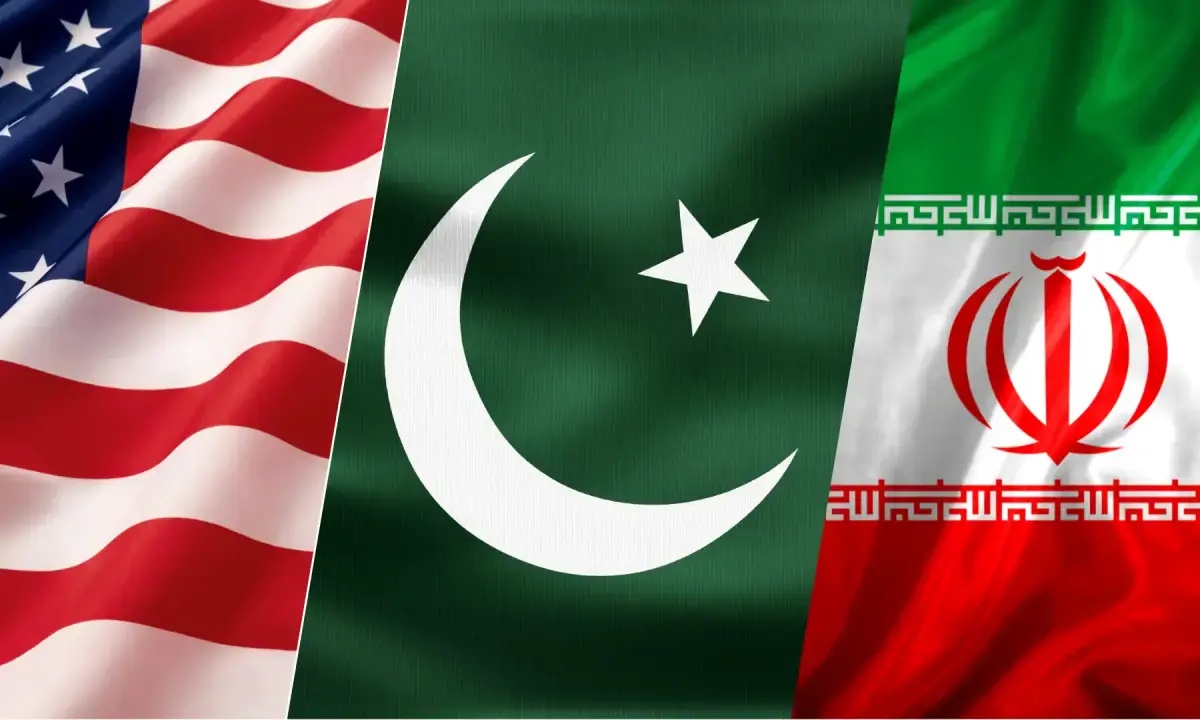
Pakistan’s emergence as an intermediary between the United States and Iran is a calculated attempt to position itself as an indispensable middle power, though this strategy carries profound geopolitical and internal risks. By leveraging its unique connections to both Tehran and Washington, Islamabad aims to offset regional strategic pressures and enhance its global standing, even as it navigates a narrow path between competing alliances.
Geopolitical Risks and Balancing Acts
Pakistan’s mediation effort is not a naive pursuit of “angelic” diplomacy but a strategic maneuver to exploit the current regional vacuum and establish itself as a necessary interlocutor. However, this positioning exposes the nation to significant hazards:
• Exposure to Conflict: If regional tensions escalate beyond the current threshold, Pakistan faces immense pressure to abandon its neutrality and align more closely with Saudi Arabia, risking kinetic retaliation from Iran.
• Great Power Entanglement: Pakistan is caught in the crossfire of broader rivalries between the United States and China, as well as the hardening blocs involving Israel, the UAE, and Iran. Balancing these competing demands limits Islamabad’s maneuverability and complicates its security architecture.
• Domestic Sectarian Fragility: The most volatile risk lies internally, where Middle Eastern geopolitical rivalries have historically sharpened sectarian identities. Proxy dynamics, particularly regarding the Saudi-Iran rivalry, have exacerbated Sunni-Shia tensions within Pakistan, threatening the nation’s own stability.
The Mediator’s Dilemma
While Pakistan has managed to facilitate communication channels, its role remains highly contingent on the shifting whims of the primary belligerents. President Trump’s recent decision to cancel an envoy trip to Islamabad highlights the fragility of this mediation, demonstrating that while Pakistan may provide a valuable platform for backchannel diplomacy, its influence is often secondary to the strategic calculations of Washington and Tehran. Pakistan’s policy is essentially a high-stakes balancing act; success offers a pathway to regional prominence, but failure risks drawing the country deeper into conflicts it is poorly equipped to manage.
Ramifications for India if Pakistan succeeds or fails
If Pakistan succeeds, what ramifications will be felt by India and South Asia ? And if it fails what could be the fallout for India ? Is India in a geopolitical Catch 22 situation?
The potential outcomes of Pakistan’s mediation efforts in the U.S.-Iran conflict present a complex strategic landscape for India, where the distinction between “winning” and “losing” is mediated by the broader regional need for stability.
The implications for India depend on the degree of success or failure of these diplomatic initiatives:
• If Mediation Succeeds: A successful stabilization of the region would be a net positive for India, even if it enhances Pakistan’s diplomatic prestige. Reduced tensions in West Asia translate to more secure energy transit routes, protection for the Indian diaspora, and a less combustible neighborhood, all of which align with India’s core strategic interests.
• If Mediation Fails: The fallout for India would be largely characterized by the regional consequences of a failed peace process rather than the failure of the mediator itself. A collapse of these talks, followed by escalated hostilities, would increase energy price volatility, threaten maritime trade in the Gulf, and potentially destabilize India’s border regions through a surge in sectarian or militant activity.
The Geopolitical Catch-22
India is not necessarily in a traditional “Catch-22,” but it is navigating a sophisticated strategic paradox:
• Constraint vs. Opportunity: India faces the challenge of being a major regional player while remaining largely absent from the primary mediation framework, which risks perceived marginalization. However, this restraint allows New Delhi to maintain its principled, neutral stance, preserving its ability to engage with all stakeholders (Israel, Iran, the UAE, and the U.S.) without becoming an explicit party to a volatile, high-stakes negotiation.
• Strategic Autonomy: While critics suggest India’s absence from the mediation frame reflects a loss of influence, New Delhi’s proactive crisis management—such as the evacuation of its citizens and high-level engagement with regional leaders—underscores its preference for pragmatic, bilateral diplomacy over the high-risk, high-visibility mediation path chosen by Pakistan.
In essence, India’s approach is a calculated effort to insulate itself from the immediate volatility of the U.S.-Iran conflict while ensuring its national interests—economic security and the welfare of its citizens—are protected through independent, state-level diplomacy.
If Pakistan wants to fish in troubled waters, it’s really none of India’s business. When the fish is finally hauled out of the West Asian trawler now out there in the perilous high seas , and the catch is brought home somehow to market, India will, of course, be there, all ready and eager to buy it.
Sudarshan Madabushi