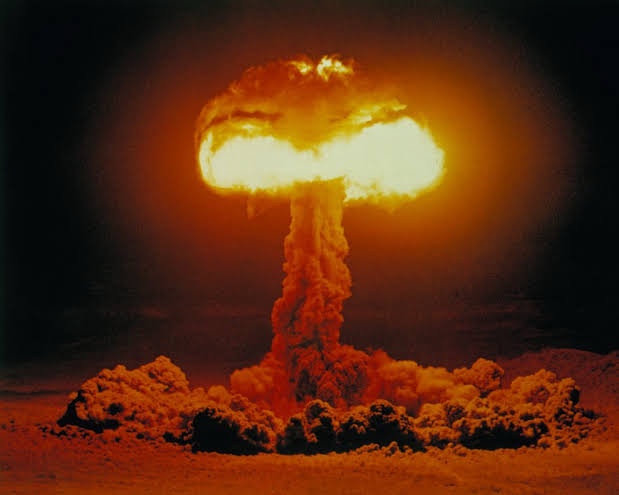
As attritional wars harden in the world today, nuclear restraint is fraying — risking a shift from deterrence to mutually assured destruction to collective annihilation. The trajectory is portentous.
M.K.Sudarshan
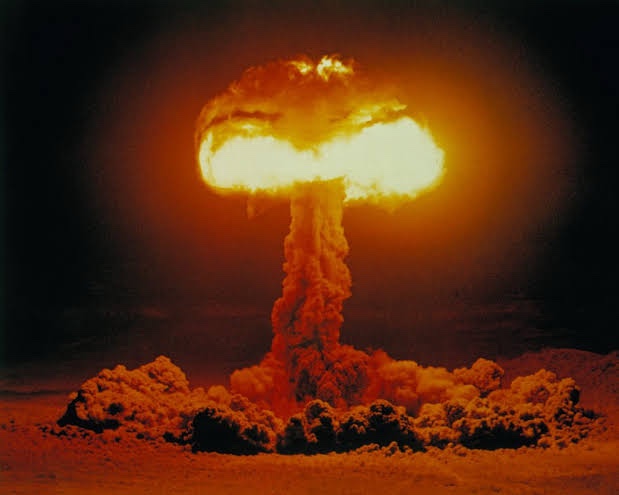
Origins of deterrence
Since Hiroshima and Nagasaki, the logic of safety through threat has governed great‑power strategy. Watching the United States end the Second World War with atomic bombs, Britain, France, the Soviet Union and later China rushed to acquire the same terrifying capability. Deterrence — the promise of retaliation so devastating that no rational adversary would strike first — became the organizing principle of national security in an anarchic international system.
The Cold War’s dark turn
But deterrence did not remain a humble, stabilizing idea. During the long Cold War, the race between Washington and Moscow morphed into something far darker: the pursuit of offensive capacity sufficient to render the opponent’s society uninhabitable. What began as a defensive posture hardened into the doctrine of Mutually Assured Destruction (MAD). No longer was deterrence merely protection; annihilation assumed center stage. The willingness to end civilization itself became the surest guarantor of survival.
Middle powers’ security calculus
That shift alarmed middle powers. For countries with genuine security fears — Israel, India, Pakistan, North Korea — nuclear arms offered an irresistible guarantor of survival against both regional foes and distant, hegemonic rivals. Nuclear status signaled that aggression would carry an existential cost. Smaller states observed and learned: nuclear weapons promised insulation from the vulnerabilities of non‑nuclear life in a world where no supranational authority could reliably protect the weak.
The NPT’s fragile bargain
The United Nations and the Nuclear Non‑Proliferation Treaty attempted to arrest this centrifugal logic. The NPT asked non‑nuclear states to forgo weapons in exchange for peaceful benefits and the promise — implicit and explicit — of security assurances. Many acceded in good faith. Others, from Iran to Libya, either rejected the bargain or pursued covert routes to acquire capability, rightly wary that the nuclear “club” might not always defend them when it mattered.
Technology and anarchy undermine it
Two technological and political realities undermined the bargain. First, nuclear know‑how and delivery systems proliferated; they grew ever more accessible. Second, global politics remained, and remains, anarchic. Institutions proved insufficiently robust to guarantee the security non‑nuclear states sought.
Non‑proliferation was therefore always a fragile equilibrium, enforced by inspection regimes, sanctions and, when necessary, force — instruments that are themselves political and imperfect.
Post‑9/11 fragility and new wars
After 9/11, amid the wars in Afghanistan and Iraq and the diffusion of asymmetric threats, the international system grew yet more combustible. Terrorist groups dreamed of “dirty” devices, states hedged their bets, and the moral threshold against nuclear use frayed. In the post‑2008 financial crisis world and in the wake of the COVID pandemic, geopolitics became more brittle. That fragility has now converged with two prolonged, attritional conflicts: Russia’s war in Ukraine and the broader and still‑evolving confrontation centered on Iran and Israel.
Erosion of the nuclear taboo
Both conflicts, now years old, have shown the limits of conventional warfare to produce decisive outcomes. As military stalemates harden, public and elite discourse in multiple capitals has dipped its toe into previously unthinkable waters. In Washington, Paris, and Berlin, some strategists regard the specter of nuclear use as a possible, if terrible, pathway to endgames. In Moscow, voices urging decisive escalation against Ukraine — including talk of targeting cities to shock adversaries into submission — no longer sound beyond the pale. And rhetoric from leaders involved in the Middle Eastern conflagration suggests an erosion of the taboo that once made nuclear use unthinkable.
From MAD to CAD
This is a consequential downward slide. What took a few decades to harden — deterrence into annihilation — has, in the space of a generation, edged toward normalization of indiscriminate nuclear threat. Where Cold War logic made restraint contingent on the prospect of reciprocal destruction, today’s politics risks making escalation almost compulsive: the more wars of attrition drag on, the more actors may see nuclear employment as the only means to break them. Deterrence would no longer “deter” so much as justify escalation. Call it the shift from MAD to CAD: Collectively Assured Destruction.
Consequences and remedies
The consequences are obvious and terrifying. Nuclear weapons do not deliver tidy, surgical results. Even a “limited” use risks catastrophic humanitarian, environmental and economic fallout well beyond the battlefield. Radioactive contamination crosses borders; climate and agricultural shocks follow; global markets convulse; refugee flows surge. In a hyper‑connected world, the local use of nuclear arms would produce global catastrophe.
What must be done
What, then, must be done?
First, leaders must unequivocally restore the nuclear taboo. Public rhetoric matters. When presidents, prime ministers and ministers normalize the “possibility” of nuclear use, they lower thresholds for dangerous miscalculation.
Second, the great powers must recommit to arms‑control architecture. That does not mean naïve faith in institutions, but pragmatic renewal: new treaties, verifiable constraints on tactical nuclear deployments, and clear “no‑first‑use” commitments where feasible.
Third, middle and smaller powers need credible security assurances that reduce the perceived utility of independent nuclear hedges — strengthened defensive alliances, regional non‑proliferation guarantees and cooperative security mechanisms.
Fourth, strengthen non‑proliferation enforcement intelligently: more targeted diplomacy, consistent inspections, and calibrated incentives that make the NPT bargain preferable to clandestine arms races.
Restoring statesmanship
Finally, the international community must re‑weave political incentives that make war termination through negotiation preferable to annihilation. That requires investment in conflict mediation, economic reconstruction, and credible sequenced pathways for security and dignity for all parties in a dispute.
A final warning
The old paradox remains: nuclear weapons made war between great powers less likely for decades, and yet their existence also created the risk of total human extinction. We now face a moment when the restraint that kept catastrophe at bay is eroding. The choice is stark, and the time for rhetoric has passed. Statesmanship must reassert limits on an instrument that knows no limits. If global leaders fail to act, we will not merely return to the dark logic of MAD — we will arrive at something worse: a world in which destruction is collectively assured.
M.K.Sudarshan