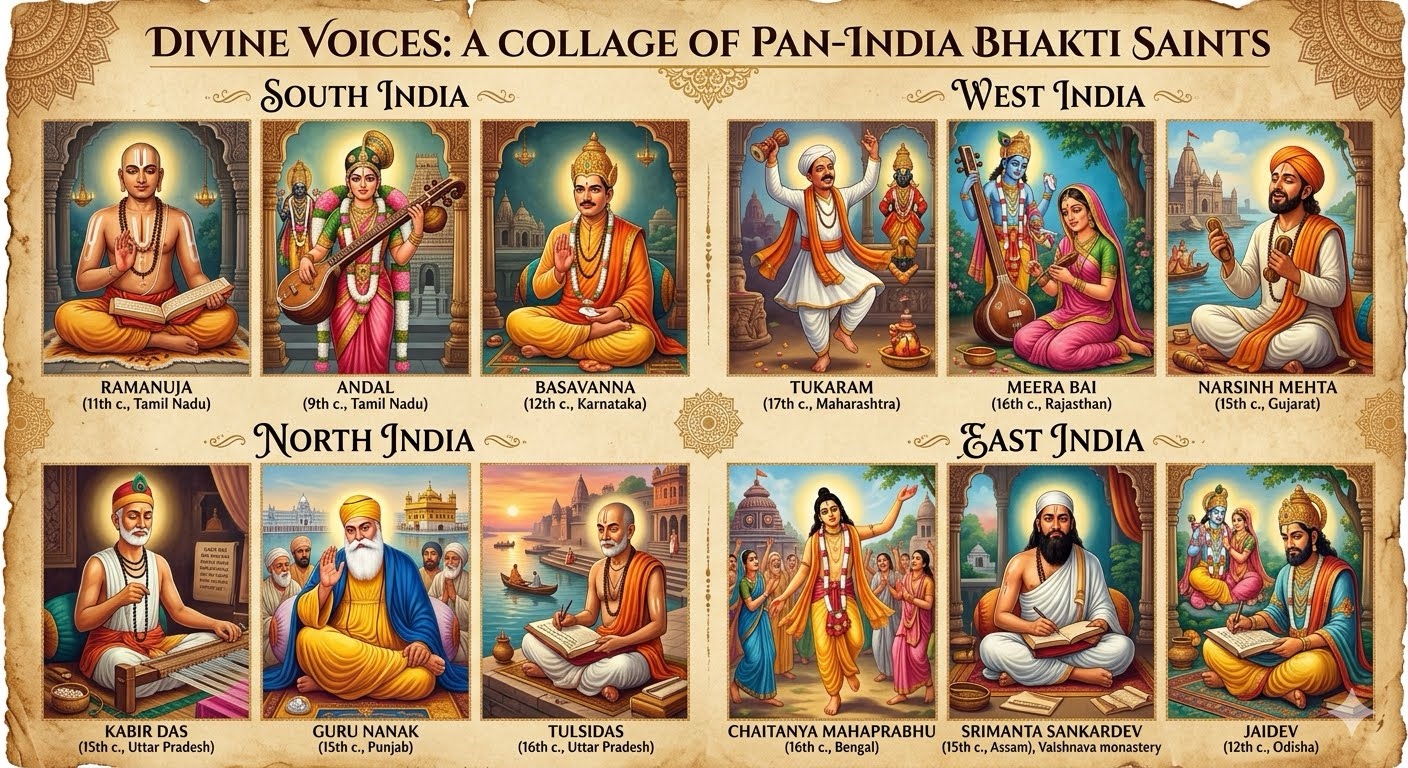
When Dravidianists attack Sanatana Dharma, they unknowingly attack Bhakti—the ancient devotional thread that has united all of India for millennia.
– Part I –
The Dravidianist Ideology Behind Udayanidhi Stalin’s Attack on Sanatana Dharma
In a sensational speech in the Tamil Nadu Legislative Assembly in early 2026, Udayanidhi Stalin, the Leader of the Opposition and son of DMK supremo M.K. Stalin, called for the “eradication of Sanatana Dharma,” equating it with diseases like mosquitoes, dengue, and coronavirus. He stated that “like mosquitoes, like dengue, like covid, it has to be completely wiped off the face of the earth.” His rhetoric included calls to “finish off all temples” and described the ideological proponents of Sanatana Dharma as enemies to be eliminated.
This inflammatory statement is not an isolated outburst but reflects the fundamental Dravidianist ideology that has long propagated anti-Brahminism, anti-Aryan narratives, and South-North Indian great cultural rift. The Dravidian movement, born in early 20th century Tamil Nadu, has consistently framed Sanatana Dharma as “Aryan cultural imperialism” imposed upon indigenous Dravidian peoples by Brahmin invaders from the North.
The ideological framework is clear: Dravidianists claim that what is called “Hinduism” or “Sanatana Dharma” is actually a foreign imposition that erased the indigenous cultural identity of South India, creating a false pan-Indian identity through caste oppression and Brahminical orthodoxy. This narrative posits a fundamental North-South civilizational divide where the North represents Aryan/Brahminical/oppressive culture and the South represents Dravidian/indigenous/anti-caste culture.
Udayanidhi Stalin’s rhetoric follows this script precisely. By calling for the “eradication” of Sanatana Dharma, he is not merely critiquing caste discrimination or ritualistic orthodoxy—he is attacking the very foundation of Hindu religious practice, including temples, pujas, and devotional worship. His language reveals that the target is not just “Brahminical oppression” but Hinduism itself.
However, this ideological framework contains a fundamental contradiction that cannot be resolved by rhetorical sleight-of-hand: it cannot distinguish between “Brahminism” and Bhakti because Bhakti is embedded in the very texts and traditions Dravidianists claim to oppose.
– Part II –
Bhakti—From Pre-Vedic Devotional Emotion to Pan-Indian Mass Movement
The Ontological Roots of Bhakti
To understand why Udayanidhi Stalin’s defense (that he targets only Brahminism, not Bhakti) is logically impossible, we must first understand what Bhakti actually is.
Bhakti, in its deepest sense, is the emotion of overwhelming adulation, devotion, and gratitude toward a divine cosmic spirit to which one naturally feels worshipful. Scholars have long recognized that “Bhakti also had pre-Aryan origins”: “Bhakti existed prior to the Vedic tradition and alongside it.” Buddhist bhakti (bhatti in Pali) “had its beginnings in the earliest days” and was “an integral part of the Buddhist ideal from the earliest times,” in spite of breaking away from Vedic tradition.
The devotional emotion (bhāva) is a universal human spiritual response that predates organized religious systems. Archaeological evidence from the Indus Valley Civilization shows Shaiva symbolism (Pashupati seal) and devotional practices predating Vedic civilization. In Sangam Tamilakam (300 BCE–300 CE), devotional worship to Murugan, Amman, and Vishnu existed before Vedic Sanskritization.
However, Bhakti as a named, systematized spiritual path appears largely only in Vedic/post-Vedic texts. The Shvetashvatara Upanishad (c. 400–200 BCE) is groundbreaking because it contains the first explicit use of the word “bhakti” in verse 6.23: “yasya deve parā bhaktiḥ” (“he who has highest devotion to God”). This Upanishad revolutionized early Vedic worship by:
- Shifting from external sacrifice to internal meditation and yoga
- Introducing Ishvara (personal God) as both immanent and transcendent
- Elevating Ishvara to supreme being and giving him auspicious epithets (benevolent)
- Declaring God is hidden in all beings as inner Self, accessible to all regardless of caste or gender
The Bhagavad Gita (2nd century BCE–2nd century CE) then explicitly designated bhakti as one of three primary spiritual paths (bhakti yoga alongside karma yoga and jnana yoga), making it central to Sanatana Dharma.
The Bhakti Movement in South India
The Bhakti movement as an organized mass movement originated in Tamilakam during the 6th–7th century CE, centuries before it spread to North India. This movement was led by:
- The Vaishnava Alvars (12 poet-saints, including Andal) who composed 4,000 verses compiled as the Nalayira Divya Prabandham
- The Shaiva Nayanars (63 saints, including Appar, Sambandar, Sundarar) who composed the Tevaram hymns
These saints:
- Wrote in vernacular Tamil (not Sanskrit), making devotion accessible to all castes and genders
- Challenged caste barriers and offered spiritual salvation to shudras and women
- Created devotional literature that became pan-Indian scripture
Ramanuja (11th century CE), a Srivaishnava Brahmin, then integrated Tamil bhakti into Vedanta through his philosophy of Vishishtadvaita, making Tamil bhakti part of pan-Indian Sanatana Dharma.
Bhakti in North, West, and Eastern India
Critically, devotional worship existed across all regions long before the organized Bhakti Movement:
North Krishna devotion in Mahabharata (2nd century BCE); Bhagavad Gita’s bhakti yoga (2nd century BCE–2nd century CE);
East Haridasi traditions, early Shaiva/Vaishnava devotionalism;
West Lingayat, Varkari traditions; early Shaiva temples;
Buddhism/Jainism: Bhakti to Buddha, bodhisattvas, and Tirthankaras from earliest times
The Bhakti movement spread from South to North (7th–18th century CE), not uniformly pan-Indian from the start, but local devotional traditions always existed everywhere.
Saints like Tulsidas (North), Mirabai (Rajasthan), Kabir (Bihar), Surdas (Uttar Pradesh), Vallabhacharya (Gujarat), Chaitanya (Bengal), and Eknath/Tukaram (Maharashtra) all represented bhakti traditions that were not necessarily Brahminical or votaries of Vedic orthodoxy.
The key insight: Bhakti transcended language, caste, and orthodoxy while remaining embedded in Sanatana Dharma’s philosophical framework.
– Part III –
Bhakti as the Pan-Indian Cultural Glue That Unites All of Bharatavarsha
Beyond Language, Geography, and Ethnicity
Bhakti is the cultural glue that historically united all peoples of India, irrespective of language, geography, and ethnicity. Here’s how:
Dimension of Diversity How Bhakti Unifies:
— Political diversity Multiple kingdoms, dynasties, languages (Sanskrit, Tamil, Prakrit, Pali, Bengali, Marathi, Gujarati)
— Linguistic diversity Dravidian languages (Tamil, Telugu, Kannada, Malayalam) + Indo-Aryan (Sanskrit, Hindi, Bengali, Marathi)
— Deity diversity Shiva, Vishnu, Devi, Murugan, Ganesha, local deities
— Philosophical diversity Advaita, Vishishtadvaita, Dvaita, Samkhya, Yoga
— Caste/gender diversity Brahmins, shudras, women, outcastes
— Religious diversity Hinduism, Buddhism, Jainism, Sikhism
The Shared Cultural Memory
Bhakti created pan-Indian cultural unity through:
- Shared mythologies: Ramayana and Mahabharata told and retold across all regions, languages, and traditions
- Pilgrimage circuits: Char Dham, 12 Jyotirlingas, 108 Divya Desams, 51 Shakti Peethas created geographic unity
- Devotional practices: Kirtan, darshan, prasad, aarti, bhajan became universal Hindu practices
- Philosophical framework: Concepts of dharma, karma, moksha, reincarnation created shared worldview
- Temple culture: Temples as centers of community, art, music, and devotion across all regions
The invisible cultural glue that united all peoples of Bharatavarsha was thus not predominantly Vedic Sanskrit orthodoxy (which was elitist and priest-mediated) but bhakti—the universal devotional emotion expressed in local languages, accessible to all, creating a countrywide brotherhood of values, ways of living, customs, rituals, and collective cultural memories.
Challenging the Aryan-Dravidian Divide
The Dravidianist claim of a fundamental North-South civilizational rift is historically false because:
- The Aryan-Dravidian divide is a colonial construct without archaeological, genetic, or historical basis
- Bhakti existed in both North and South before Sanskritization; Tamil Alvars drew from Vedic Vishnu traditions (Kṛṣṇa Yajurveda)
- Tamil bhakti spread to North India through Sanskritization and became pan-Indian Hinduism
- Brahmins are not monolithic—many were anti-caste Bhakti saints (Nathamuni, Ramanuja, Vedanta Desika, Swami Vivekananda)
- Bhakti transcended caste (Andal was woman, Nandanar was shudra, Mirabai was queen who rejected luxury)
The scholarly consensus is thus quite clear: “Theories propounded by Aryanists and Dravidianists are utterly groundless and mere dreams of very learned men”; “The entire Aryan paradigm rests on a faulty set of academic presumptions.”
– Conclusion –
When Denigrating Sanatana Dharma, You Denigrate All of India’s People
When Dravidianists like Udayanidhi Stalin deny and denigrate Sanatana Dharma, they are either unwittingly or deliberately denigrating pan-Indian Bhakti traditions which do not by any stretch of sophistry exclude Brahminism.
The logical impossibility is inescapable:
- Bhakti is Sanatana Dharma (embedded in Vedas, Upanishads, Gita, Puranas)
- Brahmins propagated Bhakti (Alvars, Nayanars, Ramanuja, Nathamuni were Brahmins)
- Temples are Bhakti centers (which Udayanidhi said to “finish off”)
- Tamil Nadu is Bhakti’s cradle (6th–7th century CE Alvars/Nayanars)
Therefore, when you denigrate Sanatana Dharma, you end up denigrating the peoples of all India—not just North Indians or Brahmins, but Tamil devotees who worship Meenakshi, Ramanathaswamy, and Tirupati; Bengali devotees who worship Chaitanya and Krishna; Marathi devotees who worship Viththal; Gujarati devotees who worship Krishna; Punjabi Sikhs who practice bhakti through Guru Granth Sahib.
Bhakti is the shared heritage of all Indians. To attack it is to attack the cultural identity of billions across all regions, languages, and castes.
The Danger of Crossing into Anti-National Territory
There is a profound danger in this rhetoric: when you deny the cultural unity of India, you cross the border into anti-national territory.
If India was always culturally one through bhakti, even when politically fragmented, then:
- Denying this unity = denying India’s civilizational identity
- Attacking Sanatana Dharma = attacking the cultural glue that holds India together
- Promoting North-South divide = promoting civilizational fracturing
- Calling for “eradication” of Hinduism = advocating destruction of India’s cultural fabric
The Dravidianist narrative may frame itself as “anti-caste” or “anti-oppression,” but when it calls for the eradication of Sanatana Dharma itself, it becomes anti-cultural, anti-historical, and ultimately anti-national.
The Path Forward
Instead of division, India needs unity through bhakti—recognizing that:
- Bhakti is pre-Vedic, indigenous, and universal to all of Bharatavarsha
- Bhakti transcends language, caste, and orthodoxy while remaining embedded in Sanatana Dharma
- Bhakti created pan-Indian cultural unity through shared devotional practices, pilgrimage circuits, and collective memories
- Bhakti is not Brahminical imperialism but democratic devotion accessible to all
The true Indian identity is not “Aryan vs. Dravidian” or “North vs. South” but Bhakti as the shared spiritual heritage that united all peoples of Bharatavarsha across millennia.
To deny this is to deny what makes India, India—and to cross the line from political critique into civilizational self-destruction.
The bottom line: Udayanidhi Stalin cannot cleverly defend himself by saying “I only oppose Brahminism, not Bhakti” because the two are inseparable. When he attacks Sanatana Dharma, he attacks the Bhakti traditions of all Indians—Tamil, Hindi, Bengali, Marathi, Gujarati, Punjabi, Telugu, Kannada, Malayalam alike. In doing so, he undermines the cultural unity of India itself and crosses into territory that threatens the nation’s civilizational integrity.
Sudarshan Madabushi