“Tabula Occulta”: Intentional Reciprocity in the Bhagavad-gītā, Viśiṣṭādvaita, and the Phenomenology of Divine Revelation

🕉️ New Essay: “Intentional Reciprocity”

What if Bhagavad-gītā 4.11 is not just a theological promise—but a metaphysical principle about the structure of consciousness itself?

Kṛṣṇa says: “In whatever way one worships Me, I reciprocate accordingly.”

Read through the lens of Edmond Husserl’s phenomenology and Rāmānuja’s Viśiṣṭādvaita, this verse reveals a profound truth:

✅ Consciousness is never ex nihilo—it’s eternally self-luminous.

✅ But its intentional reach (dharma-bhūta-jñāna) expands or contracts according to karma.

✅ Divine manifestation is proportional to the karmically shaped intentionality of the devotee.

✅ The real risk isn’t ex nihilo; it’s ex occulto—Bhagavān present but unrevealed.

For readers who love comparative philosophy, Vedānta, phenomenology, and the metaphysics of bhakti.

Three Words, One Surrender:

In Srīvaiṣṇava thought, three words keep appearing together: śaraṇāgati, prapatti and nyāsa. Are they synonyms? Not exactly.

Set on the Tirumala hills during a pilgrimage to the temple of Venkaṭeśvara, this dialogue between an American professor of Indian Religious Studies and an unknown Srīvaiṣṇava pilgrim explores their distinctive shades of meaning.

Śaraṇāgati names the heart’s turn to God—the bhakti inflection point of taking refuge.

Prapatti is that surrender developed as a complete upāya, with doctrine, inner disposition, and often ritual.

Nyāsa is the Vedic ideal of self‑entrustment, crystallised in the Mahānārāyaṇa Upaniṣad’s recurring prapadye mantras.

The dialogue also asks whether the wide presence of śaraṇāgati in Advaita, Dvaita, Śaiva Siddhānta, Gauḍīya Vaiṣṇavism, and modern devotional movements makes it a Srīvaiṣṇava borrowing or possession. Its answer is no: surrender is a shared Vaidika–Vedāntic spiritual grammar, though each tradition gives it a different metaphysical and soteriological accent.

Srīvaiṣṇavism’s distinctive contribution lies in its unusually exact and comprehensive articulation of the principle through prapatti and nyāsa.

Moving through the stories of Vibhīṣaṇa, Draupadī, Arjuna, Bharata and Kākāsura, the conversation shows how “coming to refuge”, “surrendering” and “placing oneself in God’s hands” can be read as different facets of one profound movement of the soul toward the Divine.

How Visishtadvaita Distinguishes Between Ego-Bashing and Ego-Massaging : விசிஷ்டாத்வைதம் காட்டும் வழி: அகந்தையை ஒடுக்குவதா? வளர்ப்பதா?

Is your ego an enemy to crush or a spark to celebrate? Visishtadvaita Vedanta reveals a beautiful middle path: aligning individual choice (Sankalpam) with divine service. Read the full bilingual (English/Tamil) breakdown featuring the story of Vibhishana.

Discover why Sri Ramanuja’s Visishtadvaita Vedanta rejects both crushing and inflating the Ego. Learn how Svarupa-Jnana aligns the self toward Moksha.

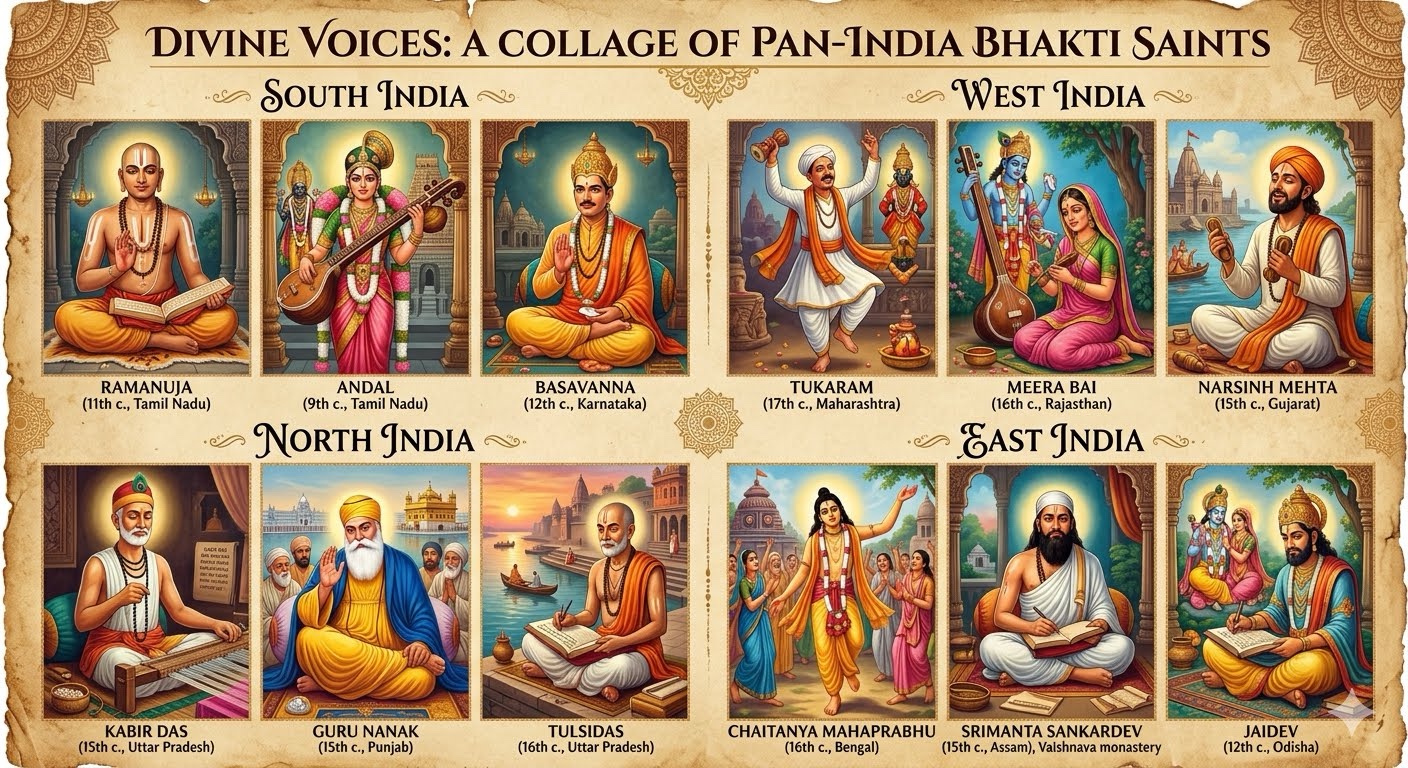
The Cultural Glue of Bharat: Why Bhakti Unites India While Dravidianism Divides (An Essay in 3 Parts)

When Dravidianists attack Sanatana Dharma, they unknowingly attack Bhakti—the ancient devotional thread that has united all of India for millennia. – Part I – The Dravidianist Ideology Behind Udayanidhi Stalin’s Attack on Sanatana Dharma In a sensational speech in the Tamil Nadu Legislative Assembly in early 2026, Udayanidhi Stalin, the Leader of the Opposition andContinue reading “The Cultural Glue of Bharat: Why Bhakti Unites India While Dravidianism Divides (An Essay in 3 Parts)”