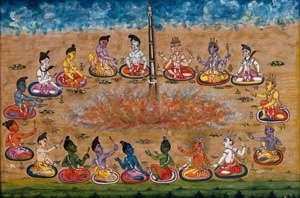

The story of the Hindu yajna tradition in modern India is not merely the story of a ritual form in decline. It is the story of a civilizational inheritance that has gradually lost its centrality in the public religious imagination even while retaining immense scriptural prestige.
The older Vedic world placed yajna at the heart of the cosmic, social, and spiritual order; yet in contemporary Hindu life, the sacrificial fire often survives only in reduced domestic rites, occasional temple homas, or rare specialist performances, while the public center of religion has shifted decisively toward temple worship, festival spectacle, devotional recitation, and institutional liturgy.
This decline should not be misunderstood as proof that yajna was somehow dispensable to Hindu tradition. On the contrary, the survival of yajna across millennia testifies to its former centrality. The more accurate conclusion is that Hindu ritual culture underwent a long and consequential transformation. Agamic modes of worship did not abolish yajna; rather, they re-situated ritual authority by moving the center of sacred action from the sacrificial enclosure to the consecrated icon, the temple, and the liturgical calendar. In this transformation, the fire altar ceased to be the dominant public theatre of religion, while puja, arcana, procession, recitation, and utsava came to define the religious life of the community.
In our own state of Tamil Nadu, the tradition of yajna was widely prevalent in historical Sangam period times . The noted Tamil scholar Sri Indira Parthasarathy (Eepa) pointed out to me the name of Palyagasalai Mudukudumi Peruvazhuthi who was traditionally regarded as one of the early Pandya kings of the Sangam age. His very title, “Palyagasalai,” (“பல்யாகசாலை”) suggests that he was associated with the performance of many yajnas, showing that sacrificial ritual had an important place in the political and religious culture of early Tamil society. This indicates that yajna was not merely a Vedic rite but also a royal and public expression of dharma, generosity, and sacred kingship. In that sense, this king stands as an important reminder of the ancient prestige of yajna in Tamil civilization too.
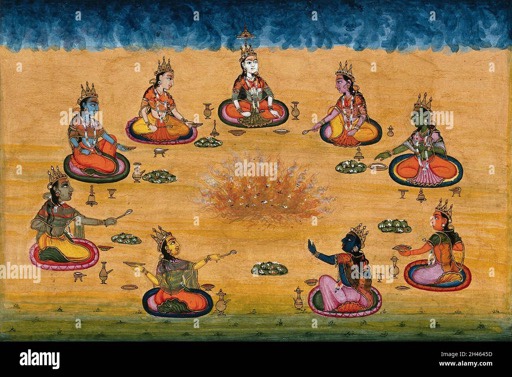
As a Sri Vaishnava born Brahmin, I must confess to my own utter ignorance about the ancient Vedic Yajna traditions of India. Like many in my generation of laukeeka (secular, English educated and professional career) Tambrahms, although I have been quite scrupulous for long in performing mandatory daily and obligatory Vedic rites of Sandhyavandanam and Shraadham, regretfully, all these years, I had taken no trouble at all to acquire even as much as a nodding acquaintance with the subject of Vedic Yajna traditions, their nature, distinctiveness and liturgical practice as prevalent in the past and present.
The years have today rolled on and passed me by indeed and, I realise, there is no hope at all that at my present age, I shall ever be able to learn to perform any of these yajnas of such a wide, fascinating and profound variety. I can therefore only console and satisfy myself with a little bit of knowledge about what the yajna tradition is — so little and sketchy though it might be. Nevertheless, I believe that the time I have recently spent in trying to read up, gather and meticulously compile finally — for my own benefit — a handy little listing of the different yajna traditions of India, has been well worth it for, today, at least I am not the utter ignoramus that I was indeed before making the effort.
Below ⬇️ is a summary of my sketchy compilation that I wish to share publicly on my webpage mainly for the benefit of those who, like me, might want not to feel embarrassed by their own ignorance about the subject.
Systematic Classification of the Yajñas
First, it’s crucial to understand that these yajñas fall into two major categories based on their textual source and ritual structure:
Key Doctrinal Distinctions
- Śrauta vs. Smaarta/Gṛhya (the fundamental binary):
• Three fires vs. one fire
• Multiple priests vs. householder
• Shruti mantras vs. Smriti/KalpaSūtra
• Soma common vs. Soma absent
Hierarchy of Śrauta Rites:
Agnihotra (daily) → Darśapūrṇamāsa (biweekly) → Agnistoma (entry Soma) →Extended Soma rites → Agnicayana (advanced)
Regional Specializations:
• Kerala: Agnicayana (Athirathram) only living tradition[wikipedia]
• Telugu: Paundareeka yaga
• Pan-Indian: Agnistoma, Vajapeya, Agnihotra, Aupasana
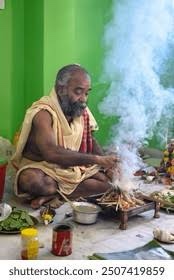
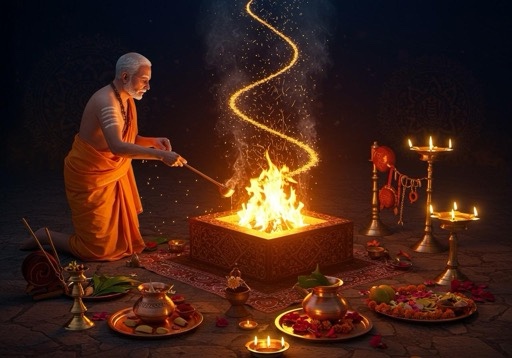
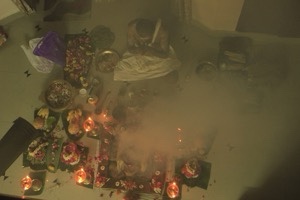
This taxonomy clarifies that the above list has categories:
— (Śrauta, Smaarta, Gṛhya), daily rites
— (Agnihotra, Aupasana), Soma sacrifices (Agnistoma, Vajapeya),
— advanced rituals (Agnicayana),
— preparatory rites (Agni Aadhana, agrayana),
— regional yagas (Paundareeka),
— and subsidiary rituals (Aruna-ketuka).
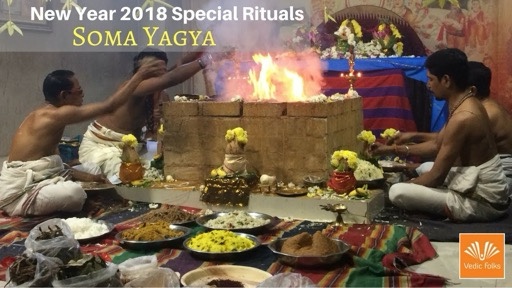
Comparative Summary Table

Key Doctrinal Distinctions
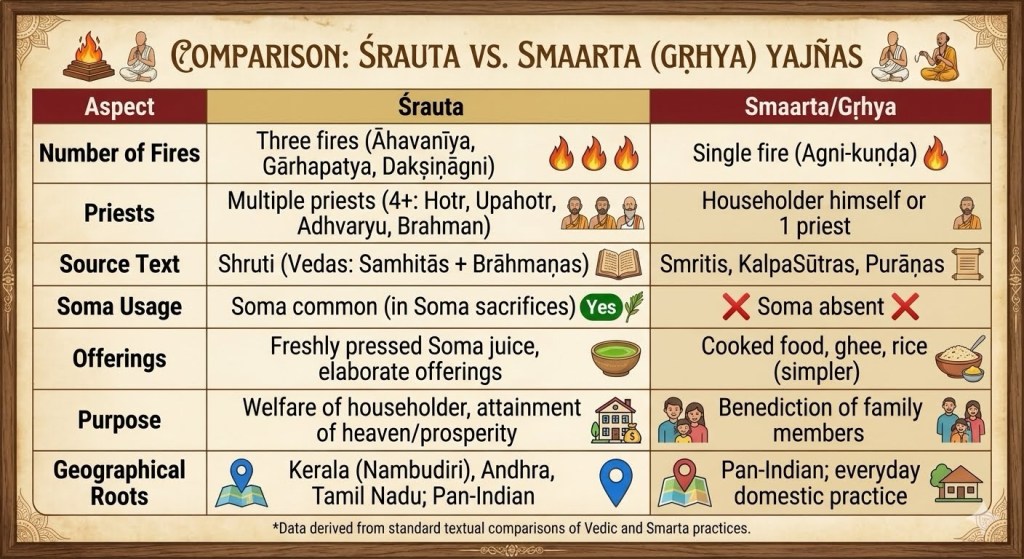
Detailed Explanations of Each Yajña
- Śrauta (श्रौत)
• Nature: The entire category of Vedic sacrifices based on Shruti texts
• Liturgical Practice: Three-fire ritual; multiple priests (Hotr, Upahotr, Adhvaryu, Brahman); elaborate Soma offerings common
• Geographical Roots: Pan-Indian; preserved in Kerala (Nambudiri), Andhra, Tamil Nadu[wikipedia]
• Key Distinction: This is not a specific rite but the class containing Agnistoma, Agnicayana, Vajapeya, etc. - Smaarta (स्मार्त) / Gṛhya (गृह्य)
• Nature: Domestic sacrifices based on Smriti/KalpaSūtra texts; “Gruhya” is the same category
• Liturgical Practice: Single fire; householder performs with wife’s participation; simpler offerings (cooked food, ghee, rice)
• Geographical Roots: Pan-Indian; everyday domestic practice
• Key Distinction: “Smarta” = textual category; “Gṛhya” = ritual type (domestic). These terms are interchangeable in classification. - Agnihotra (अग्निहोत्र)
• Nature: Daily twice-fire offering; foundational Śrauta ritual
• Liturgical Practice:
• Offered exactly at sunrise & sunset
• Two pinchfuls of uncooked rice + ghee into fire
• Mantras: “agnir jyotir, jyotiḥ sūryaḥ svāhā” (evening); reverse (morning)
• Geographical Roots: Orthodox Hindu communities pan-India; modern revival by various groups
• Key Distinction: The basic daily rite one must establish before performing Agnistoma. - Aupasana (आुपासन)
• Nature: Daily yajna performed by married Hindus; commences in marriage fire.
• Liturgical Practice:
• Fire preserved throughout life without break
• Son lights his fire from father’s fire during marriage (generational continuity)
• All 7 Pakayajñas (including Upanayana, Śrāddha) conducted in this fire
• Geographical Roots: Pan-Indian; embedded in Hindu marriage ritual
• Key Distinction: Domestic (Smarta) fire that links generations; distinct from Agnihotra despite both being daily. - Agnistoma (अग्निस्तोम)
• Nature: Simplest Soma rite; first of seven Soma sacrifices
• Liturgical Practice:
• 5-day ceremony (core spans 3 days)
• 10 Soma pressings: 2 dawn, 4 midday, 4 dusk
• Freshly pressed Soma juice offered into three fires
• Four priests: Hotr, Upahotr, Adhvaryu, Brahman
• Geographical Roots: Pan-Indian Vedic tradition
• Key Distinction: Entry-level Soma sacrifice; prerequisite for Agnicayana - Ishti (इष्टि)
• Nature: General term for “offering/sacrifice”; also specific category of non-Soma Śrauta rites
• Liturgical Practice:
• Varies by type; can be simple (cooked food) or elaborate
• Often Sanskrit for “Yajna” itself
• Geographical Roots: Pan-Indian
• Key Distinction: Generic term sometimes used for Pakayajña (cooked-food) sacrifices; not a single specific rite - Agni Aadhana (अनि आधन)
• Nature: Establishment/ignition of the three Śrauta fires
• Liturgical Practice: Ritual procedure for kindling and consecrating Āhavanīya, Gārhapatya, Dakṣiṇāgni
• Geographical Roots: Pan-Indian Śrauta tradition
• Key Distinction: Preparatory ritual required before ANY Śrauta sacrifice; not a sacrifice by itself - Agni Cayana / Agnicayana (अनिचयन)
• Nature: Advanced Śrauta ritual; “over-night piling up of the fire”; also called Athirathram
• Liturgical Practice:
• 12-day ceremony
• Bird-shaped altar (uttaravedi) built from 1005 bricks
• Liturgical text: Krishna Yajurveda Chapters 20-25
• Purpose: Build immortal body beyond death/suffering
• Geographical Roots: Exclusively Kerala (Nambudiri Brahmins); discontinued elsewhere by 11th century
• Key Distinction: Most elaborate Śrauta ritual; requires prior Agnistoma; only living tradition in Kerala - Paundareeka / Pauṇḍarīka (पौण्डरीक)
• Nature: Vishnu-oriented yaga for prosperity; emulates Śrī Rama’s deeds
• Liturgical Practice: Vyūḍha (elaborate) form; Telugu tradition
• Geographical Roots: Telugu states (Andhra/Telangana); Brahmaśrī Dendukūri Veṅkaṭappa Yajñanārāyaṇa pioneered multiple performances
• Key Distinction: Regional Vishnu yaga; not a standard Śrauta/Soma rite; Telugu-specific. - Vajapeya (वजपेय):
• Nature: Last of seven Soma sacrifices; “drink of strength”; elevates Brahmana to Purohita or king to paramount sovereign
• Liturgical Practice:
• Soma rite with drinking of Soma
• 17 cups of Soma + 17 cups of Sura (wine) offered
• Yajamana climbs sacrificial post wheel with wife
• “By performing Vajapeya he becomes an emperor” (Śatapatha Brāhmaṇa)
• Geographical Roots: Pan-Indian Vedic tradition; associated with kingship
• Key Distinction: Kingly sovereignty rite; unusual inclusion of Sura wine. - Sarvatomukha (सर्वतोमुख)
• Nature: Śrauta sacrifice with three fires; “all-directional facing”
• Liturgical Practice: Three-fire offering; oblations to all directions
• Geographical Roots: Pan-Indian Śrauta tradition
• Key Distinction: Named for directional inclusivity; standard Śrauta three-fire format. - Aruna-ketuka (अरुण-केतुक)
• Nature: Fire ritual with mantras in praise of Sun (Aruna); part of Agni Cayana
• Liturgical Practice: Aruna Prasna mantras + Ketuka (banner/flame) fire ritual
• Geographical Roots: Associated with Śrauta tradition; Sun worship
• Key Distinction: Sun-oriented subsidiary ritual; possibly integrated with Agnicayana. - Gruhya (गृह्य)
• Nature: Same as Smaarta; domestic sacrifices
• Liturgical Practice: Single fire; householder + family; simpler than Śrauta
• Geographical Roots: Pan-Indian domestic practice
• Key Distinction: Synonymous with Smaarta; “Gṛhya” emphasizes domestic nature, “Smaarta” emphasizes textual source
Additionally, there are two more Yajnas that were performed since olden times:
Agrayana (अग्रायण)
• Nature and sense: Agrāyana literally means “first-going” or “leading fire/rite”; in ritual parlance it generally refers to a sacrificial rite performed at the beginning of a season, year, reign, or important cycle — an inaugural yajña that marks a new beginning. It is often an observance that inaugurates a sequence of rites (e.g., the first homa of a year, the first offering after a consecration) rather than a single fixed, standalone canonical sacrifice like the Agnistoma.
• Liturgical practice: Practice varies with context. Typical features are: a specially consecrated yajna-kuṇḍa, invocation of the deity or deities appropriate to the new cycle (Agni, Indra, or the patron deity), a sankalpa (declarative intention) stating the new beginning, and oblations (ghee, rice, havis) offered with Vedic or agamic mantras. It can take the form of a simple pakayajña (cooked-food oblations) or a fuller śrauta-style homa depending on the sponsor’s resources and the tradition (smārta or śrauta) they follow.
• Distinctive points: Agrayana’s defining trait is primacy of timing and intent (inauguration), not a fixed technical structure; therefore it may be śrauta in a community that preserves śrauta forms, or gṛhya/smārta in domestic contexts. It is essentially a functional label (“the inaugural yajña”) rather than a rigid ritual category.
• Geographical/textual roots: The practice appears across regions because many ritual calendars mandate inaugural acts (seasonal and regnal); its exact form and name may vary regionally and in āgama or local custom. It is attested in later ritual manuals and regional temple traditions rather than as one canonical Vedic soma-sacrifice in the Brāhmaṇas.
Śravaṇa-pāsu (श्रवण-पाशु / Śravaṇa-pāsu)
• Nature and sense: The compound suggests two possible readings in classical ritual vocabulary; depending on manuscript/usage contexts it is read as Śravaṇa-pāsu or Śravaṇa-pashu.
Broadly, it refers to a rite connected with the listening (śravaṇa) of specific mantras and an act concerning animals (pāsu/pashu) — historically this points to rites related to animal-oblation contexts or rites performed for the welfare of cattle, flocks, or sacrificial animals. In many Vedic and post-Vedic contexts “pāsu” is used as “sacrificial animal” and rites for cattle welfare and consecration exist in domestic and community practice.
• Liturgical practice: Where the term is used as an explicit ritual heading, the rite typically combines recitation/listening (śravaṇa) of prescribed mantras with offerings and rites directed to protect, consecrate, or release animals (or to transfer merit on their behalf).
Depending on the tradition it may be a) a protective rite for cattle and flocks (blessings, oblations, sprinkling, recitation of protective stotras), or b) a regulated sacrificial act where animal offerings are controlled by the sūtra rules (many later traditions replace animal-offering with symbolic vegetarian havis).
The central liturgical element is the simultaneous emphasis on correct hearing/recitation of mantras (to secure the ritual’s efficacy) and the pāsu-related action (welfare, consecration, or, historically, the regulated animal oblation).
• Distinctive points: Śravaṇa-pāsu therefore occupies a liminal place between technical śrauta rules for animal oblation and the social-economic concern for cattle (a key asset in agrarian societies). Where animal sacrifice is taboo, the rite survives as a protective or consecratory ceremony for cattle or as symbolic substitutional offerings (seed, ghee, barley cakes). The emphasis on śravaṇan underscores that correctly heard and recited mantras are viewed as crucial to the rite’s efficacy.
• Geographical/textual roots: References to cattle-concern rites and to ritual forms that emphasize hearing are widespread in Brāhmaṇa and Gṛhyasūtra material; exact labels vary regionally. In later medieval and regional compilations such headings reappear in temple or village ritual contexts where cattle welfare remained socially important. As with many pāsu-related practices, forms changed over time toward non-violent or symbolic offerings in many regions.

(Concluded)
“Yajna purushaaya namo namah!”🙏
Sudarshan Madabushi