
By M.K.Sudarshan
Chennai, India : June 22, 2026
Part III: How Liberal Historians Perpetuated the Colonial Myth
The Continuation of Orientalist Narrative
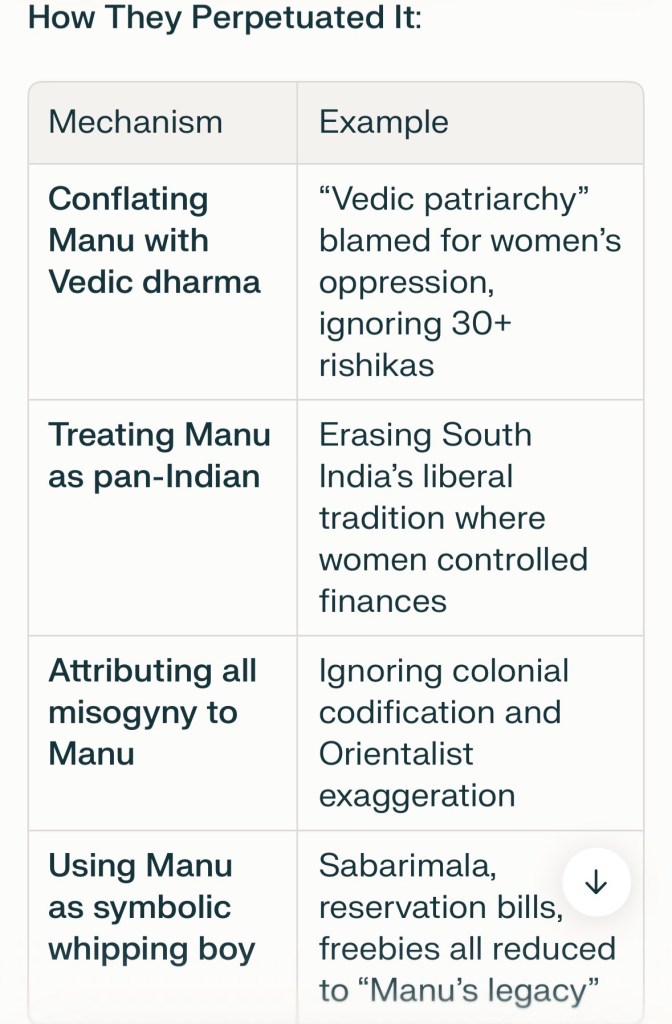
Post-independence, liberal historians and social anthropologists continued the British Orientalist narrative rather than correcting it:
Key Figures:
• Dr. B.R. Ambedkar (1920s–1950s): Blamed Manu for caste oppression; burned Manu copies (1927)
• Uma Chakravarti: “Brahmanical patriarchy” thesis conflates caste endogamy with Vedic dharma
• Modern feminists: Use Manu to stigmatise “Indian patriarchy” as “pure evil”
The Damage: This perpetuation validates the British colonial narrative that “Manu = Hindu law” while erasing Vedic feminine glory and South India’s liberal tradition.
The “Anti-Manu Hangover” Toxicity
The contemporary “hangover of anti-Manu-ism” toxifies discourse in four ways:
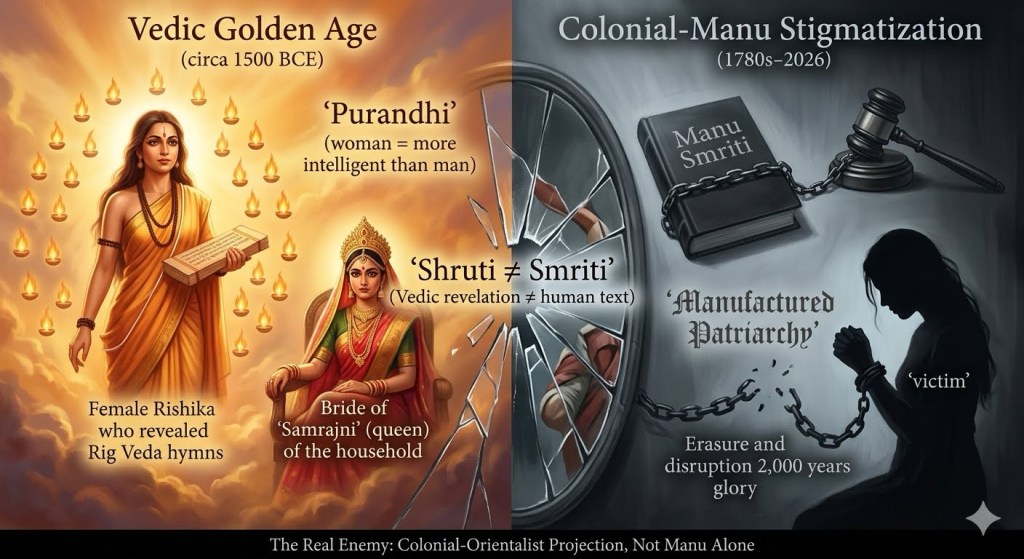
Toxicity #1: Erases Vedic Feminine Glory
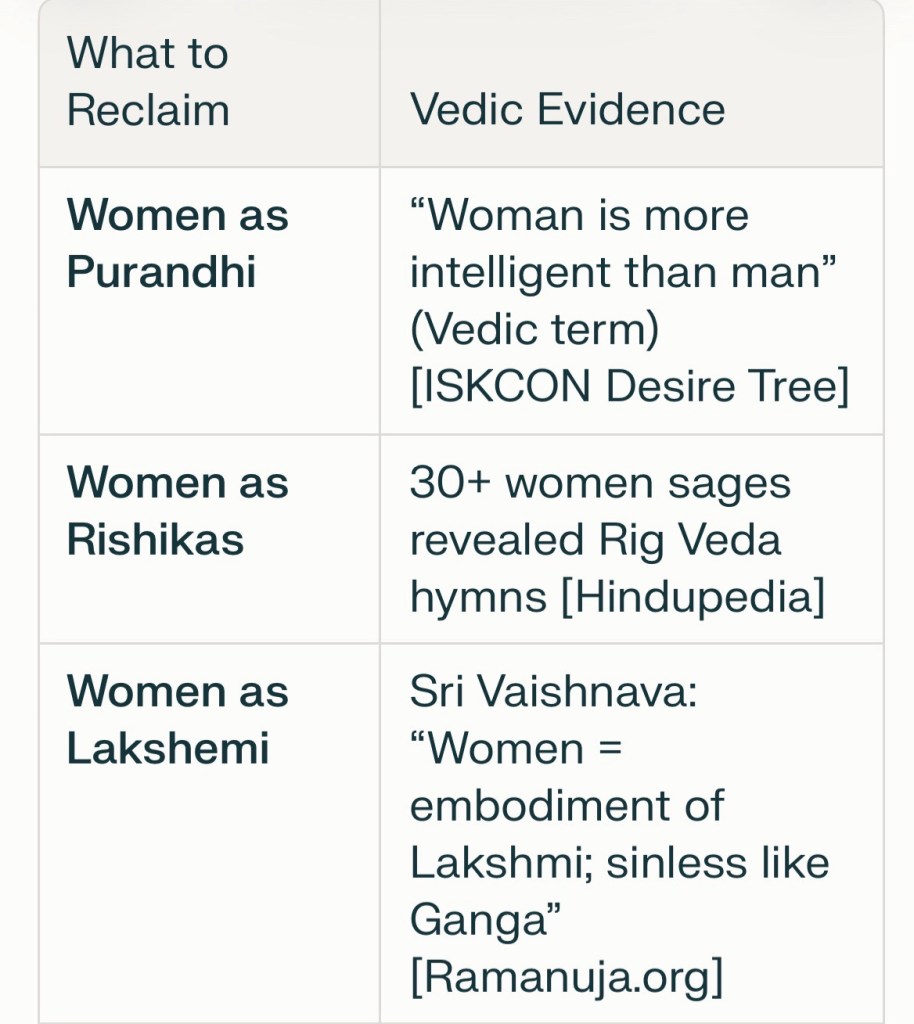
• By blaming Manu for “all misogyny,” critics ignore 30+ women Vedic sages who revealed Rig Veda hymns
• Erases Andal (only female Alvar, 8th CE) and Devaki Piratti as spiritual giants
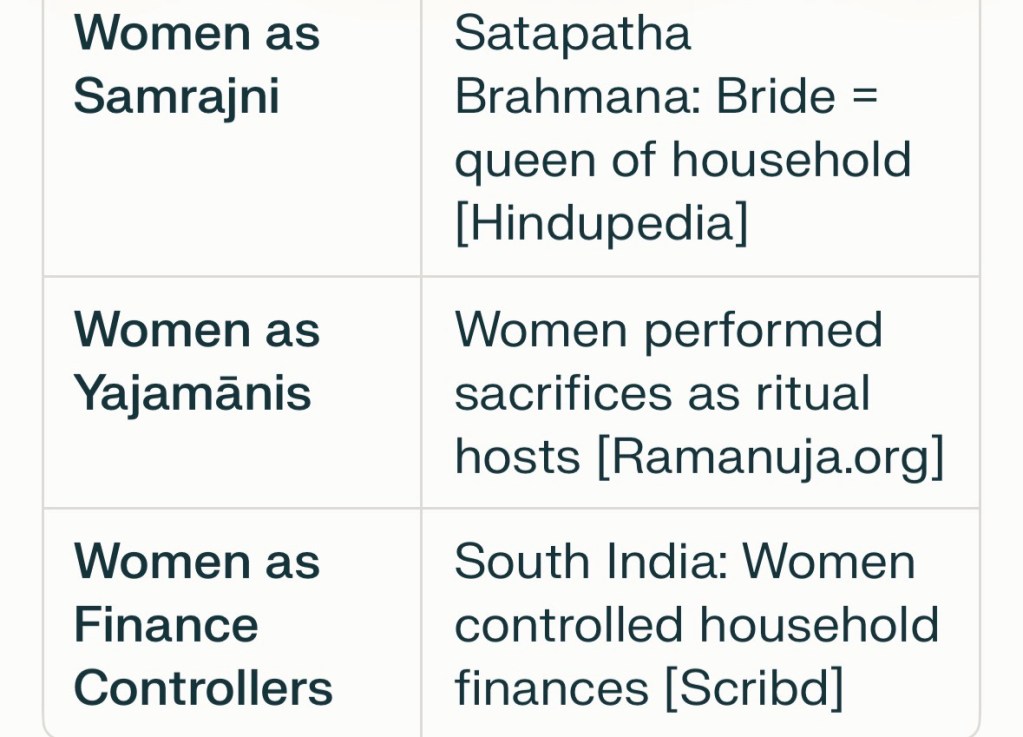
• Denies women’s 2,000-year status as samrajni (queens) and Purandhi (more intelligent)
Toxicity #2: Erases South India’s Liberalism
• South India’s women controlled household finances, were yajamānis, remained “more free”
• Sri Vaishnavism maintained women as Lakshmi embodiments
• Sati was regional (18th-century Rajasthan), not universal
Toxicity #3: Makes Women “Victims” Not “Queens”
• Framing women as “Manu’s oppressed victims” denies their Vedic status as divine embodiments
• Modern discourse diminishes women’s dignity by erasing their spiritual authority
Toxicity #4: Validates Colonial Narrative
• Anti-Manu rhetoric accepts British claim that “Manu = Hindu law” (false)
• Misses the actual source: British colonialism + Orientalist exaggeration, not Manu alone
*****************
Part IV: What Would Serve Women’s Cause Honestly?
Reclaim the Vedic Feminine Legacy
Instead of blaming Manu, genuine women’s dignity requires reclaiming what was erased:

******************
Conclusion: The Real Enemy Is Not Manu—It’s the Colonial-Orientalist Projection
The Manu Smriti has served liberal historians and social anthropologists as a handy scapegoat because it allows them to:
- Stigmatise “Indian patriarchy” as “pure misogynistic evil” without examining Vedic feminine glory
- Validate British colonial narratives that “Manu = Hindu law” (which is false)
- Erase South India’s liberal tradition where women remained autonomous
- Make women “victims” rather than restore their Vedic status as queens and sages
- But the real historical truth is:
• Manu was never Vedic law (he’s Smriti, not Shruti)
• Manu was never universal (South India rejected him)
• Manu was never preeminent (18 Dharmashastras existed)
• Manu was not the origin of misogyny (Vedic women had full equality 1,500 years before him)
• British colonialism made Manu canonical (not Hindu society) - The real enemy is not Manu, but the colonial-Orientalist-modern ideological conflation that:
• Erases 2,000+ years of Vedic feminine glory
• Misrepresents South India’s liberal tradition
• Validates the British claim that “Manu = Hindu law”
• Diminishes women’s dignity by framing them as “Manu’s victims” - What would actually serve women’s cause: Reclaiming the Vedic feminine ideal where women were Purandhi, Rishikas, Lakshmi embodiments, Samrajni, and Yajamānis, somidevamma—not the Manu-victim narrative that anti-Manu rhetoric imposes.
Until liberal historians and social anthropologists acknowledge these glaring inaccuracies, the “anti-Manu hangover” will continue to toxify Indian discourse and do more harm than good to the actual dignity and cause of Indian women.
(Concluded)
The author M.K. Sudarshan (aka Sudarshan Madabushi) is a scholar-student of classical Indian philosophy, Vedic literature, and Sri Vaishnava theology, having published six critically acclaimed books on the subjects. He also commentates on economic theory, historical biography and current international affairs.