by M.K.Sudarshan
12 July, 2026: Chennai, India
When statecraft replaces legal rigor with panic, war becomes inevitable.
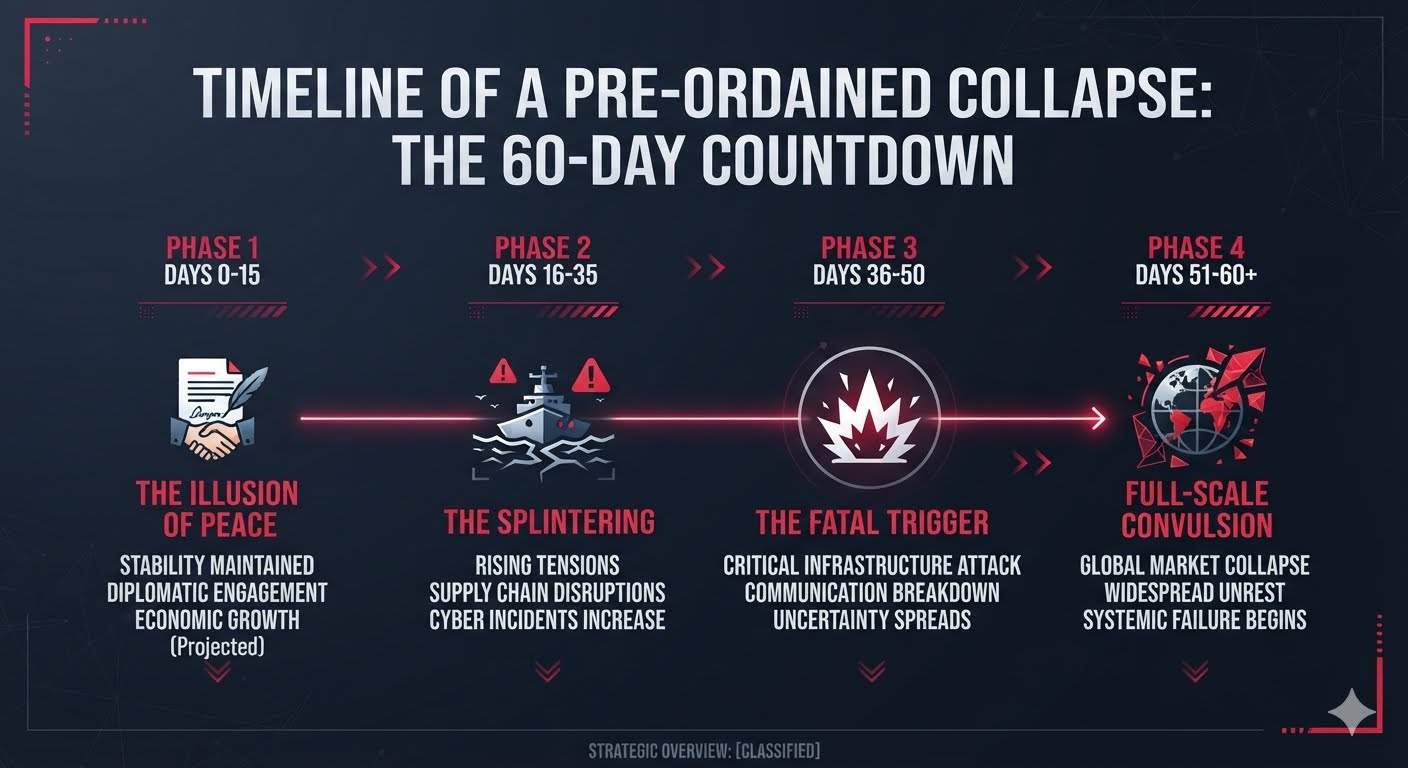
The catastrophic collapse of the June 2026 Islamabad MoU is a masterclass in the perils of “shadow diplomacy”. Driven by an overwhelming panic over skyrocketing oil prices, an inner circle completely sidelined the U.S. Department of Justice to rush through a fatally flawed agreement.
By ignoring the pedestrian, rigorous mechanics of consensus ad idem (a true meeting of the minds), negotiators committed two unforgivable sins:
They feared to negotiate the actual terms of maritime control, hiding instead behind the “constructive ambiguity” of Paragraph 5.
They negotiated out of fear of an immediate conflict, perverting JFK’s famous dictum and walking open-eyed into a lethal 60-day trap that implicitly granted Iran the right to tax global shipping.
Because career legal eagles were locked out of the room, the administration signed a political illusion that acted as a countdown timer. Within three weeks, the absolute lack of mutual understanding triggered heavy airstrikes, a total blockade of the Strait of Hormuz, and an imminent global economic convulsion.
This isn’t just a breakdown in diplomacy—it is a devastating indictment of fatal, short-sighted ineptitude.
1. The Perversion of Consensus Ad Idem (The Root Legal Failure)
The bedrock of any valid agreement—whether a pedestrian commercial contract or a high-stakes international treaty—is consensus ad idem: a true, absolute meeting of the minds. For an agreement to hold, all parties must understand and assent to the exact same subject matter, in the exact same sense, at the exact same time.
In the Islamabad MoU, consensus ad idem was not merely neglected; it was actively sabotaged.
- The Illusion of Agreement: The text was engineered with “constructive ambiguity”—a diplomatic euphemism for drafting words that mean completely contradictory things to each side.
- Paragraph 5 as a Legal Weapon: The text mandated that “Iran will make arrangements… for the safe passage of commercial vessels with no charge for 60 days only.”
- The Cognitive Dissonance: The U.S. read this as a temporary administrative checklist for mine-clearing. Iran read it as a formal recognition of its sovereign right to gatekeep the Strait of Hormuz and, crucially, to levy tolls on global shipping on Day 61.
By signing a document where no actual meeting of the minds existed, the signatories did not draft a peace treaty; they drafted a legal time bomb.
2. Negotiating Out of Fear and Fearing to Negotiate
The psychological underpinnings of the Islamabad negotiations completely inverted John F. Kennedy‘s timeless maxim. The administration acted out of a dual paralysis:
The Fear to Negotiate
Negotiators were plagued by a cowardice that prevented them from tackling the real, structural friction points head-on. They knew that defining precise routing coordinates, veto powers, or post-Day 60 financial frameworks would cause the talks to instantly collapse. Rather than doing the grinding, painful work of achieving clarity, they hid behind vague language, choosing the comfort of a fleeting political illusion over a sustainable, legally sound framework.
Negotiating Out of Fear
Driven by a frantic panic over skyrocketing oil prices, frozen global supply chains, and the terrifying prospect of a widening military escalation, the administration operated in a state of desperation. This desperation weaponized time against them. Panic dictated that any piece of paper with a signature was preferable to none, forcing them to accept a fatally flawed framework simply to secure an immediate, temporary sigh of relief.
3. The Irresponsible Sidelining of Institutional Due Process
The ultimate failure of accountability lies in the deliberate, sneaky exclusion of the U.S. Department of Justice (DoJ) and its Office of Legal Counsel (OLC).
[ Traditional Statecraft ] [ The Islamabad Approach ] State/Defense Depts. Kushner / Witkoff / Rubio │ │ ▼ (Mandatory Review) ▼ (Deliberate Bypass) DoJ & OLC Legal Eagles Rushed Remote Signing (Strips Ambiguity / Redlines Text) (Bypassed Interagency Checks) │ │ ▼ ▼ Stable, Legally Binding Treaty Fatal "Constructive Ambiguity"
In a routine administration, seasoned institutional lawyers act as gatekeepers, systematically stripping out ambiguity, defining terms, and anticipating breaches. For the Islamabad MoU, they were intentionally locked out:
- The Kitchen-Cabinet Cartel: The negotiation was privatized. It was run by an inner circle consisting of Jared Kushner, Special Envoy Steve Witkoff, Secretary of State Marco Rubio, and a small cell within the War Department, operating via Pakistani and Qatari intermediaries (General Asim Munir and Prime Minister Shehbaz Sharif).
- The “Political Document” Loophole: To evade statutory interagency review triggers, the administration cynically labeled the text a non-binding “Memorandum of Understanding” rather than a formal treaty. This allowed them to rush to the Palace of Versailles for a remote signature without a rigorous, line-by-line legal vetting.
- The Ignored Warning Signs: Had DoJ “legal eagles” reviewed Paragraph 5, they would have instantly flag-polled the “Day 61 Toll Trap.” They would have refused to clear a clause that implicitly ceded an international waterway to Iranian taxation. The inner circle sidelined the DoJ precisely because they wanted to ignore these inconvenient legal truths to manufacture a rapid political victory.
4. The Global Fallout: An Economy on the Brink
The price of this fatal ineptitude is now being paid by the rest of the world. Because there was no consensus ad idem, the treaty collapsed within weeks of its signing, triggering the exact nightmare scenario it was rushed to prevent: [3]
- The Spark: When the U.S. routed commercial vessels through alternative channels to bypass Iranian “arrangements,” Tehran viewed it as a breach of contract and attacked tankers.
- The Escalation: The U.S. retaliated with massive, heavy airstrikes targeting Iranian coastal assets and Tehran itself.
- The Convulsion: President Trump declared the truce officially over, oil export waivers were revoked, and the Islamic Revolutionary Guard Corps (IRGC) declared the Strait of Hormuz closed “until further notice.”
Conclusion
The Islamabad MoU will live in infamy as a masterclass in how not to conduct international law. It proves that when nations bypass the pedestrian, rigorous mechanics of due process, they trade temporary political theater for systemic catastrophe. By shunting out the lawyers, the American administration did not negotiate peace—they legally codified the path to an imminent, devastating global war.
(Concluded)