by M.K. Sudarshan
September 25, 2026: Chennai, India
The Inquisitional Beast and the Ideological Void
The global hegemony of Western Civilisation was never maintained by military and geopolitical maneuverings alone. It required the violent, systematic exclusion of competing global economic theories or philosophies. Operating under a philosophy of self-arrogated imperial Exceptionalism, the West spawned a whole slew or range of ideological and ethical frameworks for the rest of the world to learn from, emulate, and embrace.
Anyone who proposed or formulated alternative economic models that did not fit the civilisational mould or serve the West’s strategic purpose was ruthlessly vilified, rendered voiceless, and effete. The clearest example of the Inquisitional nature of the beastly instincts of Western Civilisation was the fate of the heterodox economist Lyndon LaRouche.
The Inquisitional Beast: The Case of Lyndon LaRouche
Within mainstream Western academia and institutional journalism, LaRouche was heavily marginalized, characterized as a fringe political figure and a conspiracy theorist. The official consensus attributes his isolation and his 1988 federal conviction for conspiracy to mail fraud to illegal fundraising practices, rather than an academic excommunication.
However, viewed through the lens of heterodox economic critique, his trajectory tells a much darker story of systemic intolerance. Proponents of his work argue that LaRouche’s fierce advocacy for a return to a Hamiltonian economic model—centered on the physical economy, massive state-backed infrastructure, and the dismantling of speculative banking systems—posed a direct threat to the Wall Street and London financial nexus.
His sweeping proposals, such as the “Eurasian Land-Bridge” designed to connect Europe and Asia via vast infrastructure networks, offered a blueprint for global development entirely independent of Western financial institutions.
To critics of Western hegemony, the aggressive state prosecution, academic blacklisting, and relentless media vilification that drove LaRouche to madness were the defensive reflex of a monoculture that brooks no heresy. It proved that Western civilization maintains an ideological iron curtain: preach universalism when dominant, but deploy ruthless containment the moment the core paradigm is challenged.
The Ten Pillars of the Monoculture
For half a millennium, this civilisational monoculture survived by controlling the boundaries of human thought through ten great ideological and ethical frameworks. The world was forced to perforce adapt to, operate, work, and live within these ten pillars:
1. Social revolution of the people, by the people, for the people: The ideals of “Égalité, Liberté, Fraternité” born of the French Revolution.
2. Parliamentary Democracy: The imposition of specific legislative systems as the sole measure of civilized governance.
3. Capitalism and Free Markets: The structural enforcement of capital accumulation and private ownership.
4. Socialism and Communism: The official European counter-system (Marxism) which, even in rebellion, kept debates within European intellectual boundaries.
5. Liberal Democracy: The packaging of individual rights intertwined with free-market states as the final form of human government.
6. Secularism: The forced divorcing of public life, law, and politics from sacred or spiritual traditions, undermining older civilisational authorities.
7. Free Trade: The doctrine preached to open foreign markets for Western goods.
8. Globalisation: The integration of the world into a singular economic matrix managed by Western institutions.
9. Protectionism and Intellectual Property: The legal guardrails erected to lock in technological advantages the moment developing nations began to compete effectively.
10. Unilateralism and Hegemony: The raw deployment of military and economic power whenever the “rules-based international order” failed to serve Western strategic interests.
The Ideological Void: After the Requiem
Today, with Western Civilisation in a state of incipient decline, we are witnessing the structural failure and slow collapse of every single one of these ten great ideological frameworks. The grand pata’s—the overarching paradigms within which humanity has marched for 500 years—are breaking apart.
As a consequence, the world has entered a profound, terrifying ideological void.
Every major Western system has been tried, tested, and pushed to its absolute limit over the last five centuries, and none has ultimately worked well for the collective health of the world. Yet, there is currently no cogent, all-comprehensive, and powerful alternative paradigm ready to dismantle and replace the dying order.
There is no alternate civilisational vision today that possesses the same universal, magnetic appeal to peoples across nations as the ideas of Capitalism, Industrialism, Socialism, Technocracy, Globalisation, and Multilateralism once did.
Instead of a new universal dawn, the post-Western void looks like a fractured landscape. Civilisational states like China, India, and the Islamic world are retreating into their own historical narratives, using Western-invented technologies not to integrate with the global village, but to wall themselves off from it.
We are entering an era of a “Global Archipelago“—isolated islands of power operating without a shared moral vocabulary or a common blueprint for the human journey.
When History finally sings its final, quiet requiem for Western Civilisation, the old questions will lose their meaning. The world will no longer ask how to emulate or appease the West, because the illusion of a single, linear path to human progress will have vanished entirely into the void.
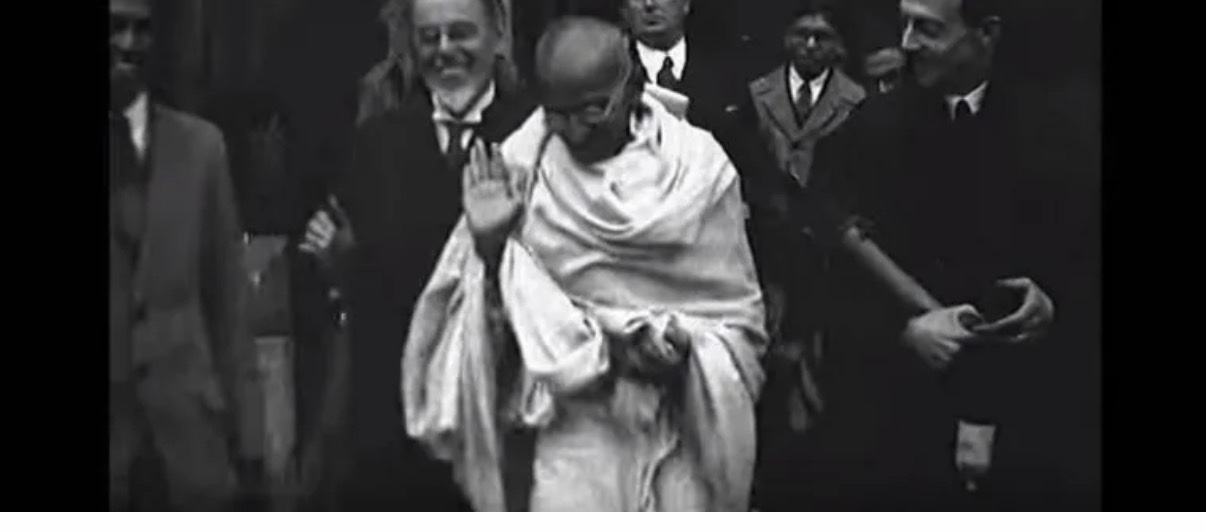
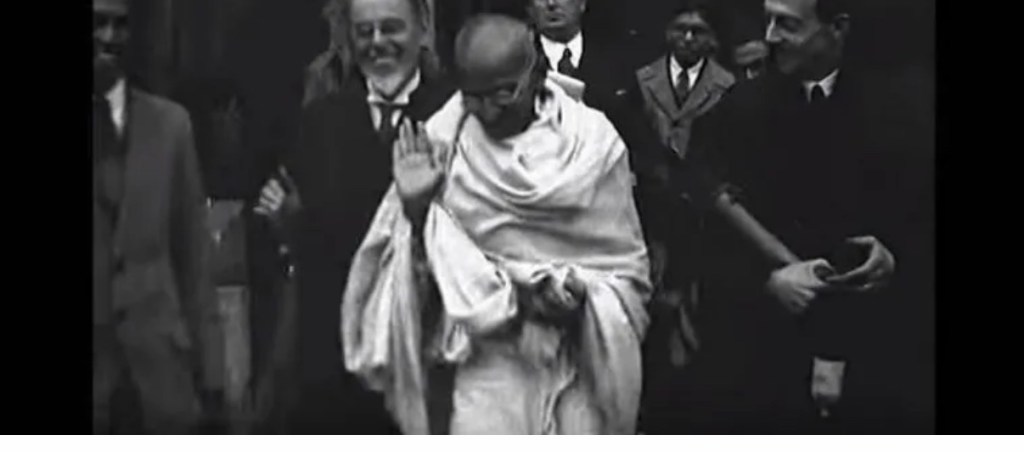
Yet, amidst this silence, Mahatma Gandhi’s historic quip will remain suspended over the ruins of the twentieth century. When asked what he thought of Western Civilisation, his reply—“I think it’s a good idea”—will echo not just as a witty insult to a colonial reporter, but as something deeply, sardonically and permanently inscrutable. It survives as a haunting reminder of an ideal that the West authored, exported, but ultimately could never find the civilisational capacity to practice.
(Concluded)